 Preview
 Send
Send Share
Share
 Details

 Download
 Similars
 X-Ray
X-Ray Diaporama
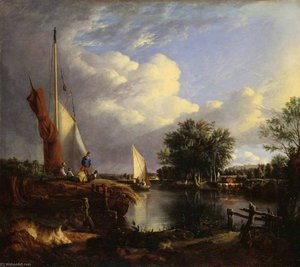
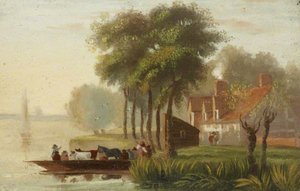
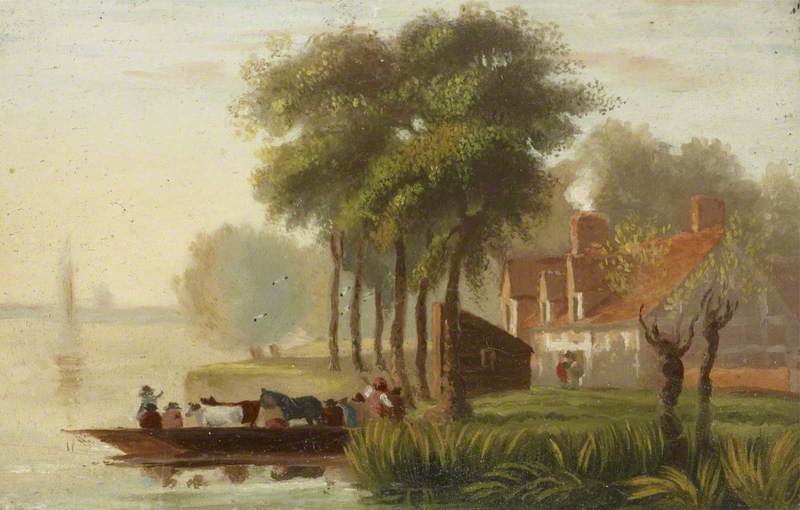
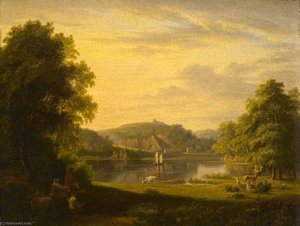
A Ferry Boat with Cattle
 9.0 x 14.0 cm
 National Trust
 Read More
Giclée / Art Print
Museum-quality giclée or canvas print with fast production and flexible finish options. ( Buy Hand Made Painting Buy Image)




































Pick from our preset sizes that match the artwork's original proportions.

You may enter your own dimensions to fit a specific frame or space. If your selected size does not match the original image's proportions, we will either crop the artwork or extend the image with a mirrored or solid-fill edge. A digital mockup will be sent for your approval before production begins.
Please note that the on-screen preview does not reflect the actual cropping or extension. Only the mockup will accurately show the final composition.
While custom sizes are available, we recommend selecting a dimension from the predefined list to preserve the original proportions.
Worldwide Delivery () in 2 weeks instead of standard 4/5 weeks. (20 August)

Free Worldwide Express Shipping

High-Quality Linen Canvas

Full Shipping Insurance

Customs Tax Refund Guarantee

True Color Matching Guarantee

60-Day Return Policy (Defects Only)

100% Money-Back Guarantee

Bulk Discount Offer
 Glass option is only available in size under 110 CM

A Ferry Boat with Cattle
Giclée / Art Print
Reproduction Size
-


Total Price
$ 63
Related Artworks
Artist Biography
A Norfolk Master of Light and Landscape
Joseph Stannard (1797–1830) stands as a remarkable figure within the Norwich School of Painters, an artistic movement that flourished in Norfolk during the early Victorian era. Born in Norwich on September 13th, 1797, his formative years were shaped by the tutelage of John Crome—a celebrated landscape artist himself—who recognized Stannard’s prodigious talent and secured him a place at Norwich Grammar School. Despite facing financial constraints that necessitated a shift to Robert Ladbrooke as instructor, Stannard's artistic journey quickly gained momentum, establishing him as a prominent voice within the burgeoning Norfolk art scene.
From his debut exhibition in 1811 at the Norwich Society of Artists—a young boy showcasing remarkable skill—Stannost’s work garnered positive reviews in publications like The Norwich Mercury, cementing his reputation as a gifted artist. Demonstrating both ambition and artistic conviction, Stannard eventually severed ties with the Norwich Society of Artists in 1816 to forge ahead with a rival organization. This bold decision underscored his desire to pursue independent artistic endeavors and navigate the competitive landscape of the nineteenth-century British art world.
The Influence of the Dutch Masters
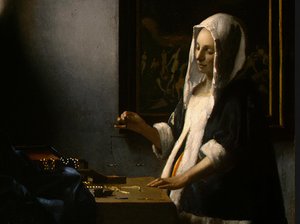
Stannard’s stylistic evolution was profoundly influenced by the profound legacies of the Dutch masters. During a transformative trip to Holland in 1821, he meticulously studied the works of legends such as Rembrandt and Vermeer. These encounters instilled within him a deep appreciation for chiaroscuro, atmospheric perspective, and the careful rendering of light and shadow—techniques that would become the unmistakable hallmarks of his oeuvre. By blending the local charm of English scenery with the dramatic lighting traditions of the Netherlands, he created a visual language that was both intimate and grand.
His mastery is perhaps most vividly realized in his ability to capture the ephemeral qualities of nature. Whether depicting the rugged coastline or the tranquil riverbanks of Norfolk, Stannard utilized light not merely as an illumination, but as a narrative tool to evoke emotion. His work often features:
- Atmospheric Perspective: A technique used to create depth and a sense of vastness in his coastal and marine scenes.
- Chiaroscuro: The dramatic interplay between light and dark that lends a sculptural quality to his subjects.
- Realistic Detail: An exacting devotion to the textures of water, sand, and sky, particularly evident in works like Yarmouth Sands, Norfolk.
Legacy and Artistic Achievement
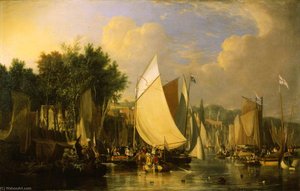
The zenith of Stannard's career is epitomized by his magnum opus, “Thorpe Water Frolic,” completed in 1825. This painting captures the serene beauty of Thorpe Waters with breathtaking realism, conveying a palpable sense of tranquility through its balanced and harmonious composition. It remains one of the most celebrated examples of his ability to transform a local landscape into a timeless piece of art. Beyond his landscapes, Stannard was also a skilled marine and portrait painter, capable of capturing the rugged vitality of maritime life and the dignified presence of his subjects.
Though his life was tragically short, ending in 1830, the impact of Joseph Stannard remains etched in the history of British art. He helped elevate the Norwich School from a provincial movement to a significant contributor to the national landscape tradition. His ability to marry the ruggedness of the English coast with the sophisticated light-play of the Dutch masters ensures that his name continues to resonate with anyone seeking the true essence of the Norfolk spirit.
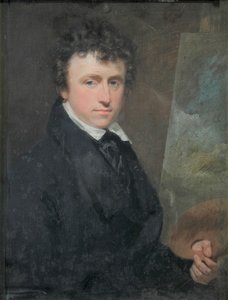
Joseph Stannard
1797 - 1830
Quick Facts
- Artistic Movement Or Style: Norwich School
- Artists Or Movements Influenced By This Artist: ['Dutch Masters']
- Artists Who Influenced This Artist:
- Robert Ladbrooke
- John Crome
- Date Of Birth: 1797
- Date Of Death: 1830
- Full Name: Joseph Stannard
- Nationality: English
- Notable Artworks:
- Thorpe Water Frolic
- Yarmouth Sands
- Place Of Birth: Norwich, England