 Preview
 Send
Send Share
Share
 Details

 Download
 Similars
 X-Ray
X-Ray Diaporama
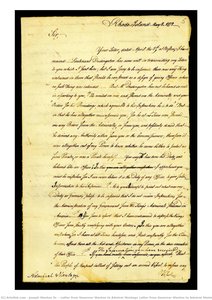
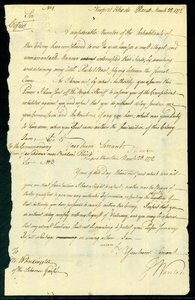
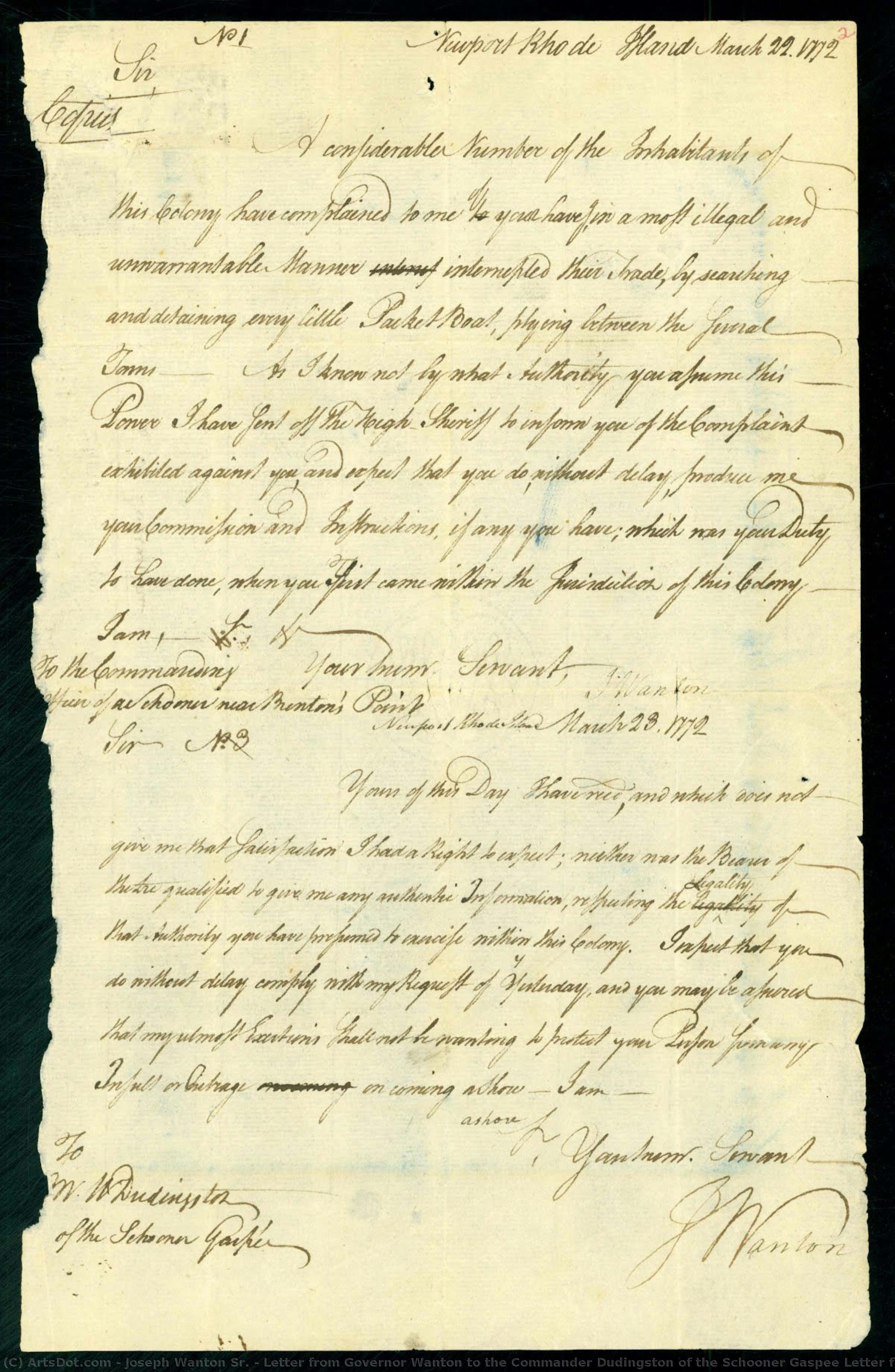
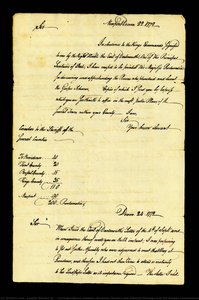
Letter from Governor Wanton to the Commander Dudingston of the Schooner Gaspee Letter from Governor Wanton to the Commander Dudingston of the Schooner Gaspee, page 1

 Read More
Hand Made Oil Reproduction
Hand-painted oil on canvas in your size and frame, made to order by our artists. ( Buy Print Buy Image)




































Pick from our preset sizes that match the artwork's original proportions.

You may enter your own dimensions to fit a specific frame or space. If your selected size does not match the original image's proportions, we will either crop the artwork or extend the painting with additional hand-painted elements. A digital mockup will be sent for your approval before production begins.
Please note that the on-screen preview does not reflect the actual cropping or extension. Only the mockup will accurately show the final composition.
While custom sizes are available, we recommend selecting a dimension from the predefined list to preserve the original proportions.
After order, ArtsDot.com team will email client for instructions and provide a mockup preview
Worldwide Delivery () in 3/4 weeks instead of standard 5 weeks. (23 August). No compromise on quality.

Free Worldwide Express Shipping

High-Quality Linen Canvas

Full Shipping Insurance

Customs Tax Refund Guarantee

True Color Matching Guarantee

60-Day Return Policy (Defects Only)

100% Money-Back Guarantee

Bulk Discount Offer
 Glass option is only available in size under 110 CM

Letter from Governor Wanton to the Commander Dudingston of the Schooner Gaspee Letter from Governor Wanton to the Commander Dudingston of the Schooner Gaspee, page 1
Reproduction Medium
Reproduction Size
-


Total Price
$ 263
Artwork Description
Related Artworks




Artist Biography
A Life Intertwined with Colonial Currents: Joseph Wanton Sr.
Joseph Wanton Sr., born in Newport, Rhode Island, in 1705, was a figure whose life epitomized the complexities of colonial America. Though not an artist in the traditional sense, his existence became interwoven with artistic representation through depictions like John Greenwood’s lively “Sea Captains Carousing,” and his extensive correspondence provides invaluable insight into the socio-political landscape of 18th-century Rhode Island. Wanton's story isn’t one of brushstrokes and canvases, but rather a narrative etched in mercantile ventures, political maneuvering, and the burgeoning tensions that would ultimately ignite the American Revolution. He emerged from a prominent Quaker family deeply rooted in the colony’s affairs, inheriting both a legacy of influence and a shrewd business acumen. This foundation propelled him into a successful merchant career, navigating the intricate web of colonial trade with skill and ambition. His rise wasn't merely economic; it was a testament to his ability to thrive within the established order while subtly challenging its constraints.From Merchant Prince to Reluctant Governor
Wanton’s ascent continued as he transitioned from successful merchant to governor of Rhode Island in 1769. This appointment placed him squarely at the center of a rapidly escalating conflict between Great Britain and its American colonies. His administration coincided with growing unrest, most notably culminating in the infamous Gaspee Affair of 1772. The burning of the British schooner *Gaspee*, aggressively enforcing trade regulations, became a potent symbol of colonial defiance. Wanton’s response was characteristically cautious yet strategically astute. He skillfully shielded those involved from prosecution by the Crown, demonstrating a commitment to colonial autonomy without necessarily advocating for outright independence. This delicate balancing act reveals a man deeply concerned with preserving stability while acknowledging the legitimate grievances of his constituents. His actions weren't born of radical fervor but rather a pragmatic assessment of the situation and a desire to avoid immediate confrontation. He understood the power dynamics at play and navigated them with a calculated restraint that would define his governorship.Navigating the Tempest: The Road to Revolution
As the specter of revolution loomed larger, Wanton’s cautious approach increasingly clashed with the more radical elements within the Rhode Island General Assembly. While he maintained communication with other colonial governors and contributed to the founding of Brown University (originally New College), his reluctance to embrace armed conflict created friction. He wasn't opposed to reform, but believed a measured response was crucial, fearing that hasty action would lead to disastrous consequences. This position, though perhaps reasonable in its intent, proved untenable as public sentiment shifted towards independence. In 1775, when asked to pledge support for raising an army and commissioning new officers, Wanton refused. This defiance of the assembly’s demands led to his removal from office, replaced by Nicholas Cooke, a figure more aligned with the growing revolutionary zeal. Despite this political setback, Wanton retired peacefully to his Newport home, spared the turmoil of war and living until 1780.A Legacy Beyond Governance: Historical Significance
Joseph Wanton Sr.’s legacy extends beyond his tenure as governor. He offers a valuable lens through which to examine the complexities of colonial governance during a period of immense change. His story highlights the diverse opinions within the colonies regarding independence, demonstrating that not all colonists were ardent revolutionaries. The Gaspee Affair, in which he played a pivotal role, underscores the escalating tensions between Britain and its American possessions. Furthermore, his contribution to the founding of Brown University cemented his place as a benefactor of education and intellectual growth. His surviving letters, meticulously preserved, provide a unique historical record, offering intimate glimpses into 18th-century colonial life. While not celebrated for artistic creation itself, Wanton’s depiction in Greenwood's “Sea Captains Carousing” serves as a visual testament to his prominence within the merchant class and offers a fascinating glimpse into the social dynamics of the era. He remains a significant figure, not as a revolutionary icon, but as a representative of a more cautious, pragmatic approach to navigating the turbulent waters leading to American independence.Artistic Echoes & Enduring Records
Though primarily known for his political and mercantile endeavors, Joseph Wanton Sr.'s connection to the artistic world is embodied in John Greenwood’s “Sea Captains Carousing in Surinam.” This painting, a vibrant snapshot of colonial life, captures Wanton amongst fellow merchants and seafarers engaged in convivial – and somewhat raucous – revelry. The artwork serves as a visual document of the era's social customs and economic pursuits, immortalizing Wanton as a key player within this world. Beyond this pictorial representation, his enduring legacy lies in the wealth of correspondence he left behind. These letters are not merely historical documents; they are windows into the mind of a man grappling with momentous decisions during a pivotal period. They reveal his anxieties, his calculations, and his unwavering commitment to what he believed was best for Rhode Island.- The Gaspee Affair correspondence offers direct insight into his diplomatic efforts.
- His letters regarding the founding of Brown University demonstrate his dedication to education.
- Personal correspondence reveals a nuanced portrait of a man navigating complex family and business relationships.
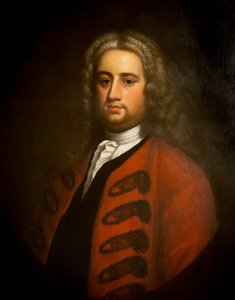
Joseph Wanton Sr.
1705 - 1780 , United States of America
Quick Facts
- Artistic Movement Or Style: Historical documents
- Date Of Birth: 1705
- Date Of Death: 1780
- Full Name: Joseph Wanton Sr.
- Nationality: American
- Notable Artworks:
- Correspondence w/ Montago
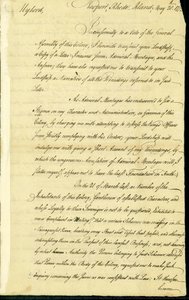
- Letter to Admiral Montagu
- Copy of a letter to Montagu
- Place Of Birth: Newport, USA