

 Preview
 Send
Send Share
Share
 Details

 Download
 Similars
 X-Ray
X-Ray Diaporama
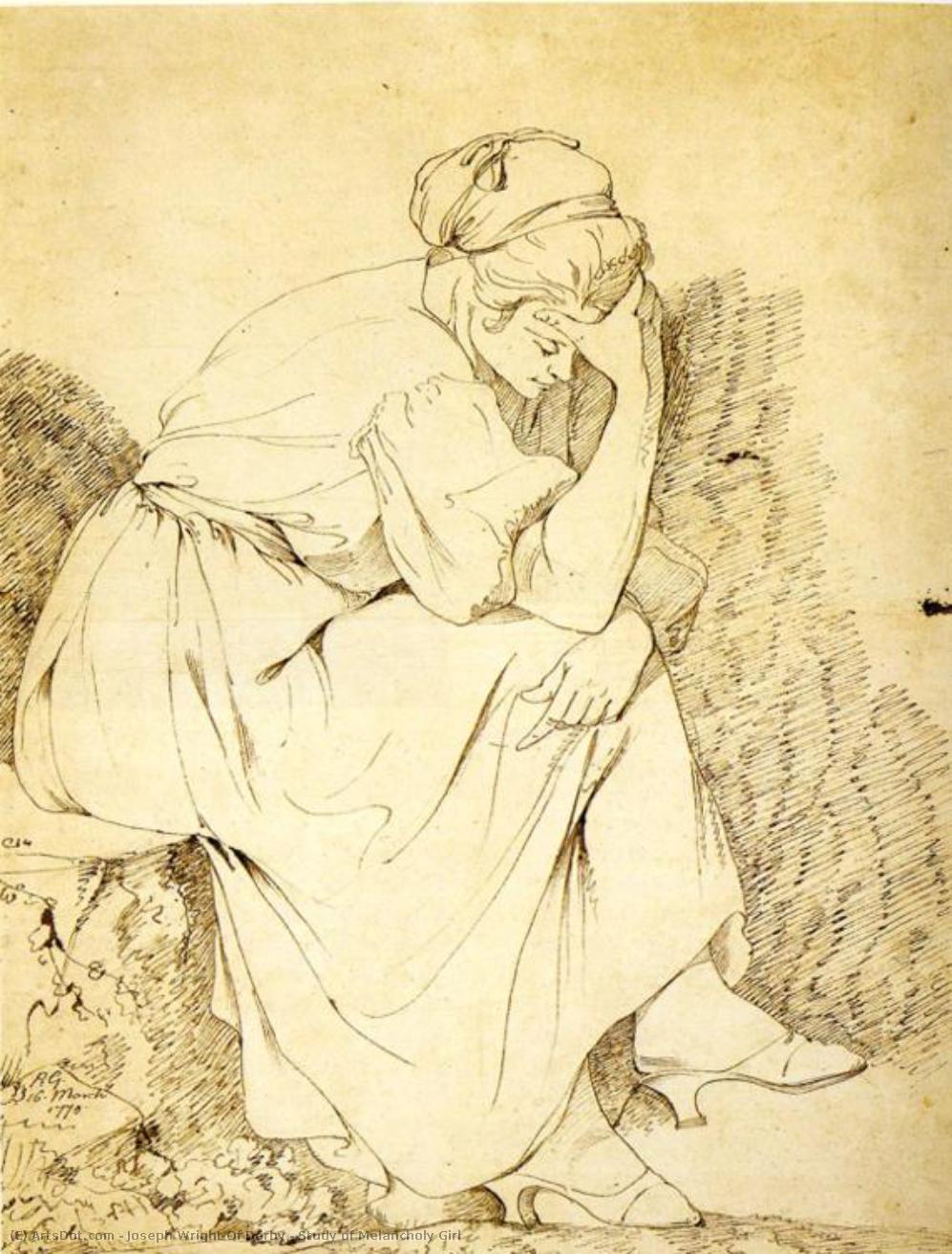
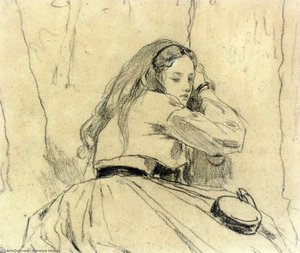
Study of Melancholy Girl
 Drawing
- WallArt
- Neoclassicism
 1775
1775 55.0 x 41.0 cm
 British Museum
 Read More
Purchase a high-resolution, enhanced digital image, far superior to the online preview.
Each file is meticulously prepared by our in-house specialists using advanced tools and expert manual retouching. We ensure every image has exceptional clarity, precise color accuracy, and fine detail.
The final file is delivered via email within 72 hours, optimized for immediate use in professional, editorial, and print environments. This is the same quality trusted by top-tier design studios, publishers, and galleries.
Digital Image
Download a high-resolution file for personal display, printing, and creative projects. ( Buy Print Buy Hand Made Painting)
Included in Every Digital Image Order
Expert Digital Delivery, Guaranteed
When you choose ArtsDot.com, you're not just getting an image - you're receiving a professionally enhanced digital artwork, crafted with precision and backed by a satisfaction guarantee. Here's everything that comes with your order, automatically:

Fast Email Delivery
Your high-resolution digital image file will be emailed to you within 72 hours of ordering - ready for immediate use.

AI-Enhanced Digital File
Your artwork is professionally optimized using advanced AI tools and manual editing, ensuring maximum detail, clarity, and color accuracy.

Free Lifetime Re-Delivery
Accidentally deleted or lost your file? No worries - we'll resend it to you anytime, free of charge.

No Import Fees - Ever
Enjoy your artwork instantly with zero customs, duties, or delivery fees - digital downloads are always tax-free.

Color Accuracy Guarantee
We ensure your digital image reflects the original colors as closely as possible using professional tools and color management.

60-Day Satisfaction Guarantee
If you're not satisfied with your digital image, we'll revise it or refund 100% within 60 days - no questions asked.

100% Money-Back Guarantee
Not satisfied? Get a full refund within 60 days of receiving your digital file - no questions asked.

Bulk Order Discounts
Buy 3 images, save 10% - Buy 5, save 15% - Buy 10+, save 20%. Great for creative projects, galleries, and agencies.
Collectible Description
A Study in Quiet Contemplation
This evocative drawing, titled "Study of Melancholy Girl," transports the viewer into a deeply intimate moment of introspection. Rendered in stark black and white, the composition centers on a woman seated upon the ground, her posture speaking volumes without uttering a single word. Her hands are clasped before her face, suggesting a profound engagement with thought—a beautiful embodiment of pensive stillness. The artist has captured not merely a likeness, but an entire emotional state: the quiet weight of contemplation.
The technical mastery on display is remarkable; every delicate line defining the woman's features and the drape of her dress speaks to an acute observational skill. Yet, the scene is enriched by peripheral elements that deepen its narrative resonance. Observe the small bird perched in the upper left corner, a silent witness to her musings, and another resting further down on the right. Complementing this natural tableau is the inclusion of a potted plant in the lower left quadrant. These details transform what could be a simple portrait into a carefully constructed visual poem.
The Echoes of Enlightenment Thought
Dating to 1775, this work emerges from an era brimming with intellectual ferment—the cusp of profound societal change that Joseph Wright of Derby so masterfully chronicled in his life's work. While Wright is celebrated for illuminating the drama of industry and scientific discovery, pieces like this remind us that even amidst the roaring engines of progress, the inner landscape of the human spirit remained a vital subject. The melancholy captured here resonates with the philosophical currents of the Enlightenment, an age where reason wrestled constantly with emotion.
The atmosphere is thick with unspoken questions. It invites the collector or decorator to pause before the piece, to consider what thoughts might occupy such a beautiful, yet burdened, mind. It speaks to the universal human experience of solitude and deep thought, making it a poignant addition to any sophisticated interior setting.
Symbolism in Shadow and Line
The symbolism woven into this drawing is subtle but rich. The melancholy itself is not depicted as despair, but rather as a state of profound receptivity—a space where ideas can germinate. The birds often symbolize the fleeting nature of thought or the passage of time, while the plant anchors the scene to the enduring cycle of life and growth. These natural elements act as silent companions to the woman's internal journey.
For those who appreciate art that rewards close looking, this piece offers layers upon layers of meaning. It is a meditation on beauty found not in grand gestures, but in the quiet dignity of being thoughtful.
A Touch of Industrial Romanticism
Joseph Wright’s career bridged the gap between classical portraiture and the burgeoning reality of modern life. This drawing, while intimate, carries that signature intellectual weight—a sense of humanity observed against a backdrop of changing times. Owning a reproduction allows one to bring home not just an image, but a piece of artistic philosophy. It serves as a sophisticated focal point, suggesting depth, history, and the enduring power of introspection within any room's decor.
Related Artworks
Artist Biography
The Luminary of Derby: Joseph Wright and the Dawn of the Industrial Age
Joseph Wright, known to history as “Wright of Derby,” was more than a painter; he was a visual philosopher who captured a pivotal moment in human existence. Born in 1734 amidst the burgeoning industrial heartland of England, Wright didn’t merely depict his time—he *illuminated* it, both literally and figuratively. His canvases weren't filled with grand historical narratives or aristocratic portraits alone; they pulsed with the energy of scientific discovery, the drama of enlightenment thought, and the stark beauty of a landscape irrevocably altered by human innovation. He stands as the first major artist to truly grapple with, and celebrate, the spirit of the Industrial Revolution, an era that would redefine civilization itself. His early life in Derby, steeped in the practical world of his father’s legal profession, provided a grounding that perhaps informed his later fascination with precision and observation. Though initially destined for law, young Joseph's inclination towards art proved irresistible, leading him to London at seventeen to study under Thomas Hudson, a prominent portrait painter of the day. This formal training laid a foundation, but it was Wright’s innate curiosity and independent spirit that would ultimately forge his unique artistic path.Chiaroscuro and the Spirit of Inquiry
Wright's technical mastery is immediately apparent in his dramatic use of chiaroscuro, a technique borrowed from Baroque masters like Caravaggio but employed with a distinctly modern sensibility. He wasn’t simply interested in creating visual drama; he used light and shadow to symbolize the unveiling of knowledge, the struggle between darkness and understanding. Consider masterpieces such as *An Experiment on a Bird in the Air Pump* (1768), where candlelight throws stark relief upon the faces of onlookers witnessing a scientific demonstration—a scene brimming with both wonder and anxiety. The painting isn’t just about the experiment itself; it's an exploration of humanity’s burgeoning curiosity, its willingness to probe the mysteries of nature, and the ethical implications of such endeavors. Similarly, *A Philosopher Lecturing on the Orrery* (1766) presents a captivating scene where a miniature solar system is unveiled, illuminating not only the faces of the captivated audience but also the expanding universe of scientific thought. These weren’t isolated incidents; Wright consistently sought subjects that allowed him to explore the intersection of science, philosophy, and human emotion. His style was subtly influenced by Alexander Cozens, particularly in his compositional approaches, yet he remained fiercely independent, forging a visual language uniquely his own.Beyond Portraits: Landscapes and the Romantic Sensibility
While Wright is celebrated for his “candlelight pictures,” to limit him to that single aspect of his oeuvre would be a grave disservice. He was also a gifted landscape painter, capturing the rugged beauty of Derbyshire and beyond with an increasingly Romantic sensibility. Works like *Dovedale by Moonlight* showcase his ability to evoke atmosphere and emotion through subtle gradations of light and shadow, transforming familiar scenes into evocative visions. His landscapes weren’t merely topographical representations; they were imbued with a sense of awe and reverence for the natural world—a sentiment that resonated deeply with the growing Romantic movement. Even in these seemingly tranquil scenes, however, there's often an undercurrent of melancholy or mystery, hinting at the fragility of nature and the inevitability of change. *Rydal Waterfall* (1795), exemplifies this skill, showcasing his mastery of capturing both power and serenity within a single composition.A Legacy Forged in Light and Shadow
Wright’s impact on British art was profound, though perhaps not immediately recognized during his lifetime. He faced some resistance from the established artistic circles, notably declining full membership to the Royal Academy after feeling slighted—a testament to his independent spirit. However, his influence extended beyond formal institutions. Artists like William Pether and John Downman were directly inspired by his techniques, particularly his dramatic use of light and shadow. More broadly, Wright’s work paved the way for a new generation of artists who sought to capture the dynamism and complexity of the modern world. He didn't just paint what he saw; he painted what he *felt*—the excitement, the anxiety, the wonder—of an era on the cusp of transformation. His paintings remain powerful reminders of a time when humanity dared to question everything, to explore the unknown, and to embrace the possibilities of a new age. Today, his works are held in major museums worldwide, ensuring that the luminary of Derby continues to illuminate our understanding of art, science, and the human spirit.- Notable Works: *An Experiment on a Bird in the Air Pump*, *A Philosopher Lecturing on the Orrery*, *Dovedale by Moonlight*.
- Influences: Thomas Hudson, Alexander Cozens, Baroque masters like Caravaggio.
- Key Characteristics: Dramatic chiaroscuro, exploration of scientific themes, Romantic landscapes.
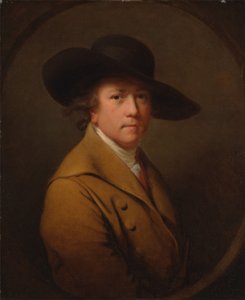
Joseph Wright of Derby
1734 - 1797 , United Kingdom
Quick Facts
- Artistic Movement Or Style: Chiaroscuro, Romanticism
- Artists Who Influenced This Artist:
- Thomas Hudson
- Alexander Cozens
- Date Of Birth: September 3, 1734
- Date Of Death: August 29, 1797
- Full Name: Joseph Wright of Derby
- Nationality: British
- Notable Artworks:
- Dovedale by moonlight
- Three Persons Viewing...
- A Philosopher Lecturing...
- An Experiment on a Bird...
- Place Of Birth: Derby, United Kingdom

