 Preview
 Send
Send Share
Share
 Details

 Download
 Similars
 X-Ray
X-Ray Diaporama
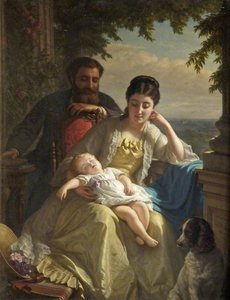
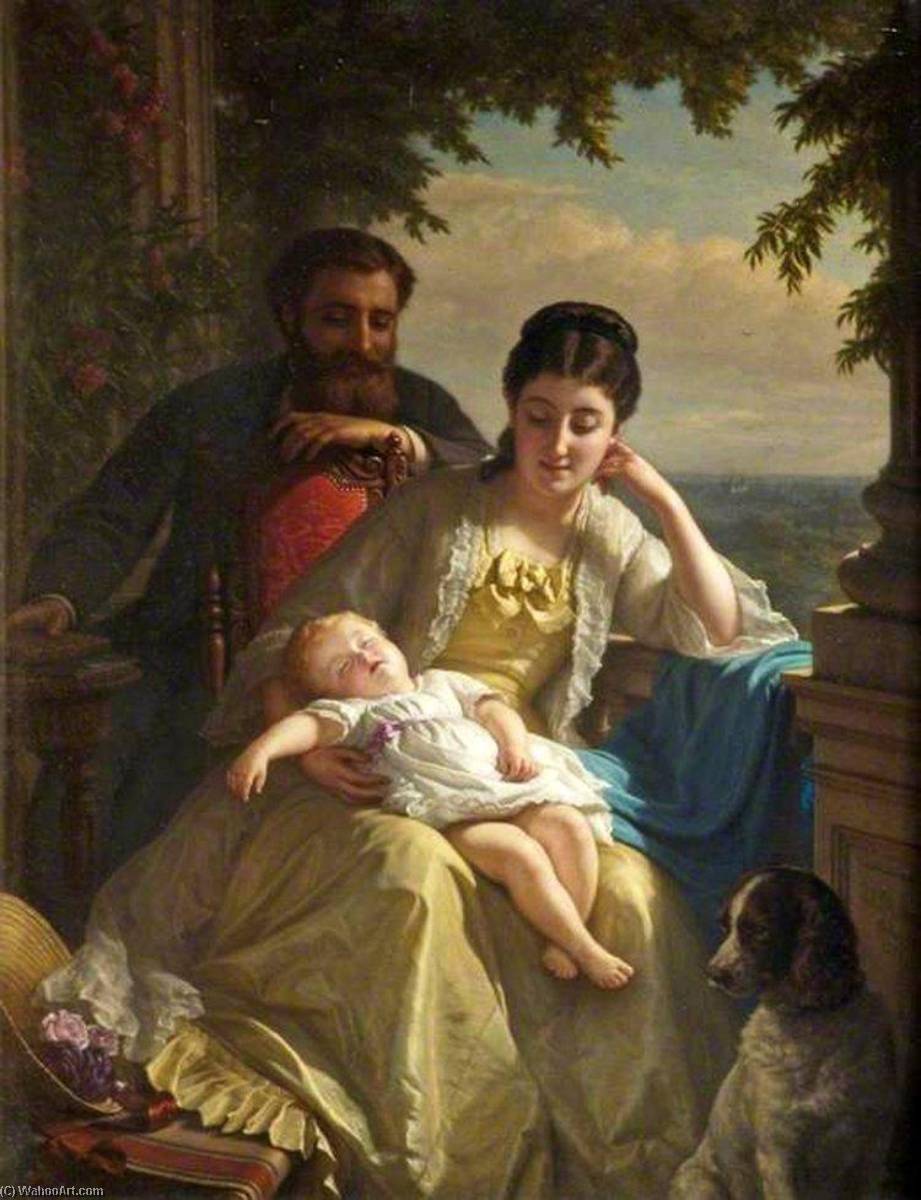
The First Born


 Read More
Hand Made Oil Reproduction
Hand-painted oil on canvas in your size and frame, made to order by our artists. ( Buy Print Buy Image)




































Pick from our preset sizes that match the artwork's original proportions.

You may enter your own dimensions to fit a specific frame or space. If your selected size does not match the original image's proportions, we will either crop the artwork or extend the painting with additional hand-painted elements. A digital mockup will be sent for your approval before production begins.
Please note that the on-screen preview does not reflect the actual cropping or extension. Only the mockup will accurately show the final composition.
While custom sizes are available, we recommend selecting a dimension from the predefined list to preserve the original proportions.
After order, ArtsDot.com team will email client for instructions and provide a mockup preview
Worldwide Delivery () in 3/4 weeks instead of standard 5 weeks. (19 August). No compromise on quality.

Free Worldwide Express Shipping

High-Quality Linen Canvas

Full Shipping Insurance

Customs Tax Refund Guarantee

True Color Matching Guarantee

60-Day Return Policy (Defects Only)

100% Money-Back Guarantee

Bulk Discount Offer
 Glass option is only available in size under 110 CM

The First Born
Reproduction Medium
Reproduction Size
-


Total Price
$ 263
Related Artworks
Artist Biography
A Life Dedicated to Intimate Realism: Josephus Laurentius Dyckmans
Josephus Laurentius Dyckmans, born in Lier, Belgium, on August 9th, 1811, and passing away in Antwerp on January 8th, 1888, was a painter who carved a unique niche for himself within the bustling art world of 19th-century Belgium. Often affectionately dubbed “The Belgian Gerard Dou,” Dyckmans wasn’t drawn to grand historical narratives or sweeping landscapes; instead, he devoted his considerable talent to capturing the quiet poetry of everyday life, the tender moments of domesticity, and the subtle nuances of human emotion. His painstaking detail, rich color palettes, and Romantic sensibility established him as a master of genre painting, offering viewers a glimpse into the lives – and interiors – of the burgeoning middle class.Early Training and Artistic Development
Dyckmans’ artistic journey began with foundational training under Melchior Gommar Tieleman in his hometown of Lier. Recognizing his potential, local patrons supported him financially, enabling him to pursue further studies at the prestigious Academy of Fine Arts in Antwerp starting in 1834. This period proved pivotal as he entered the workshop of Gustaaf Wappers, a leading figure in Belgian Romantic and history painting. While influenced by Wappers’ technical prowess, Dyckmans soon charted his own course, diverging from the dramatic historical scenes favored by his mentor. He found himself increasingly captivated by the Dutch Golden Age masters – particularly Gerard Dou, whose meticulous attention to detail and intimate portrayals of domestic life would become a defining characteristic of Dyckmans' style. His early successes at local salons, including “A Confession of Love” in 1834 and “Game of Checkers,” which earned him a silver medal in Brussels in 1836, signaled the emergence of a distinctive voice. A sensational “Vegetable Market” submission to the Ghent Salon in 1838 further solidified his reputation, leading to exhibitions in Antwerp and The Hague where it was awarded another silver medal.A Master of Genre: Themes and Techniques
Dyckmans’ oeuvre is characterized by a profound focus on genre scenes – depictions of everyday life, often set within the comfortable interiors of middle-class homes. He excelled at portraying intimate moments: mothers with their children, families gathered around a table, quiet scenes of mourning or contemplation. His paintings weren't merely representations of reality; they were imbued with emotional depth and psychological insight. The artist’s meticulous technique was central to his success. He employed an extraordinary level of detail, rendering textures, fabrics, and objects with remarkable precision. This dedication to realism wasn’t simply about accuracy; it served to heighten the sense of intimacy and draw viewers into the scene. His color palettes were rich and warm, often utilizing a Romantic style that emphasized atmosphere and emotional resonance. He was particularly adept at capturing light and shadow, creating a sense of depth and volume that further enhanced the realism of his work.Recognition and Later Life
Throughout his career, Dyckmans enjoyed considerable recognition both within Belgium and internationally. He exhibited regularly at the Royal Academy of Arts in London (1846, 1860, 1863, 1869) and participated in the Universal Exhibition in Paris in 1867. In 1841, he undertook a journey to Paris and the Netherlands, broadening his artistic horizons. He was appointed professor of painting and perspective at the Antwerp Academy in November of that year, sharing his knowledge with aspiring artists. Though elected as a corresponding member of the Belgian Royal Academy in 1847, Dyckmans’ reserved nature led him to remain largely detached from its activities. In 1854 he left his teaching post, preferring a more secluded existence. He married in 1847 and had two daughters, and spent much of his later life alternating between his home in Antwerp and a country retreat in Kalmthout. The Belgian state honored him with knighthood in the Order of Leopold in 1851, followed by an officership in 1870.Historical Significance and Legacy
Josephus Laurentius Dyckmans occupies a unique position within the history of Belgian art. While his contemporaries often focused on grand historical themes, he championed the beauty and dignity of everyday life. His paintings offer valuable insights into the social customs, domestic interiors, and emotional lives of the 19th-century middle class. He wasn’t simply a recorder of reality; he was an interpreter, imbuing his scenes with a sense of warmth, intimacy, and psychological depth. His nickname, “The Belgian Gerard Dou,” is testament to his mastery of detail and his ability to capture the quiet poetry of domestic life. Though perhaps less celebrated than some of his more historically-focused contemporaries, Dyckmans’ work continues to resonate with viewers today, offering a poignant glimpse into a bygone era and reminding us of the enduring power of intimate realism.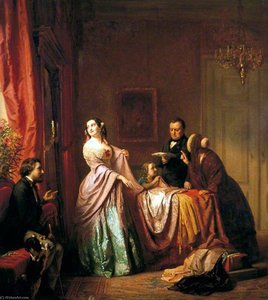
josephus laurentius dyckmans
1811 - 1888
Quick Facts
- Artistic Movement Or Style: Romantic Genre Painting
- Artists Or Movements Influenced By This Artist: ['Gerard Dou']
- Artists Who Influenced This Artist: ['Dutch Golden Age Art']
- Date Of Birth: August 9, 1811
- Date Of Death: January 8, 1888
- Full Name: Josephus Laurentius Dyckmans
- Nationality: Belgian
- Notable Artworks:
- The Lady of Fashion
- Le Premier Né
- Place Of Birth: Lier, Belgium