 Preview
 Send
Send Share
Share
 Details

 Download
 Similars
 X-Ray
X-Ray Diaporama
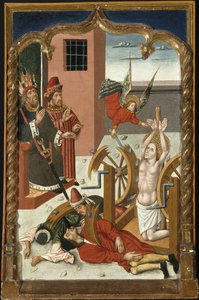
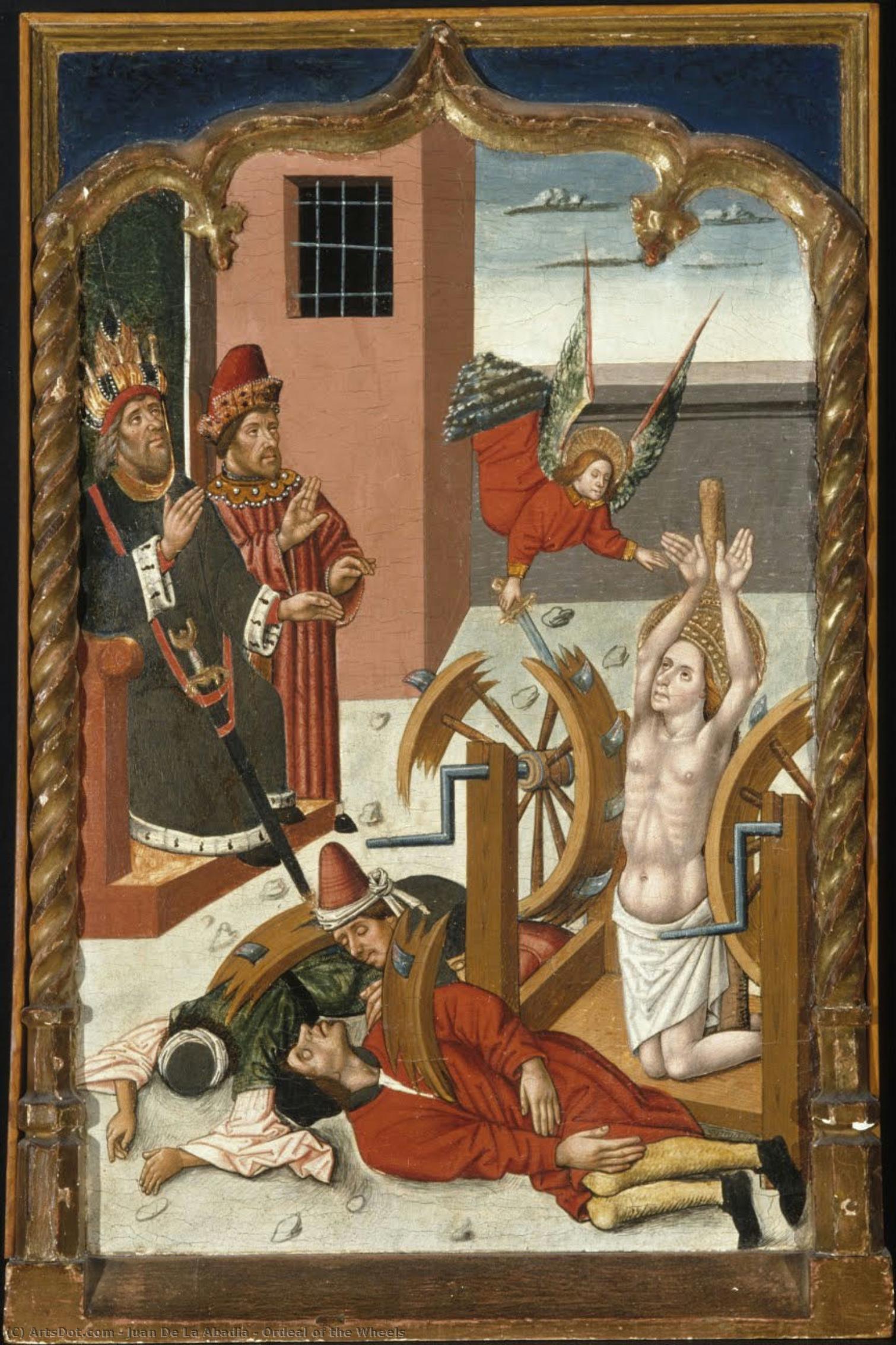
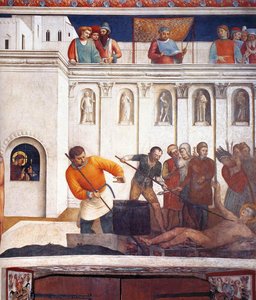
Ordeal of the Wheels
 1491
1491 80.0 x 49.0 cm
 Read More
Giclée / Art Print
Museum-quality giclée or canvas print with fast production and flexible finish options. ( Buy Hand Made Painting Buy Image)




































Pick from our preset sizes that match the artwork's original proportions.

You may enter your own dimensions to fit a specific frame or space. If your selected size does not match the original image's proportions, we will either crop the artwork or extend the image with a mirrored or solid-fill edge. A digital mockup will be sent for your approval before production begins.
Please note that the on-screen preview does not reflect the actual cropping or extension. Only the mockup will accurately show the final composition.
While custom sizes are available, we recommend selecting a dimension from the predefined list to preserve the original proportions.
Worldwide Delivery () in 2 weeks instead of standard 4/5 weeks. (31 August)

Free Worldwide Express Shipping

High-Quality Linen Canvas

Full Shipping Insurance

Customs Tax Refund Guarantee

True Color Matching Guarantee

60-Day Return Policy (Defects Only)

100% Money-Back Guarantee

Bulk Discount Offer
 Glass option is only available in size under 110 CM

Ordeal of the Wheels
Giclée / Art Print
Reproduction Size
-


Total Price
$ 63
Related Artworks








Artist Biography
A Master of Transition: The World of Juan de la Abadía
Juan de la Abadía el Viejo, a name resonating softly through the annals of Spanish Gothic painting, represents a fascinating juncture in artistic evolution. Active primarily in the Kingdom of Aragon during the late 15th century – roughly from 1470 to his death around 1498 – he wasn’t merely a painter; he was a bridge between the established International Gothic style and the burgeoning Renaissance influences that would soon reshape the Iberian Peninsula's artistic landscape. For years, he was known as the “Maestro de Almudévar,” identified by a striking panel depicting Saint Dominic originating from the small town of Almudévar in Huesca. This initial attribution hinted at his regional importance, but subsequent scholarship has revealed a far more significant artist whose work embodies the spiritual and aesthetic sensibilities of a changing era.
Early Life and Artistic Formation
Details surrounding Juan de la Abadía’s early life remain elusive. Unlike many Renaissance masters documented through extensive apprenticeships and patronage networks, information about his formative years is scarce. He first appears in historical records around 1470, already engaged in artistic commissions within Huesca. This suggests a degree of prior training, likely within a local workshop steeped in the traditions of Hispano-Flemish painting—a style characterized by meticulous detail, rich color palettes, and a pronounced emphasis on religious iconography. In April 1482, he formalized his workshop structure by taking on Franci Johan Baget as an apprentice for two years, demonstrating his established position within the Aragonese guild system. While no concrete evidence points to formal training abroad, the clear presence of Flemish artistic elements in his work indicates a familiarity with Northern European painting traditions, perhaps through imported works or itinerant artists circulating throughout Spain.
The Spanish-Flemish Style and Religious Devotion
De la Abadía’s art is deeply rooted in the Spanish-Flemish style, a unique blend of Gothic refinement and Northern Renaissance realism. His paintings are predominantly tempera on wood panels, showcasing an extraordinary attention to detail—from the intricate folds of drapery to the delicate rendering of facial features. Gold leaf embellishments were frequently employed, adding luminosity and symbolic weight to his compositions. He often incorporated stucco reliefs and metallic elements, further enhancing the visual richness and devotional impact of his works. The subject matter is overwhelmingly religious, reflecting the deeply Catholic context of 15th-century Spain. Altarpieces (retablos) formed the core of his output, commissioned for churches throughout Aragon. These weren’t simply decorative objects; they were intended to be powerful visual aids for prayer and contemplation, depicting scenes from the lives of saints, archangels, and moments of divine judgment.
Key Works and Artistic Legacy
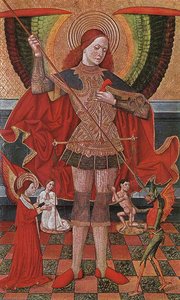
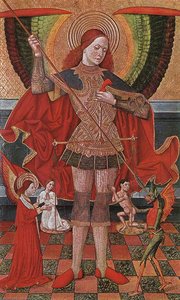
Among De la Abadía's most celebrated works is Saint Michael Weighing Souls, a captivating panel originating from Liesa in Huesca. This piece exemplifies his mastery of composition and symbolism, portraying the archangel balancing souls on a scale while confronting the Devil with a spear—a potent representation of medieval eschatology and the weighing of merits. The Saviour, now housed in the Museum of Zaragoza, demonstrates his skill in depicting Christ’s serene majesty. While some earlier works have been lost over time – such as the St. Catalina from 1490 originally located in la Magdalena de Huesca – surviving pieces reveal a consistent artistic vision and technical prowess. His son, Juan de la Abadía el Joven, continued the family tradition after 1490, suggesting a successful workshop and the transmission of his father’s skills to the next generation.
Historical Significance and Enduring Appeal
Juan de la Abadía occupies a crucial position in Spanish art history as a transitional figure. He skillfully navigated the stylistic currents of his time, blending the elegance of Gothic traditions with emerging Renaissance influences. His work provides valuable insight into the artistic patronage of Aragonese ecclesiastical centers during a period of significant cultural change. While not as widely recognized as some of his contemporaries, De la Abadía’s paintings offer a compelling glimpse into the spiritual and aesthetic values of late 15th-century Spain. The meticulous detail, rich symbolism, and devotional intensity of his art continue to captivate viewers today, reminding us of the enduring power of religious imagery and the artistic legacy of this remarkable master.
Quick Facts
- Artistic Movement Or Style: Spanish-Flemish Gothic
- Date Of Death: 1498
- Full Name: Juan de la Abadía el Viejo
- Nationality: Spanish
- Notable Artworks:
- Saint Michael Weighing Souls
- Santa Catalina (lost)
- Saviour
- Santo Domingo
- Place Of Birth: Huesca, Spain