 Preview
 Send
Send Share
Share
 Details

 Download
 Similars
 X-Ray
X-Ray Diaporama
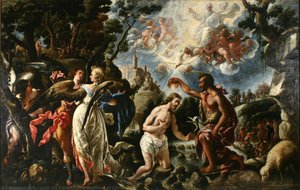
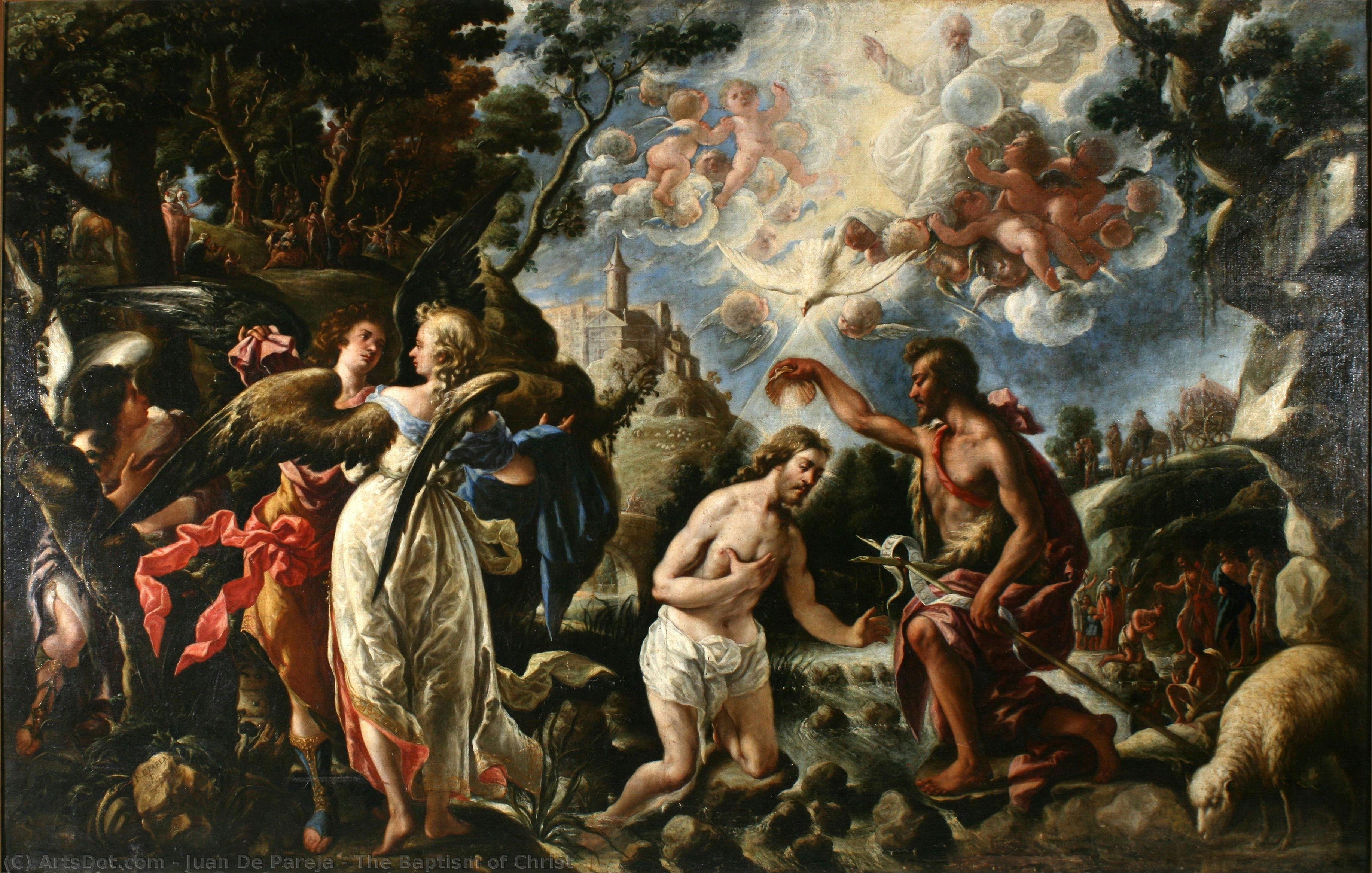
The Baptism of Christ

 Read More
Hand Made Oil Reproduction
Hand-painted oil on canvas in your size and frame, made to order by our artists. ( Buy Print Buy Image)




































Pick from our preset sizes that match the artwork's original proportions.

You may enter your own dimensions to fit a specific frame or space. If your selected size does not match the original image's proportions, we will either crop the artwork or extend the painting with additional hand-painted elements. A digital mockup will be sent for your approval before production begins.
Please note that the on-screen preview does not reflect the actual cropping or extension. Only the mockup will accurately show the final composition.
While custom sizes are available, we recommend selecting a dimension from the predefined list to preserve the original proportions.
After order, ArtsDot.com team will email client for instructions and provide a mockup preview
Worldwide Delivery () in 3/4 weeks instead of standard 5 weeks. (23 August). No compromise on quality.

Free Worldwide Express Shipping

High-Quality Linen Canvas

Full Shipping Insurance

Customs Tax Refund Guarantee

True Color Matching Guarantee

60-Day Return Policy (Defects Only)

100% Money-Back Guarantee

Bulk Discount Offer
 Glass option is only available in size under 110 CM

The Baptism of Christ
Reproduction Medium
Reproduction Size
-


Total Price
$ 263
Artwork Description
Related Artworks




Artist Biography
Juan de Pareja: Life and Legacy
Early Life and Enslavement
- Born in Antequera, Spain, around 1610, Juan de Pareja began life under the constraints of slavery. His mother was an enslaved African-descended woman, and his father a Spanish man.
- He was identified as a “morisco,” a term referring to individuals of mixed heritage – in his case, likely both African and Spanish ancestry.
- Pareja entered the household of Diego Velázquez, one of Spain’s most celebrated painters, becoming an assistant within his workshop around 1631.
Assistant to Velázquez
- For nearly two decades, Pareja served as a vital member of Velázquez's studio, assisting with various tasks and likely contributing to the execution of paintings.
- His duties extended beyond simple assistance; he was trusted enough to travel with Velázquez on his trips, including the significant journey to Italy in 1649-1650.
- During this Italian sojourn, Velázquez painted a portrait of Pareja – now housed at the Metropolitan Museum of Art – which garnered immense praise and established Pareja’s recognition as an individual with artistic merit.
Freedom and Artistic Development
- In Rome, in November 1650, Velázquez legally emancipated Pareja, granting him his freedom through a documented manumission. This act was remarkable for the time and underscored Velázquez’s respect for Pareja's abilities.
- Following his liberation, Pareja continued to work as an independent painter in Madrid, developing his own distinct style influenced by his years under Velázquez.
Major Works and Artistic Style
- Pareja’s oeuvre, though limited to around ten known works, demonstrates a mastery of Baroque techniques, particularly in portraiture and religious scenes.
- His most celebrated painting is The Calling of Saint Matthew (1661), currently displayed at the Museo del Prado. This work showcases his skill in composition, dramatic lighting, and emotional expression.
- Other notable works include *Portrait of Agustín Moreto*, *Portrait of a Monk*, and *The Flight into Egypt*.
- His style is characterized by realistic depictions, rich color palettes, and a strong sense of narrative.
Influences and Legacy
- Diego Velázquez was undoubtedly the most significant influence on Pareja’s artistic development, shaping his technique and aesthetic sensibilities.
- Pareja's work also reflects broader trends within the Spanish Golden Age of painting, including a focus on religious themes and naturalism.
- His story is historically significant as it highlights the contributions of enslaved individuals to the art world and challenges conventional narratives about artistic genius.
- Juan de Pareja’s life and work serve as a powerful testament to talent overcoming adversity, leaving an enduring mark on Spanish art history.
Historical Significance
- Pareja's story is increasingly recognized for its importance in understanding the intersection of race, class, and artistic creation in 17th-century Spain.
- He represents a unique case study of an artist who emerged from enslavement to achieve recognition and create significant works of art.
- His life challenges traditional art historical narratives that often overlook the contributions of marginalized groups.
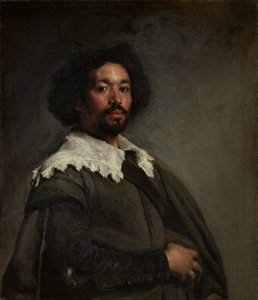
Juan de Pareja
1610 - 1670 , Spain
Quick Facts
- Birth Date: 1610
- Birth Place: Antequera, Spain
- Death Date: 1670
- Influenced By: Diego Velázquez
- Movement: Baroque
- Name: Juan de Pareja
- Nationality: Spanish
- Notable Works: The Calling of Saint Matthew