

 Preview
 Send
Send Share
Share
 Details

 Download
 Similars
 X-Ray
X-Ray Diaporama
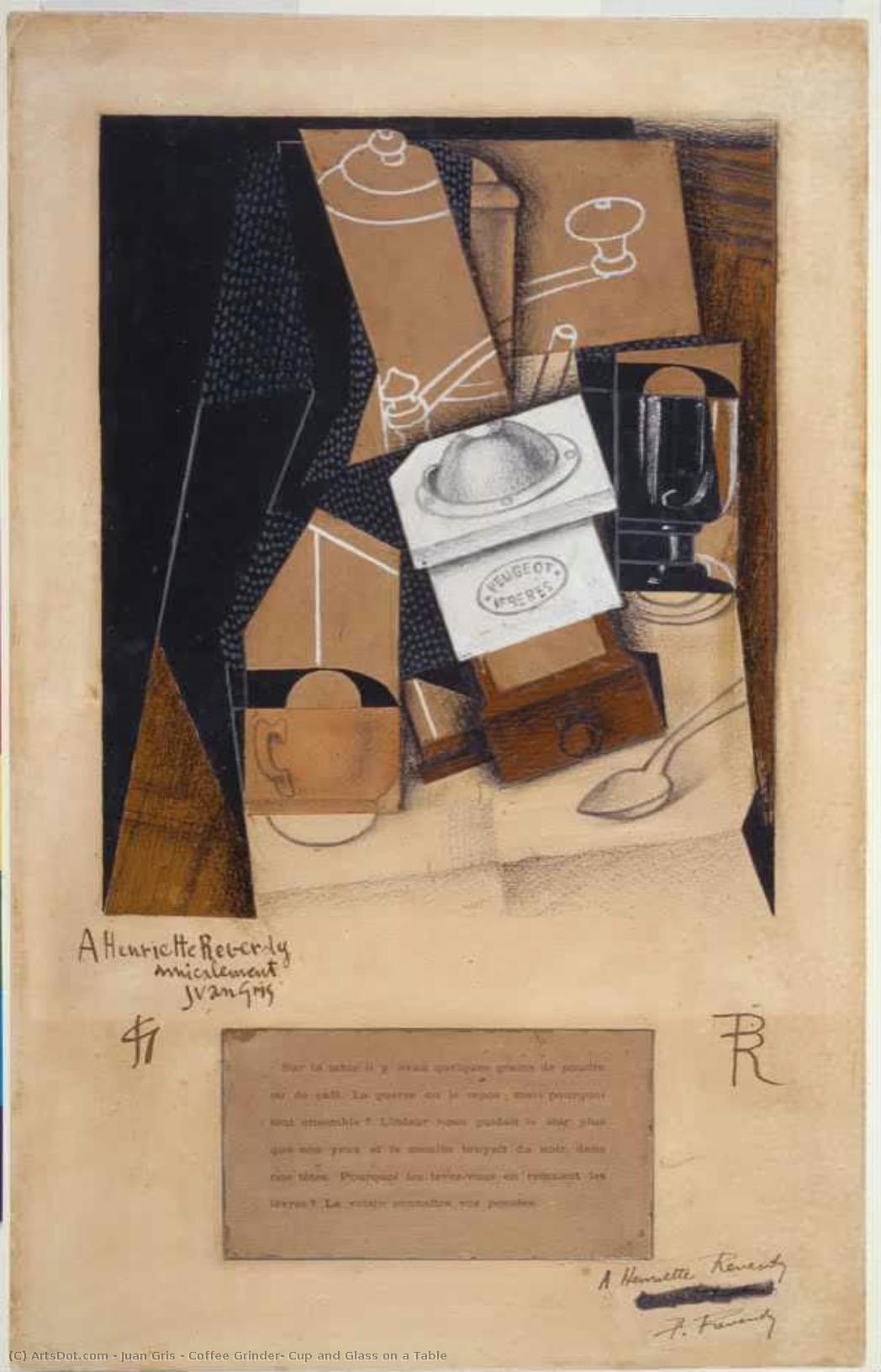
Coffee Grinder, Cup and Glass on a Table
 Acrylic On Canvas
- WallArt
- Cubist Collage
 1916
1916 29.0 x 46.0 cm
 Museo Nacional Centro de Arte Reina Sofía
 Read More
Purchase a high-resolution, enhanced digital image, far superior to the online preview.
Each file is meticulously prepared by our in-house specialists using advanced tools and expert manual retouching. We ensure every image has exceptional clarity, precise color accuracy, and fine detail.
The final file is delivered via email within 72 hours, optimized for immediate use in professional, editorial, and print environments. This is the same quality trusted by top-tier design studios, publishers, and galleries.
Digital Image
Download a high-resolution file for personal display, printing, and creative projects. ( Buy Print Buy Hand Made Painting)
Included in Every Digital Image Order
Expert Digital Delivery, Guaranteed
When you choose ArtsDot.com, you're not just getting an image - you're receiving a professionally enhanced digital artwork, crafted with precision and backed by a satisfaction guarantee. Here's everything that comes with your order, automatically:

Fast Email Delivery
Your high-resolution digital image file will be emailed to you within 72 hours of ordering - ready for immediate use.

AI-Enhanced Digital File
Your artwork is professionally optimized using advanced AI tools and manual editing, ensuring maximum detail, clarity, and color accuracy.

Free Lifetime Re-Delivery
Accidentally deleted or lost your file? No worries - we'll resend it to you anytime, free of charge.

No Import Fees - Ever
Enjoy your artwork instantly with zero customs, duties, or delivery fees - digital downloads are always tax-free.

Color Accuracy Guarantee
We ensure your digital image reflects the original colors as closely as possible using professional tools and color management.

60-Day Satisfaction Guarantee
If you're not satisfied with your digital image, we'll revise it or refund 100% within 60 days - no questions asked.

100% Money-Back Guarantee
Not satisfied? Get a full refund within 60 days of receiving your digital file - no questions asked.

Bulk Order Discounts
Buy 3 images, save 10% - Buy 5, save 15% - Buy 10+, save 20%. Great for creative projects, galleries, and agencies.
Collectible Description
A Moment of Stillness: Exploring Juan Gris’s “Coffee Grinder, Cup and Glass on a Table”
This exquisite 1916 painting by Juan Gris, titled "Coffee Grinder, Cup and Glass on a Table," offers more than just a depiction of domestic objects; it's a carefully constructed meditation on form, space, and the very nature of perception. Created during his pivotal engagement with Cubism alongside poet Pierre Reverdy – a collaboration documented in their ambitious project, Au soleil du plafond – this work embodies the radical experimentation that defined the era’s most groundbreaking artistic movements. Measuring 29 x 46 cm, it's a remarkably intimate scale, drawing the viewer into a quiet tableau of everyday life transformed through Gris’s intensely analytical and innovative lens.
The Birth of Cubist Vision: Gris and Reverdy
Juan Gris, born José Victoriano González-Pérez in Madrid in 1887, arrived at painting with an engineer's precision – a mind trained to dissect and understand the world through logical structures. His early studies under José Moreno Carbonero laid the groundwork for his later explorations, but it was his partnership with Pierre Reverdy that truly ignited his artistic revolution. Reverdy’s poems, intended to accompany Gris’s chromolithographs in Au soleil du plafond, weren't merely decorative; they were integral to the artwork’s conceptual framework. This collaborative process pushed Gris beyond simply representing objects; he was tasked with visually translating Reverdy’s poetic ideas of space and simultaneity – a core tenet of Cubism.
Deconstructing Reality: Technique and Composition
Gris's technique in "Coffee Grinder, Cup and Glass on a Table" is characterized by its deliberate fragmentation and reconstruction. The objects are not presented as unified wholes but rather broken down into geometric planes, analyzed from multiple viewpoints simultaneously. Notice the sharp angles of the coffee grinder, the flattened forms of the cup and glass, and the overlapping perspectives that create a sense of dynamic tension. The muted palette – predominantly browns, ochres, and greys – contributes to the painting’s contemplative mood, allowing the viewer's eye to focus on the intricate interplay of shapes and shadows. The inclusion of the chair in the background, slightly out of focus, subtly suggests a human presence, further grounding this abstract composition within a recognizable reality.
Symbolism and Emotional Resonance
Beyond its formal qualities, the painting carries a quiet emotional resonance. The scene evokes a sense of domestic tranquility – a moment of pause before or after a simple ritual. The coffee grinder itself, a symbol of industry and routine, is rendered with an almost sculptural quality, elevating it to something more than just a functional object. Gris’s masterful manipulation of light and shadow creates depth and volume within the flattened planes, inviting the viewer to contemplate not only the objects themselves but also the act of observation – the very process by which we construct our understanding of the world. This piece is a testament to Gris's ability to transform the mundane into something profoundly artistic, reflecting the intellectual and aesthetic currents of early 20th-century Europe.
Related Artworks
Artist Biography
A Spanish Visionary of Cubism: The Life and Art of Juan Gris
Born José Victoriano González-Pérez in Madrid in 1887, the artist who would become known as Juan Gris embarked on a journey that would place him among the most significant figures of early 20th-century art. His initial path wasn’t one immediately leading to canvas and brush; he pursued engineering at the School of Arts and Sciences, demonstrating an analytical mind that would later profoundly influence his artistic approach. Even during these formative years, a creative spark flickered – contributing drawings to local periodicals hinted at a burgeoning visual talent. It was in 1905 that he adopted the pseudonym Juan Gris, a name resonating with a newfound sense of identity and purpose as he began formal painting studies under José Moreno Carbonero. This marked a pivotal shift, setting him on a course toward artistic innovation.Parisian Awakening and the Embrace of Cubism
The year 1906 witnessed a transformative relocation to Paris, a city then pulsating with artistic energy. Gris immersed himself in this vibrant milieu, forging friendships with luminaries like Henri Matisse, Georges Braque, and Fernand Léger. He initially engaged in satirical illustration for publications such as *L'Assiette au Beurre*, honing his observational skills and developing a keen sense of visual wit. However, the magnetic pull of Pablo Picasso proved particularly influential. Around 1910, Gris began to seriously dedicate himself to painting, moving away from caricature towards the burgeoning language of Cubism. This wasn’t mere imitation; he embarked on a quest to distill the essence of form and space, seeking a new visual order. His early explorations were marked by a deliberate departure from traditional representation, embracing abstraction as a means of capturing reality's underlying structure.The Geometry of Perception: Style and Key Works
Juan Gris’s artistic output is characterized by an exceptional clarity and intellectual rigor. He didn’t simply deconstruct objects; he reconstructed them with deliberate precision, emphasizing geometric forms and a carefully considered palette. This approach led to what became known as his “crystal period,” exemplified in masterpieces like *Still Life Before an Open Window* and *Place Ravignan* (1915). These works showcase a remarkable interplay of planes and angles, creating a sense of depth and solidity while simultaneously challenging conventional notions of perspective. After 1913, Gris wholeheartedly embraced Synthetic Cubism, pioneering the use of *papier collé* – collage – incorporating real-world materials like newspaper clippings and textured papers into his compositions. This technique added another layer of complexity and tactility to his work, blurring the boundaries between painting and sculpture. Notable examples include *Guitar in front of the sea* (1925), a testament to his simplified forms and adherence to cubist principles, and *Homage à Pablo Picasso* (1912), which signaled his growing recognition within the avant-garde art world.Legacy and Lasting Influence
Juan Gris’s contribution to Cubism extends beyond mere stylistic innovation; he brought a unique intellectual depth and structural clarity to the movement. He moved past the analytical phase, towards a more organized and synthetic approach, emphasizing order and precision. His work profoundly influenced the Purist style championed by Amédée Ozenfant and Charles Edouard Jeanneret (Le Corbusier), advocating for a return to classical principles of form and composition. Gris’s emphasis on geometric forms, harmonious color palettes, and the integration of everyday objects into his art established him as a pivotal figure in 20th-century art. His legacy continues to inspire artists today, demonstrating the enduring power of Cubism and the visionary genius of Juan Gris – a Spanish master who reshaped our understanding of perception and representation.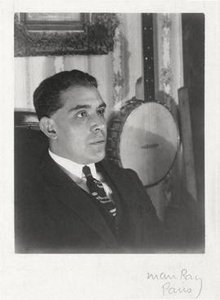
Juan Gris
1887 - 1927 , Spain
Quick Facts
- Artistic Movement Or Style: Cubism, Synthetic Cubism
- Artists Or Movements Influenced By This Artist:
- Purism
- Amédée Ozenfant
- Le Corbusier
- Artists Who Influenced This Artist:
- Pablo Picasso
- Henri Matisse
- Georges Braque
- Date Of Birth: March 23, 1887
- Date Of Death: May 11, 1927
- Full Name: José Victoriano González-Pérez
- Nationality: Spanish
- Notable Artworks:
- Guitar in front of the sea
- Homage à Pablo Picasso
- The Miller
- Portrait of Madame Josette Gris
- Place Of Birth: Madrid, Spain

