 Preview
 Send
Send Share
Share
 Details

 Download
 Similars
 X-Ray
X-Ray Diaporama
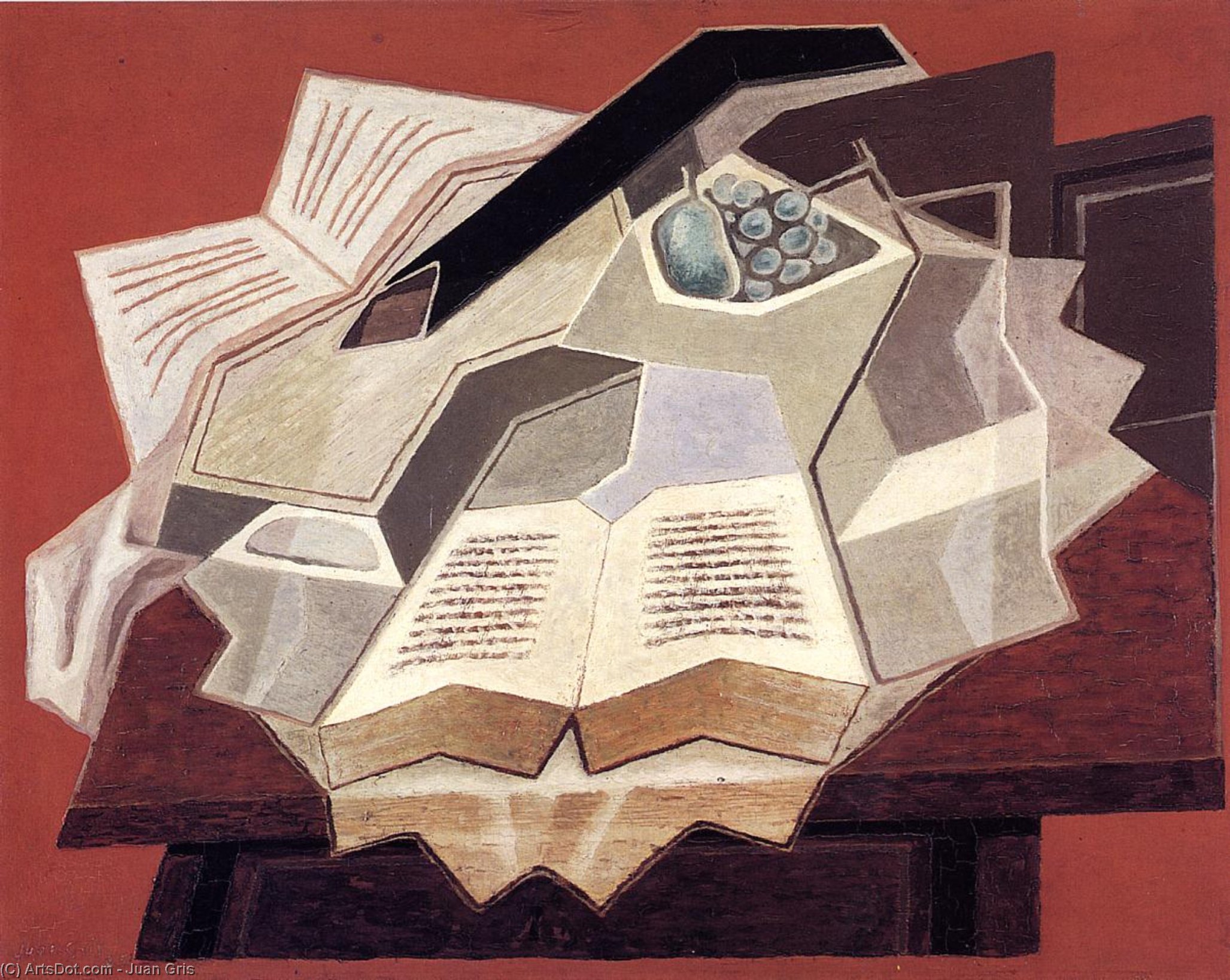
The Open Book
 Acrylic
- WallArt
- Cubist Style
 1925
1925 73.0 x 92.0 cm
 Read More
Hand Made Oil Reproduction
Hand-painted oil on canvas in your size and frame, made to order by our artists. ( Buy Print Buy Image)




P118B $10

P118H $10

P118W $10

P438Z $10

P508JH $12

P508YH $12

P805H $10

P805Z $10

P919BZ $10

P919G $10

P919XJ $10

P959ZH $10

P968JZ $12

W106C $8

W218G $10

W218JH $8

W218Y $10

W307PJ $10

W316G $10

W316PJ $8

W316Y $10

W398PJ $8

W4111J $10

W500HY $15

W500JH $15

W692G $12

W849H $8

W940BG $15

W953PJ $8




Pick from our preset sizes that match the artwork's original proportions.

You may enter your own dimensions to fit a specific frame or space. If your selected size does not match the original image's proportions, we will either crop the artwork or extend the painting with additional hand-painted elements. A digital mockup will be sent for your approval before production begins.
Please note that the on-screen preview does not reflect the actual cropping or extension. Only the mockup will accurately show the final composition.
While custom sizes are available, we recommend selecting a dimension from the predefined list to preserve the original proportions.
After order, ArtsDot.com team will email client for instructions and provide a mockup preview
Worldwide Delivery () in 3/4 weeks instead of standard 5 weeks. (16 August). No compromise on quality.

Free Worldwide Express Shipping

High-Quality Linen Canvas

Full Shipping Insurance

Customs Tax Refund Guarantee

True Color Matching Guarantee

60-Day Return Policy (Defects Only)

100% Money-Back Guarantee

Bulk Discount Offer
 Glass option is only available in size under 110 CM

The Open Book
Reproduction Medium
Reproduction Size
-


Total Price
$ 263
Artwork Description
A Window Into Cubist Innovation: Exploring Juan Gris’s “The Open Book”
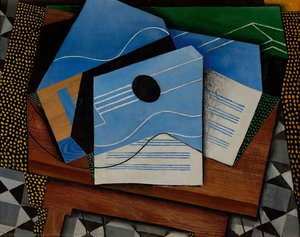
Juan Gris’s “The Open Book,” completed in 1925, stands as an emblem of the groundbreaking Cubist movement—a stylistic revolution that irrevocably altered the landscape of European art. More than just a depiction of an everyday object, this oil on canvas piece delves into the very essence of perception and representation, embodying Gris’s masterful synthesis of analytical geometry and expressive color.
- Subject Matter: The painting centers around a simple yet powerfully symbolic motif – an open book. This deliberate choice wasn't merely accidental; it served as a springboard for Gris to dissect the visual experience of reading, translating complex ideas into fragmented forms that mirrored the multifaceted nature of thought itself.
- Cubist Style: Gris’s adherence to Cubism is unmistakable. Like Picasso and Braque, he abandoned traditional perspective, opting instead for multiple viewpoints simultaneously presented on a single canvas. Geometric shapes—cubes, cylinders, cones—are meticulously arranged to create an illusion of depth and volume, challenging viewers to actively engage with the artwork.
- Technique: Gris employed a technique characterized by layering thin washes of color over textured surfaces. This meticulous approach allowed him to capture subtle tonal variations and imbue the painting with a luminous quality that contrasts sharply with the rigid geometry of its composition. The careful blending of hues contributes significantly to the overall mood—a contemplative stillness punctuated by flashes of vibrant color.
- Historical Context: Created during the height of Cubist experimentation, “The Open Book” reflects the intellectual fervor of the era. Artists were grappling with new ways of understanding reality, influenced by developments in science and philosophy. Gris’s work aligns perfectly with this broader cultural shift, representing a conscious rejection of academic conventions.
Symbolism & Emotional Impact: The open book itself symbolizes knowledge, contemplation, and the transformative power of ideas. Its fragmented representation underscores the difficulty of capturing complex concepts in visual form—a poignant reminder that art strives to convey more than just what is seen on the surface. “The Open Book” invites viewers into a dialogue about perception and interpretation, prompting them to consider how we construct our understanding of the world around us.
Where to See It: Currently housed at Kunstmuseum Bern in Switzerland, this artwork offers visitors an unparalleled opportunity to experience firsthand the brilliance of Cubist artistry. Its presence within Bern’s impressive collection underscores its significance as a cornerstone of modern art history.
Related Artworks
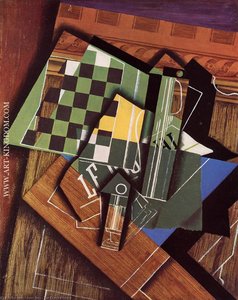
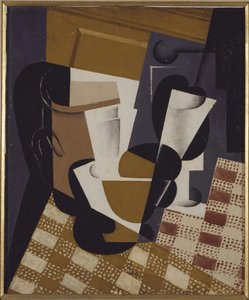
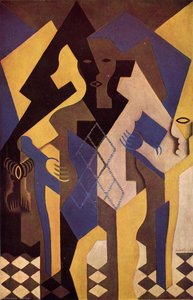
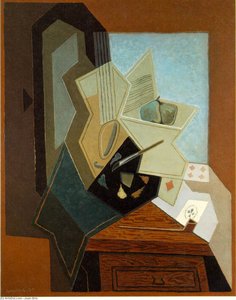
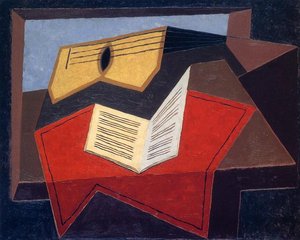
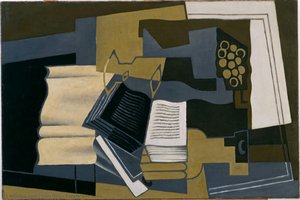
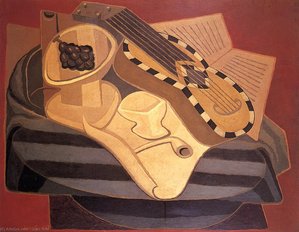
Artist Biography
A Spanish Visionary of Cubism: The Life and Art of Juan Gris
Born José Victoriano González-Pérez in Madrid in 1887, the artist who would become known as Juan Gris embarked on a journey that would place him among the most significant figures of early 20th-century art. His initial path wasn’t one immediately leading to canvas and brush; he pursued engineering at the School of Arts and Sciences, demonstrating an analytical mind that would later profoundly influence his artistic approach. Even during these formative years, a creative spark flickered – contributing drawings to local periodicals hinted at a burgeoning visual talent. It was in 1905 that he adopted the pseudonym Juan Gris, a name resonating with a newfound sense of identity and purpose as he began formal painting studies under José Moreno Carbonero. This marked a pivotal shift, setting him on a course toward artistic innovation.Parisian Awakening and the Embrace of Cubism
The year 1906 witnessed a transformative relocation to Paris, a city then pulsating with artistic energy. Gris immersed himself in this vibrant milieu, forging friendships with luminaries like Henri Matisse, Georges Braque, and Fernand Léger. He initially engaged in satirical illustration for publications such as *L'Assiette au Beurre*, honing his observational skills and developing a keen sense of visual wit. However, the magnetic pull of Pablo Picasso proved particularly influential. Around 1910, Gris began to seriously dedicate himself to painting, moving away from caricature towards the burgeoning language of Cubism. This wasn’t mere imitation; he embarked on a quest to distill the essence of form and space, seeking a new visual order. His early explorations were marked by a deliberate departure from traditional representation, embracing abstraction as a means of capturing reality's underlying structure.The Geometry of Perception: Style and Key Works
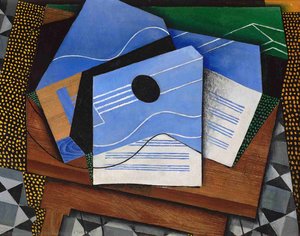
Juan Gris’s artistic output is characterized by an exceptional clarity and intellectual rigor. He didn’t simply deconstruct objects; he reconstructed them with deliberate precision, emphasizing geometric forms and a carefully considered palette. This approach led to what became known as his “crystal period,” exemplified in masterpieces like *Still Life Before an Open Window* and *Place Ravignan* (1915). These works showcase a remarkable interplay of planes and angles, creating a sense of depth and solidity while simultaneously challenging conventional notions of perspective. After 1913, Gris wholeheartedly embraced Synthetic Cubism, pioneering the use of *papier collé* – collage – incorporating real-world materials like newspaper clippings and textured papers into his compositions. This technique added another layer of complexity and tactility to his work, blurring the boundaries between painting and sculpture. Notable examples include *Guitar in front of the sea* (1925), a testament to his simplified forms and adherence to cubist principles, and *Homage à Pablo Picasso* (1912), which signaled his growing recognition within the avant-garde art world.Legacy and Lasting Influence
Juan Gris’s contribution to Cubism extends beyond mere stylistic innovation; he brought a unique intellectual depth and structural clarity to the movement. He moved past the analytical phase, towards a more organized and synthetic approach, emphasizing order and precision. His work profoundly influenced the Purist style championed by Amédée Ozenfant and Charles Edouard Jeanneret (Le Corbusier), advocating for a return to classical principles of form and composition. Gris’s emphasis on geometric forms, harmonious color palettes, and the integration of everyday objects into his art established him as a pivotal figure in 20th-century art. His legacy continues to inspire artists today, demonstrating the enduring power of Cubism and the visionary genius of Juan Gris – a Spanish master who reshaped our understanding of perception and representation.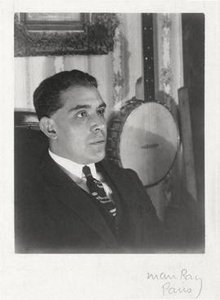
Juan Gris
1887 - 1927 , Spain
Quick Facts
- Artistic Movement Or Style: Cubism, Synthetic Cubism
- Artists Or Movements Influenced By This Artist:
- Purism
- Amédée Ozenfant
- Le Corbusier
- Artists Who Influenced This Artist:
- Pablo Picasso
- Henri Matisse
- Georges Braque
- Date Of Birth: March 23, 1887
- Date Of Death: May 11, 1927
- Full Name: José Victoriano González-Pérez
- Nationality: Spanish
- Notable Artworks:
- Guitar in front of the sea
- Homage à Pablo Picasso
- The Miller
- Portrait of Madame Josette Gris
- Place Of Birth: Madrid, Spain
Related Articles

Geometric Abstraction's 10 Defining Masterpieces | Art for Your Home - ArtsDot
Explore 10 defining masterpieces of Geometric Abstraction! Discover Kandinsky, Mondrian & Malevich’s iconic works. Find museum-quality art reproductions and curated decor ideas to elevate your home at ArtsDot.com.
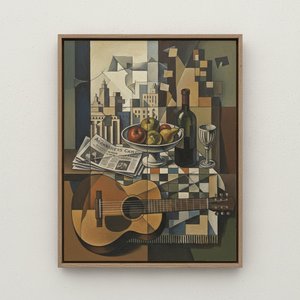
Juan Gris: Cubist Deconstruction & Synthesis – A Comprehensive Exploration
Explore the revolutionary art of Juan Gris – a master of Cubism. Discover his unique approach to deconstruction, vibrant Synthetic Cubist works, and lasting influence on modern art. Expert analysis for collectors.
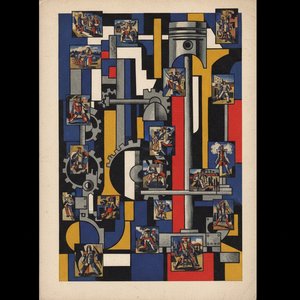
Fernand Léger's Masterpieces: 25 Iconic Paintings & The Machine Age Aesthetic | ArtsDot
Explore 25 iconic Fernand Léger paintings that defined the Machine Age & Cubism. Discover the stories behind his bold colors, geometric forms & avant-garde style. Find museum-quality art reproductions on ArtsDot.com.
Kandinsky's Masterpieces: 25 Paintings That Define Abstract Art | ArtsDot
Journey through Wassily Kandinsky's 25 most iconic abstract paintings. Explore his revolutionary use of color, form & spiritual expressionism. Find museum-quality Kandinsky reproductions and elevate your home decor with ArtsDot.com. Discover all masterpieces on ArtsDot.com!
Beyond Form & Color: Geometric Abstraction's Evolution in 20th/21st Century Art
Explore the evolution of geometric abstraction from Cubism to contemporary art. Discover key artists like Malevich & Mondrian, investment insights, and expert collecting advice at ArtsDot.