

 Send
Send Share
Share
 Details

 Download
 Similars
 Diaporama
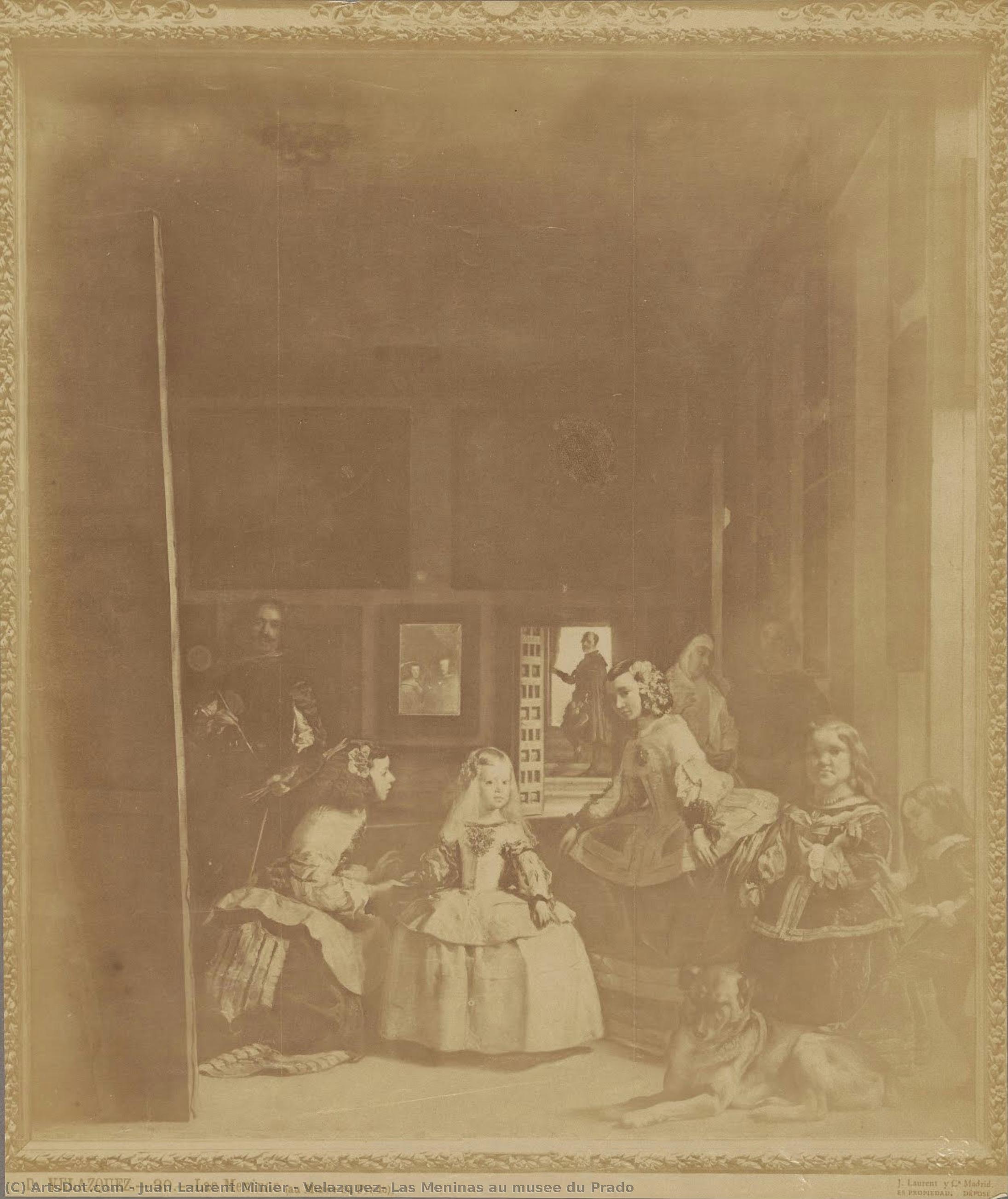
Velazquez: Las Meninas au musee du Prado
 Black and White Photography
- Photo
- Baroque
 1875
1875- 19th Century
 33.0 x 27.0 cm
 J. Paul Getty Museum
 Read More
Purchase a high-resolution, enhanced digital image, far superior to the online preview.
Each file is meticulously prepared by our in-house specialists using advanced tools and expert manual retouching. We ensure every image has exceptional clarity, precise color accuracy, and fine detail.
The final file is delivered via email within 72 hours, optimized for immediate use in professional, editorial, and print environments. This is the same quality trusted by top-tier design studios, publishers, and galleries.
Digital Image
Download a high-resolution file for personal display, printing, and creative projects. ( Buy Print Buy Hand Made Painting)
Included in Every Digital Image Order
Expert Digital Delivery, Guaranteed
When you choose ArtsDot.com, you're not just getting an image - you're receiving a professionally enhanced digital artwork, crafted with precision and backed by a satisfaction guarantee. Here's everything that comes with your order, automatically:

Fast Email Delivery
Your high-resolution digital image file will be emailed to you within 72 hours of ordering - ready for immediate use.

AI-Enhanced Digital File
Your artwork is professionally optimized using advanced AI tools and manual editing, ensuring maximum detail, clarity, and color accuracy.

Free Lifetime Re-Delivery
Accidentally deleted or lost your file? No worries - we'll resend it to you anytime, free of charge.

No Import Fees - Ever
Enjoy your artwork instantly with zero customs, duties, or delivery fees - digital downloads are always tax-free.

Color Accuracy Guarantee
We ensure your digital image reflects the original colors as closely as possible using professional tools and color management.

60-Day Satisfaction Guarantee
If you're not satisfied with your digital image, we'll revise it or refund 100% within 60 days - no questions asked.

100% Money-Back Guarantee
Not satisfied? Get a full refund within 60 days of receiving your digital file - no questions asked.

Bulk Order Discounts
Buy 3 images, save 10% - Buy 5, save 15% - Buy 10+, save 20%. Great for creative projects, galleries, and agencies.
Collectible Description
Velázquez: Las Meninas au musée du Prado – A Masterpiece of Illusion and Reflection
Diego Velázquez’s *Las Meninas*, completed in 1656, stands as arguably the pinnacle of Baroque painting and a cornerstone of Western art history. More than just a portrait of King Philip IV and his family—though undeniably that—it's an intricate exploration of perception, representation, and the artist’s role within the royal court. Situated prominently at the Museo Nacional del Prado in Madrid, this monumental canvas continues to fascinate scholars and viewers alike with its layered composition and profound psychological depth.
The Composition: A Calculated Paradox
Velázquez brilliantly employs perspective—or rather, manipulates it—to create a captivating illusion. The central figure is Infanta Margaret Theresa, surrounded by her ladies-in-waiting, creating an immediate focal point. However, the artist himself is depicted working on a large canvas in the background, subtly inviting us to consider the act of painting itself as part of the scene. Crucially, Velázquez includes a mirror reflecting the King and Queen’s faces—a daring move that disrupts conventional portraiture by placing the viewer within the frame alongside the royal family.
Style and Technique: Luminosity and Detail
Velázquez's masterful technique exemplifies the luminist style prevalent during his time. He achieves remarkable atmospheric effects through delicate brushstrokes and subtle glazing—a process where thin layers of translucent paint are applied over previous coats to build up color and luminosity. The artist’s meticulous attention to detail is evident in every element of the painting, from the textures of fabrics to the expressions on the faces of each individual. This painstaking realism contrasts beautifully with the idealized depictions favored by earlier artists.
Historical Context: Power, Courtly Ritual, and Artistic Innovation
*Las Meninas* reflects the grandeur and formality of Philip IV’s reign—a period marked by political stability and artistic patronage. Velázquez served as court painter for decades, documenting royal life with unparalleled accuracy and sophistication. The painting wasn't merely a celebration of royalty; it was also a statement about the status of art within the Habsburg court. By portraying himself at work, Velázquez subtly asserted the importance of artistic creativity and challenged prevailing notions of artistic representation.
Symbolism: Beyond Appearance – A Reflection on Reality
The mirror’s reflection is laden with symbolic significance—suggesting that we are all observers within a larger narrative. It prompts us to contemplate the relationship between artifice and reality, mirroring not only the royal family but also the viewer's gaze. Furthermore, the inclusion of dogs and other domestic animals adds an element of everyday life to the opulent setting, reminding us that even in the most formal environments, human experience remains grounded in tangible observation.
Emotional Impact: An Enduring Mystery
*Las Meninas* continues to resonate with audiences centuries later because it captures a moment of profound psychological complexity. The painting’s enigmatic gaze—particularly Velázquez's own—invites contemplation and interpretation. It is a testament to Velázquez’s genius as an artist and his ability to convey emotion through subtle visual cues, cementing its place as one of the most enduring masterpieces in Western art.
Related Artworks


Artist Biography
John Frederick Kensett: The Luminist Vision
John Frederick Kensett, born in Cheshire, Connecticut, in 1816 and passing away in 1886, stands as a pivotal figure in the development of American landscape painting. Initially apprenticed to his father’s engraving firm, Kensett’s artistic trajectory shifted dramatically towards capturing the ethereal beauty of nature – a movement he largely defined as “luminism.” This style, characterized by its delicate brushwork and emphasis on atmospheric effects, sought to depict light and color with unprecedented subtlety, moving beyond the dramatic narratives favored by the Hudson River School. His early years were marked by a deliberate rejection of engraving, fueled by a deep desire to translate his observations of the natural world onto canvas. This journey took him through England and Europe, immersing him in artistic traditions while simultaneously forging a uniquely American approach.Early Influences and European Sojourns
Kensett’s formative years were profoundly shaped by encounters with established artists and movements. Following his father's death, he spent time working as an engraver before embarking on a transformative trip to England in 1840, alongside fellow artists like John W. Casilear and Asher B. Durand. This period proved crucial; Kensett was deeply influenced by the works of the National Gallery and Dulwich College collection, absorbing the techniques of luminists such as J.M.W. Turner. His time in Paris (1840-1843) further broadened his artistic horizons. He studied at the École Préparation des Beaux-Arts, experimenting with antique sculpture and drawing from life – a deliberate contrast to the prevailing academic styles. He also engaged with a vibrant American artist community, including Thomas Cole, Benjamin Champney, and John Vanderlyn, absorbing their perspectives on capturing the essence of the American landscape. Crucially, his grandmother’s death in Hampton Court brought him back to England, where he continued to refine his skills and establish connections within the art world until 1845.Rome and the Italian Landscape
Kensett's most significant artistic development occurred during his extended sojourn in Italy (1843-1847). He spent years touring the countryside around Rome, meticulously sketching and studying the light, color, and textures of Southern Italy, Naples, Florence, and Venice. This period marked a decisive shift towards luminism, as he sought to emulate the atmospheric effects of Italian masters like Titian and Michelangelo. He established a close working relationship with George Curtis and his brothers, who introduced him to New York’s social circles and provided valuable connections within the art market. His time in Rome wasn't merely observational; it was intensely productive, resulting in a vast body of work that showcased his mastery of capturing fleeting moments of light and shadow—a hallmark of his style.Key Works and Artistic Style
Kensett’s most celebrated works exemplify the principles of luminism. *The Old Mill*, painted in 1848, is perhaps his most iconic piece, demonstrating his ability to render light and atmosphere with remarkable precision. Other notable paintings include *Twilight in the Adirondacks* (1857), *The Oxbow*, and numerous scenes depicting the Connecticut River Valley. His technique involved layering thin washes of color to create a sense of depth and luminosity, often employing a broken brushstroke to mimic the effects of reflected light. He was particularly adept at capturing the subtle nuances of atmospheric perspective, conveying the feeling of distance and air through variations in tone and color. His paintings weren’t simply representations of landscapes; they were meditations on light, time, and the sublime beauty of nature.Legacy and Historical Significance
John Frederick Kensett's contribution to American art is undeniable. He played a crucial role in establishing luminism as a distinct artistic movement, influencing generations of landscape painters who followed. His meticulous observation of nature, combined with his innovative use of color and light, elevated the status of landscape painting within the American art world. While often overshadowed by the more dramatic narratives of the Hudson River School, Kensett’s quiet, contemplative scenes offer a unique perspective on the beauty and tranquility of the American wilderness – a legacy that continues to resonate with viewers today. His work remains an important example of 19th-century American art and a testament to the power of observation and artistic vision.
juan laurent minier
1816 - 1886 , France
Quick Facts
- Artistic Movement Or Style: Luminism
- Artists Or Movements Influenced By This Artist:
- Hudson River School
- Luminism
- Artists Who Influenced This Artist:
- Asher B. Durand
- Thomas Cole
- Benjamin Champney
- Date Of Birth: 1816
- Date Of Death: 1886
- Full Name: John Frederick Kensett
- Nationality: American
- Notable Artworks:
- The Old Mill
- Twilight in the Adirondacks
- Ram's Head
- Place Of Birth: Cheshire, Connecticut

