 Preview
 Send
Send Share
Share
 Details

 Download
 Similars
 X-Ray
X-Ray Diaporama
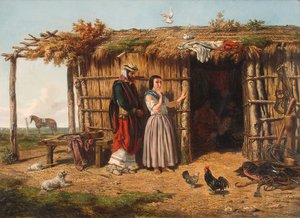
Gaucho Scene
 Sanguine
- Realism
 19th Century
 37.0 x 71.0 cm
 Colección de Arte Amalia Lacroze de Fortabat
 Read More
Hand Made Oil Reproduction
Hand-painted oil on canvas in your size and frame, made to order by our artists. ( Buy Print Buy Image)




P118B $10

P118H $10

P118W $10

P438Z $10

P508JH $12

P508YH $12

P805H $10

P805Z $10

P919BZ $10

P919G $10

P919XJ $10

P959ZH $10

P968JZ $12

W106C $8

W218G $10

W218JH $8

W218Y $10

W307PJ $10

W316G $10

W316PJ $8

W316Y $10

W398PJ $8

W4111J $10

W500HY $15

W500JH $15

W692G $12

W849H $8

W940BG $15

W953PJ $8




Pick from our preset sizes that match the artwork's original proportions.

You may enter your own dimensions to fit a specific frame or space. If your selected size does not match the original image's proportions, we will either crop the artwork or extend the painting with additional hand-painted elements. A digital mockup will be sent for your approval before production begins.
Please note that the on-screen preview does not reflect the actual cropping or extension. Only the mockup will accurately show the final composition.
While custom sizes are available, we recommend selecting a dimension from the predefined list to preserve the original proportions.
After order, ArtsDot.com team will email client for instructions and provide a mockup preview
Worldwide Delivery () in 3/4 weeks instead of standard 5 weeks. (28 August). No compromise on quality.

Free Worldwide Express Shipping

High-Quality Linen Canvas

Full Shipping Insurance

Customs Tax Refund Guarantee

True Color Matching Guarantee

60-Day Return Policy (Defects Only)

100% Money-Back Guarantee

Bulk Discount Offer
 Glass option is only available in size under 110 CM

Gaucho Scene
Reproduction Medium
Reproduction Size
-


Total Price
$ 263
A Journey Through the Argentine Pampa
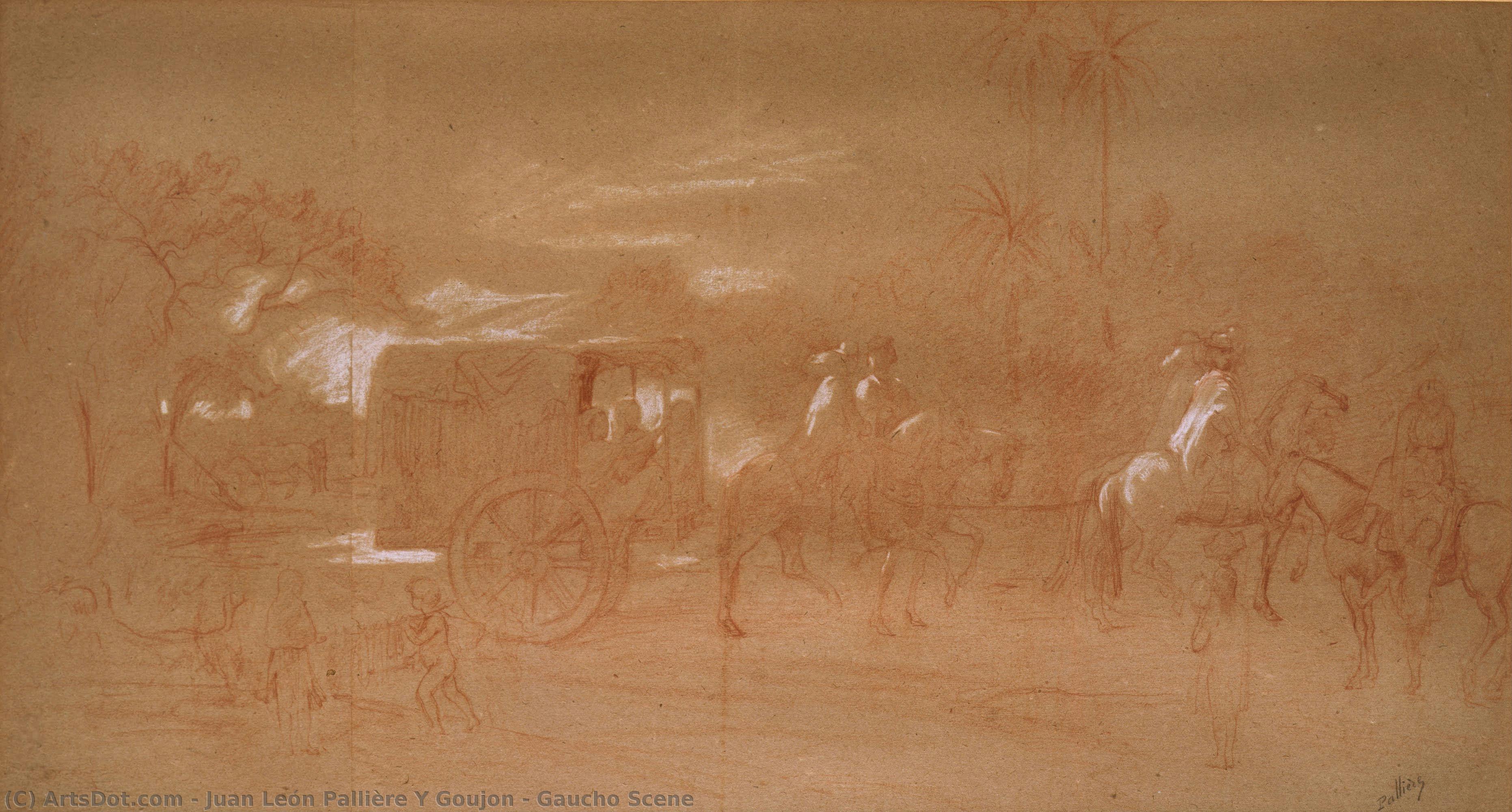
In the evocative masterpiece Gaucho Scene, the viewer is transported into the heart of the Argentine wilderness, where the rugged spirit of the pampa comes to life through the masterful hand of Juan León Pallière y Goujon. This captivating work captures a moment of transient movement, depicting a wagon pulled by four sturdy horses, their riders draped in traditional ponchos that flutter with the rhythm of the journey. The composition is a delicate dance of figures and landscape; to one side, a mother on horseback tenderly lifts her son toward the group, a poignant gesture of familial connection amidst the vastness of the plains. Nearby, two children wander through the dust, their small forms grounding the epic scale of the scene with a sense of human vulnerability and innocence.
The artist’s technique breathes life into every element of this pastoral tableau. Utilizing a style that suggests the rapid, spontaneous energy of a sketch, Pallière captures the essence of motion. The presence of various tree specimens, including notable palms, provides a structural rhythm to the landscape, while a distant herd of cattle rests in the cool shade, adding layers of depth and life to the horizon. There is a profound sense of atmosphere here—a mixture of the heat of the desert sun and the cooling shadows of the foliage—that invites the observer to step directly into the dust and the wind of the nineteenth-century frontier.
The Soul of the Gaucho Tradition
Beyond its mere depiction of a traveling group, Gaucho Scene serves as a historical window into a vanishing way of life. The painting is steeped in the symbolism of the gaucho—the legendary horsemen of South America who embodied independence, resilience, and a deep bond with the land. Through the careful rendering of the riders' attire and the heavy, rhythmic movement of the wagon, Pallière pays homage to the cultural identity of Argentina. The scene is not merely an observation of travel, but a celebration of camaraderie and the shared struggle of life on the edge of civilization.
For the discerning collector or interior designer, this artwork offers more than just visual beauty; it provides a narrative anchor for any space. The earthy tones and the dynamic composition make it an ideal centerpiece for rooms that seek to evoke warmth, history, and a sense of adventure. Whether placed in a sophisticated study or a grand living area, this reproduction brings with it the timeless allure of the Argentine plains, offering a window into a world where every journey is an epic tale of survival and spirit.
Related Artworks
Artist Biography
A Wanderer of the Americas: The Life and Vision of Juan León Pallière
The story of Juan León Pallière y Goujon is one of movement, cultural synthesis, and a profound romantic connection to the vast landscapes of the South American continent. Born in Rio de Janeiro in 1823 to French parents, Pallière’s early life was shaped by the cosmopolitan elegance of Europe. The son of Armand Julien Pallière, a celebrated painter to the Brazilian imperial court, his artistic lineage was steeped in academic rigor from birth. After traveling through Europe as a young boy and entering the prestigious workshop of François-Éduard Picot in Paris, he developed a technical mastery that would later serve as the foundation for his most evocative works. However, it was not the grand salons of Paris or the classical traditions of Rome that truly ignited his spirit, but rather the rugged, untamed beauty of the Americas.
Pallière’s arrival in the Rio de la Plata region in 1855 marked a transformative epoch in his career. While he had been trained in the disciplined halls of the Académie des Beaux-Arts, his time spent traversing Argentina and Chile allowed him to abandon the rigid constraints of classical painting in favor of a more soulful, romantic approach. Between 1855 and 1866, his travels took him through a mosaic of landscapes—from the bustling streets of Rosario and Mendoza to the soaring heights of the Andes and the distant reaches of Tucumán. This period of wandering was not merely a physical journey but an artistic metamorphosis; he began to document the pulse of rural life, capturing the customs, traditions, and the very essence of the gaucho culture with an intimacy that few of his contemporaries could match.
The Romantic Lens: Capturing the Argentine Soul
What distinguishes Pallière from other itinerant artists of the nineteenth century was his ability to blend a sophisticated European technique with a deep, empathetic observation of local life. He did not merely paint landscapes; he painted the drama inherent in the human relationship with nature. His work often reflects the "grandeur of nature" that he so frequently noted in his personal journals, using light and shadow to mitigate the sorrows of a harsh environment. Whether through delicate watercolors, precise lithographs, or sweeping oil paintings, Palliente sought to create a graphic record of a nation in transition.
His repertoire is characterized by several key thematic elements:
- Historical Narrative: He possessed a unique talent for dramatic storytelling, as seen in works like the Murder of Manuel Vicente Maza, where he utilized historical tension to engage the viewer.
- Rural Customs: His depictions of the gaucho and the daily rhythms of the countryside provided a vital ethnographic record of mid-nineteenth-century Argentina.
- The Sublime Landscape: Inspired by the scientific explorations of figures like Alexander von Humboldt, Pallière captured the majestic and often intimidating scale of the South American wilderness.
- Orientalist Influence: His travels through Morocco and Spain infused his work with a sense of the exotic, allowing him to bridge the gap between local American themes and the broader Romantic trends of the era.
Legacy and Historical Significance
The historical significance of Juan León Pallière lies in his role as a pioneer of Argentine national identity through art. While other European painters of his time remained somewhat detached from the local reality, Pallière’s work helped consolidate the genre of rural customs within the national pictorial language. He moved beyond the mere imitation of foreign styles to create something uniquely South American—a visual poetry that celebrated the ruggedness and the dignity of the people inhabiting the vast plains and mountains.
Though his time in Argentina was relatively brief, the impact of his prolific output remains indelible. His sketches, journals, and paintings served as a bridge between the old world and the new, offering a window into a period of profound social and territorial formation. Today, his work stands not only as a testament to his individual mastery but as a vital piece of the cultural mosaic that defines the artistic heritage of Argentina and Brazil. Through his eyes, we see a continent defined by its breathtaking scale and the resilient spirit of those who call its wild frontiers home.
juan león pallière y goujon
1850 - 1926 , Argentina
Quick Facts
- Artistic Movement Or Style: Miniaturist
- Artists Who Influenced This Artist: ['Henry Wyatt']
- Date Of Birth: 1784
- Date Of Death: 1850
- Full Name: Sarah Biffin
- Nationality: British
- Notable Artworks:
- Lady Godiva
- Self-Portrait (1830)
- Self-Portrait (1850)
- Place Of Birth: East Quantoxhead, Somerset
Related Articles

John Constable's Masterpieces: Explore 25 Iconic Landscapes for Your Home
Journey through John Constable's 25 most celebrated landscapes. Explore Romanticism, Dedham Vale & his masterful use of light in iconic paintings like 'Hay Wain'. Find museum-quality art reproductions and elevate your home decor on ArtsDot.com.

Romantic Landscapes: 10 Masterpieces for Your Home | ArtsDot
Journey through 10 Romantic landscape masterpieces by Friedrich, Turner & Cole. Explore emotional art, sublime nature scenes & iconic 19th-century paintings. Find museum-quality reproductions for your home at ArtsDot.com – discover the full collection online!

Evocations of Place: A Historical Journey Through Landscape Art
Explore the rich history of landscape art with ArtsDot. Discover renowned artists, movements like Impressionism & Romanticism, and expert guidance for collecting timeless pieces. Find your perfect serene escape today!

Evocations of Place: A Historical Journey Through Landscape Art
Explore the rich history of landscape art with ArtsDot. Discover renowned artists, movements like Impressionism & tonalism, and expert guidance for collecting timeless pieces. Find your perfect serene escape today!
Evoking Nature's Sublime: A Comprehensive Exploration of 19th-Century Landscape Painting
Explore the captivating world of 19th-century landscape painting! Discover renowned artists like Friedrich & Monet, key movements, and find the perfect artwork to bring nature's serenity into your home. Expert insights at ArtsDot.