 Preview
 Send
Send Share
Share
 Details

 Download
 Similars
 X-Ray
X-Ray Diaporama
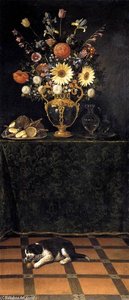
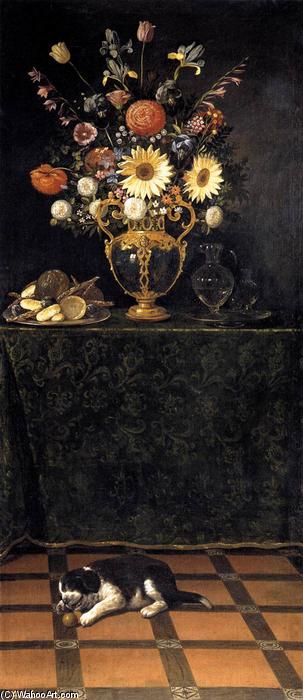
Still Life with a Puppy
 Oil On Canvas
- WallArt
- Baroque
 1625
1625 228.0 x 95.0 cm
 Museo del Prado
 Read More
Giclée / Art Print
Museum-quality giclée or canvas print with fast production and flexible finish options. ( Buy Hand Made Painting Buy Image)




P118B $10

P118H $10

P118W $10

P438Z $10

P508JH $12

P508YH $12

P805H $10

P805Z $10

P919BZ $10

P919G $10

P919XJ $10

P959ZH $10

P968JZ $12

W106C $8

W218G $10

W218JH $8

W218Y $10

W307PJ $10

W316G $10

W316PJ $8

W316Y $10

W398PJ $8

W4111J $10

W500HY $15

W500JH $15

W692G $12

W849H $8

W940BG $15

W953PJ $8




Pick from our preset sizes that match the artwork's original proportions.

You may enter your own dimensions to fit a specific frame or space. If your selected size does not match the original image's proportions, we will either crop the artwork or extend the image with a mirrored or solid-fill edge. A digital mockup will be sent for your approval before production begins.
Please note that the on-screen preview does not reflect the actual cropping or extension. Only the mockup will accurately show the final composition.
While custom sizes are available, we recommend selecting a dimension from the predefined list to preserve the original proportions.
Worldwide Delivery () in 2 weeks instead of standard 4/5 weeks. (23 August)

Free Worldwide Express Shipping

High-Quality Linen Canvas

Full Shipping Insurance

Customs Tax Refund Guarantee

True Color Matching Guarantee

60-Day Return Policy (Defects Only)

100% Money-Back Guarantee

Bulk Discount Offer
 Glass option is only available in size under 110 CM

Still Life with a Puppy
Giclée / Art Print
Reproduction Size
-


Total Price
$ 63
Collectible Description
The Quiet Majesty of Juan van der Hamen
Juan van der Hamen y León’s “Still Life with a Puppy,” painted in 1625, isn't merely a depiction of objects arranged upon a table; it’s a carefully constructed tableau designed to evoke a profound sense of serenity and timeless beauty. Housed within the hallowed halls of the Museo del Prado in Madrid, this oil on canvas work transcends its humble subject matter – a vase of flowers, a golden vessel, and a slumbering dog – to become a poignant meditation on the harmony between nature, domesticity, and the fleeting passage of time. The painting’s power lies not in dramatic gesture or vibrant color, but rather in its exquisite restraint, a testament to van der Hamen's mastery of light, shadow, and the subtle nuances of texture.
Van der Hamen was a pivotal figure in the development of *bodegones*, the still life genre that flourished in 17th-century Madrid. He skillfully inherited and refined the traditions established by Flemish masters like Peter Paul Rubens and Jan Bruegel the Elder, adapting their techniques to the Spanish Baroque aesthetic. Unlike earlier depictions which often emphasized opulent luxury, van der Hamen’s work frequently explored themes of simplicity and quiet contemplation, reflecting a shift in artistic sensibilities towards a more introspective approach.
A Symphony of Light and Color
The painting's composition is remarkably balanced, drawing the eye to the central focus: the golden vase overflowing with an array of blossoms. Van der Hamen’s use of light is particularly noteworthy – it’s diffused and gentle, bathing the scene in a soft, almost ethereal glow. He masterfully employs *chiaroscuro*, contrasting areas of intense illumination with deep shadows to create a sense of depth and volume. The flowers themselves are rendered with astonishing detail; each petal appears delicately brushed, capturing their velvety texture and subtle variations in color. The dog, nestled peacefully on the floor, is not merely an accessory but a vital element of the composition, its relaxed posture contributing to the overall atmosphere of tranquility.
Notice how the artist subtly integrates the background – the dark curtain – to further enhance the sense of depth and create a visual frame for the still life. This technique, common in Baroque painting, directs the viewer’s attention towards the foreground objects while simultaneously suggesting an infinite space beyond. The color palette is restrained yet sophisticated, dominated by warm golds, rich reds, and muted greens, creating a harmonious and visually pleasing effect.
Symbolism and the Language of Still Life
Still life paintings of this era were often laden with symbolic meaning. While “Still Life with a Puppy” appears deceptively simple on the surface, it’s rich in potential interpretations. The golden vase, frequently associated with wealth and prosperity, could represent earthly pleasures and material possessions. The flowers themselves – lilies, roses, and violets – each carry their own symbolic weight: lilies for purity and innocence, roses for love and beauty, and violets for humility and modesty. The puppy, a symbol of childhood and vulnerability, adds an element of tenderness to the scene.
The dog’s peaceful slumber suggests a desire for rest and respite from worldly concerns – a quiet invitation to contemplate the beauty of the present moment. Van der Hamen's skill lies in his ability to imbue these seemingly mundane objects with profound emotional resonance, transforming them into enduring symbols of human experience.
A Timeless Reflection
“Still Life with a Puppy” is more than just a beautiful painting; it’s a window into the artistic sensibilities of 17th-century Spain. Its quiet elegance and profound symbolism continue to captivate viewers centuries later, offering a moment of respite from the complexities of modern life. Reproductions of this masterpiece capture the essence of van der Hamen's vision, allowing us to appreciate the subtle details and emotional depth of this remarkable work. It’s a piece that speaks volumes without uttering a single word, a testament to the enduring power of art to evoke beauty, contemplation, and a sense of timeless tranquility.
Related Artworks
Artist Biography
The Architect of Stillness
In the vibrant, sun-drenched atmosphere of 17th-century Madrid, a new visual language was being forged, and at its heart stood Juan van der Hamen y León. While the era is often remembered for its grand religious epics and sweeping historical dramas, Van der Hamen achieved immortality through a much more intimate medium: the bodegón. During the 1620s, he emerged as a transformative figure, elevating the still life from simple culinary documentation to a sophisticated genre of profound symbolic depth and technical mastery. His ability to capture the quiet dignity of inanimate objects allowed him to command the attention of the Spanish crown, earning him prestigious positions as an unsalaried painter to the courts of both Philip III and Philip IV. Through his brush, the humble textures of everyday life were transformed into objects of royal contemplation.A Heritage of Precision and Versatility
The artist’s unique aesthetic was deeply rooted in a complex and rich lineage that blended Northern European precision with Spanish soul. Born in Madrid around 1596, he was the son of Jan van der Hamen, a Flemish courtier, and Dorotea Witman Gómez de León, whose noble Toledan ancestry provided him with deep Spanish roots. This fusion of Flemish meticulousness and Spanish dramatic sensibility became the hallmark of his technique. While he is most celebrated for his still lifes, Van der Hamen was a remarkably versatile talent, refusing to be confined by a single subject matter. His prolific output spanned a wide array of disciplines, including:- Religious History Paintings created for the grand churches and convents of Spain.
- Landscapes and Portraits which demonstrated his command over light, atmosphere, and human character.
The Legacy of a Brief Brilliance
Despite the tragic brevity of his life, which ended in 1631 at the age of only thirty-five, Van der Hamen’s impact on the Spanish Baroque cannot be overstated. He did not merely paint objects; he orchestrated them. In his works, one finds a breathtaking interplay of light and shadow, where the delicate translucency of glassware meets the heavy, tactile reality of earthenware and ripe fruit. His mastery of texture and composition set a standard that would influence generations of Spanish painters to come. Though his career was a fleeting moment in history, the silent, beautiful worlds he created continue to resonate, offering a window into the refined elegance and profound stillness of a golden age in Spanish art. He remains a master who taught us that even in the most motionless subject, there is a life waiting to be discovered.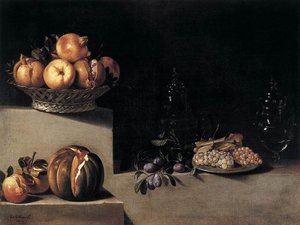
juan van der hamen y leon
1596 - 1631
Quick Facts
- Artistic Movement Or Style: Still life (Bodegones)
- Artists Or Movements Influenced By This Artist: Popularized Madrid still life
- Date Of Birth: 1596
- Date Of Death: 1631
- Full Name: Juan van der Hamen y León
- Nationality: Spanish
- Place Of Birth: Madrid, Spain
Related Articles
Early Netherlandish Masters: 10 Paintings That Revolutionized Art & Decor
Journey into the Early Netherlandish Renaissance! Explore 10 iconic paintings by Jan van Eyck, Rogier van der Weyden & more. Discover stunning detail, symbolism, and oil painting techniques. Find museum-quality art reproductions for your home at ArtsDot.com.
Hugo van der Goes: Devotion, Innovation & the Psychological Depth of Early Netherlandish Painting
Explore the revolutionary art of Hugo van der Goes – a master of Early Netherlandish painting renowned for his dramatic realism, psychological depth & profound influence on Renaissance artists. Discover his iconic works and lasting legacy.

Rembrandt's Masterpieces: Explore 25 Iconic Paintings & Prints | ArtsDot
Journey through Rembrandt van Rijn's 25 most iconic paintings & etchings. Explore Dutch Golden Age masterpieces, dramatic chiaroscuro, and timeless portraits. Find museum-quality art reproductions to elevate your home decor on ArtsDot.com.

Early Netherlandish Masters: 10 Paintings That Revolutionized Art & Decor
Journey into the world of Early Netherlandish painting! Explore 10 masterpieces by Jan van Eyck, Rogier van der Weyden & more. Discover stunning detail, symbolism & Renaissance art for your home decor. Find museum-quality reproductions on ArtsDot.com
Abraham Hendricksz van Beyeren: Pioneering Dutch Still Life & the Banquet Tradition
Explore the captivating world of Dutch Golden Age still life with Abraham van Beyeren. Discover his innovative techniques, symbolic banquet scenes & lasting influence on art history. Learn about collecting these masterpieces.