 Preview
 Send
Send Share
Share
 Details

 Download
 Similars
 X-Ray
X-Ray Diaporama
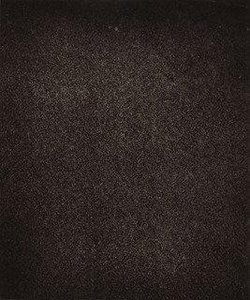
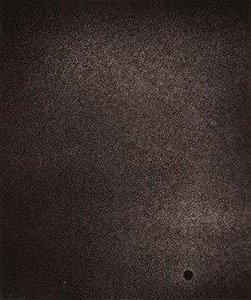
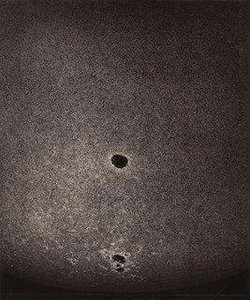
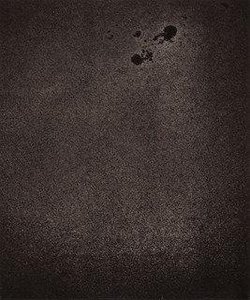
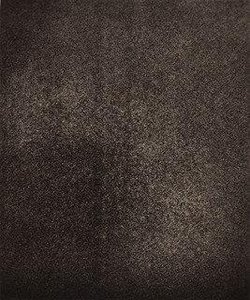
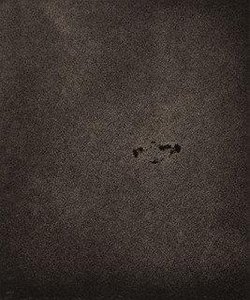
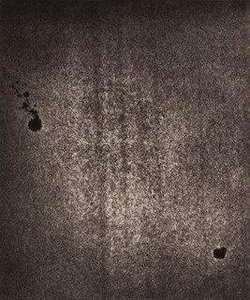
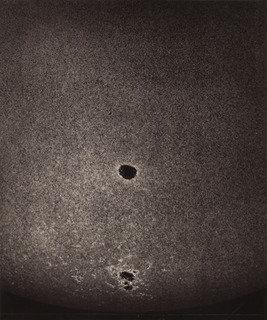
Région Centrale (Taches, Facules bord), April 20,1893, 6h 45m 25s
 1877
1877 54.0 x 45.0 cm
 Read More
Giclée / Art Print
Museum-quality giclée or canvas print with fast production and flexible finish options. ( Buy Hand Made Painting Buy Image)




































Pick from our preset sizes that match the artwork's original proportions.

You may enter your own dimensions to fit a specific frame or space. If your selected size does not match the original image's proportions, we will either crop the artwork or extend the image with a mirrored or solid-fill edge. A digital mockup will be sent for your approval before production begins.
Please note that the on-screen preview does not reflect the actual cropping or extension. Only the mockup will accurately show the final composition.
While custom sizes are available, we recommend selecting a dimension from the predefined list to preserve the original proportions.
Worldwide Delivery () in 2 weeks instead of standard 4/5 weeks. (22 August)

Free Worldwide Express Shipping

High-Quality Linen Canvas

Full Shipping Insurance

Customs Tax Refund Guarantee

True Color Matching Guarantee

60-Day Return Policy (Defects Only)

100% Money-Back Guarantee

Bulk Discount Offer
 Glass option is only available in size under 110 CM

Région Centrale (Taches, Facules bord), April 20,1893, 6h 45m 25s
Giclée / Art Print
Reproduction Size
-


Total Price
$ 63
Related Artworks









Artist Biography
The Celestial Eye: The Life and Legacy of Jules Janssen
In the grand tapestry of nineteenth-century discovery, few figures occupy a space as uniquely luminous as Jules Janssen. While history often separates the rigorous precision of the scientist from the expressive soul of the artist, Janssen’s life was a seamless bridge between the two. Born in Paris in 1824, he did not merely observe the heavens; he sought to capture their very essence through the burgeoning medium of photography. His journey began within the disciplined halls of the École Polytechnique, where the foundations of mathematics and physics provided him with the intellectual tools to decode the universe. Yet, it was his profound fascination with the sun—a celestial furnace of light and mystery—that would drive him to pioneer a new way of seeing, blending the empirical with the visual.
The essence of Janssen’s contribution lies in his ability to transform fleeting astronomical phenomena into permanent, tangible records. Alongside his collaborator Pierre Petit, he developed the revolutionary Janssen-Petit telescope, an instrument that eschewed traditional refracting lenses in favor of concave mirrors. This technical mastery allowed him to harvest sunlight with unprecedented efficiency, revealing the intricate textures of the solar surface. Through this lens, the sun ceased to be a distant, featureless orb and became a dynamic landscape of granulation and sunspots. His work documented the convective cells of the photosphere, capturing patterns that suggested a living, breathing atmosphere of fire and magnetism.
Pioneering the Captured Moment
Beyond the study of solar anatomy, Janssen’s legacy is inextricably linked to the birth of chronophotography. He possessed an artist's intuition for movement, recognizing that time itself could be layered upon a single image. By photographing successive moments of solar activity, he created a primitive yet profound form of motion study, allowing the scientific community to witness the rhythmic pulsations of the sun’s chromosphere. This technique did more than record data; it introduced a new aesthetic language of temporal depth, where the distinction between a single moment and a duration began to blur.
His achievements were not merely technical but deeply foundational to the field of astrophysics. Janssen is credited with helping to uncover the gaseous nature of the solar chromosphere and played a pivotal role in the identification of helium, an element that would forever change our understanding of cosmic composition. His observations regarding how solar radiation might influence terrestrial weather patterns demonstrated a visionary grasp of the interconnectedness of our solar system—a concept that remains at the heart of modern climate science.
A Lasting Impression on Science and Art
The historical significance of Jules Janssen extends far beyond the archives of the Société astronomique de France. He stands as a precursor to the modern era, where the camera serves as both an instrument of truth and a tool of profound beauty. His "photographs" of the sun—often viewed today through the lens of abstract expressionism—possess a raw, textured quality that evokes the primordial forces of nature. To look upon his studies of Région Centrale is to witness the intersection of human curiosity and cosmic grandeur.
As we reflect on his life, we see a man who refused to be confined by the boundaries of a single discipline. His work remains a testament to the power of observation:
- The Synthesis of Disciplines: Merging the mathematical rigor of physics with the visual storytelling of photography.
- Technological Innovation: The creation of reflective solar telescopes that redefined solar observation.
- Scientific Discovery: Contributing to the fundamental understanding of the sun's gaseous atmosphere and the element helium.
- Visual Legacy: Pioneering chronophotography, which captured the fluid dynamics of the heavens for eternity.
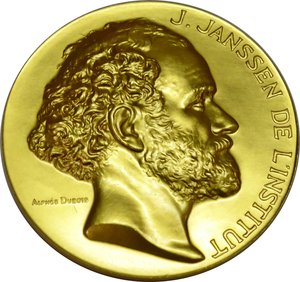
jules janssen
1824 - 1907
Quick Facts
- Artistic Movement Or Style: Early Chronophotography
- Date Of Birth: 1824
- Date Of Death: 1907
- Full Name: Jules Janssen
- Nationality: French
- Notable Artworks:
- Région Centrale (June, 10 1887)
- Région Centrale (March 25,1893)
- Région Central (Granulations)
- Place Of Birth: Paris, France