 Preview
 Send
Send Share
Share
 Details

 Download
 Similars
 X-Ray
X-Ray Diaporama
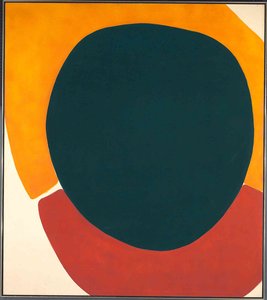
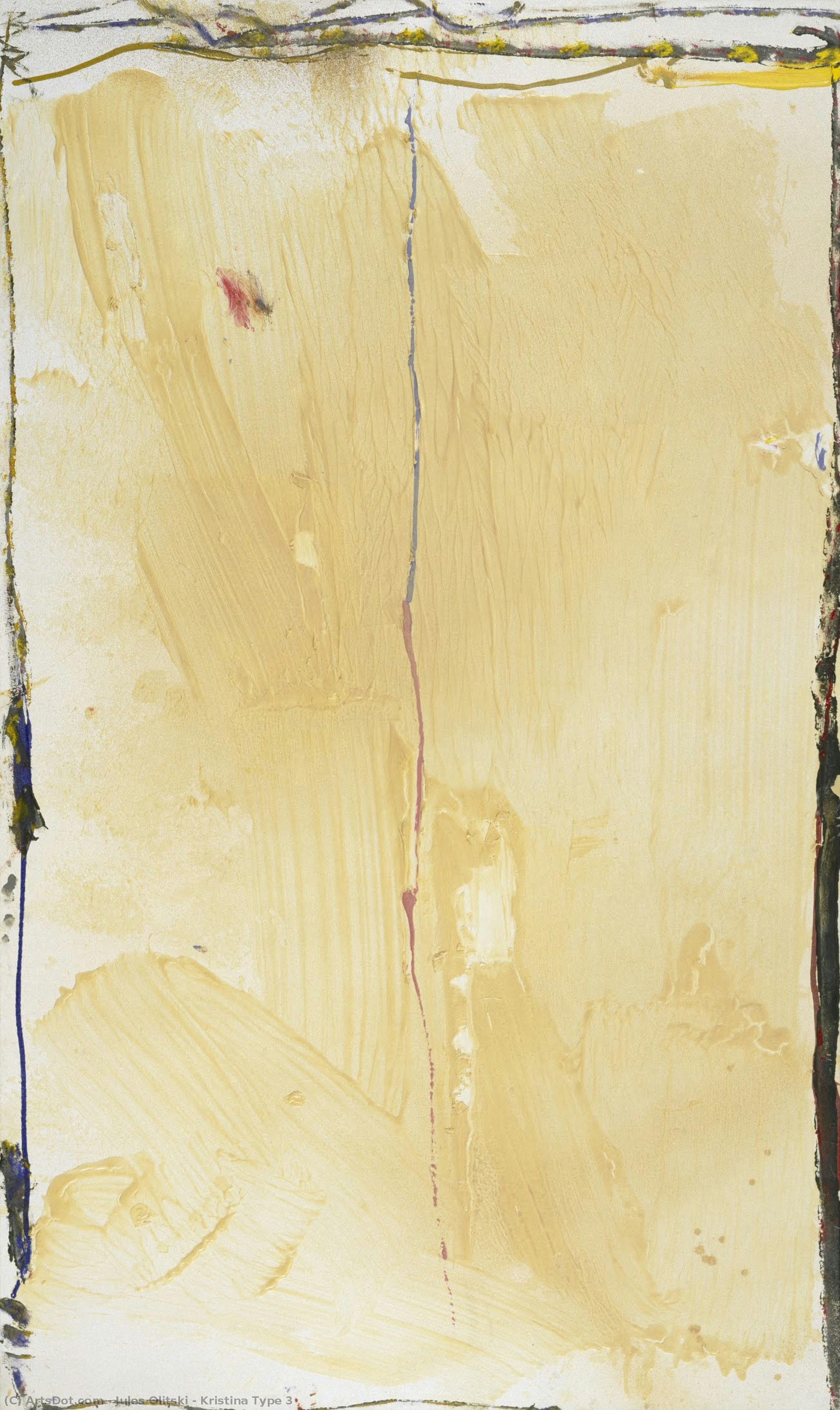
Kristina Type 3
 Acrylic On Canvas
- WallArt
- Color Field Painting
 Modern
 292.0 x 172.0 cm
 Chrysler Museum of Art
 Read More
Giclée / Art Print
Museum-quality giclée or canvas print with fast production and flexible finish options. ( Buy Hand Made Painting Buy Image)




































Pick from our preset sizes that match the artwork's original proportions.

You may enter your own dimensions to fit a specific frame or space. If your selected size does not match the original image's proportions, we will either crop the artwork or extend the image with a mirrored or solid-fill edge. A digital mockup will be sent for your approval before production begins.
Please note that the on-screen preview does not reflect the actual cropping or extension. Only the mockup will accurately show the final composition.
While custom sizes are available, we recommend selecting a dimension from the predefined list to preserve the original proportions.
Worldwide Delivery () in 2 weeks instead of standard 4/5 weeks. (17 August)

Free Worldwide Express Shipping

High-Quality Linen Canvas

Full Shipping Insurance

Customs Tax Refund Guarantee

True Color Matching Guarantee

60-Day Return Policy (Defects Only)

100% Money-Back Guarantee

Bulk Discount Offer
 Glass option is only available in size under 110 CM

Kristina Type 3
Giclée / Art Print
Reproduction Size
-


Total Price
$ 63
Collectible Description
A Symphony of Color and Light
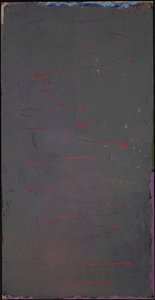
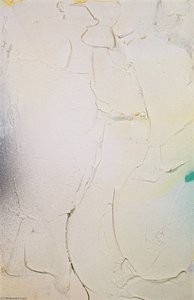
In the vast landscape of mid-century abstraction, few works capture the ethereal essence of light as vibrantly as Jules Olitski’s Kristina Type 3. This monumental masterpiece, measuring an imposing 292 x 172 cm, serves as a profound testament to the power of Color Field painting. At first glance, the viewer is greeted by a radiant, sun-drenched yellow expanse that seems to vibrate against the retina. In the heart of this luminous field lies a stark, white central canvas, creating a focal point that feels less like a physical object and perhaps more like a window into a pure, unadulterated dimension of light. The composition is punctuated by deliberate, rhythmic red spots that dance across the yellow background, providing a necessary tension and visual pulse that prevents the eye from simply drifting away into the void.
The technique employed in this work reflects Olitski’s revolutionary approach to the medium of acrylic on canvas. Eschewing the heavy, impasto textures of traditional expressionism, Olitski utilized methods that allowed color to appear atmospheric and weightless. Through a sophisticated layering process, he achieved a sense of depth where the colors do not merely sit upon the surface but seem to emanate from within it. This mastery of tonal subtlety—a skill rooted in his early fascination with the psychological depth of Rembrandt—allows Kristina Type 3 to shift its mood depending on the lighting of the room, making it a dynamic presence in any curated space.
Historical Resonance and Emotional Depth
To understand the emotional gravity of this piece, one must consider the journey of the artist himself. Born in Ukraine amidst the turbulent shadows of Soviet upheaval, Olitski brought a unique resilience to the New York art scene. His transition from the structured world of his youth to the liberated, experimental atmosphere of post-war America is mirrored in the liberation of his brushwork. Kristina Type 3 represents the pinnacle of this evolution, where the artist moves beyond representational forms to explore the raw, emotional potential of pure pigment. The painting does not tell a story through figures or landscapes; instead, it tells a story of energy, expansion, and the triumph of light over darkness.
For the discerning collector or interior designer, this artwork offers more than mere decoration; it provides an atmospheric anchor. The bold interplay between the warmth of the yellow and the sharp vitality of the red spots creates a sophisticated energy that can energize a modern gallery or provide a luminous centerpiece for a luxury residential suite. As a high-quality reproduction, capturing the delicate transitions and the brilliant saturation of Olitski’s original vision allows the spirit of Color Field painting to inhabit contemporary environments, inviting a sense of peace, introspection, and awe into the home.
Related Artworks


Artist Biography
The Luminous Legacy of Jules Olitski
The story of Jules Olitski is one of profound transformation, a journey that began in the turbulent shadows of Soviet Ukraine and culminated in the radiant, weightless expanses of American abstraction. Born Jevel Demikovsky in 1922 within the Snizhne region, his early life was marked by the heavy hand of political upheaval. The execution of his father during the era of Stalinist repression left an indelible mark on the young artist, instilling a resilience that would later define his creative spirit. Emigrating to the United States as a child with his mother and grandmother, Olitski found a new home in Brooklyn, where the vibrant, pulsing energy of postwar New York City began to shape his burgeoning artistic sensibilities.
His path toward mastery was paved through rigorous academic pursuit and an insatiable curiosity for the mechanics of light and shadow. After studying at the Pratt Institute and the National Academy of Design, the G.I. Bill provided him with a transformative opportunity to study in Paris during the late 1940s. It was in the studios of Europe—specifically at the Ossip Zadkine School and the Académie de la Grande Chaumiére—that Olitski began a deliberate process of artistic stripping. He sought to shed the heavy, gestural habits of traditional painting, looking instead toward the psychological depth found in the tonal subtleties of Rembrandt. This period of self-assessment was crucial; he was not merely learning new techniques but was actively deconstructing his own perception to find a more pure form of expression.
A Revolution of Color and Atmosphere
Olitski’s true artistic breakthrough arrived in 1951 with his debut at Galerie huit in Paris, marking the beginning of a trajectory that would redefine the boundaries of the canvas. While many of his contemporaries were immersed in the frantic, muscular energy of Abstract Expressionism, Olitski moved in a different direction. He began to reject chromatic excess in favor of monochromatic explorations and expansive, atmospheric voids. His work became a meditation on the essence of color itself, rather than a vehicle for narrative or figure.
To achieve this, he pioneered a revolutionary technique that bridged the gap between painting and atmosphere. By utilizing spray guns to apply thin, delicate layers of acrylic paint, he was able to create surfaces that appeared almost weightless, as if the color were not sitting upon the canvas but emanating from within it. This method allowed for:
- Atmospheric Luminosity: The creation of surfaces that seem to glow with an internal light, capturing fleeting moments of brilliance.
- Textural Innovation: A departure from heavy impasto toward a smooth, ethereal texture that invites the viewer into a state of contemplation.
- Chromatic Vibration: The ability to layer colors so finely that they appear to vibrate against the retina, creating a sense of depth without physical mass.
Works such as Kristina Type 3 exemplify this mastery, where sun-drenched yellows and stark whites interact to create a window into a pure dimension of light. In these canvases, Olitski achieved what many thought impossible: the depiction of the intangible.
Historical Significance and the Color Field Movement
As a central figure in the development of Color Field painting and Lyrical Abstraction, Olitski’s influence on 20th-century art cannot be overstated. He helped shift the focus of the art world from the "action" of the painter to the "experience" of the viewer. His canvases do not demand to be read like a story; they demand to be felt as environments. By removing the trace of the brushstroke, he removed the ego of the artist, leaving only the pure, unadulterated presence of color.
His legacy is found in the way modern abstraction approaches the concept of space and perception. Through his innovative use of spray paint and his commitment to exploring the limits of monochromatic depth, Olitski transformed the canvas from a flat surface into a profound, immersive landscape. He remains a titan of mid-century abstraction, an artist who took the trauma of his early life and transmuted it into a legacy of light, air, and infinite color.

Jules Olitski
1922 - 2007 , Ukraine
Quick Facts
- Artistic Movement Or Style: Color Field Painting & Lyrical Abstraction
- Artists Or Movements Influenced By This Artist: ['European Modern Masters']
- Artists Who Influenced This Artist: ['Rembrandt']
- Date Of Birth: March 27, 1922
- Date Of Death: February 4, 2007
- Full Name: Jevel Demikovsky Olitski
- Nationality: American
- Notable Artworks:
- Green Spread
- Pink Alert
- Mother of Night 2
- Place Of Birth: Snovsk, Ukraine
Related Articles

White on Canvas: 10 Masterpieces & Timeless Elegance for Your Home Decor
Explore 10 iconic white paintings by Monet, Whistler & Rothko! Discover the stories behind these serene masterpieces and their impact on art history. Find museum-quality reproductions for your home decor at .

Mark Rothko's Masterpieces: 25 Paintings That Define Abstract Expressionism | ArtsDot
Explore 25 iconic Mark Rothko paintings that define Abstract Expressionism. Discover the stories, colors & emotions behind these masterpieces. Find museum-quality art reproductions and curated decor ideas at ArtsDot.com.

Kandinsky's Masterpieces: 25 Paintings That Define Abstract Art | ArtsDot
Journey through Wassily Kandinsky's 25 most iconic abstract paintings. Explore his revolutionary use of color, form & spiritual expressionism. Find museum-quality Kandinsky reproductions and elevate your home decor with ArtsDot.com. Discover all masterpieces on ArtsDot.com!
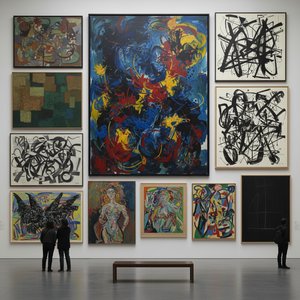
Abstract Expressionism's 10 Defining Masterpieces |
Explore 10 defining Abstract Expressionism masterpieces by Pollock, Rothko & de Kooning. Discover the stories behind these iconic paintings and find museum-quality art reproductions to elevate your home decor on .

Geometric Abstraction's 10 Defining Masterpieces | Art for Your Home - ArtsDot
Explore 10 defining masterpieces of Geometric Abstraction! Discover Kandinsky, Mondrian & Malevich’s iconic works. Find museum-quality art reproductions and curated decor ideas to elevate your home at ArtsDot.com.