

 Preview
 Send
Send Share
Share
 Details

 Download
 Similars
 X-Ray
X-Ray Diaporama
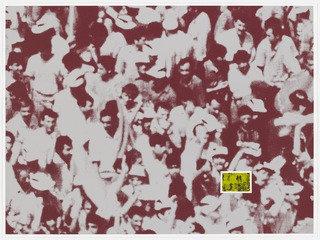
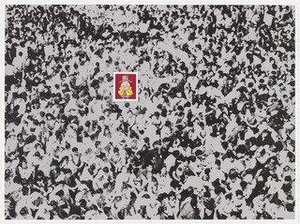
Ankara, Turkey (March, 1990) from precariously close to 5 billion points of confusion
 1990
1990 56.0 x 75.0 cm
 Read More
Purchase a high-resolution, enhanced digital image, far superior to the online preview.
Each file is meticulously prepared by our in-house specialists using advanced tools and expert manual retouching. We ensure every image has exceptional clarity, precise color accuracy, and fine detail.
The final file is delivered via email within 72 hours, optimized for immediate use in professional, editorial, and print environments. This is the same quality trusted by top-tier design studios, publishers, and galleries.
Digital Image
Download a high-resolution file for personal display, printing, and creative projects. ( Buy Print Buy Hand Made Painting)
Included in Every Digital Image Order
Expert Digital Delivery, Guaranteed
When you choose ArtsDot.com, you're not just getting an image - you're receiving a professionally enhanced digital artwork, crafted with precision and backed by a satisfaction guarantee. Here's everything that comes with your order, automatically:

Fast Email Delivery
Your high-resolution digital image file will be emailed to you within 72 hours of ordering - ready for immediate use.

AI-Enhanced Digital File
Your artwork is professionally optimized using advanced AI tools and manual editing, ensuring maximum detail, clarity, and color accuracy.

Free Lifetime Re-Delivery
Accidentally deleted or lost your file? No worries - we'll resend it to you anytime, free of charge.

No Import Fees - Ever
Enjoy your artwork instantly with zero customs, duties, or delivery fees - digital downloads are always tax-free.

Color Accuracy Guarantee
We ensure your digital image reflects the original colors as closely as possible using professional tools and color management.

60-Day Satisfaction Guarantee
If you're not satisfied with your digital image, we'll revise it or refund 100% within 60 days - no questions asked.

100% Money-Back Guarantee
Not satisfied? Get a full refund within 60 days of receiving your digital file - no questions asked.

Bulk Order Discounts
Buy 3 images, save 10% - Buy 5, save 15% - Buy 10+, save 20%. Great for creative projects, galleries, and agencies.
Related Artworks






Artist Biography
Julia Wachtel: Decoding the Echoes of Mass Culture
Julia Wachtel’s work, a compelling blend of painting and mixed media, stands as a significant contribution to the Pictures Generation movement of the early 1980s. Emerging from the vibrant art scene of New York City, she didn't simply replicate existing imagery; instead, she meticulously deconstructed and reassembled fragments of popular culture—advertising, film stills, celebrity photographs, and even cartoon characters—to expose the underlying mechanisms of image production and consumption within a rapidly changing society. Her canvases are not merely representations but complex dialogues with the visual language that increasingly dominates our lives.
Born in 1956, Wachtel’s artistic journey began with formal training at Middlebury College, followed by a year at The School of Visual Arts, where she studied under influential figures like Vito Acconci and Joseph Kosuth. This early exposure to conceptual art and experimental practices laid the groundwork for her distinctive approach. She then pursued further study at the Whitney Independent Study Program, a crucible for innovation and experimentation that profoundly shaped her artistic vision. Notably, Wachtel’s career also included a decade as production manager for the UK edition of Vanity Fair, an experience that undoubtedly informed her keen eye for detail and her understanding of the power dynamics inherent in media representation.
The Pictures Generation and a Critical Lens
Wachtel is inextricably linked to The Pictures Generation, a collective of artists who emerged in the early 1980s and challenged traditional notions of painting. This group—including Jenny Holzer, Barbara Kruger, Jeff Koons, and Raymond Pettis—utilized techniques borrowed from advertising, photography, and mass media to create works that interrogated the relationship between art and society. Unlike earlier generations of artists who sought to transcend the everyday, The Pictures Generation embraced it, using readily available imagery as a starting point for critical commentary. Wachtel’s work exemplifies this approach through its appropriation of recognizable images—often unsettling or grotesque—and its layering of these elements to create dense, visually arresting compositions.
Her early pieces frequently featured iconic figures from advertising and popular culture – movie stars, pin-up girls, political leaders – presented in a deliberately fragmented and distorted manner. This wasn’t simply about replicating these images; it was about exposing their inherent artificiality and the manipulative power of mass media to shape our perceptions. The use of techniques like silkscreening and collage further emphasized this process of deconstruction and reconstruction, transforming familiar imagery into something both unsettling and strangely compelling.
A Shift Towards Digital Landscapes
While her early work focused on traditional painting techniques, Wachtel’s practice has evolved significantly in recent years. She now primarily works with digital media, creating intricate, grayscale artworks that explore themes of anonymity, chaos, and the overwhelming nature of information overload. Her 2019 piece, “precariously close to 5 billion points of confusion,” is a prime example of this shift. This large-scale digital work, presented as a dense, layered abstraction, evokes the feeling of being lost within an endless stream of data—a sensation increasingly familiar in the 21st century. The artwork’s title itself speaks volumes about the overwhelming complexity and potential for disorientation inherent in our digitally mediated world.
The influence of her earlier work is still evident in these digital pieces, however. The fragmented nature of the imagery, the deliberate use of distortion, and the underlying critique of mass culture remain central to her artistic concerns. Furthermore, Wachtel’s exploration of anonymity—evident in the faceless figures that populate many of her works—resonates powerfully with contemporary anxieties about surveillance and the erosion of individual identity.
Legacy and Critical Recognition
Julia Wachtel's work has garnered significant critical attention and is held in prestigious collections, including those of the Whitney Museum of American Art, the Cleveland Museum of Art, and MoMA. Her contributions to The Pictures Generation cemented her place as a key figure in contemporary art history, and her ongoing exploration of image culture continues to resonate with audiences today. Her ability to synthesize historical influences—from Pop Art to conceptualism—with a distinctly modern sensibility ensures that her work remains both intellectually stimulating and visually arresting.
Beyond the formal recognition, Wachtel’s art serves as a potent reminder of the pervasive influence of images on our lives and the critical importance of questioning their origins and motivations. Her ongoing engagement with digital media suggests that she will continue to push the boundaries of artistic expression and offer new perspectives on the complexities of contemporary culture.
julia wachtel
1956 -
Quick Facts
- Artistic Movement Or Style: Pictures Generation, Mixed Media
- Artists Or Movements Influenced By This Artist:
- The Pictures Generation
- Pop Art
- Artists Who Influenced This Artist:
- Vito Acconci
- Joseph Kosuth
- Joan Jonas
- Date Of Birth: 1956
- Full Name: Julia Wachtel
- Nationality: American
- Notable Artworks:
- precariously close to 5 billion points of confusion
- Helpp
- Champagne Life
- Place Of Birth: New York City, USA

