 Preview
 Send
Send Share
Share
 Details

 Download
 Similars
 X-Ray
X-Ray Diaporama
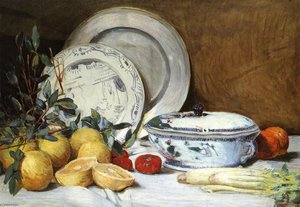
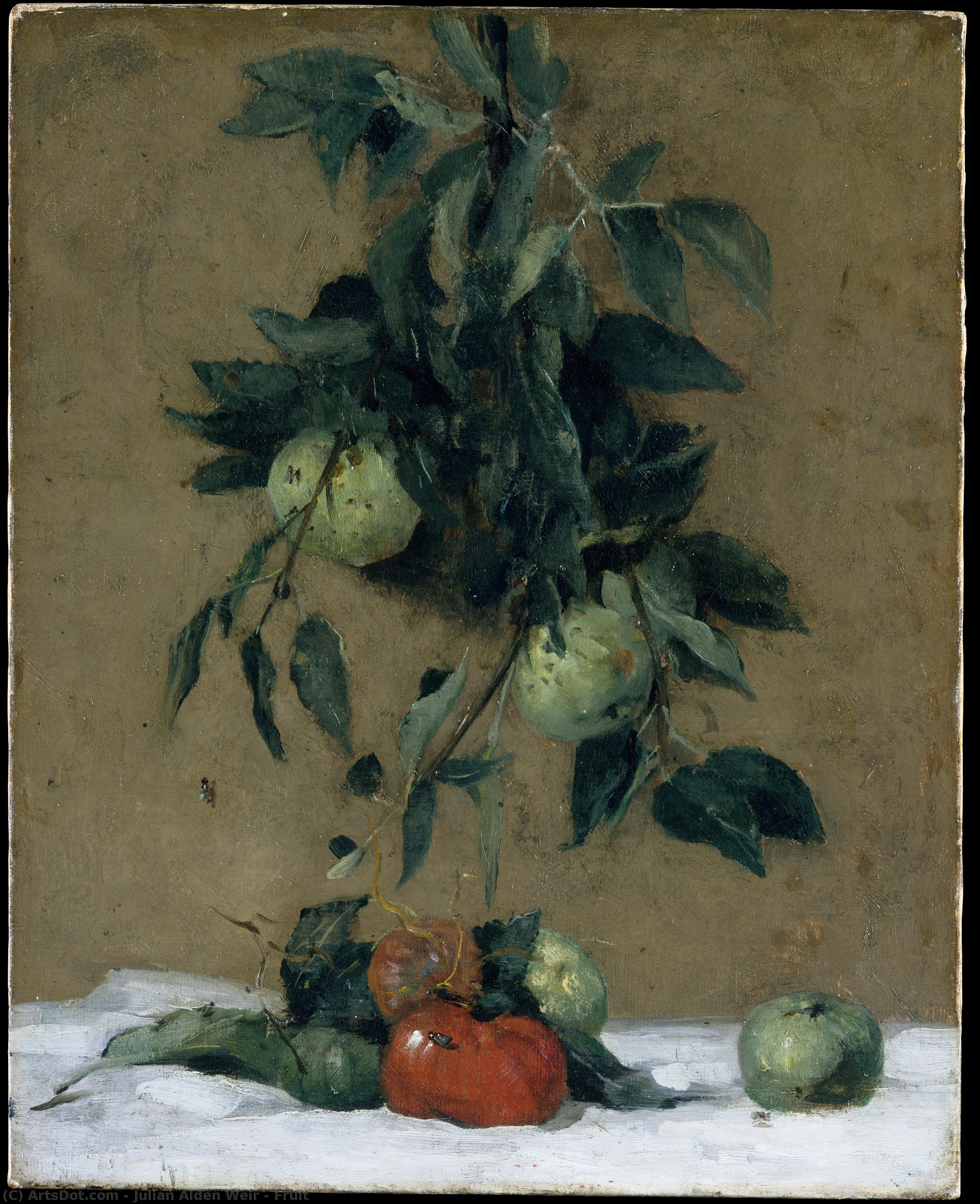
Fruit
 Oil On Canvas
- WallArt
- Impressionism
 1888
1888- 19th Century
 54.0 x 44.0 cm
 Metropolitan Museum of Art
 Read More
Hand Made Oil Reproduction
Hand-painted oil on canvas in your size and frame, made to order by our artists. ( Buy Print Buy Image)




P118B $10

P118H $10

P118W $10

P438Z $10

P508JH $12

P508YH $12

P805H $10

P805Z $10

P919BZ $10

P919G $10

P919XJ $10

P959ZH $10

P968JZ $12

W106C $8

W218G $10

W218JH $8

W218Y $10

W307PJ $10

W316G $10

W316PJ $8

W316Y $10

W398PJ $8

W4111J $10

W500HY $15

W500JH $15

W692G $12

W849H $8

W940BG $15

W953PJ $8




Pick from our preset sizes that match the artwork's original proportions.

You may enter your own dimensions to fit a specific frame or space. If your selected size does not match the original image's proportions, we will either crop the artwork or extend the painting with additional hand-painted elements. A digital mockup will be sent for your approval before production begins.
Please note that the on-screen preview does not reflect the actual cropping or extension. Only the mockup will accurately show the final composition.
While custom sizes are available, we recommend selecting a dimension from the predefined list to preserve the original proportions.
After order, ArtsDot.com team will email client for instructions and provide a mockup preview
Worldwide Delivery () in 3/4 weeks instead of standard 5 weeks. (16 August). No compromise on quality.

Free Worldwide Express Shipping

High-Quality Linen Canvas

Full Shipping Insurance

Customs Tax Refund Guarantee

True Color Matching Guarantee

60-Day Return Policy (Defects Only)

100% Money-Back Guarantee

Bulk Discount Offer
 Glass option is only available in size under 110 CM

Fruit
Reproduction Medium
Reproduction Size
-


Total Price
$ 263
Artwork Description
Julian Alden Weir’s “Fruit”: A Still Life of Transient Beauty
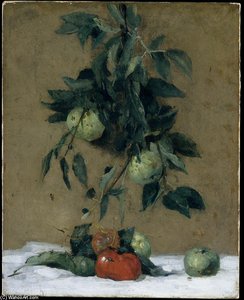
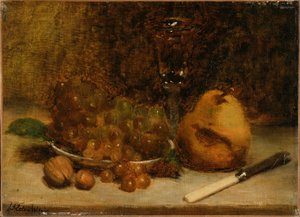
Julian Alden Weir's 1888 painting, "Fruit," offers a captivating glimpse into the burgeoning world of American Impressionism. More than just a depiction of apples, oranges, and grapes arranged on a table, it’s a meditation on beauty, decay, and the fleeting nature of existence – a core tenet of the *vanitas* tradition prevalent in European art at the time. Weir, born in West Point, New York, inherited an artistic lineage deeply rooted in formal training, beginning with his father's instruction at the United States Military Academy, yet it was his immersion in Parisian ateliers and encounters with artists like Jean-Léon Gérôme that truly ignited his distinctive style. This painting represents a pivotal moment in Weir’s artistic journey – a deliberate shift away from the rigid academicism of his early years towards a more subjective and emotionally resonant approach to capturing the world around him.
The composition itself is deceptively simple, yet meticulously crafted. The arrangement of the fruit—the vibrant red of the apples, the sunny yellow of the oranges, and the deep purple of the grapes – draws the eye immediately. Notice how Weir doesn’t strive for photographic realism; instead, he employs loose brushstrokes and a muted palette, prioritizing atmosphere and light over precise detail. The table, rendered with subtle tonal variations, provides a grounding element, anchoring the vibrant fruits within a sense of quiet contemplation. This deliberate choice reflects the influence of artists like Edouard Manet, whom Weir admired and whose work encouraged him to explore more intimate still lifes that evoked the *vanitas* tradition – a reminder of mortality and the transience of earthly pleasures.
The Influence of *Vanitas* and the Symbolism of Decay
“Fruit” is deeply informed by the *vanitas* genre, a popular theme in Northern European art during the 16th and 17th centuries. *Vanitas* paintings typically featured symbolic objects – skulls, decaying fruit, extinguished candles – to remind viewers of the inevitability of death and the futility of worldly pursuits. While Weir’s work isn't overtly morbid, the inclusion of ripe fruit on the verge of decay subtly conveys this underlying theme. The slightly bruised apple, for instance, hints at the passage of time and the ephemeral nature of beauty. The grapes, plump and luscious, represent abundance and pleasure, but their proximity to the decaying elements suggests that even these joys are ultimately transient.
Beyond *vanitas*, individual fruits carry specific symbolic weight. Apples have long been associated with knowledge, temptation, and immortality in Western art. Oranges, introduced to Europe from the East, represented wealth and luxury. Grapes symbolize abundance, fertility, and joy. Weir’s careful selection of these elements creates a layered visual narrative, inviting viewers to contemplate not just the beauty of the fruit itself, but also its deeper meaning.
Technique and Artistic Style
Weir's masterful technique is evident in his skillful use of light and shadow. He employs broken color—applying small dabs of paint rather than blending them smoothly—to create a sense of luminosity and atmospheric depth. The brushstrokes are loose and expressive, capturing the texture of the fruit’s skin and the sheen of its surfaces. This approach aligns with the Impressionist movement's emphasis on capturing fleeting moments and subjective perceptions. The painting is executed in oil on canvas, a medium that allowed Weir to achieve rich colors and subtle tonal variations.
Interestingly, this period of Weir’s work – the 1880s – saw him moving away from his earlier academic style and embracing a more intimate and emotionally driven approach. His connection with artists like Edouard Manet during his time in Paris undoubtedly played a role in this transformation. The painting's quiet elegance and contemplative mood reflect Weir’s growing confidence as an artist, signaling a shift towards a distinctly American brand of Impressionism.
A Reproduction for Art Lovers
ArtsDot is proud to offer a meticulously hand-painted reproduction of Julian Alden Weir’s “Fruit.” This isn't merely a print; it’s a faithful recreation of the original, capturing the artist’s delicate brushwork and evocative atmosphere. The 54 x 44 cm size makes this piece ideal for adding a touch of timeless beauty to any room – from a cozy study to a sophisticated dining area. The subtle color palette and nuanced details will bring a sense of serenity and contemplation to your space, reminding you of the fleeting nature of beauty and the importance of appreciating the present moment. Explore our collection today and bring home a piece of art history.
Related Artworks
Artist Biography
Early Life and Artistic Foundations
Julian Alden Weir, born August 30, 1852, at West Point, New York, inherited an artistic lineage that profoundly shaped his path. His father, Robert Walter Weir, was a respected painter and drawing professor at the United States Military Academy, instilling in young Julian a deep appreciation for art from an early age. The home itself was a vibrant studio, filled with the tools and inspiration of a creative life. This nurturing environment extended to his elder brother, John Ferguson Weir, who also became a notable landscape artist. Julian’s initial formal training began at the National Academy of Design in New York City around 1870, providing him with a solid grounding in traditional techniques. However, it was his journey to Paris in 1873 that truly ignited his artistic development. Studying under Jean-Léon Gérôme at the École des Beaux-Arts exposed him to academic rigor and meticulous detail, while friendships forged with artists like Jules Bastien-Lepage broadened his perspective on painting’s possibilities. Initially, Weir harbored a strong aversion to the emerging Impressionist movement, dismissing its perceived lack of form and structure as “horrible.” This early resistance would prove pivotal, as his eventual embrace of Impressionism came not from immediate acceptance but through a gradual evolution of understanding.The Connecticut Years and Artistic Transformation
A turning point in Weir’s life arrived with his marriage to Anna Dwight Baker in 1883 and their subsequent move to Branchville, Connecticut. He purchased a farm there, seeking respite from the bustling art world of New York City. This rural setting became more than just a retreat; it was a wellspring of inspiration. The tranquil landscapes, the rhythms of farm life, and the intimate connection with nature began to subtly shift his artistic focus. While initially continuing to produce portraits and still lifes in a traditional style, Weir found himself increasingly drawn to capturing the fleeting effects of light and atmosphere. Around 1891, this inclination blossomed into a full-fledged embrace of Impressionism. Influenced by fellow artists like John Twachtman and Theodore Robinson, he began experimenting with broken brushstrokes, vibrant color palettes, and an emphasis on subjective perception. This wasn’t a wholesale abandonment of his earlier training; rather, it was a synthesis of academic skill with the innovative spirit of the new movement. His style often oscillated between pure Impressionistic expression and a more subdued tonalism, creating a unique visual language that distinguished him from his contemporaries. He also demonstrated considerable talent as an engraver, particularly through his skillful use of aquatint techniques.A Leading Voice in American Art
By the late 19th century, Julian Alden Weir had established himself as a prominent figure in the American art scene. He was instrumental in forming “The Ten,” a group of ten independent-minded painters who sought to exhibit their work outside the constraints of traditional institutions like the National Academy of Design. This collective—including artists such as Childe Hassam, Willard Leroy Metcalf, and Edmund Tarbell—represented a significant step towards artistic autonomy and helped shape the direction of American painting. In 1912, Weir was elected the first president of the Association of American Painters and Sculptors, further solidifying his leadership role within the art community. He later served as president of the National Academy of Design itself, demonstrating the respect he had earned from both progressive and conservative factions of the art world. His key works from this period—such as *On the Shore* (1892), a vibrant coastal scene; *New England Barnyard* (1904), a charming depiction of rural life; and *Upland Pasture* (1905)—exemplify his mastery of Impressionistic techniques and his ability to capture the essence of American landscapes.Legacy and Enduring Influence
Julian Alden Weir’s contributions extend far beyond his individual paintings. He played a crucial role in bridging the gap between traditional academic painting and the innovative spirit of Impressionism, paving the way for future generations of American artists. His dedication to fostering artistic independence through “The Ten” challenged established norms and helped create a more vibrant and diverse art landscape. Today, Weir Farm National Historic Site in Branchville, Connecticut, stands as a testament to his life and work. Preserved as it was during his time, the farm offers visitors a glimpse into the world that inspired him—the rolling hills, the weathered barns, and the quiet beauty of rural New England. The site serves not only as a historical landmark but also as a continuing source of inspiration for artists today. His family’s artistic legacy – stemming from his father Robert Walter Weir, a Hudson River School painter – further cements Julian Alden Weir's place within the broader narrative of American art history. He died in New York City on December 8, 1919, leaving behind a body of work that continues to captivate and inspire, reminding us of the power of art to capture the beauty and essence of the world around us.- Key Works: *On the Shore* (1892), *New England Barnyard* (1904), *Upland Pasture* (1905)
- Artistic Style: Impressionism, Tonalism
- Associations: “The Ten,” National Academy of Design
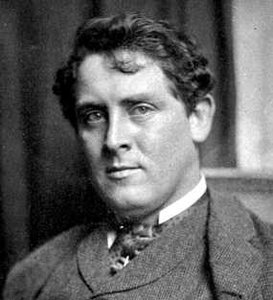
Julian Alden Weir
1852 - 1919 , United States of America
Quick Facts
- Artistic Movement Or Style: Impressionism, Tonalism
- Artists Or Movements Influenced By This Artist: ['The Ten American Painters']
- Artists Who Influenced This Artist:
- Jean-Léon Gérôme
- Jules Bastien-Lepage
- Date Of Birth: August 30, 1852
- Date Of Death: December 8, 1919
- Full Name: Julian Alden Weir
- Nationality: American
- Notable Artworks:
- On the Shore
- New England Barnyard
- Upland Pasture
- Place Of Birth: West Point, USA
Related Articles
Julian Alden Weir: A Quiet Master of American Impressionism & Rural Life
Discover Julian Alden Weir, a leading American Impressionist painter celebrated for his serene landscapes & depictions of rural life. Explore his artistic evolution, influence on 'The Ten', and legacy at Weir Farm.
The Bountiful Still Life: Symbolism & Artistic Representation of Fruit Across Art History
Explore the rich history of still life painting & the symbolism of fruit across art movements. Discover masterpieces from Caravaggio to Cézanne with ArtsDot – expert guidance & museum-quality reproductions.

The Enduring Legacy of Oil on Canvas: Technique, History & Aesthetic Impact
Explore the rich history & techniques of oil painting – from Renaissance masters to Impressionism. Discover pigments, layering methods, and why this timeless medium endures. Expert insights for artists & art enthusiasts.

Cézanne's Masterpieces: 25 Iconic Artworks to Transform Your Space
Journey through 25 iconic artworks by Paul Cézanne – a master of Impressionism and Post-Impressionism. Explore his landscapes, still lifes, and the stories behind these timeless masterpieces. Discover museum-quality reproductions & curated decor at ArtsDot.com.

Oil on Canvas: A Historical & Technical Exploration of a Timeless Artistic Medium
Explore the rich history & enduring techniques of oil painting on canvas. Discover the science behind its longevity, conservation practices, and contemporary relevance. Expert insights for art enthusiasts.