 Preview
 Send
Send Share
Share
 Details

 Download
 Similars
 X-Ray
X-Ray Diaporama
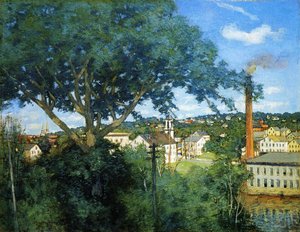
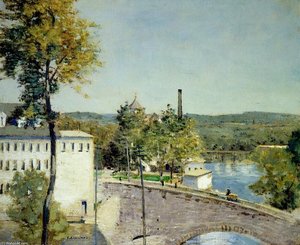
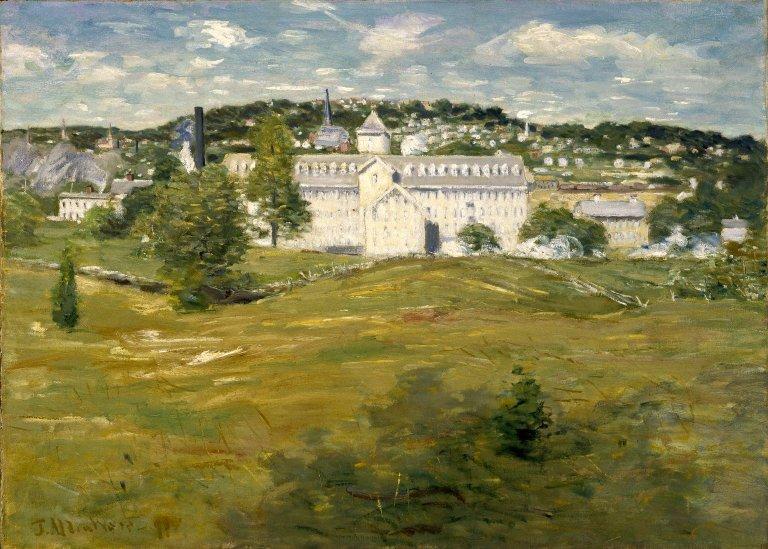
Willimantic Thread Factory
 Oil On Canvas
- WallArt
- Impressionist Landscape
 1893
1893- 19th Century
 61.0 x 85.0 cm
 Brooklyn Museum
 Read More
Hand Made Oil Reproduction
Hand-painted oil on canvas in your size and frame, made to order by our artists. ( Buy Print Buy Image)




P118B $10

P118H $10

P118W $10

P438Z $10

P508JH $12

P508YH $12

P805H $10

P805Z $10

P919BZ $10

P919G $10

P919XJ $10

P959ZH $10

P968JZ $12

W106C $8

W218G $10

W218JH $8

W218Y $10

W307PJ $10

W316G $10

W316PJ $8

W316Y $10

W398PJ $8

W4111J $10

W500HY $15

W500JH $15

W692G $12

W849H $8

W940BG $15

W953PJ $8




Pick from our preset sizes that match the artwork's original proportions.

You may enter your own dimensions to fit a specific frame or space. If your selected size does not match the original image's proportions, we will either crop the artwork or extend the painting with additional hand-painted elements. A digital mockup will be sent for your approval before production begins.
Please note that the on-screen preview does not reflect the actual cropping or extension. Only the mockup will accurately show the final composition.
While custom sizes are available, we recommend selecting a dimension from the predefined list to preserve the original proportions.
After order, ArtsDot.com team will email client for instructions and provide a mockup preview
Worldwide Delivery () in 3/4 weeks instead of standard 5 weeks. (17 August). No compromise on quality.

Free Worldwide Express Shipping

High-Quality Linen Canvas

Full Shipping Insurance

Customs Tax Refund Guarantee

True Color Matching Guarantee

60-Day Return Policy (Defects Only)

100% Money-Back Guarantee

Bulk Discount Offer
 Glass option is only available in size under 110 CM

Willimantic Thread Factory
Reproduction Medium
Reproduction Size
-


Total Price
$ 263
Artwork Description
A Tranquil Reflection of Industrial Progress: Julian Alden Weir’s Willimantic Thread Factory
Julian Alden Weir's “Willimantic Thread Factory,” completed in 1893, stands as a testament to the Impressionist movement’s fascination with capturing fleeting moments of everyday life amidst the burgeoning industrial landscape. Currently residing at the Brooklyn Museum in New York City, this oil on canvas masterpiece offers more than just a picturesque depiction; it embodies a nuanced commentary on America's evolving relationship with modernity and industry. Weir skillfully blends tonalism—a technique prioritizing subtle gradations of color to convey mood—with Impressionistic principles, resulting in an image that is both visually arresting and emotionally resonant.Composition and Style: Embracing Light and Atmosphere
The painting’s composition immediately draws the eye towards a sprawling vista dominated by a substantial textile mill building – a prominent feature of Hartford's industrial heritage. Weir eschews dramatic contrasts of light and shadow, favoring instead diffused sunlight that washes over the grassy field and scattered trees surrounding the factory complex. This deliberate choice aligns perfectly with Impressionist ideals, prioritizing the sensory experience of observing nature rather than striving for photographic realism. The artist’s meticulous attention to detail—evident in the rendering of individual leaves and branches—contrasts subtly with the broader tonal palette, emphasizing the harmonious blend between natural beauty and industrial activity.The Artist's Vision: Weir and the Impressionist Legacy
Julian Alden Weir (1852-1919) was a pivotal figure within the American Impressionist movement, alongside luminaries like George Handel Bryant and Frederic Church. Influenced by artists such as Jean-Léon Gérôme and Jules Bastien Lepage—who championed academic precision alongside capturing atmospheric effects—Weir adopted a distinctive approach that prioritized tonal harmony and emotional depth. His artistic training at the École des Beaux-Arts in Paris instilled in him a foundational understanding of traditional painting techniques, yet he ultimately embraced Impressionism's liberating spirit, rejecting rigid conventions to prioritize subjective perception. Weir’s work frequently explored themes of rural landscapes and American identity, reflecting the anxieties and aspirations of his era—a period marked by rapid industrial expansion and shifting social dynamics.Historical Context: Industry Amidst Pastoral Beauty
“Willimantic Thread Factory” emerged during a transformative moment in American history – the late nineteenth century witnessed unprecedented economic growth fueled by technological innovation and westward migration. The textile industry, particularly around Hartford, Connecticut, was rapidly reshaping the nation’s economy and social fabric. Weir's decision to portray this industrial edifice within a tranquil pastoral setting is deliberate; it serves as an implicit acknowledgement of both progress and tradition. Rather than glorifying industrial might, Weir presents it as a component of a larger ecosystem—a harmonious coexistence between human endeavor and natural splendor. This subtle juxtaposition speaks volumes about the artist’s worldview and his desire to capture the complexities of American life during this pivotal period.Symbolism and Emotional Impact: A Moment Frozen in Time
Beyond its formal qualities, “Willimantic Thread Factory” possesses a profound emotional impact. The painting evokes feelings of serenity and contemplation—a quiet appreciation for the beauty inherent in even the most commonplace scenes. Weir’s masterful use of color—particularly muted greens and blues—creates an atmosphere of tranquility that invites viewers to linger on the canvas. Furthermore, the inclusion of horses adds another layer of symbolism, representing strength, vitality, and connection to the land – elements crucial to the American Romantic tradition. Ultimately, Weir's “Willimantic Thread Factory” transcends mere visual representation; it encapsulates a vision of America—a nation striving for progress while cherishing its enduring ties to nature.Related Artworks

Artist Biography
Early Life and Artistic Foundations
Julian Alden Weir, born August 30, 1852, at West Point, New York, inherited an artistic lineage that profoundly shaped his path. His father, Robert Walter Weir, was a respected painter and drawing professor at the United States Military Academy, instilling in young Julian a deep appreciation for art from an early age. The home itself was a vibrant studio, filled with the tools and inspiration of a creative life. This nurturing environment extended to his elder brother, John Ferguson Weir, who also became a notable landscape artist. Julian’s initial formal training began at the National Academy of Design in New York City around 1870, providing him with a solid grounding in traditional techniques. However, it was his journey to Paris in 1873 that truly ignited his artistic development. Studying under Jean-Léon Gérôme at the École des Beaux-Arts exposed him to academic rigor and meticulous detail, while friendships forged with artists like Jules Bastien-Lepage broadened his perspective on painting’s possibilities. Initially, Weir harbored a strong aversion to the emerging Impressionist movement, dismissing its perceived lack of form and structure as “horrible.” This early resistance would prove pivotal, as his eventual embrace of Impressionism came not from immediate acceptance but through a gradual evolution of understanding.The Connecticut Years and Artistic Transformation
A turning point in Weir’s life arrived with his marriage to Anna Dwight Baker in 1883 and their subsequent move to Branchville, Connecticut. He purchased a farm there, seeking respite from the bustling art world of New York City. This rural setting became more than just a retreat; it was a wellspring of inspiration. The tranquil landscapes, the rhythms of farm life, and the intimate connection with nature began to subtly shift his artistic focus. While initially continuing to produce portraits and still lifes in a traditional style, Weir found himself increasingly drawn to capturing the fleeting effects of light and atmosphere. Around 1891, this inclination blossomed into a full-fledged embrace of Impressionism. Influenced by fellow artists like John Twachtman and Theodore Robinson, he began experimenting with broken brushstrokes, vibrant color palettes, and an emphasis on subjective perception. This wasn’t a wholesale abandonment of his earlier training; rather, it was a synthesis of academic skill with the innovative spirit of the new movement. His style often oscillated between pure Impressionistic expression and a more subdued tonalism, creating a unique visual language that distinguished him from his contemporaries. He also demonstrated considerable talent as an engraver, particularly through his skillful use of aquatint techniques.A Leading Voice in American Art
By the late 19th century, Julian Alden Weir had established himself as a prominent figure in the American art scene. He was instrumental in forming “The Ten,” a group of ten independent-minded painters who sought to exhibit their work outside the constraints of traditional institutions like the National Academy of Design. This collective—including artists such as Childe Hassam, Willard Leroy Metcalf, and Edmund Tarbell—represented a significant step towards artistic autonomy and helped shape the direction of American painting. In 1912, Weir was elected the first president of the Association of American Painters and Sculptors, further solidifying his leadership role within the art community. He later served as president of the National Academy of Design itself, demonstrating the respect he had earned from both progressive and conservative factions of the art world. His key works from this period—such as *On the Shore* (1892), a vibrant coastal scene; *New England Barnyard* (1904), a charming depiction of rural life; and *Upland Pasture* (1905)—exemplify his mastery of Impressionistic techniques and his ability to capture the essence of American landscapes.Legacy and Enduring Influence
Julian Alden Weir’s contributions extend far beyond his individual paintings. He played a crucial role in bridging the gap between traditional academic painting and the innovative spirit of Impressionism, paving the way for future generations of American artists. His dedication to fostering artistic independence through “The Ten” challenged established norms and helped create a more vibrant and diverse art landscape. Today, Weir Farm National Historic Site in Branchville, Connecticut, stands as a testament to his life and work. Preserved as it was during his time, the farm offers visitors a glimpse into the world that inspired him—the rolling hills, the weathered barns, and the quiet beauty of rural New England. The site serves not only as a historical landmark but also as a continuing source of inspiration for artists today. His family’s artistic legacy – stemming from his father Robert Walter Weir, a Hudson River School painter – further cements Julian Alden Weir's place within the broader narrative of American art history. He died in New York City on December 8, 1919, leaving behind a body of work that continues to captivate and inspire, reminding us of the power of art to capture the beauty and essence of the world around us.- Key Works: *On the Shore* (1892), *New England Barnyard* (1904), *Upland Pasture* (1905)
- Artistic Style: Impressionism, Tonalism
- Associations: “The Ten,” National Academy of Design
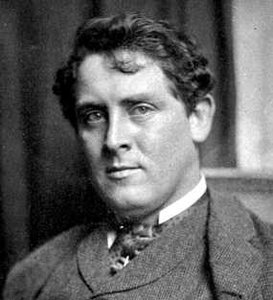
Julian Alden Weir
1852 - 1919 , United States of America
Quick Facts
- Artistic Movement Or Style: Impressionism, Tonalism
- Artists Or Movements Influenced By This Artist: ['The Ten American Painters']
- Artists Who Influenced This Artist:
- Jean-Léon Gérôme
- Jules Bastien-Lepage
- Date Of Birth: August 30, 1852
- Date Of Death: December 8, 1919
- Full Name: Julian Alden Weir
- Nationality: American
- Notable Artworks:
- On the Shore
- New England Barnyard
- Upland Pasture
- Place Of Birth: West Point, USA
Related Articles
Julian Alden Weir: A Quiet Master of American Impressionism & Rural Life
Discover Julian Alden Weir, a leading American Impressionist painter celebrated for his serene landscapes & depictions of rural life. Explore his artistic evolution, influence on 'The Ten', and legacy at Weir Farm.
Capturing a Nation's Light: Exploring the American Impressionist Movement
Explore the captivating world of American Impressionism! Discover key artists, techniques & its lasting impact on art history. Find museum-quality reproductions and expert guidance at ArtsDot.
Frederick Childe Hassam: American Impressionism's Chronicler of Light & Modern Life
Explore the captivating world of Frederick Childe Hassam, a pioneer of American Impressionism. Discover his iconic paintings capturing light, urban life & coastal beauty. Learn about his legacy and influence on American art history.
Giclée Prints: Archival Quality & Aesthetic Nuances for the Discerning Collector
Explore the world of giclée prints with ArtsDot. Learn about archival quality, aesthetic nuances & investment potential. Expert guidance for discerning art collectors seeking museum-quality reproductions and lasting value.

Impressionist Landscapes: 10 Masterpieces for Your Home | ArtsDot
Journey through 10 iconic Impressionist landscapes by Monet, Renoir & Degas. Explore the history, techniques & emotions behind these masterpieces. Find museum-quality reproductions for your home at ArtsDot.com – where art comes to life! Discover all masterpieces on ArtsDot.com