

 Preview
 Send
Send Share
Share
 Details

 Download
 Similars
 X-Ray
X-Ray Diaporama
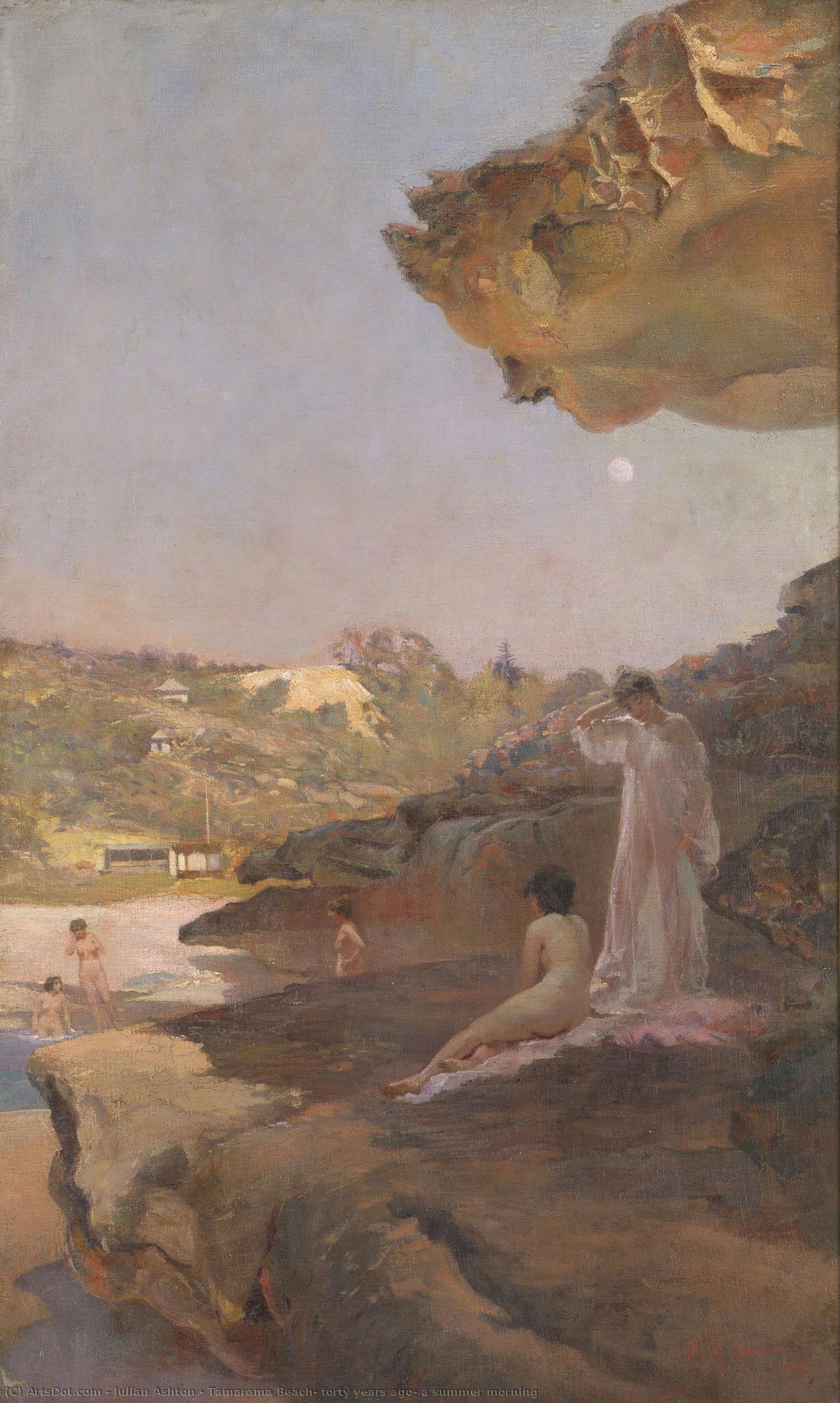
Tamarama Beach, forty years ago, a summer morning
 Oil On Canvas
- WallArt
- Barbizon School
 1899
1899- 19th Century
 99.0 x 59.0 cm
 Art Gallery of New South Wales
 Read More
Purchase a high-resolution, enhanced digital image, far superior to the online preview.
Each file is meticulously prepared by our in-house specialists using advanced tools and expert manual retouching. We ensure every image has exceptional clarity, precise color accuracy, and fine detail.
The final file is delivered via email within 72 hours, optimized for immediate use in professional, editorial, and print environments. This is the same quality trusted by top-tier design studios, publishers, and galleries.
Digital Image
Download a high-resolution file for personal display, printing, and creative projects. ( Buy Print Buy Hand Made Painting)
Included in Every Digital Image Order
Expert Digital Delivery, Guaranteed
When you choose ArtsDot.com, you're not just getting an image - you're receiving a professionally enhanced digital artwork, crafted with precision and backed by a satisfaction guarantee. Here's everything that comes with your order, automatically:

Fast Email Delivery
Your high-resolution digital image file will be emailed to you within 72 hours of ordering - ready for immediate use.

AI-Enhanced Digital File
Your artwork is professionally optimized using advanced AI tools and manual editing, ensuring maximum detail, clarity, and color accuracy.

Free Lifetime Re-Delivery
Accidentally deleted or lost your file? No worries - we'll resend it to you anytime, free of charge.

No Import Fees - Ever
Enjoy your artwork instantly with zero customs, duties, or delivery fees - digital downloads are always tax-free.

Color Accuracy Guarantee
We ensure your digital image reflects the original colors as closely as possible using professional tools and color management.

60-Day Satisfaction Guarantee
If you're not satisfied with your digital image, we'll revise it or refund 100% within 60 days - no questions asked.

100% Money-Back Guarantee
Not satisfied? Get a full refund within 60 days of receiving your digital file - no questions asked.

Bulk Order Discounts
Buy 3 images, save 10% - Buy 5, save 15% - Buy 10+, save 20%. Great for creative projects, galleries, and agencies.
Collectible Description
Julian Ashton’s Tamarama Beach: A Snapshot of Australian Impressionism
Tamarama Beach, forty years ago, a summer morning by Julian Ashton is more than just a depiction of a seaside scene; it's a testament to the burgeoning Australian Impressionist movement and Ashton’s unwavering dedication to capturing fleeting moments of beauty. Painted in 1899, this canvas embodies the spirit of the Barbizon School influence—a conscious embrace of plein air painting—where Ashton sought to translate the immediacy of nature onto canvas with remarkable precision.Subject Matter & Composition
The painting portrays Tamarama Beach during a vibrant summer morning. Ashton skillfully captures the dappled sunlight filtering through eucalyptus trees, illuminating the sand and creating an atmosphere of warmth and tranquility. Several figures populate the beach – individuals enjoying leisure activities—adding to the sense of everyday life rendered with artistic sensitivity. The composition is balanced, guiding the viewer’s eye across the scene towards the horizon line where the sea merges seamlessly with the sky. Ashton's meticulous attention to detail ensures that every element contributes to the overall impression of serenity and natural splendor.Technique & Style
Ashton employed oil paints on canvas—a technique favored by Impressionists—allowing for layering and blending colors to achieve luminous effects. He utilized short, broken brushstrokes to convey movement and texture, particularly evident in the foliage and the ripples of water. Ashton’s palette is dominated by muted greens, blues, and yellows, reflecting the dominant hues of the coastal landscape. The artist skillfully rendered light and shadow, creating a palpable sense of depth and realism that distinguishes his work from more academic styles prevalent at the time.Historical Context & Significance
Painted in 1899, Tamarama Beach stands as one of Ashton’s earliest masterpieces and exemplifies the growing interest in capturing Australian landscapes with Impressionistic sensibilities. The Barbizon School's emphasis on direct observation and tonal harmonies resonated deeply within Ashton’s artistic vision. This painting represents a pivotal moment in Australian art history—marking the emergence of a distinctly national aesthetic that prioritized beauty and authenticity over idealized representations. It foreshadowed the broader stylistic developments that would characterize the Heidelberg School, cementing Ashton’s legacy as a pioneer of modern Australian art.Symbolism & Emotional Impact
Beyond its visual appeal, Tamarama Beach carries symbolic weight. The beach itself represents freedom, leisure, and connection with nature—values central to the Australian ethos. The dappled sunlight symbolizes optimism and vitality, mirroring the joyous spirit of summer mornings. Ashton’s masterful rendering evokes a feeling of nostalgia for simpler times, inviting viewers to contemplate the enduring beauty of the natural world and the importance of savoring fleeting moments of happiness. It's a painting that speaks volumes about the artist’s profound appreciation for his surroundings and his ability to translate those emotions into captivating visual art.Provenance & Display
Currently housed at the Art Gallery of New South Wales (Accession Number: 6535), Tamarama Beach has been exhibited extensively throughout its history, including “Three Generations of Painters,” “On the Beach,” “Two Centuries of Australian Painting,” and “Shaded.” Its inclusion in these prestigious exhibitions underscores its artistic merit and enduring relevance to Australian art heritage.Related Artworks



Artist Biography
Julian Ashton: Life & Legacy
Early Life and Education
- Born: January 27, 1851, in Addlestone, Surrey, United Kingdom.
- Ashton’s father, Thomas Briggs Ashton, was an American amateur painter, and his mother, Henrietta, was the daughter of Count Carlo Rossi, a Sardinian diplomat.
- The family moved to Penzance, Cornwall, shortly after Julian's birth, then to Totnes, Devon, following his father’s death in 1864.
- He began working in an engineer’s office at age 15, dedicating his leisure time to painting and studying at the West London School of Art for three years.
- Further studies took him to the Académie Julian in Paris, where he honed his skills and began illustrating books.
Artistic Development & Influences
- Early Style: Ashton initially found success as a painter exhibiting at the Royal Academy of Arts.
- Barbizon School Influence: He was deeply influenced by the contemporary French realism of the Barbizon school, which emphasized painting en plein air (directly from nature).
- This approach laid the foundation for his later embrace of Impressionistic principles.
- In 1878, Ashton emigrated to Melbourne under contract with David Syme’s Illustrated Australian News before relocating to Sydney.
Founding the Julian Ashton Art School
- A Pivotal Institution: In 1889, Ashton founded the Julian Ashton Art School in Sydney, which became a cornerstone of Australian art education.
- The school played a crucial role in fostering a new generation of Australian artists and promoting local artistic identity.
- Encouraging En Plein Air: He actively encouraged his students to capture the unique light and landscapes of Australia directly from nature.
Championing the Heidelberg School
- Key Advocate: Ashton was a principal organizer of the 1898 exhibition of Australian art in London, the first major international showcase of Australian artistic talent.
- As a trustee of the Art Gallery of New South Wales, he championed emerging artists associated with the Heidelberg School, also known as Australian Impressionism.
- His influence was instrumental in securing the gallery’s collection of works by these pioneering artists.
Major Works & Artistic Style
- Notable Paintings: Some of his well-known paintings include Evening, Merri Creek (1882), A Solitary Ramble (1888), and Tamarama Beach, forty years ago, a summer morning.
- Style Characteristics: Ashton’s work is characterized by its realistic depiction of Australian landscapes and scenes, often rendered with a subtle Impressionistic touch.
- He skillfully captured the unique light and atmosphere of the Australian environment.
Legacy & Historical Significance
- Lasting Impact: Julian Ashton died on April 27, 1942, leaving behind a significant legacy as an artist, teacher, and advocate for Australian art.
- His influence extended far beyond his own paintings, shaping the course of Australian art history through his teaching and promotion of local talent.
- A Pioneer of Australian Identity: He played a vital role in establishing a distinctively Australian artistic identity, independent from European traditions.
julian ashton
1851 - 1942 , United Kingdom
Quick Facts
- Birth Date: 1851-01-27
- Birth Place: Addlestone, United Kingdom
- Death Date: 1942-04-27
- Influenced: Australian Impressionists
- Influenced By: Barbizon school
- Movement: Heidelberg School, Impressionism
- Name: Julian Ashton
- Nationality: British-Australian
- Notable Works: Evening, Merri Creek; A Solitary Ramble; Tamarama Beach, forty years ago, a summer morning; The prospector

