 Preview
 Send
Send Share
Share
 Details

 Download
 Similars
 X-Ray
X-Ray Diaporama
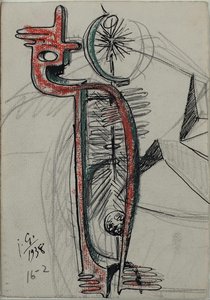
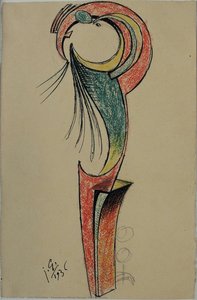
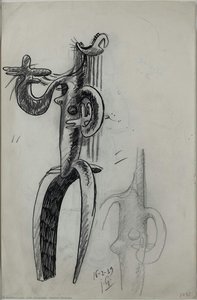
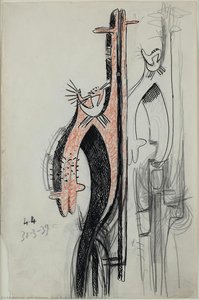
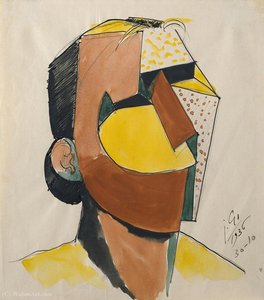
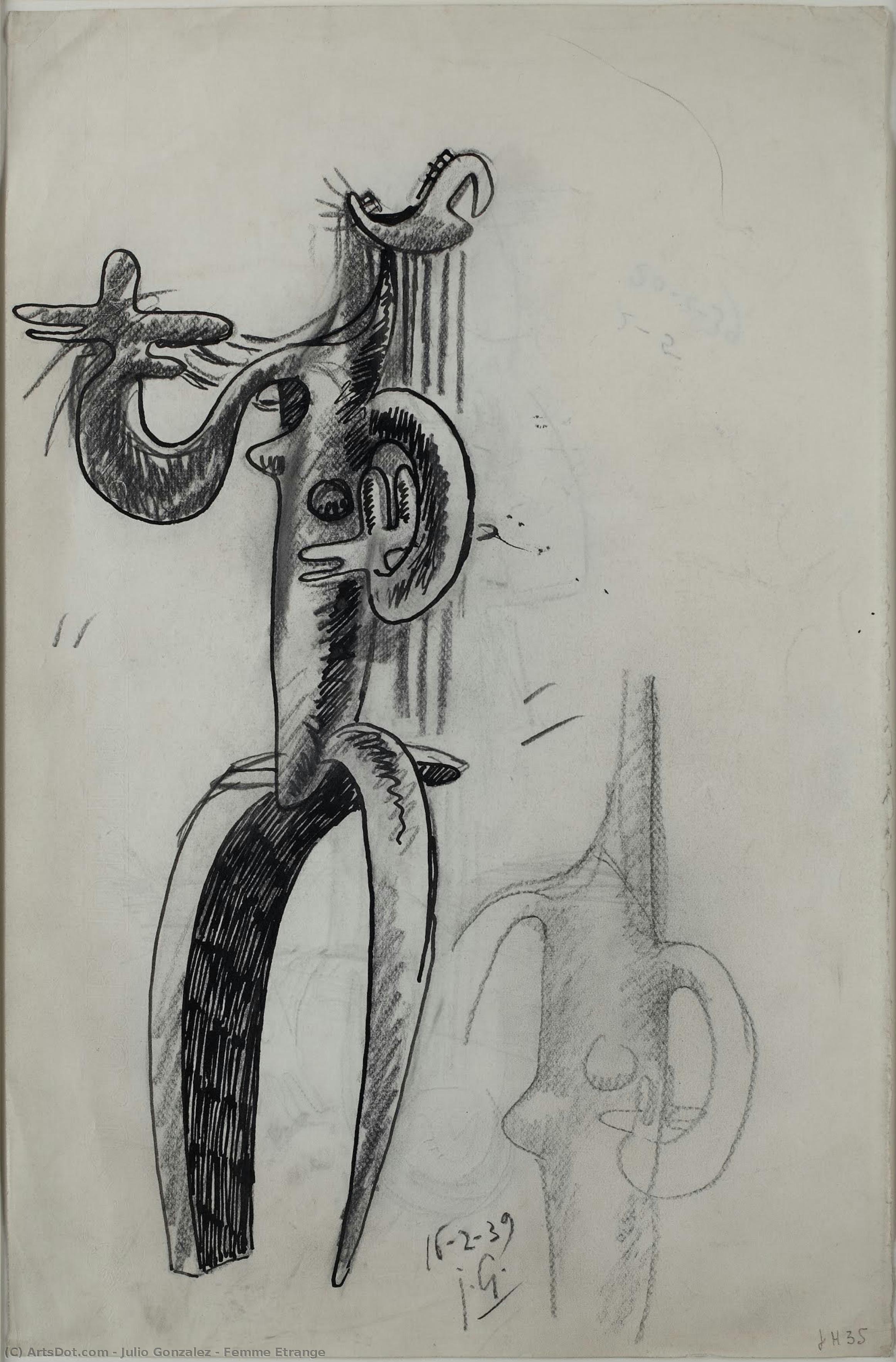
Femme Etrange
 1939
1939 20.0 x 31.0 cm
 Museu Coleção Berardo
 Read More
Hand Made Oil Reproduction
Hand-painted oil on canvas in your size and frame, made to order by our artists. ( Buy Print Buy Image)




































Pick from our preset sizes that match the artwork's original proportions.

You may enter your own dimensions to fit a specific frame or space. If your selected size does not match the original image's proportions, we will either crop the artwork or extend the painting with additional hand-painted elements. A digital mockup will be sent for your approval before production begins.
Please note that the on-screen preview does not reflect the actual cropping or extension. Only the mockup will accurately show the final composition.
While custom sizes are available, we recommend selecting a dimension from the predefined list to preserve the original proportions.
After order, ArtsDot.com team will email client for instructions and provide a mockup preview
Worldwide Delivery () in 3/4 weeks instead of standard 5 weeks. (24 August). No compromise on quality.

Free Worldwide Express Shipping

High-Quality Linen Canvas

Full Shipping Insurance

Customs Tax Refund Guarantee

True Color Matching Guarantee

60-Day Return Policy (Defects Only)

100% Money-Back Guarantee

Bulk Discount Offer
 Glass option is only available in size under 110 CM

Femme Etrange
Reproduction Medium
Reproduction Size
-


Total Price
$ 263
Related Artworks






Artist Biography
The Sculptor Who Found Beauty in Iron
Julio González stands as a monumental figure in the history of modern sculpture, a visionary who transformed the very language of three-dimensional form. Born in Barcelona on September 21st, 1876, González was destined for a life intertwined with metal. He descended from a lineage steeped in the meticulous traditions of craftsmanship; his grandfather was a goldsmith in Galicia, and his father, Concordio González, operated a workshop specializing in the fabrication of gold, silver, and iron. From his earliest years, the rhythmic clang of the hammer and the intense heat of the forge were not merely background noises but the foundational elements of his artistic vocabulary. This deep-seated mastery of metallurgy would later allow him to achieve what many thought impossible: treating iron with the same lyrical fluidity as a painter treats a brushstroke.
The trajectory of González’s life took a transformative turn when he moved to Paris in 1902, immersing himself in the electric atmosphere of Montmartre. It was here that his technical prowess met the radical spirit of the avant-garde. He found himself part of a vibrant circle of Spanish expatriates, most notably Pablo Picasso and Pablo Gargallo. The relationship with Picasso was particularly profound; their shared passion for experimentation led to a legendary artistic dialogue that would redefine the boundaries of sculpture. While Picasso provided the conceptual spark of Cubism, González provided the technical innovation required to translate those fragmented, multi-dimensional ideas into physical reality. Together, they pioneered a new way of seeing, moving away from the heavy, solid masses of traditional bronze and marble toward something far more ethereal.
Drawing in Space: A Revolution of Form
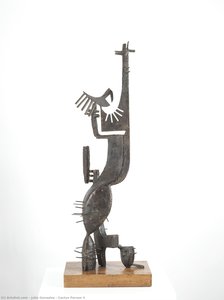
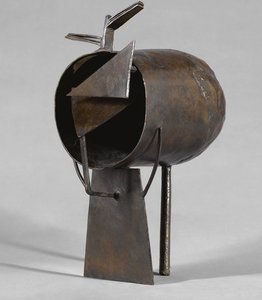
González’s true genius lay in his ability to treat iron as if it were a sketch drawn in mid-air. He moved beyond the concept of sculpture as a solid volume, instead embracing the idea of drawing in space. By utilizing flat pieces, strips, and rods of scrap and old iron, he could suggest the presence of a figure through nothing more than a few expressive, ascending lines. This technique allowed him to capture the essence of movement and light, creating works that felt both skeletal and incredibly alive. His favorite subjects—often women captured in moments of quiet introspection, dancing, or grooming—were rendered with a sketchy, rhythmic quality that emphasized line over mass.
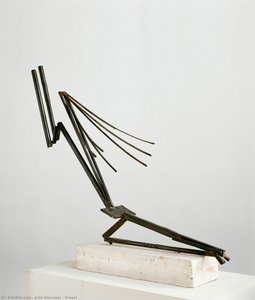
As his career progressed, particularly from 1932 onwards, his work underwent a fascinating evolution toward a more sober and austere aesthetic. The complexity of his earlier assemblages gave way to a profound linearity. In masterpieces such as Prayer, the use of simple bars and rods creates a hauntingly beautiful suggestion of a kneeling woman, her arms reaching upward in a gesture of spiritual yearning. This period demonstrated his ability to strip away the unnecessary, leaving behind only the most potent emotional traces. His mastery of welding, cutting, and forging allowed him to manipulate the industrial medium of iron to convey the most delicate human emotions, bridging the gap between the industrial age and the human soul.
Legacy and Historical Significance
Though he remained largely unrecognized by the mainstream during much of his lifetime, the historical significance of Julio González cannot be overstated. He is widely revered as the "father of all iron sculpture of this century," a title that honors his role in legitimizing iron as a primary medium for fine art. His innovations paved the way for generations of abstract sculptors who would continue to explore the interplay between void and solid, line and volume. By breaking the traditional mold of sculpture, he liberated the medium from its reliance on weight and density, offering instead a vision of art that is light, transparent, and infinitely expressive.
Today, the legacy of González lives on in every modern work that dares to use negative space as a structural element. His life's work remains a testament to the power of tradition meeting innovation—a journey from the ancestral forge of Barcelona to the cutting edge of the Parisian avant-garde. Through his hands, the cold, unyielding nature of iron was transformed into a medium of profound grace, forever changing how we perceive the relationship between matter and space.
Julio González
1876 - 1942
Quick Facts
- Artistic Movement Or Style: Cubism
- Artists Or Movements Influenced By This Artist: ['Modernisme']
- Artists Who Influenced This Artist: ['Pablo Picasso']
- Date Of Birth: September 21, 1876
- Date Of Death: 1942
- Full Name: Julio González Pellicer
- Nationality: Spanish
- Notable Artworks:
- Prayer
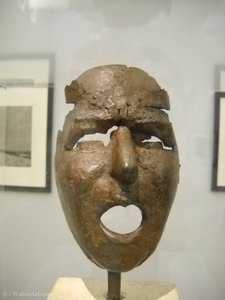
- Head (1936)
- Cactus Person II
- Place Of Birth: Barcelona, Spain