 Preview
 Send
Send Share
Share
 Details

 Download
 Similars
 X-Ray
X-Ray Diaporama
 Stats
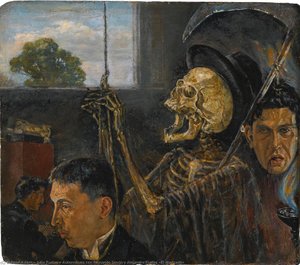
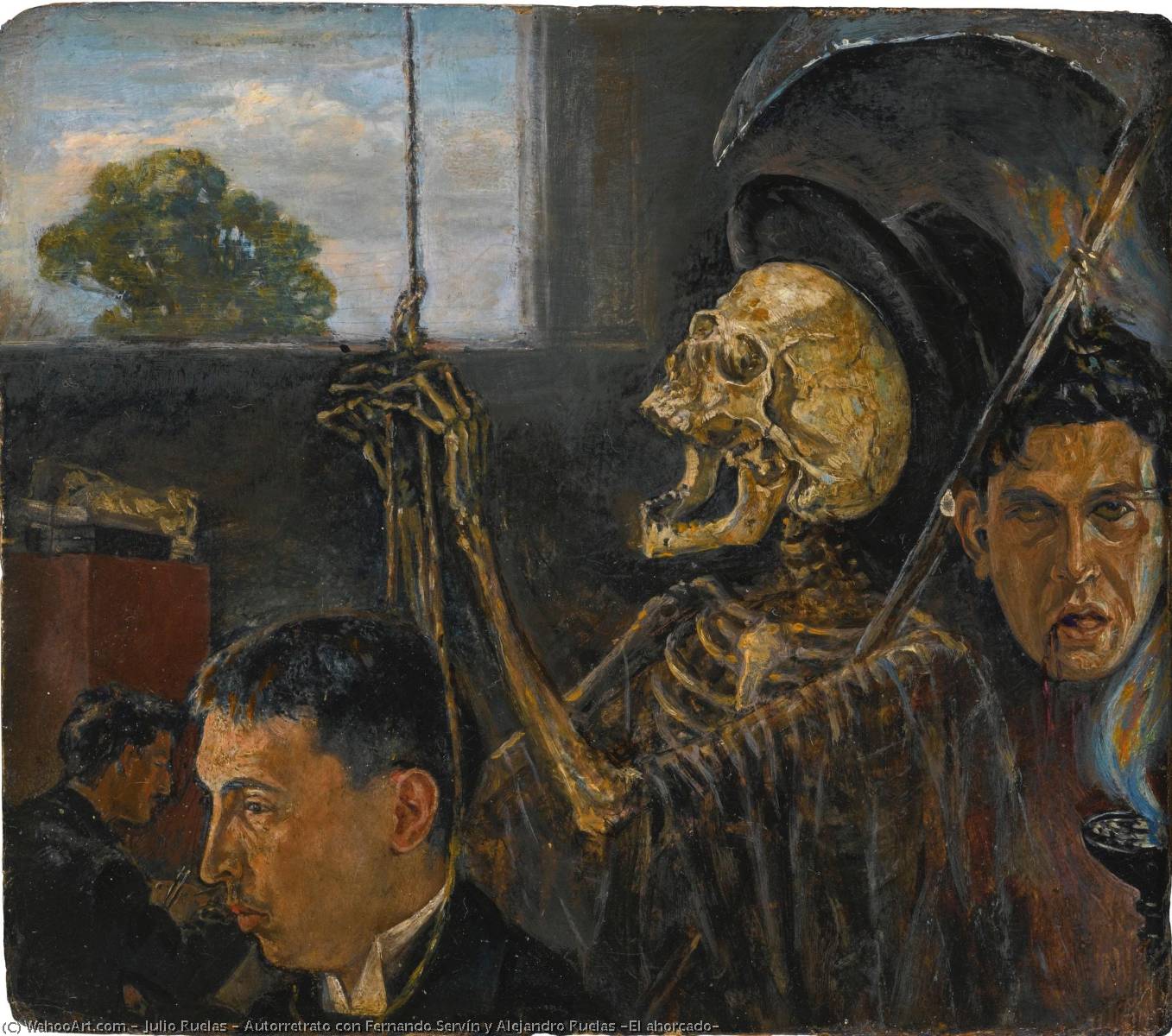
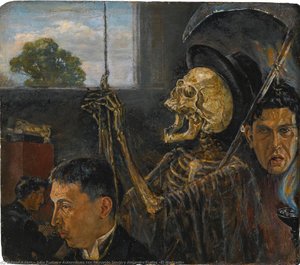
StatsAutorretrato con Fernando Servín y Alejandro Ruelas (El ahorcado)
 13.0 x 15.0 cm
 Read More
Giclée / Art Print
Museum-quality giclée or canvas print with fast production and flexible finish options. ( Buy Hand Made Painting Switch to Digital Image)




































Pick from our preset sizes that match the artwork's original proportions.

You may enter your own dimensions to fit a specific frame or space. If your selected size does not match the original image's proportions, we will either crop the artwork or extend the image with a mirrored or solid-fill edge. A digital mockup will be sent for your approval before production begins.
Please note that the on-screen preview does not reflect the actual cropping or extension. Only the mockup will accurately show the final composition.
While custom sizes are available, we recommend selecting a dimension from the predefined list to preserve the original proportions.
Worldwide Delivery () in 2 weeks instead of standard 4/5 weeks. (13 September)

Free Worldwide Express Shipping

High-Quality Linen Canvas

Full Shipping Insurance

Customs Tax Refund Guarantee

True Color Matching Guarantee

100-Day Return Policy (Defects Only)

100% Money-Back Guarantee

Bulk Discount Offer
 Glass option is only available in size under 110 CM

Autorretrato con Fernando Servín y Alejandro Ruelas (El ahorcado)
Giclée / Art Print
Reproduction Size
-


Total Price
$ 63
Related Artworks





Artist Biography
Julio Ruelas: A Tormented Visionary of Mexican Symbolism
Julio Ruelas (1870-1907) remains a profoundly enigmatic figure in the history of Mexican art, an artist whose intensely personal and often unsettling imagery continues to captivate viewers nearly a century after his untimely death. Born in Zacatecas, Mexico, into a family steeped in artistic tradition – his father was a painter – Ruelas’s journey as an artist was marked by both intense creative fervor and profound personal struggles. He wasn't merely a painter; he was a draughtsman, printmaker, and graphic artist, meticulously crafting a visual language deeply rooted in Mexican folklore, mythology, and the anxieties of modernity.
Ruelas’s early artistic development was significantly shaped by his time in Europe, particularly in Karlsruhe, Germany. There, amidst the influence of Romanticism, he honed his drawing skills and began to explore themes of darkness, mortality, and psychological torment – elements that would become central to his mature style. This period instilled a fascination with dramatic narratives and a willingness to confront difficult subjects, laying the groundwork for his later, more intensely symbolic work. His studies under academic painter Meyerbeer in Danzig further broadened his artistic horizons, exposing him to classical techniques and compositional principles.
The Revista Moderna and the Rise of Symbolism
Ruelas’s career truly took flight when he joined the prestigious Revista Moderna magazine in Mexico City. This publication, a leading voice in Mexican intellectual life, provided him with an unprecedented platform to showcase his distinctive style. It was here that he established himself as the principal illustrator, imbuing the magazine's pages with his haunting visions of Mexican identity and the darker aspects of human experience. His work for Revista Moderna wasn’t simply decorative; it was a deliberate engagement with contemporary social and political issues, often subtly critiquing the inequalities and anxieties of the era.
Ruelas's artistic style is immediately recognizable by its stark contrasts, dramatic lighting, and meticulously rendered details. He frequently depicted himself within his own artwork – self-portraits that are not merely representations of his physical appearance but rather explorations of his inner psyche. These self-images, often characterized by a sense of isolation and torment, became a signature element of his oeuvre. The twisted lines and shadowed features he employed created an atmosphere of unease and psychological depth, reflecting the artist’s own struggles with illness and mortality.
A Palette of Torment: Technique and Symbolism
Ruelas's technical mastery is evident in his intricate etchings and prints. He possessed a remarkable ability to capture subtle nuances of light and shadow, creating a sense of three-dimensionality on the flat surface of the print. His use of black ink was particularly striking – he employed it not merely for outlining but also for building up layers of texture and tone, imbuing his images with a palpable sense of weight and darkness. His subjects often drew upon Mexican folklore and mythology—the “suplicio de la Reina Mora” (The Torment of the Queen), depicting a tragic queen’s demise, or "La domadora" (The Domadora) portraying a woman controlling a wild animal – these scenes were rendered with an unsettling realism that amplified their emotional impact.
Beyond technique, Ruelas's work is profoundly symbolic. He frequently employed recurring motifs—shadows, masks, and distorted figures—to explore themes of death, decay, and the fragility of human existence. The “autorretrato con musa” (Portrait with Muse), for example, suggests a complex relationship between creator and subject, hinting at both admiration and perhaps even a degree of self-destruction. His fascination with the macabre – images of hanged satyrs and scenes of lovers’ suicides – reflected a preoccupation with mortality and the darker aspects of human nature.
A Tragic End and Lasting Legacy
Ruelas's life was tragically cut short at the age of 37, succumbing to tuberculosis in Paris. Despite his brief career, he left behind a remarkably significant body of work that continues to be studied and admired by art historians and collectors alike. His etchings are now housed in museums across Mexico and beyond, including the Museum of the City of Mexico and the Zacatecas Museum, testament to their enduring artistic merit. His influence can also be seen in the works of later Mexican artists who embraced symbolism and explored themes of identity and social critique.
More than just an artist, Julio Ruelas was a chronicler of his time—a sensitive observer of Mexican society grappling with rapid modernization and cultural change. His art remains a powerful testament to the complexities of the human condition, offering a glimpse into the tormented soul of a visionary artist who dared to confront the darkness within himself and share it with the world.
julio ruelas
1870 - 1907
Quick Facts
- Artistic Movement Or Style: Mexican Symbolism
- Artists Or Movements Influenced By This Artist: ['Revista Moderna']
- Artists Who Influenced This Artist:
- Meyerbeer
- Romanticism
- Date Of Birth: June 21, 1870
- Date Of Death: September 16, 1907
- Full Name: Julio Ruelas
- Nationality: Mexican
- Notable Artworks:
- El suplicio de la Reina Mora
- La domadora
- Retrato de Rubén Campos
- Place Of Birth: Zacatecas, Mexico