

 Preview
 Send
Send Share
Share
 Details

 Download
 Similars
 X-Ray
X-Ray Diaporama
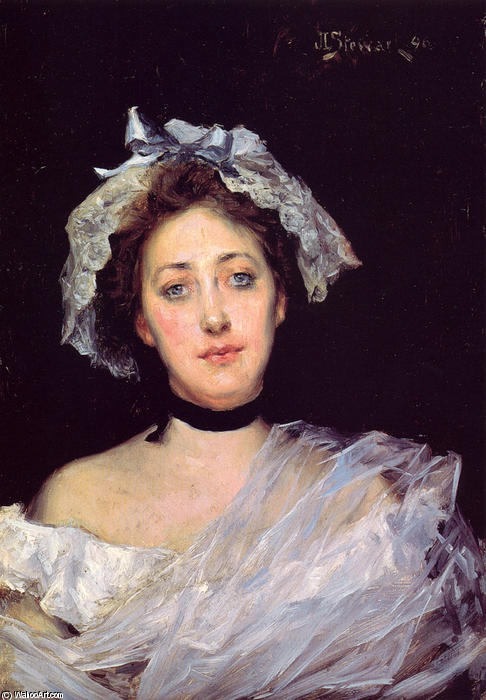
An English Lady
 Read More
Purchase a high-resolution, enhanced digital image, far superior to the online preview.
Each file is meticulously prepared by our in-house specialists using advanced tools and expert manual retouching. We ensure every image has exceptional clarity, precise color accuracy, and fine detail.
The final file is delivered via email within 72 hours, optimized for immediate use in professional, editorial, and print environments. This is the same quality trusted by top-tier design studios, publishers, and galleries.
Digital Image
Download a high-resolution file for personal display, printing, and creative projects. ( Buy Print Buy Hand Made Painting)
Included in Every Digital Image Order
Expert Digital Delivery, Guaranteed
When you choose ArtsDot.com, you're not just getting an image - you're receiving a professionally enhanced digital artwork, crafted with precision and backed by a satisfaction guarantee. Here's everything that comes with your order, automatically:

Fast Email Delivery
Your high-resolution digital image file will be emailed to you within 72 hours of ordering - ready for immediate use.

AI-Enhanced Digital File
Your artwork is professionally optimized using advanced AI tools and manual editing, ensuring maximum detail, clarity, and color accuracy.

Free Lifetime Re-Delivery
Accidentally deleted or lost your file? No worries - we'll resend it to you anytime, free of charge.

No Import Fees - Ever
Enjoy your artwork instantly with zero customs, duties, or delivery fees - digital downloads are always tax-free.

Color Accuracy Guarantee
We ensure your digital image reflects the original colors as closely as possible using professional tools and color management.

60-Day Satisfaction Guarantee
If you're not satisfied with your digital image, we'll revise it or refund 100% within 60 days - no questions asked.

100% Money-Back Guarantee
Not satisfied? Get a full refund within 60 days of receiving your digital file - no questions asked.

Bulk Order Discounts
Buy 3 images, save 10% - Buy 5, save 15% - Buy 10+, save 20%. Great for creative projects, galleries, and agencies.
Related Artworks
Artist Biography
A Parisian Bloom: The Life and Art of Julius LeBlanc Stewart
Julius LeBlanc Stewart, often fondly remembered as “the Parisian from Philadelphia,” occupies a fascinating niche in the annals of late 19th and early 20th-century art. Born in Philadelphia in 1855, his trajectory led him not to fully embrace the burgeoning American artistic landscape, but rather to immerse himself within the vibrant currents of European society and painting—specifically, the alluring world of Belle Époque Paris. Stewart wasn’t merely a visitor; he became an integral part of this glamorous milieu, capturing its essence with a unique blend of technical skill, refined sensibility, and a keen eye for the nuances of social life. His canvases offer a window into a bygone era, revealing not just *what* people looked like, but *how* they lived, loved, and sought pleasure. The story of Stewart is one of transatlantic artistic exchange, where American wealth met European sophistication, resulting in a body of work that continues to captivate with its elegance and charm. His father, William Hood Stewart, a sugar millionaire, moved the family to Paris in 1865, becoming a distinguished art collector and an early patron of artists like Marià Fortuny and those associated with the Barbizon school. This relocation proved pivotal for young Julius, shaping his artistic identity within the heart of European culture.
From Philadelphia Academy to Parisian Salons
Stewart’s initial artistic grounding came at the Pennsylvania Academy of the Fine Arts, where he demonstrated an early aptitude for portraiture and figure painting. However, this foundation served as a springboard for something far grander—a relocation to Paris in the 1870s. In Paris, he sought tutelage under Jean-Léon Gérôme, a leading figure of academic painting renowned for his meticulous detail and historical accuracy. While Stewart absorbed the technical rigor of Gérôme’s approach, he also found himself amidst the stirrings of Impressionism and the more naturalistic tendencies of the Barbizon school. Though he didn't fully adopt the broken brushwork or fleeting light effects of the Impressionists, their influence subtly permeated his work, adding a touch of atmospheric vibrancy to his compositions. The Barbizon painters’ emphasis on *plein air* painting—painting outdoors directly from nature—also resonated with Stewart, informing his landscapes and lending a sense of immediacy to his scenes. Early in his Parisian career, he explored Orientalist themes, popular at the time, depicting richly detailed Middle Eastern interiors and figures, showcasing an early fascination with exotic cultures. He exhibited regularly at the Paris Salon from 1878 onwards, establishing himself within the established art world.
Themes of Leisure and Elegance: A Trilogy of Styles
Stewart’s artistic output can be broadly categorized into three distinct yet interconnected areas. First, his *society portraits* became highly sought after by wealthy American and European patrons. These weren't merely likenesses; they were carefully constructed representations of status, taste, and social standing—elegant depictions that captured the glamour and sophistication of the Belle Époque elite. Secondly, his *Orientalist scenes* reveal a continuing fascination with Eastern cultures, filled with intricate details, vibrant costumes, and atmospheric landscapes evoking a sense of mystery and allure. Finally, Stewart’s *yachting scenes* reflect the growing leisure culture of the time, depicting fashionable individuals enjoying life at sea against backdrops like the glamorous canals of Venice or the sparkling Mediterranean. These paintings weren't simply about boats; they were celebrations of wealth, freedom, and the pursuit of pleasure. His style is characterized by meticulous detail, a refined sense of color harmony, and a skillful handling of light and shadow—a blend of academic precision with an Impressionistic touch that made his work both technically accomplished and visually appealing. Works like *On the Yacht “Namouna”, Venice* (1890) exemplify this synthesis, capturing not just the opulence of Bennett’s yacht but also the social interactions and fashionable attire of its passengers.
Recognition and Legacy
Throughout his career, Stewart exhibited widely in Paris, the United States, and other European cities, gaining recognition for his ability to capture the spirit of his time. Notable works like *Nymphs Hunting* (1898), *The Glade* (1900) – housed at the Detroit Institute of Arts – *Oriental Still Life* (1872), *Les Chasseuresses* (1899), and *On the Yacht “Namouna”, Venice* (1890) stand as testaments to his skill and artistic vision. He received numerous commissions from prominent figures, solidifying his reputation as a leading portraitist of his era. While perhaps not as universally recognized today as contemporaries like John Singer Sargent, Stewart’s contributions remain significant. His work provides invaluable insight into the social and cultural values of the Belle Époque—the opulence, leisure, and cosmopolitanism that defined this unique period in history. He successfully navigated the artistic currents of his time, creating a body of work that continues to fascinate and delight viewers with its elegance, charm, and evocative portrayal of a bygone era. The Baptism, exhibited at the 1893 Chicago World’s Columbian Exposition, further cemented his reputation as an artist capable of capturing grand social scenes.
Influences and Artistic Lineage
Stewart’s artistic journey was shaped by several key influences. He deeply admired and learned from Jean-Léon Gérôme, whose emphasis on technical mastery provided a solid foundation for his own work. The Barbizon school painters also played a role, inspiring his appreciation for naturalism and *plein air* painting. However, Stewart didn’t simply imitate these masters; he synthesized their lessons with his own unique sensibility, creating a style that was both refined and engaging.
- Influenced By: Jean-Léon Gérôme, Barbizon School painters
- Influenced: Contributed to the broader aesthetic of refined realism popular in the early 20th century.
While it's difficult to pinpoint direct artistic descendants, his work contributed to the broader aesthetic of refined realism popular in the early 20th century—an approach that valued technical skill, elegant composition, and a faithful representation of the world around us. His legacy lies not in founding a new school of painting, but in embodying the spirit of his time and creating works that continue to resonate with audiences today. He remains “the Parisian from Philadelphia,” a testament to an artist who successfully bridged two worlds and captured the fleeting beauty of a remarkable era.
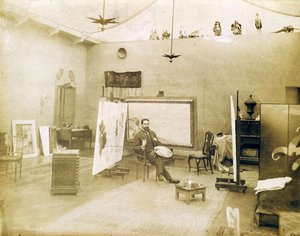
Julius LeBlanc Stewart
1855 - 1919 , United States of America
Quick Facts
- Artistic Movement Or Style: Belle Époque, Realism
- Artists Or Movements Influenced By This Artist: ['Refined Realism']
- Artists Who Influenced This Artist:
- Jean-Léon Gérôme
- Barbizon School
- Date Of Birth: 1855
- Date Of Death: 1919
- Full Name: Julius LeBlanc Stewart
- Nationality: American
- Notable Artworks:
- Nymphs Hunting
- The Glade
- Oriental Still Life
- Les Chasseuresses
- On the Yacht Namouna
- Place Of Birth: Philadelphia, USA

