

 Preview
 Send
Send Share
Share
 Details

 Download
 Similars
 X-Ray
X-Ray Diaporama
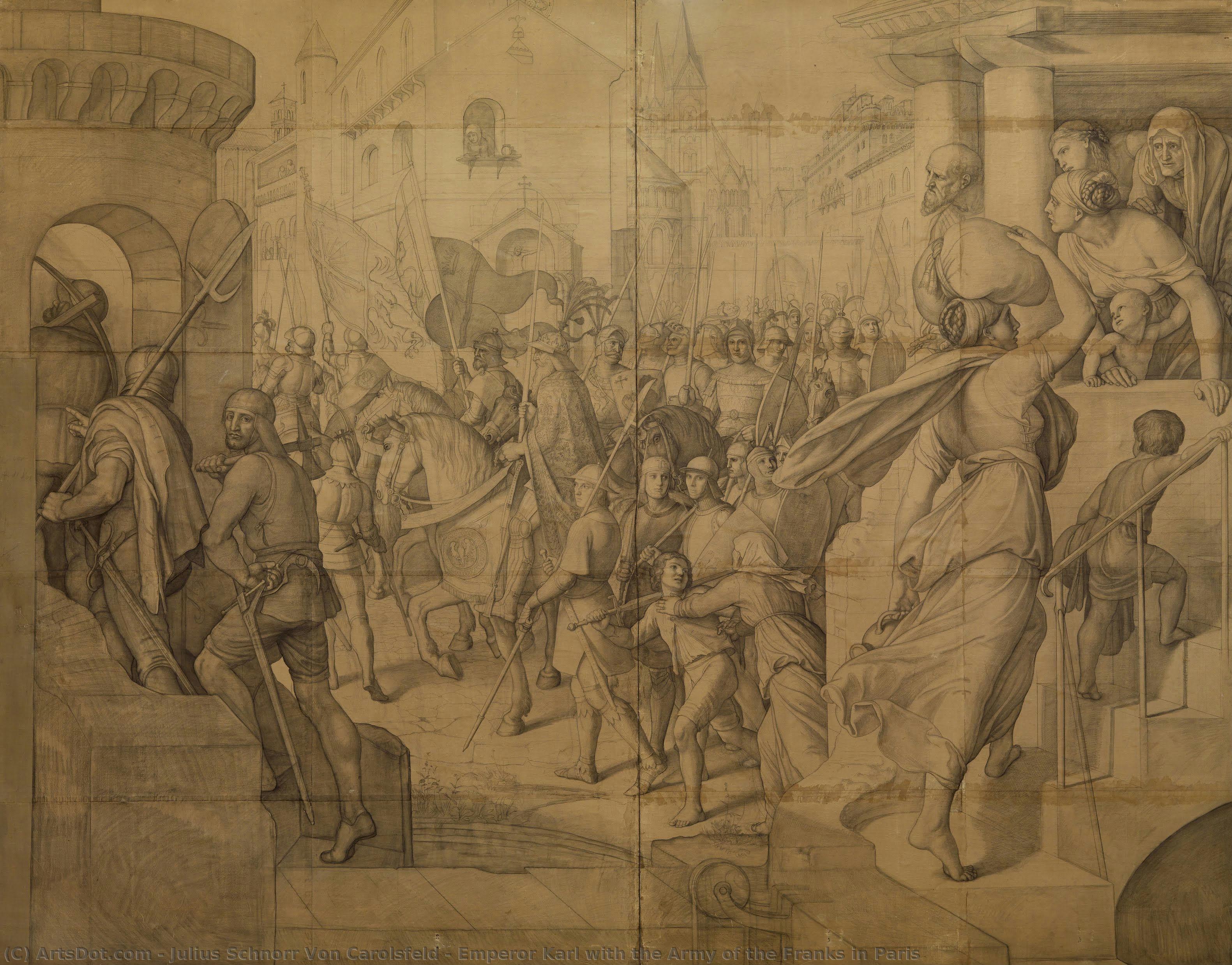
Emperor Karl with the Army of the Franks in Paris
 Oil On Canvas
- WallArt
- Romantic Historical Painting
 1826
1826- 19th Century
 287.0 x 363.0 cm
 Staatliche Kunsthalle Karlsruhe
 Read More
Purchase a high-resolution, enhanced digital image, far superior to the online preview.
Each file is meticulously prepared by our in-house specialists using advanced tools and expert manual retouching. We ensure every image has exceptional clarity, precise color accuracy, and fine detail.
The final file is delivered via email within 72 hours, optimized for immediate use in professional, editorial, and print environments. This is the same quality trusted by top-tier design studios, publishers, and galleries.
Digital Image
Download a high-resolution file for personal display, printing, and creative projects. ( Buy Print Buy Hand Made Painting)
Included in Every Digital Image Order
Expert Digital Delivery, Guaranteed
When you choose ArtsDot.com, you're not just getting an image - you're receiving a professionally enhanced digital artwork, crafted with precision and backed by a satisfaction guarantee. Here's everything that comes with your order, automatically:

Fast Email Delivery
Your high-resolution digital image file will be emailed to you within 72 hours of ordering - ready for immediate use.

AI-Enhanced Digital File
Your artwork is professionally optimized using advanced AI tools and manual editing, ensuring maximum detail, clarity, and color accuracy.

Free Lifetime Re-Delivery
Accidentally deleted or lost your file? No worries - we'll resend it to you anytime, free of charge.

No Import Fees - Ever
Enjoy your artwork instantly with zero customs, duties, or delivery fees - digital downloads are always tax-free.

Color Accuracy Guarantee
We ensure your digital image reflects the original colors as closely as possible using professional tools and color management.

60-Day Satisfaction Guarantee
If you're not satisfied with your digital image, we'll revise it or refund 100% within 60 days - no questions asked.

100% Money-Back Guarantee
Not satisfied? Get a full refund within 60 days of receiving your digital file - no questions asked.

Bulk Order Discounts
Buy 3 images, save 10% - Buy 5, save 15% - Buy 10+, save 20%. Great for creative projects, galleries, and agencies.
Emperor Karl with the Army of the Franks in Paris – A Renaissance Revival
Julius Schnorr von Carolsfeld’s “Emperor Karl with the Army of the Franks in Paris,” completed in 1826, is more than a historical depiction; it's a potent distillation of artistic and spiritual aspiration. Measuring an imposing 287 x 363 cm, this monumental canvas immediately commands attention, transporting the viewer to the heart of a pivotal moment in European history – the arrival of Charles VII in Paris following his victory at Orleans. The photograph captures a painting brimming with dynamic energy, showcasing Schnorr von Carolsfeld’s masterful command of composition and his unwavering commitment to the principles of Renaissance art.
- Subject Matter: The scene meticulously portrays Emperor Karl VII surrounded by his army of Franks, a tableau designed not merely to record an event but to imbue it with symbolic weight.
- Historical Context: Painted during a period of intense political and religious upheaval in Europe, the work reflects the burgeoning interest in classical antiquity and the desire to revive the grandeur of the Renaissance – a movement Schnorr von Carolsfeld wholeheartedly embraced.
A Symphony of Line and Form
Schnorr von Carolsfeld’s artistic journey began within a family steeped in artistic tradition, his father, Veit Hanns Schnorr von Carolsfeld, providing the initial foundation for his talent. This early training instilled a deep appreciation for visual expression and honed his skills through meticulous copying of neoclassical drawings by John Flaxman. The influence of Flaxman is readily apparent in this work – a deliberate choice to emulate the clarity of line, the balanced composition, and the idealized forms characteristic of Flaxman’s style. The artist's technique demonstrates a remarkable control of line, creating a sense of movement and dynamism within the crowded scene. Notice how individual figures are rendered with precise detail, yet contribute to the overall harmonious flow of the composition. The use of light and shadow further enhances the dramatic effect, emphasizing key elements and adding depth to the portrayal.
Symbolism and Narrative
Beyond a simple depiction of military might, “Emperor Karl with the Army of the Franks in Paris” is rich in symbolic meaning. The presence of swords scattered throughout the painting speaks to the violence inherent in conflict, while the figures themselves – soldiers, civilians, and the Emperor himself – represent various aspects of power, faith, and leadership. Schnorr von Carolsfeld’s meticulous attention to detail suggests a desire not just to record history but to imbue it with spiritual significance, aligning with his broader artistic philosophy centered on "spiritual vision." The horse, prominently positioned at the center, symbolizes nobility and strength – qualities essential to the Emperor's authority.
Emotional Impact and Artistic Legacy
The painting’s enduring appeal lies in its ability to evoke a sense of awe and wonder. Schnorr von Carolsfeld masterfully captures the energy of a momentous occasion, inviting viewers to contemplate themes of power, faith, and human endeavor. This artwork represents a pivotal moment in Schnorr von Carolsfeld's career, solidifying his reputation as a leading figure in the revival of Renaissance ideals. ArtsDot’s hand-painted reproduction faithfully recreates this masterpiece, allowing you to experience its full impact and appreciate the artistry of one of Germany’s most significant 19th-century painters.
Related Artworks
Artist Biography
A Life Dedicated to Spiritual Vision
Julius Schnorr von Carolsfeld, born in Leipzig in 1794, emerged from a family deeply rooted in the artistic traditions of Germany. His father, Veit Hanns Schnorr von Carolsfeld, a respected draughtsman, engraver, and painter, provided young Julius with his earliest artistic training, instilling within him a foundational skill set and an appreciation for visual expression. This early exposure proved pivotal, shaping the trajectory of a career that would become synonymous with religious art and a fervent revival of Renaissance ideals. Even in these formative years, a sensitivity to line and form was nurtured, evident in Julius’s initial practice of copying the neoclassical drawings of John Flaxman – a discipline that honed his observational abilities and laid the groundwork for his later stylistic development. At seventeen, he ventured to Vienna, enrolling at the Academy of Fine Arts, but this period coincided with a burgeoning spirit of artistic rebellion; figures like Johann Friedrich Overbeck, who would soon become central to the Nazarene movement, had recently been expelled, signaling a shift away from established academic norms and towards a more spiritually-driven aesthetic.The Embrace of the Nazarenes and Roman Flourishing
It was in 1815 that Schnorr’s artistic path truly crystallized as he followed Overbeck and other like-minded artists to Rome. This marked his formal entry into the Nazarene movement, a collective of German painters who sought to purify art by returning to what they perceived as the spiritual integrity and stylistic clarity of early Renaissance masters. Rejecting the prevailing trends of their time – Neoclassicism and Romanticism – the Nazarenes looked towards the 15th-century Italian artists, particularly Fra Angelico, for inspiration. Schnorr initially absorbed this influence deeply, his style characterized by a delicate precision and a luminous palette reminiscent of Fra Angelico’s frescoes. However, his artistic vision gradually evolved during his time in Rome, expanding to encompass the grandeur and complexity of High Renaissance models. The Nazarenes championed fresco painting as the ultimate form of monumental art, and Schnorr was entrusted with decorating the entrance hall of the Villa Massimo near the Lateran – a significant commission that allowed him to translate the epic narratives of Ariosto into vibrant visual form. This project showcased his burgeoning talent for composition and storytelling, establishing him as a key figure within the movement.Return to Munich and Royal Commissions
In 1825, Schnorr von Carolsfeld returned to Germany, settling in Munich and entering the service of King Ludwig I of Bavaria. This marked a new chapter in his career, one defined by large-scale decorative projects and royal patronage. Ludwig I, an enthusiastic advocate for the arts, envisioned a revival of wall painting throughout Bavaria, and Schnorr was appointed as a central figure in this ambitious undertaking. His most substantial commission involved decorating five halls within the Residenz palace with frescoes illustrating scenes from the *Nibelungenlied*, the epic German poem. Initially, Schnorr conceived of a complex symbolic program that would intertwine elements of German history with Old Testament narratives, aiming to create a profound and multi-layered visual experience. However, Ludwig I ultimately preferred a more straightforward narrative approach, curtailing some of Schnorr’s more ambitious artistic intentions. Despite this limitation, the frescoes demonstrated his mastery of composition and draughtsmanship, though they were sometimes criticized for their elaborate detail.The “Picture Bible” and Legacy
Schnorr's later career was dominated by an extraordinary undertaking: the creation of a monumental "Picture Bible." Published in Leipzig between 1852 and 1860, with an English edition following in 1861, this ambitious work comprised hundreds of meticulously crafted illustrations depicting scenes from both the Old and New Testaments. The “Picture Bible” was not merely a collection of images; it was a testament to Schnorr’s deep Lutheran faith and his extensive theological knowledge. While lauded for its scholarly accuracy and artistic ambition, some critics found the drawings overly complex and lacking in harmonious balance. Beyond biblical illustration, Schnorr also demonstrated versatility as a designer, creating stained-glass windows for prominent cathedrals such as Glasgow Cathedral and St Paul's Cathedral in London. These designs, however, received mixed reviews, with some observers finding them to be a departure from traditional medieval aesthetics. Julius Schnorr von Carolsfeld passed away in 1872, leaving behind a rich artistic legacy defined by his contributions to the Nazarene movement, his prolific output of religious art, and his unwavering commitment to reviving historical artistic traditions. His work continues to inspire artists and scholars alike, serving as a powerful reminder of the enduring power of faith and artistic vision.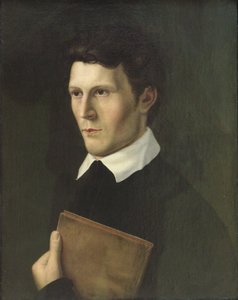
Julius Schnorr von Carolsfeld
1794 - 1872 , Germany
Quick Facts
- Artistic Movement Or Style: Nazarene Movement
- Artists Or Movements Influenced By This Artist: Romanticism, Renaissance revival
- Artists Who Influenced This Artist:
- Fra Angelico
- Albrecht Dürer
- Date Of Birth: 1794
- Date Of Death: 1872
- Full Name: Julius Schnorr von Carolsfeld
- Nationality: German
- Notable Artworks:
- Madonna and Child
- Picture Bible
- Place Of Birth: Leipzig, Germany

