 Preview
 Send
Send Share
Share
 Details

 Download
 Similars
 X-Ray
X-Ray Diaporama
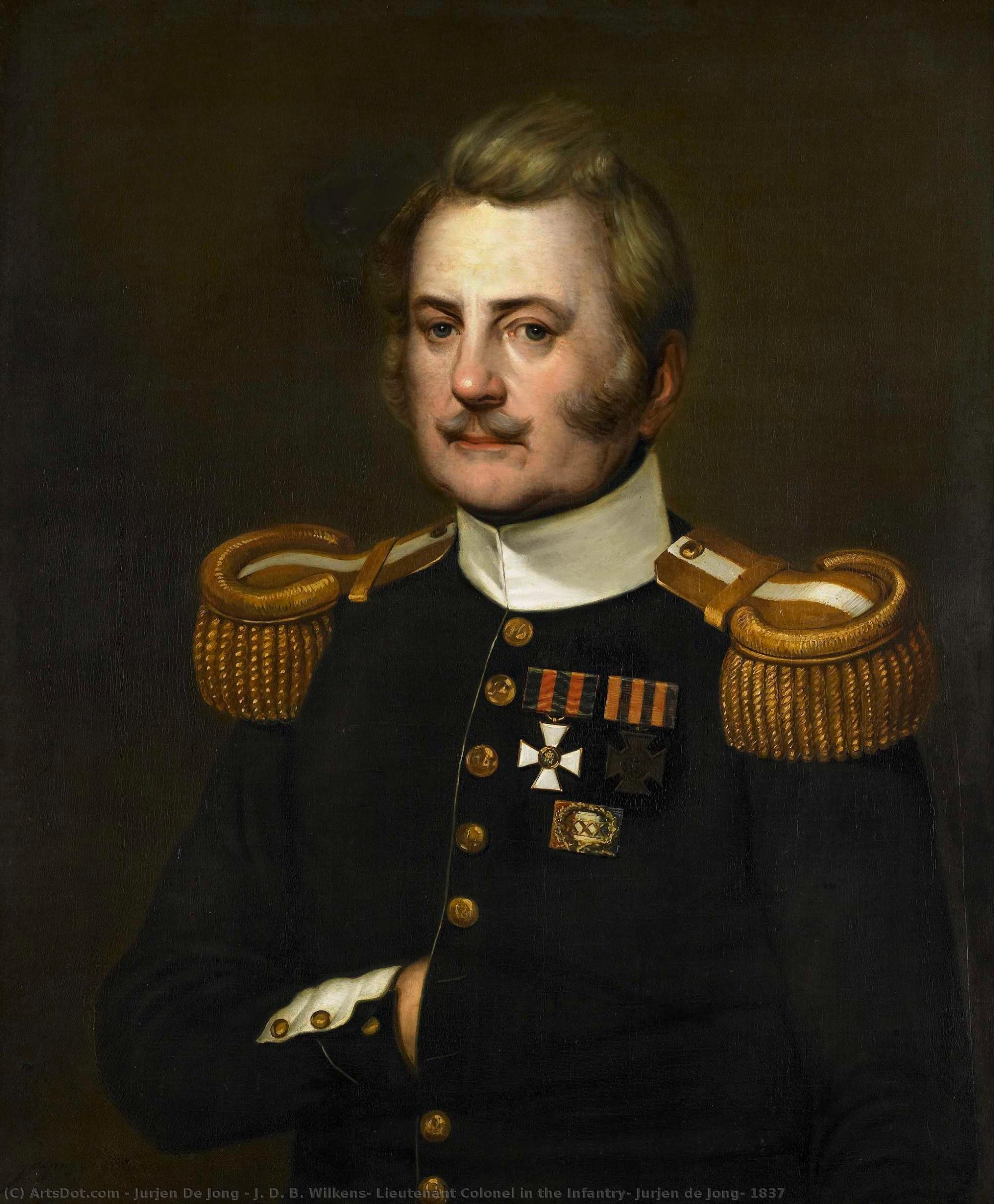
J. D. B. Wilkens, Lieutenant Colonel in the Infantry, Jurjen de Jong, 1837
 1837
1837 66.0 x 56.0 cm
 Read More
Giclée / Art Print
Museum-quality giclée or canvas print with fast production and flexible finish options. ( Buy Hand Made Painting Buy Image)




































Pick from our preset sizes that match the artwork's original proportions.

You may enter your own dimensions to fit a specific frame or space. If your selected size does not match the original image's proportions, we will either crop the artwork or extend the image with a mirrored or solid-fill edge. A digital mockup will be sent for your approval before production begins.
Please note that the on-screen preview does not reflect the actual cropping or extension. Only the mockup will accurately show the final composition.
While custom sizes are available, we recommend selecting a dimension from the predefined list to preserve the original proportions.
Worldwide Delivery () in 2 weeks instead of standard 4/5 weeks. (27 August)

Free Worldwide Express Shipping

High-Quality Linen Canvas

Full Shipping Insurance

Customs Tax Refund Guarantee

True Color Matching Guarantee

60-Day Return Policy (Defects Only)

100% Money-Back Guarantee

Bulk Discount Offer
 Glass option is only available in size under 110 CM

J. D. B. Wilkens, Lieutenant Colonel in the Infantry, Jurjen de Jong, 1837
Giclée / Art Print
Reproduction Size
-


Total Price
$ 63
Collectible Description
Related Artworks







Artist Biography
The Enigmatic Worlds of Jurjen de Jong
Jurjen de Jong is a contemporary artist whose work occupies a fascinating space between realism and surrealism, inviting viewers into meticulously crafted scenes that feel both familiar and profoundly unsettling. Born in the Netherlands (the exact year remains intentionally private, reflecting De Jong’s preference for allowing his art to speak rather than biographical details), he has cultivated a unique artistic voice characterized by hyperrealistic depictions of interiors populated by ghostly, almost translucent figures. His paintings aren't portraits in the traditional sense; they are explorations of memory, absence, and the lingering emotional weight of spaces long occupied.A Study in Light and Absence
De Jong’s artistic journey wasn’t formally trained through a conventional academic path. He is largely self-taught, which perhaps explains the unconventional nature of his technique. While rooted in classical painting methods – evident in his masterful handling of light and shadow, and precise rendering of textures – he diverges from tradition by employing an unusual layering process involving multiple glazes and washes. This creates a luminosity that isn’t simply about depicting illumination but about evoking it; the figures within his paintings appear to *emanate* light rather than reflect it, contributing to their ethereal quality. The artist often focuses on domestic interiors – bedrooms, living rooms, hallways – spaces imbued with personal history and quiet narratives. These aren't grand or opulent settings; they are deliberately ordinary, lending a sense of universality to the emotions they convey. He frequently depicts these scenes devoid of vibrant color, favoring muted palettes of grays, blues, and ochres that amplify the feeling of melancholy and introspection.Influences and Artistic Development
Pinpointing direct influences on De Jong’s work is challenging, as his style feels remarkably singular. However, one can detect echoes of 17th-century Dutch Masters like Johannes Vermeer in his meticulous attention to detail and use of light. The psychological realism of Edward Hopper also resonates within his paintings – the sense of loneliness and alienation that permeates both artists' works. The influence isn’t imitative but rather a shared sensibility towards capturing the quiet dramas of everyday life. Early work showed a greater emphasis on still life, gradually evolving into the figure-focused compositions he is known for today. This shift coincided with a deeper exploration of personal memory and the artist's fascination with the concept of “psychic residue” – the idea that emotions and experiences leave an indelible mark on physical spaces. He moved away from depicting objects as symbols to focusing on the human presence, or rather, the *lack* thereof, within these environments.Themes and Symbolism
The recurring motif of translucent figures is central to understanding De Jong’s artistic concerns. These aren't ghosts in the traditional sense; they are more akin to echoes, remnants of past inhabitants whose presence lingers in the atmosphere of the rooms they once occupied. They represent memory itself – fragmented, incomplete, and constantly shifting. The emptiness surrounding these figures isn’t simply about physical absence but about emotional distance and the passage of time. The artist often includes subtle details that hint at a narrative without ever fully revealing it—a half-read book, an overturned chair, a single flower in a vase—leaving room for viewers to project their own experiences and interpretations onto the scenes. His work explores themes of loss, longing, and the ephemeral nature of existence. The deliberate ambiguity forces contemplation on the viewer’s part, prompting questions about identity, belonging, and the stories we tell ourselves about our past.Historical Significance and Contemporary Relevance
Jurjen de Jong's work stands out in contemporary art for its quiet intensity and refusal to engage with overt spectacle. In an era often dominated by large-scale installations and politically charged statements, his paintings offer a more intimate and contemplative experience. He has garnered international recognition for his unique vision, exhibited in galleries across Europe and North America.- His ability to evoke powerful emotions through subtle means has resonated with collectors and critics alike.
- De Jong’s work challenges the traditional boundaries between realism and surrealism, creating a new visual language that is both hauntingly beautiful and deeply thought-provoking.
- He represents a growing trend in contemporary art towards introspective explorations of personal history and emotional landscapes.