- Home

- Print on canvas
- justus sustermans, joost sustermans or suttermans, his given name italianised to giusto
 Preview
 Send
Send Share
Share
 Details

 Download
 Similars
 X-Ray
X-Ray Diaporama
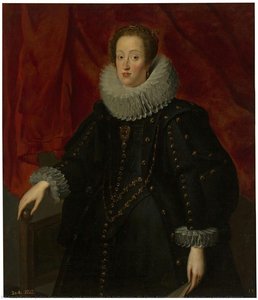
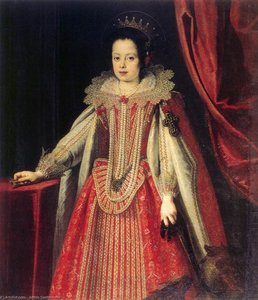
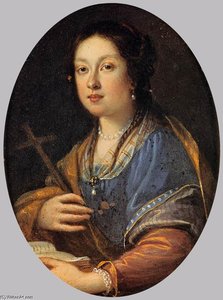
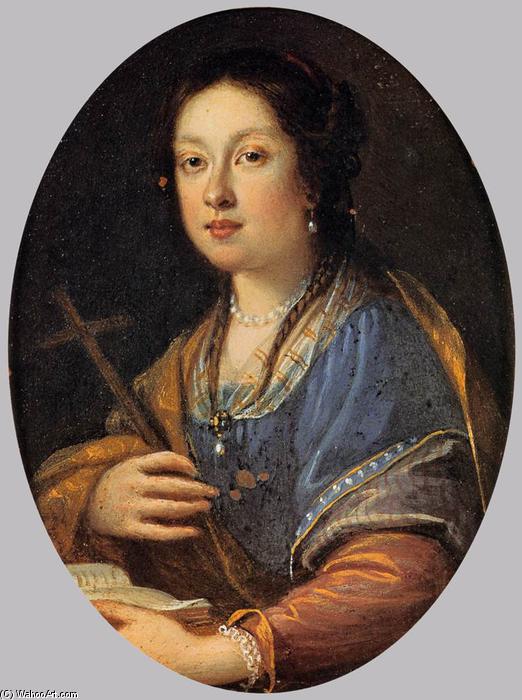
Portrait of Margherita de' Medici
 1628
1628 187.0 x 115.0 cm
 Read More
Giclée / Art Print
Museum-quality giclée or canvas print with fast production and flexible finish options. ( Buy Hand Made Painting Buy Image)




































Pick from our preset sizes that match the artwork's original proportions.

You may enter your own dimensions to fit a specific frame or space. If your selected size does not match the original image's proportions, we will either crop the artwork or extend the image with a mirrored or solid-fill edge. A digital mockup will be sent for your approval before production begins.
Please note that the on-screen preview does not reflect the actual cropping or extension. Only the mockup will accurately show the final composition.
While custom sizes are available, we recommend selecting a dimension from the predefined list to preserve the original proportions.
Worldwide Delivery () in 2 weeks instead of standard 4/5 weeks. (3 September)

Free Worldwide Express Shipping

High-Quality Linen Canvas

Full Shipping Insurance

Customs Tax Refund Guarantee

True Color Matching Guarantee

60-Day Return Policy (Defects Only)

100% Money-Back Guarantee

Bulk Discount Offer
 Glass option is only available in size under 110 CM

Portrait of Margherita de' Medici
Giclée / Art Print
Reproduction Size
-


Total Price
$ 63
The Subject and Composition
The portrait depicts Margherita de' Medici with a three-quarter view, a common technique used during the Baroque period to add depth and dimension to the subject. She is adorned in a beautiful blue garment with gold trim, symbolizing her high social status. The clothing is intricately detailed with lace and embroidery, reflective of the fashion of the time. A pearl necklace adds to the elegance of her attire, while a book or small object in her right hand may hold symbolic significance.Artistic Style and Technique
The painting technique employed by Sustermans is characterized by fine brushwork and attention to detail, particularly in the rendering of skin, hair, and clothing textures. The use of light and shadow creates a sense of volume and form, typical of Baroque portraiture. The dark background provides a stark contrast with the subject, highlighting her features and emphasizing her importance. Key Features:- Oil on canvas painting measuring 187 x 115 cm
- Housed in the Galleria Palatina in Italy
- Created by Justus Sustermans in 1628
- Depicts Margherita de' Medici with a three-quarter view
The Portrait of Margherita de' Medici is a remarkable example of Baroque portraiture, showcasing Sustermans' exceptional skill and attention to detail. As a masterpiece of art, it continues to inspire and captivate audiences today.
Related Artworks








Artist Biography
Early Life and Training
Justus Sustermans, Joost Suttermans or Suttermans (born Antwerp, Belgium 1597 – died 1681 Florence) was a Flemish Baroque painter and draughtsman whose career spanned over six decades and cemented his reputation as the foremost portrait painter in Italy during his time. Born into an artistic family—his father, Frans Sutermans, was also a painter—Justus’s upbringing instilled within him a profound appreciation for visual art from a young age. He began his artistic journey in Antwerp, where he was profoundly influenced by the monumental canvases of Peter Paul Rubens and Anthony van Dyck, artists who epitomized the grandeur and dynamism of the Baroque aesthetic. This formative period equipped him with foundational skills and exposed him to stylistic innovations that would shape his distinctive oeuvre.Style and Technique
Sustermans’ artistic style is characterized by a bold embrace of color palettes and dramatic chiaroscuro—the interplay between light and shadow—techniques that were hallmarks of the Baroque era. Unlike some contemporaries who favored meticulous detail, Sustermans prioritized capturing the essence of his subjects through expressive brushstrokes and masterful use of tonal gradation. His canvases pulsated with vitality, conveying not merely likeness but also psychological depth and emotional resonance. He skillfully employed glazing techniques to achieve luminous surfaces and create a sense of atmospheric perspective, mirroring the artistic conventions prevalent in Antwerp and Florence during his lifetime. The meticulous observation of anatomy combined with an intuitive understanding of human emotion distinguished Sustermans’ work from many others of his time.Notable Works
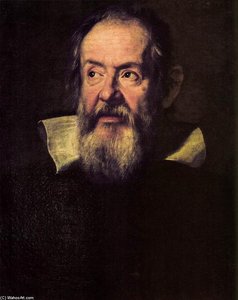
Justus Sustermans achieved international acclaim primarily through his portraits of members of the Medici family, securing him a prestigious position as their court painter. His depictions of Cosimo III de' Medici and Margherita de' Medici stand as masterpieces of Baroque portraiture, showcasing remarkable realism and conveying an unparalleled sense of dignity and composure. These paintings exemplify Sustermans’ ability to distill complex character traits into visually arresting compositions—a testament to his artistic prowess. Beyond portraits, Sustermans produced a diverse range of artworks encompassing history paintings, genre scenes depicting everyday life, still lifes brimming with meticulous detail, and animal studies imbued with scientific observation. His monumental *The Florentine Senate's Pledge of Allegiance to Ferdinando II de’ Medici*, commissioned by the Grand Duke himself, exemplifies his ambition and technical mastery—a sprawling canvas that captures a pivotal moment in Florentine history. Furthermore, Sustermans’ portraits of Galileo Galilei are considered among the most psychologically astute representations of scientific genius of their era.Influence and Legacy
Justus Sustermans exerted considerable influence on subsequent generations of artists, particularly Anthony van Dyck, who admired Sustermans' bold style and expressive technique. His meticulous attention to detail and his masterful use of chiaroscuro served as inspiration for many painters working in the Dutch Golden Age. Sustermans’ legacy extends beyond individual artworks; he established a workshop that produced numerous copies of celebrated paintings—a practice common during the Baroque period—contributing to the dissemination of artistic ideas across Europe. His portraits of the Medici family continue to captivate audiences today, offering invaluable insights into the cultural and political landscape of 17th-century Italy. Sustermans’ contribution to art history is recognized as a cornerstone of Baroque portraiture, securing his place among the most revered artists of his time.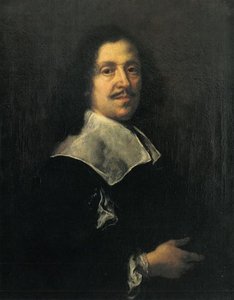
justus sustermans, joost sustermans or suttermans, his given name italianised to giusto
1597 - 1681 , Belgium
Quick Facts
- Artistic Movement Or Style: Baroque
- Artists Or Movements Influenced By This Artist: ['Anthony van Dyck']
- Artists Who Influenced This Artist:
- Peter Paul Rubens
- Anthony van Dyck
- Date Of Birth: September 28, 1597
- Date Of Death: April 23, 1681
- Full Name: Justus Sustermans
- Nationality: Flemish
- Notable Artworks:
- Domenica delle Cascine, la Cecca di Pratolino
- Portrait of Galileo Galilei
- Place Of Birth: Antwerp, Belgium