 Preview
 Send
Send Share
Share
 Details

 Download
 Similars
 X-Ray
X-Ray Diaporama
Plato
 Oil On Panel
- Renaissance Humanism
 1477
1477- Renaissance
 101.0 x 69.0 cm
 The Louvre
 Read More
Hand Made Oil Reproduction
Hand-painted oil on canvas in your size and frame, made to order by our artists. ( Buy Print Buy Image)




P118B $10

P118H $10

P118W $10

P438Z $10

P508JH $12

P508YH $12

P805H $10

P805Z $10

P919BZ $10

P919G $10

P919XJ $10

P959ZH $10

P968JZ $12

W106C $8

W218G $10

W218JH $8

W218Y $10

W307PJ $10

W316G $10

W316PJ $8

W316Y $10

W398PJ $8

W4111J $10

W500HY $15

W500JH $15

W692G $12

W849H $8

W940BG $15

W953PJ $8




Pick from our preset sizes that match the artwork's original proportions.

You may enter your own dimensions to fit a specific frame or space. If your selected size does not match the original image's proportions, we will either crop the artwork or extend the painting with additional hand-painted elements. A digital mockup will be sent for your approval before production begins.
Please note that the on-screen preview does not reflect the actual cropping or extension. Only the mockup will accurately show the final composition.
While custom sizes are available, we recommend selecting a dimension from the predefined list to preserve the original proportions.
After order, ArtsDot.com team will email client for instructions and provide a mockup preview
Worldwide Delivery () in 3/4 weeks instead of standard 5 weeks. (17 August). No compromise on quality.

Free Worldwide Express Shipping

High-Quality Linen Canvas

Full Shipping Insurance

Customs Tax Refund Guarantee

True Color Matching Guarantee

60-Day Return Policy (Defects Only)

100% Money-Back Guarantee

Bulk Discount Offer
 Glass option is only available in size under 110 CM

Plato
Reproduction Medium
Reproduction Size
-


Total Price
$ 263
Artwork Description
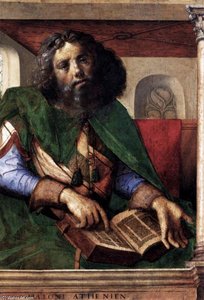
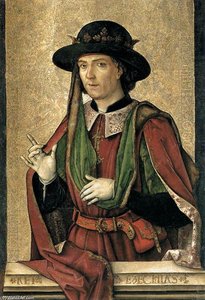
A Renaissance Portrait of Wisdom: Pedro Berruguete’s Plato
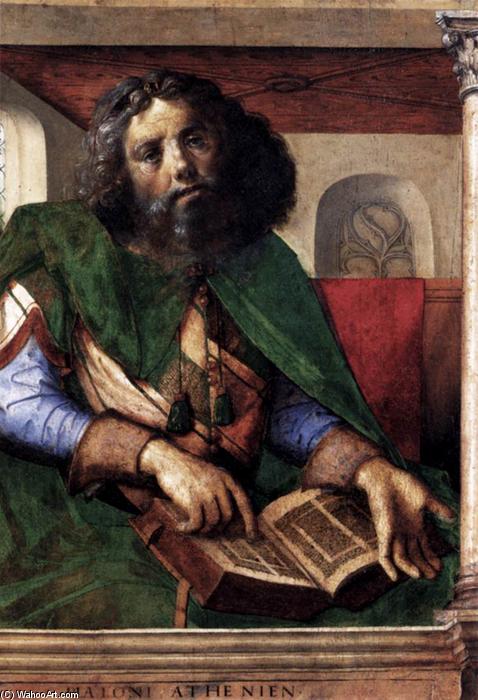
The painting “Plato” by Pedro Berruguete stands as an emblem of the artistic fervor that characterized the burgeoning Italian Renaissance, firmly rooted in the solemn traditions of Gothic art yet propelled forward by humanist ideals and a newfound appreciation for naturalism. Created in 1477, this monumental oil on wood masterpiece resides within the hallowed halls of the Musée du Louvre in Paris, France—a testament to its enduring artistic merit and historical significance.- Subject Matter: At its core lies a portrait of Plato, the revered Athenian philosopher credited with establishing the Academy and shaping Western thought. Berruguete skillfully captures not merely Plato’s physical likeness but also his intellectual aura—a gaze imbued with contemplation and an expression reflecting profound philosophical inquiry.
- Style & Technique: Berruguete deftly blends Gothic stylistic elements with Renaissance innovations. The painting adheres to the meticulous detail demanded by Gothic art, particularly evident in the intricate folds of Plato’s robe and the textured surface of the wood panel—a technique honed during his formative years amidst the Gothic workshops of Castile.
- Historical Context: “Plato” emerged during a period of transformative cultural change across Europe—the Renaissance—fueled by rediscovered classical texts and a renewed interest in humanism. Berruguete’s work reflects this intellectual climate, mirroring the humanist emphasis on reason and observation that supplanted medieval dogma.
- Symbolism: The inclusion of an open book symbolizes Plato's unwavering commitment to knowledge and philosophical discourse—a cornerstone of his legacy. Similarly, the draped robe represents dignity and erudition, reinforcing Plato’s intellectual stature within the artistic narrative.
Related Artworks
Artist Biography
Pedro Berruguete: Bridging Gothic Legacy and Renaissance Dawn
Pedro Berruguete (c. 1450 – 1504) stands as a pivotal figure in Spanish art history, marking the crucial transition between the solemn grandeur of Gothic painting and the burgeoning optimism of the Italian Renaissance. Born in Paredes de Nava, Castile, his exact birth year remains elusive, shrouded in the vagueness characteristic of artists whose lives were documented sparsely during their time. His lineage traced back to noble families, providing him with a foundation for artistic pursuits that would ultimately reshape the visual landscape of Spain. Despite the lack of definitive biographical details—a frustrating impediment for art historians—Berruguete’s oeuvre speaks volumes about his profound understanding and masterful execution of stylistic innovations. He emerged from the shadow of Gothic tradition, absorbing its expressive fervor and meticulous detail, yet simultaneously embracing the humanist ideals and geometric precision championed by Florentine masters like Brunelleschi and Donatello. This duality is palpable in his paintings, where stylized figures coexist with carefully rendered drapery and architectural elements—a hallmark of the emerging Renaissance aesthetic. His artistic journey gained momentum during a period marked by religious upheaval; Berruguete’s most celebrated works depict scenes from the early Inquisition, capturing the anxieties and moral dilemmas of the era with unflinching realism. Simultaneously, he produced breathtaking retablo panels for Castilian churches, demonstrating his technical prowess and ability to convey profound spiritual narratives. These commissions solidified his reputation as a leading artist of his time and cemented his place within the artistic canon. The speculation surrounding Berruguete’s travels to Italy in 1480 is particularly intriguing. Evidence suggests he spent time at Federico III da Montefeltro's court in Urbino, immersing himself in the vibrant artistic environment fostered by Lorenzo de Medici’s patronage. While attribution remains debated—with Justus van Gent also active in Urbino during that period—the influence of Italian Renaissance artists undoubtedly permeated Berruguete’s thinking and technique. He returned to Spain in 1482, establishing studios in Toledo and Ávila, where he continued to refine his style and produce monumental artworks. Perhaps most importantly, Berruguete is recognized as the father of Alonso Berruguete (c. 1475–1561), arguably Spain’s greatest sculptor during the Renaissance. This familial connection further elevates Berruguete's significance—his son’s sculptural achievements served as a testament to his artistic legacy and established a powerful tradition within Spanish art. The distinction between “Pedro” and “Alonso” reflects the broader cultural shift occurring in Spain, where older masters nurtured younger talents, propelling artistic innovation forward. The attribution of Berruguete's paintings remains challenging due to the absence of signatures and comprehensive documentation. However, stylistic analysis—coupled with circumstantial evidence—has convincingly linked him to numerous masterpieces, including “David,” “Ezekiel,” and “Salomon.” These works exemplify his distinctive approach: a careful balance between Gothic solemnity and Renaissance dynamism, characterized by expressive drapery, monumental scale, and meticulous attention to detail. Berruguete’s contribution to Spanish art is undeniable—he stands as a beacon of artistic transition, embodying the spirit of a nation embracing new horizons while honoring its venerable past.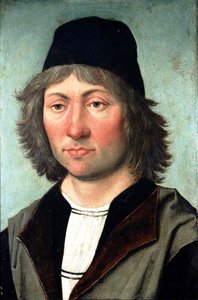
Pedro Berruguete
1450 - 1504 , Spain
Quick Facts
- Artistic Movement Or Style: Transition between Gothic & Renaissance
- Artists Or Movements Influenced By This Artist: ['']
- Artists Who Influenced This Artist: ['']
- Date Of Birth: c. 1450
- Date Of Death: 1504
- Full Name: Pedro Berruguete
- Nationality: Spanish
- Notable Artworks:
- David
- Ezekiel
- Salomon
- Place Of Birth: Paredes de Nava, Spain
Related Articles

Giclée Prints: Archival Quality & Aesthetic Nuances for the Discerning Collector
Explore the world of giclée prints with ArtsDot. Learn about archival quality, aesthetic nuances & investment potential. Expert guidance for discerning art collectors seeking museum-quality reproductions and lasting value.

The Enduring Legacy of Fine Art Prints: Technique, History & Aesthetic Impact
Explore the rich history & techniques of fine art prints. Discover investment potential, assess authenticity, and learn how to preserve your collection with expert guidance. Trusted insights for discerning collectors.

Echoes of Time: Exploring the Enduring Appeal & Historical Context of Vintage Art Prints
Explore the captivating world of vintage art prints! Discover their history, collecting tips & enduring appeal. Expert insights on chromolithography and building a legacy collection with ArtsDot.
The Enduring Legacy of Printmaking: Techniques, Themes & Artistic Innovation Across Centuries
Explore the rich history of printmaking with ArtsDot. Discover techniques from intaglio to lithography, learn about collecting valuable prints & find museum-quality reproductions. Expert insights for art enthusiasts and collectors.
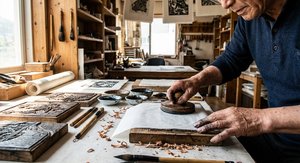
The Enduring Legacy of Woodblock Printmaking: Technique, History & Artistic Expression
Explore the rich history of woodblock printmaking – from ancient techniques to Ukiyo-e masterpieces. Discover expert insights on collecting, preserving & appreciating this enduring art form.