

 Preview
 Send
Send Share
Share
 Details

 Download
 Similars
 X-Ray
X-Ray Diaporama
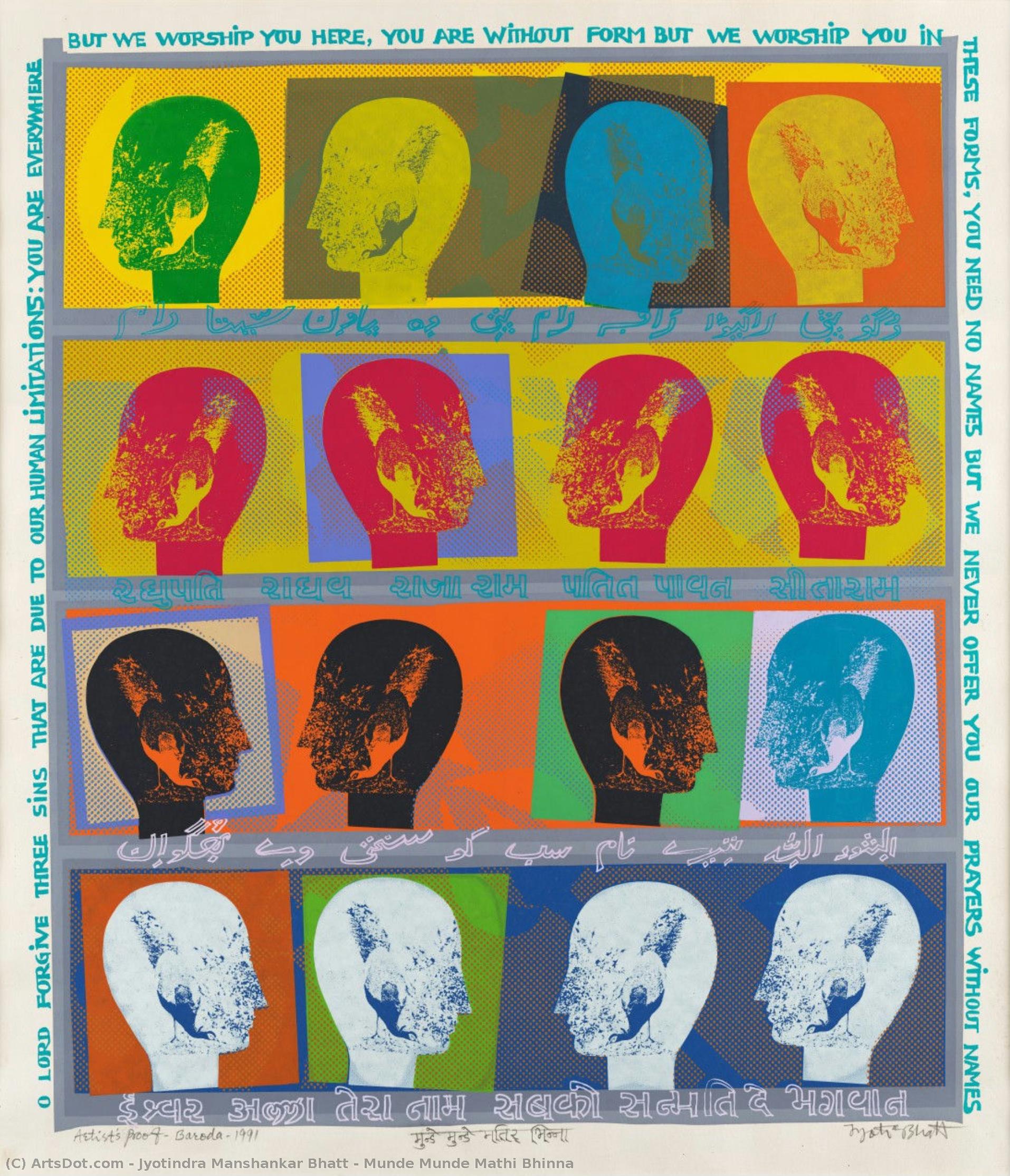
Munde Munde Mathi Bhinna
 Screenprint
- Contemporary Art
 1991
1991- Contemporary
 59.0 x 51.0 cm
 Kerala Museum
 Read More
Purchase a high-resolution, enhanced digital image, far superior to the online preview.
Each file is meticulously prepared by our in-house specialists using advanced tools and expert manual retouching. We ensure every image has exceptional clarity, precise color accuracy, and fine detail.
The final file is delivered via email within 72 hours, optimized for immediate use in professional, editorial, and print environments. This is the same quality trusted by top-tier design studios, publishers, and galleries.
Digital Image
Download a high-resolution file for personal display, printing, and creative projects. ( Buy Print Buy Hand Made Painting)
Included in Every Digital Image Order
Expert Digital Delivery, Guaranteed
When you choose ArtsDot.com, you're not just getting an image - you're receiving a professionally enhanced digital artwork, crafted with precision and backed by a satisfaction guarantee. Here's everything that comes with your order, automatically:

Fast Email Delivery
Your high-resolution digital image file will be emailed to you within 72 hours of ordering - ready for immediate use.

AI-Enhanced Digital File
Your artwork is professionally optimized using advanced AI tools and manual editing, ensuring maximum detail, clarity, and color accuracy.

Free Lifetime Re-Delivery
Accidentally deleted or lost your file? No worries - we'll resend it to you anytime, free of charge.

No Import Fees - Ever
Enjoy your artwork instantly with zero customs, duties, or delivery fees - digital downloads are always tax-free.

Color Accuracy Guarantee
We ensure your digital image reflects the original colors as closely as possible using professional tools and color management.

60-Day Satisfaction Guarantee
If you're not satisfied with your digital image, we'll revise it or refund 100% within 60 days - no questions asked.

100% Money-Back Guarantee
Not satisfied? Get a full refund within 60 days of receiving your digital file - no questions asked.

Bulk Order Discounts
Buy 3 images, save 10% - Buy 5, save 15% - Buy 10+, save 20%. Great for creative projects, galleries, and agencies.
Collectible Description
A Kaleidoscope of Human Connection
In the vibrant screenprint Munde Munde Mathi Bhinna, the visionary Indian artist Jyotindra Manshankar Bhatt invites us into a mesmerizing psychological landscape where identity and emotion collide. Created in 1991, this work serves as a profound visual meditation on the diversity of the human experience. The piece is structured as a rhythmic collage of multifaceted heads, each rendered in a striking palette of cerulean blue, emerald green, fiery orange, and deep magenta. As the eye wanders across the composition, it encounters a sea of faces, each possessing its own distinct character and silent narrative. This arrangement does not merely present a collection of portraits; it orchestrates a symphony of expressions that range from contemplative stillness to exuberant joy, creating a sense of communal vitality that is both overwhelming and deeply intimate.
The technical mastery behind this screenprint lies in Bhatt’s ability to balance the graphic precision of printmaking with the organic, layered complexity of collage. Each head emerges from a spectrum of saturated hues, utilizing the flat, bold planes characteristic of high-quality screenprinting to define form and emotion. The interplay between the white negative space and the intense pigments allows each figure to breathe while remaining part of a larger, interconnected whole. For the discerning collector or interior designer, this piece offers a sophisticated focal point that commands attention through its chromatic energy. Its ability to bridge the gap between abstract pattern and figurative representation makes it an ideal centerpiece for modern spaces seeking a touch of intellectual depth and cultural richness.
The Poetry of Difference and Unity
Beyond its striking visual surface, Munde Munde Mathi Bhinna is steeped in profound philosophical meaning. The title itself draws inspiration from a Sanskrit verse, suggesting a concept of individual distinction within a collective existence—a theme that resonates deeply with Bhatt’s broader artistic journey. Having spent much of his career documenting the endangered cultural practices and folk traditions of rural India, Bhatt brings a scholar's sensitivity to this work. The collage acts as a metaphor for the human condition: while each face is uniquely colored and shaped by its own internal world, they are all bound together in a singular, harmonious composition. This duality of "the individual" and "the collective" provides a layer of symbolic complexity that invites endless contemplation.
For those looking to integrate fine art into a curated environment, this reproduction offers more than just aesthetic beauty; it offers an emotional resonance. The artwork evokes a sense of empathy and global interconnectedness, making it a powerful addition to any collection focused on contemporary Indian masters or works exploring human identity. Whether placed in a minimalist gallery setting or a richly textured living space, the piece acts as a window into a world where diversity is celebrated as the ultimate form of beauty. It is an evocative masterpiece that captures the fleeting essence of a smile, the weight of a gaze, and the enduring strength of our shared humanity.
Related Artworks

Artist Biography
Raymond Saunders: A Weaver of Urban Landscapes
Raymond Saunders (1934–2025) emerged as a significant figure in American painting during the late 20th century, distinguished by his unique approach to assemblage and a profound engagement with the textures and rhythms of urban life. His work, often described as both formalist and deeply personal, invites viewers into a world where seemingly disparate elements—found objects, signage, architectural fragments, and expressive brushstrokes—converge to create layered narratives and evocative visual resonances. Saunders’s career spanned several decades, marked by a consistent dedication to exploring the relationship between perception, memory, and the constructed environment.
Born in Pittsburgh, Pennsylvania, Saunders' artistic journey began with a remarkably diverse education. He initially honed his skills at the public schools of Pittsburgh, participating in an artist-focused program initiated by Joseph C. Fitzpatrick, a respected educator who nurtured the talents of future luminaries like Andy Warhol and Philip Pearlstein. This early exposure to formal training was subsequently complemented by studies at the Pennsylvania Academy of Fine Arts in Philadelphia, where he further developed his technical abilities, and then at the Barnes Foundation through courses at the University of Pennsylvania. A pivotal moment arrived with a scholarship to the California College of Arts and Crafts in Oakland, culminating in an MFA degree in 1961. This multifaceted background—spanning public education, elite art institutions, and independent exploration—shaped his artistic sensibility, allowing him to synthesize diverse influences into a singular voice.
Saunders’s artistic practice shifted dramatically in 1967 with the publication of *Black Is a Color*, a powerful response to Ishmael Reed's controversial article on the Black Arts Movement. This text, a cornerstone of his intellectual and artistic development, articulated a crucial distinction: separating identity from artistic expression. He argued that reducing art solely to its racial categorization limited its potential and obscured the vastness of Black artistic experience. This commitment to challenging conventional boundaries extended throughout his career, informing his deliberate use of found objects and his rejection of simplistic representations. His work became a visual exploration of the complexities of urban space, reflecting not just what he saw but also how he *felt* about it—a deeply personal response to the built environment.
Saunders’s artistic style evolved over time, moving from more representational forms in his early years to increasingly abstract and assemblage-based works. He began incorporating elements of everyday life – signs, doors, architectural fragments – into his paintings, creating layered compositions that demanded close observation. His use of color was particularly striking, employing bold, expressive strokes alongside muted tones to generate a dynamic tension between the formal and the emotional. The influence of artists like Frank Bowling, with whom he studied at the Royal College of Art, is evident in his exploration of color fields and geometric abstraction. His work can be seen as a dialogue with both modernist painting traditions and the vernacular imagery of the urban landscape.
Throughout his career, Saunders exhibited extensively across the United States and Europe, gaining recognition from leading galleries and museums. His work has been featured in solo exhibitions at institutions such as the David Zwirner Gallery, the Providence Museum of Art, and the Carnegie Museum of Art. His legacy extends beyond individual artworks; he played a significant role in fostering dialogue about art, identity, and the relationship between artists and their environment. Raymond Saunders’s paintings remain powerful testaments to the transformative potential of observation, memory, and the enduring allure of the urban world.
Key Works & Artistic Techniques
- Mirror (1964-6): This seminal work exemplifies Saunders' early exploration of abstraction and the blurring of boundaries between representation and non-representation. The layered composition, incorporating elements of reflection and fragmentation, creates a sense of disorientation and invites multiple interpretations.
- Cover Girl (1966): A prime example of his assemblage technique, this painting integrates found objects—a sheet of paper with a magazine advertisement—into a larger canvas, creating a complex visual narrative that speaks to the pervasive influence of consumer culture and the fragmentation of identity.
- Sign Paintings (Various Dates): Saunders frequently incorporated signage into his work, using these ubiquitous elements as symbols of urban life and as points of entry for exploring themes of language, communication, and meaning.
- Doorways & Windows (Recurring Motif): The recurring presence of doorways and windows in his paintings suggests a fascination with the threshold between interior and exterior spaces, and with the act of looking out onto the world.
Influences & Connections
Saunders’s artistic development was shaped by a diverse range of influences. His early training at Pittsburgh's public schools instilled in him a respect for formal structure and a commitment to accessibility. The Pennsylvania Academy of Fine Arts provided him with technical skills, while his studies at the Barnes Foundation exposed him to the works of master painters. His time at the California College of Arts and Crafts introduced him to fellow artists like Frank Bowling, whose exploration of color fields and geometric abstraction profoundly impacted his own work.
Beyond formal influences, Saunders was also deeply engaged with intellectual currents of the era. His critique of Ishmael Reed’s *Black Is a Color* reflects a broader concern with challenging conventional categories and expanding the scope of artistic expression. His work can be seen as part of a larger dialogue about identity, representation, and the role of art in shaping our understanding of the world.
Legacy & Historical Significance
Raymond Saunders’s contribution to American painting is significant for several reasons. His innovative use of assemblage techniques—combining found objects, signage, and expressive brushstrokes—created a uniquely layered and evocative visual language. His commitment to challenging conventional notions of representation and identity pushed the boundaries of artistic expression.
Furthermore, Saunders’s work reflects the broader cultural shifts of the late 20th century, including the rise of urbanism, the proliferation of consumer culture, and the ongoing debates about race and identity. His paintings offer a powerful commentary on these themes, inviting viewers to engage with the complexities of contemporary life.
Saunders’s influence extends beyond his own artistic output. He mentored younger artists and fostered dialogue about art and its role in society. His legacy continues to inspire artists today who are seeking new ways to explore the relationship between perception, memory, and the constructed environment.
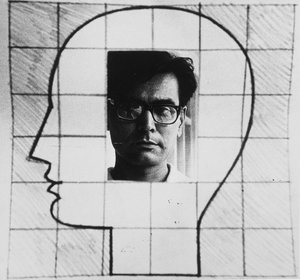
jyotindra manshankar bhatt
1934 - , India
Quick Facts
- Artistic Movement Or Style:
- Dada
- Surrealism
- Photography
- Artists Or Movements Influenced By This Artist: ['Man Ray']
- Artists Who Influenced This Artist:
- Francis Bacon
- Lee Miller
- Date Of Birth: August 27, 1890
- Date Of Death: November 18, 1976
- Full Name: Emmanuel Radnitzky (Man Ray)
- Nationality: American
- Notable Artworks:
- Mirror
- Rayographs
- Place Of Birth: South Philadelphia, USA

