

 Preview
 Send
Send Share
Share
 Details

 Download
 Similars
 X-Ray
X-Ray Diaporama
 Stats
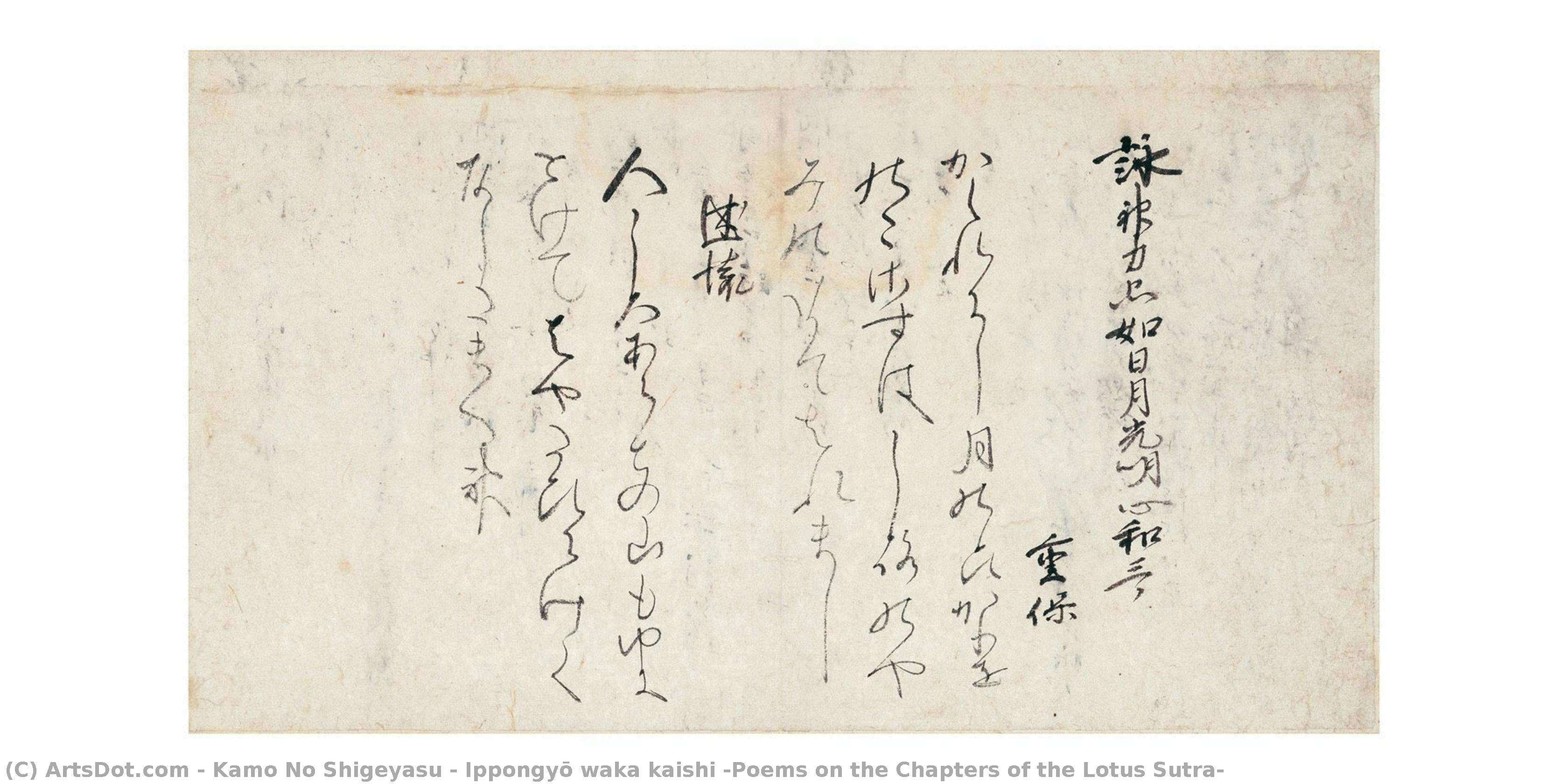
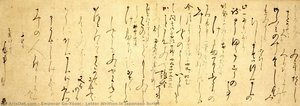
StatsIppongyō waka kaishi (Poems on the Chapters of the Lotus Sutra)
 Read More
Purchase a high-resolution, enhanced digital image, far superior to the online preview.
Each file is meticulously prepared by our in-house specialists using advanced tools and expert manual retouching. We ensure every image has exceptional clarity, precise color accuracy, and fine detail.
The final file is delivered via email within 72 hours, optimized for immediate use in professional, editorial, and print environments. This is the same quality trusted by top-tier design studios, publishers, and galleries.
Digital Image
Download a high-resolution file for personal display, printing, and creative projects. ( Switch to Print Buy Hand Made Painting)
Included in Every Digital Image Order
Expert Digital Delivery, Guaranteed
When you choose ArtsDot.com, you're not just getting an image - you're receiving a professionally enhanced digital artwork, crafted with precision and backed by a satisfaction guarantee. Here's everything that comes with your order, automatically:

Fast Email Delivery
Your high-resolution digital image file will be emailed to you within 72 hours of ordering - ready for immediate use.

AI-Enhanced Digital File
Your artwork is professionally optimized using advanced AI tools and manual editing, ensuring maximum detail, clarity, and color accuracy.

Free Lifetime Re-Delivery
Accidentally deleted or lost your file? No worries - we'll resend it to you anytime, free of charge.

No Import Fees - Ever
Enjoy your artwork instantly with zero customs, duties, or delivery fees - digital downloads are always tax-free.

Color Accuracy Guarantee
We ensure your digital image reflects the original colors as closely as possible using professional tools and color management.

100-Day Satisfaction Guarantee
If you're not satisfied with your digital image, we'll revise it or refund 100% within 100 days - no questions asked.

100% Money-Back Guarantee
Not satisfied? Get a full refund within 100 days of receiving your digital file - no questions asked.

Bulk Order Discounts
Buy 3 images, save 10% - Buy 5, save 15% - Buy 10+, save 20%. Great for creative projects, galleries, and agencies.
Related Artworks


Artist Biography
Kamo no Shigeyasu: A Poet of Quiet Reflection in the Juei Era
Born in Kyoto in 1119, Kamo no Shigeyasu (賀茂重保) was a figure of profound subtlety and quiet influence within the vibrant cultural landscape of 12th-century Japan. More than simply a poet, he served as head priest of the Kamo Shrine, a position that deeply intertwined his spiritual life with his artistic endeavors. His legacy isn’t defined by grand pronouncements or dramatic events, but rather by a meticulous dedication to preserving and celebrating the poetry of his time – specifically through his ambitious ‘Ippongyō waka kaishi’ (Poems on the Chapters of the Lotus Sutra) and his pivotal role in assembling the ‘Nijōin no Sanuki Shū,’ an anthology that offers a rare glimpse into the poetic sensibilities of the Juei era. His life, marked by both privilege and a deliberate withdrawal from worldly ambition, provides a compelling portrait of a scholar-priest navigating a period of significant social and political change.
Shigeyasu’s early life remains somewhat shrouded in mystery, though it is believed he was born into a family with deep roots within the Shinto establishment. Unlike many of his contemporaries who sought advancement through courtly service, Shigeyasu chose a path of contemplative seclusion. This decision, unusual for its time, stemmed from witnessing a series of devastating natural disasters and political upheavals – events that profoundly shaped his worldview. He ultimately relinquished his aspirations for promotion within the shrine hierarchy, embracing Buddhist vows and dedicating himself to a life of quiet scholarship and spiritual reflection. This deliberate separation from the active world is mirrored in his poetry; it’s characterized by a serene detachment, an appreciation for the beauty of nature, and a poignant awareness of mortality.
The ‘Ippongyō waka kaishi’ and the Pursuit of Contemporary Voices
Shigeyasu's most celebrated achievement is undoubtedly his ‘Ippongyō waka kaishi,’ a monumental undertaking that involved soliciting 100 poems from contemporary poets during the Juei era (1182-1187). This project, driven by a desire to document and preserve the poetic voices of his time, reveals a remarkable insight into the literary climate of the period. The ‘Ippongyō waka kaishi’ wasn't merely a collection; it was an active engagement with the poets themselves, a testament to Shigeyasu’s belief in the importance of fostering artistic community and recognizing individual talent. The very act of commissioning such a vast undertaking speaks volumes about his commitment to nurturing the flourishing poetic scene of the Juei era.
This endeavor led directly to his involvement with the ‘Nijōin no Sanuki Shū,’ an anthology that he meticulously compiled in response to the request for private collections. The ‘Sanuki Shū’ is a significant work not just for its content, but also for the circumstances of its creation – it represents a concerted effort to capture and preserve the poetry of his contemporaries, offering a valuable historical record of the Juei era's literary landscape.
The ‘Nijōin no Sanuki Shū’: A Window into the Juei Era
The ‘Nijōin no Sanuki Shū’ (二条院讃岐集), also known as the Sanuki-shū, is a collection of 98 poems that provides a rich and nuanced portrait of poetic sensibilities during the Juei era. While incomplete – several poems are missing from the surviving manuscripts – the anthology offers a compelling glimpse into the themes, styles, and techniques prevalent at the time. The poems themselves range in subject matter, encompassing seasonal observations, expressions of love, and reflections on various aspects of human experience. Notably, the anthology includes works by both Sanuki herself and other prominent poets of the era, including Emperor Nijō.
Scholarly analysis has revealed intriguing variations within the surviving manuscripts, suggesting that the compilation process involved careful selection and potentially some degree of textual revision. The two main manuscript groups – Group 1 and Group 2 – reflect subtle differences in content and notation, highlighting the complexities inherent in reconstructing a lost literary work. Despite these challenges, the ‘Nijōin no Sanuki Shū’ remains an invaluable resource for understanding the poetry of the Juei era and the role played by Kamo no Shigeyasu in preserving its legacy.
Legacy and Historical Significance
Kamo no Shigeyasu's impact extends beyond his specific poetic achievements. He stands as a representative figure of the literary recluses (such as Saigyō) who, disillusioned with the political machinations of the court, sought solace in scholarship and spiritual contemplation. His decision to abandon worldly ambition and dedicate himself to preserving the poetry of his time reflects a profound shift in values – a prioritization of artistic integrity and intellectual pursuit over social status and political advancement.
His work continues to be studied by scholars today, offering insights into the cultural, social, and literary dynamics of 12th-century Japan. The ‘Ippongyō waka kaishi’ and the ‘Nijōin no Sanuki Shū’ serve as enduring testaments to his dedication to documenting and celebrating the poetic voices of his era, solidifying Kamo no Shigeyasu's place as a significant, though often understated, figure in Japanese literary history. His quiet influence resonates through the verses he preserved, offering a poignant reflection on beauty, mortality, and the enduring power of art.

kamo no shigeyasu
1119 - 1191 , Japan
Quick Facts
- Artistic Movement Or Style: Waka poetry
- Artists Or Movements Influenced By This Artist: ['Juei Era Art']
- Artists Who Influenced This Artist: ['Kamo no Chōmei']
- Date Of Birth: 1119
- Date Of Death: 1191
- Full Name: Kamo no Shigeyasu
- Nationality: Japanese
- Notable Artworks:
- Ippongyō waka kaishi
- Nijōin no Sanuki Shū
- Place Of Birth: Kyoto, Japan