 Preview
 Send
Send Share
Share
 Details

 Download
 Similars
 X-Ray
X-Ray Diaporama
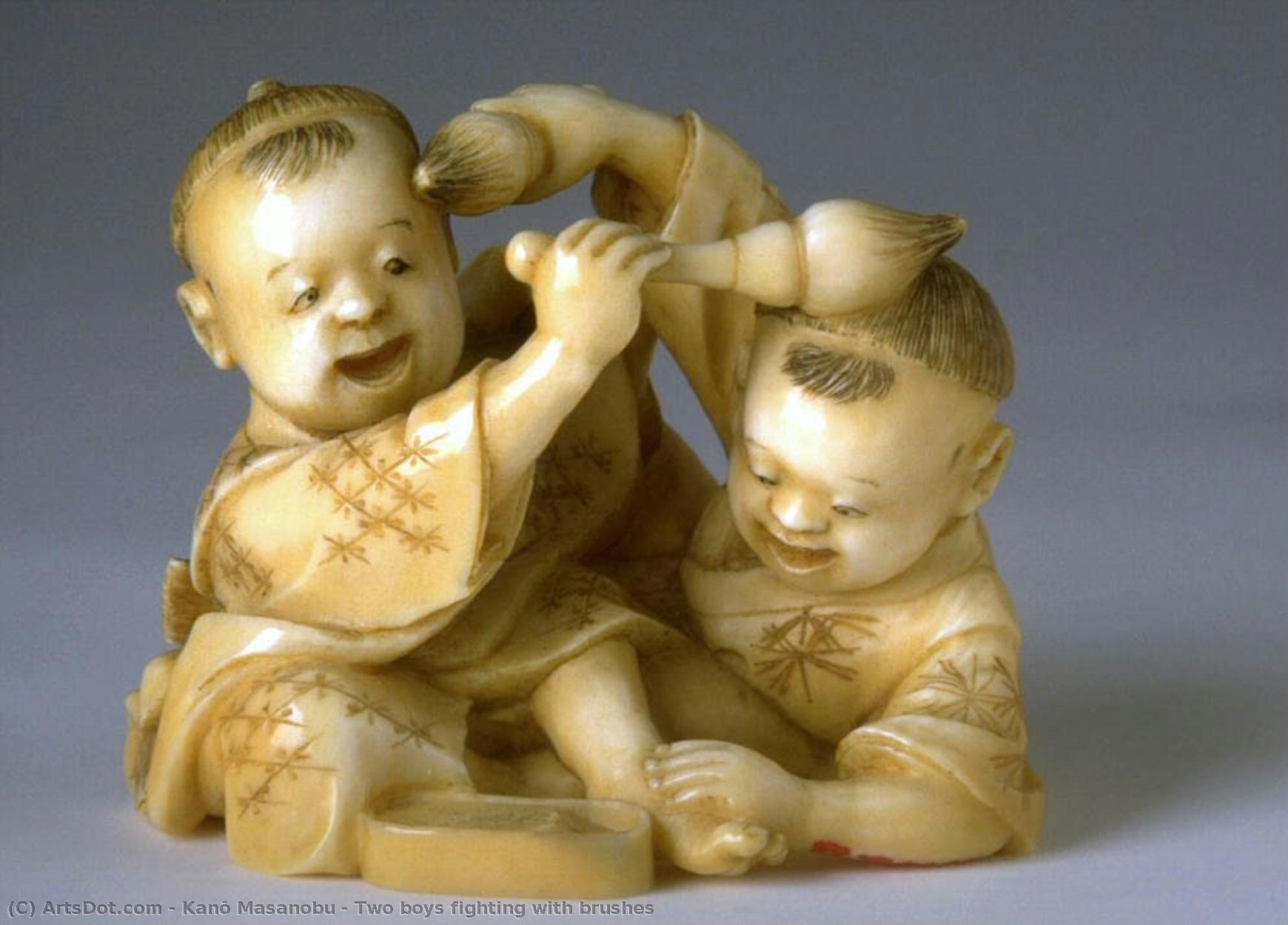
Two boys fighting with brushes

 Read More
Hand Made Oil Reproduction
Hand-painted oil on canvas in your size and frame, made to order by our artists. ( Buy Print Buy Image)




































Pick from our preset sizes that match the artwork's original proportions.

You may enter your own dimensions to fit a specific frame or space. If your selected size does not match the original image's proportions, we will either crop the artwork or extend the painting with additional hand-painted elements. A digital mockup will be sent for your approval before production begins.
Please note that the on-screen preview does not reflect the actual cropping or extension. Only the mockup will accurately show the final composition.
While custom sizes are available, we recommend selecting a dimension from the predefined list to preserve the original proportions.
After order, ArtsDot.com team will email client for instructions and provide a mockup preview
Worldwide Delivery () in 3/4 weeks instead of standard 5 weeks. (23 August). No compromise on quality.

Free Worldwide Express Shipping

High-Quality Linen Canvas

Full Shipping Insurance

Customs Tax Refund Guarantee

True Color Matching Guarantee

60-Day Return Policy (Defects Only)

100% Money-Back Guarantee

Bulk Discount Offer
 Glass option is only available in size under 110 CM

Two boys fighting with brushes
Reproduction Medium
Reproduction Size
-


Total Price
$ 263
Related Artworks








Artist Biography
Kanō Masanobu: The Architect of Japanese Art
Kanō Masanobu (1434? – August 2, 1530, Kyoto) stands as a monumental figure in the history of Japanese art, not merely for his prolific output but fundamentally for establishing the Kanō school—a lineage that would dominate Japanese painting for over three centuries. Often considered the founder of this prestigious institution, Masanobu’s influence extends far beyond his own creations, shaping artistic conventions and profoundly impacting the visual landscape of Japan. His life coincided with a period of immense political and cultural transition – the waning years of the Ashikaga shogunate – and he skillfully navigated these turbulent times to forge a new path for painting, one deeply rooted in Chinese traditions yet distinctly Japanese in its sensibility.
Born into a family with roots stretching back to the Kamakura period, Masanobu’s early life remains somewhat shrouded in mystery. He was the son of Kanō Kagenobu, a samurai and amateur artist who had developed a reputation for his landscape paintings. This lineage provided Masanobu with an initial foundation in artistic practice, though he quickly surpassed his father's skills and established himself as a leading painter in his own right. Unlike many artists of his time, Masanobu did not receive formal training within the imperial court; instead, he honed his craft through observation, apprenticeship, and direct engagement with the evolving artistic landscape.
The Rise to Prominence: Service to the Shogunate
Masanobu’s career gained significant momentum when he was appointed as the chief painter (御用絵師, *goyō eshi*) to the Ashikaga shogunate in 1481. This appointment marked a pivotal moment, elevating him to a position of immense prestige and influence within the political hierarchy. Serving the shogunate provided Masanobu with access to vast resources, commissions, and opportunities for artistic experimentation. It also solidified his role as a central figure in the development of a distinctly Japanese style of painting – one that drew heavily on Chinese models but adapted them to reflect local aesthetics and sensibilities.
His work during this period is characterized by a remarkable synthesis of Eastern and Western influences. Masanobu was deeply influenced by the priest-painter Tenshō Shūbun, whose innovative approach to landscape painting—characterized by subtle gradations of ink, atmospheric perspective, and a focus on capturing the essence of nature—served as a crucial model for Masanobu’s own artistic development. However, unlike Shūbun, who remained within the confines of Buddhist temples, Masanobu embraced a broader range of subjects, including depictions of Buddhist deities, bodhisattvas, and portraits of prominent figures.
A Distinctive Style: Suiboku-ga and Beyond
Masanobu’s artistic style is most notably defined by his mastery of *suiboku-ga* (水墨画), a monochrome ink painting technique derived from Chinese models. This method emphasized the expressive qualities of ink—its ability to create subtle variations in tone, texture, and luminosity—to convey a sense of atmosphere, mood, and spiritual depth. Unlike earlier Japanese artists who often relied on vibrant colors, Masanobu skillfully employed a restrained palette of black ink, white paper, and occasional washes of color to achieve his desired effects.
However, Masanobu’s style was not simply a replication of Chinese techniques; he infused it with distinctly Japanese elements. His landscapes often featured simplified forms, flattened perspectives, and an emphasis on capturing the essence of nature rather than meticulously rendering every detail. Furthermore, Masanobu's depictions of Buddhist figures—particularly his iconic “Zhou Maoshu Appreciating Lotuses”—demonstrated a remarkable ability to imbue these subjects with a sense of serenity, contemplation, and spiritual awareness.
Legacy and the Kanō School
Kanō Masanobu’s influence extended far beyond his own lifetime. Following his death in 1530, his son, Kanō Motonobu, continued to develop and refine the artistic principles established by his father, ultimately laying the foundation for the Kanō school—a lineage that would dominate Japanese painting for over three centuries. The school’s distinctive style—characterized by its refined technique, meticulous attention to detail, and emphasis on portraying Buddhist deities and bodhisattvas—became synonymous with high art in Japan.
The legacy of Kanō Masanobu is therefore inextricably linked to the enduring success of the Kanō school. His pioneering efforts in synthesizing Eastern and Western artistic traditions, coupled with his profound understanding of Japanese aesthetics, established a framework for generations of artists who would follow in his footsteps. Works like “Zhou Maoshu Appreciating Lotuses” stand as testaments to his genius, offering a glimpse into the serene beauty and spiritual depth that defined his artistic vision.
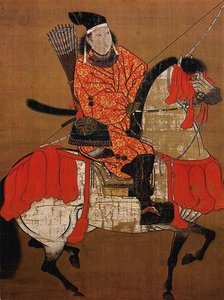
kanō masanobu
1434 - 1530 , Japan
Quick Facts
- Artistic Movement Or Style: Kanō school, Suiboku-ga
- Artists Or Movements Influenced By This Artist: ['Kanō Motonobu']
- Artists Who Influenced This Artist: ['Tenshō Shūbun']
- Date Of Birth: 1434, Kyoto, Japan
- Date Of Death: 1530, Kyoto, Japan
- Full Name: Kanō Masanobu
- Nationality: Japanese
- Notable Artworks:
- Zhou Maoshu Appreciating Lotuses
- The Sage Chou Mao-shu in a Lotus Pond
- Place Of Birth: Kyoto, Japan