

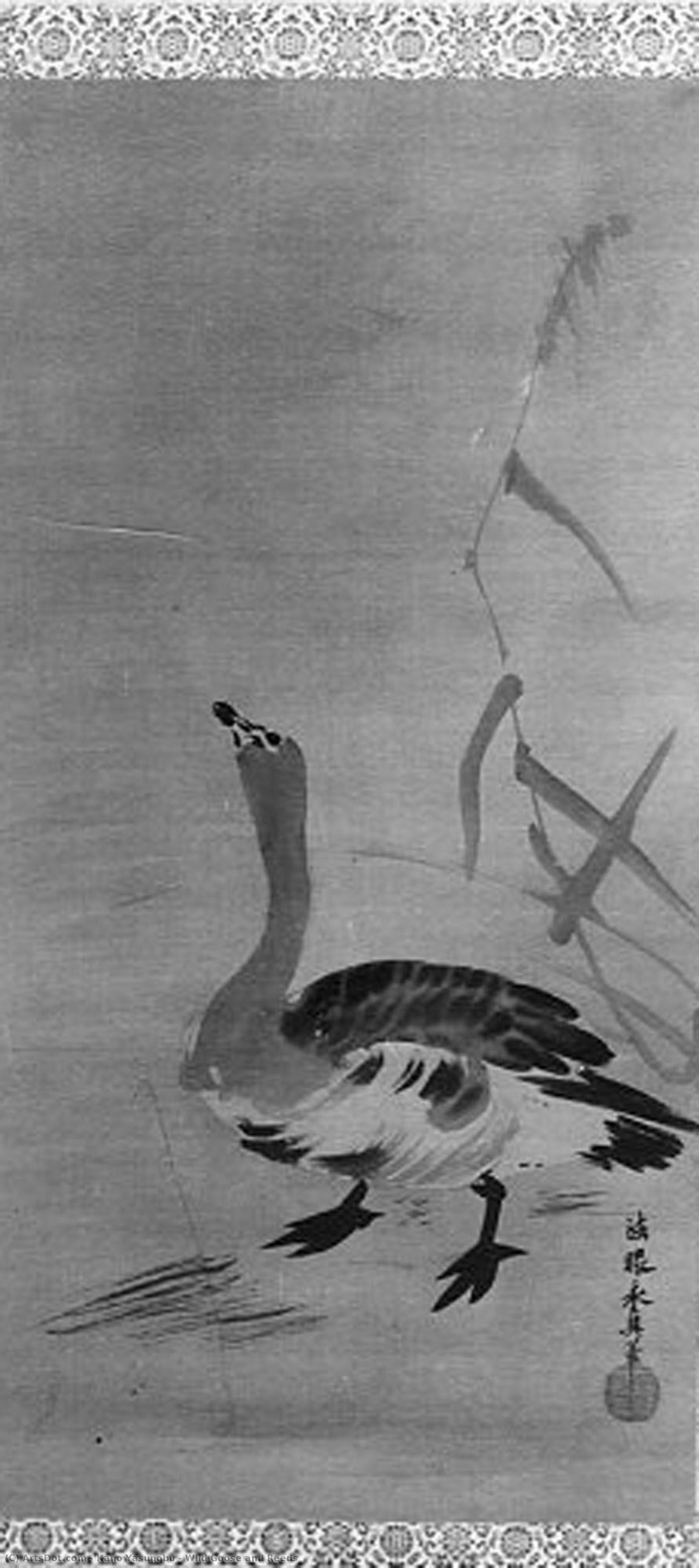
 Preview
 Send
Send Share
Share
 Details

 Download
 Similars
 X-Ray
X-Ray Diaporama
Wild Goose and Reeds
 82.0 x 41.0 cm
 Read More
Purchase a high-resolution, enhanced digital image, far superior to the online preview.
Each file is meticulously prepared by our in-house specialists using advanced tools and expert manual retouching. We ensure every image has exceptional clarity, precise color accuracy, and fine detail.
The final file is delivered via email within 72 hours, optimized for immediate use in professional, editorial, and print environments. This is the same quality trusted by top-tier design studios, publishers, and galleries.
Digital Image
Download a high-resolution file for personal display, printing, and creative projects. ( Buy Print Buy Hand Made Painting)
Included in Every Digital Image Order
Expert Digital Delivery, Guaranteed
When you choose ArtsDot.com, you're not just getting an image - you're receiving a professionally enhanced digital artwork, crafted with precision and backed by a satisfaction guarantee. Here's everything that comes with your order, automatically:

Fast Email Delivery
Your high-resolution digital image file will be emailed to you within 72 hours of ordering - ready for immediate use.

AI-Enhanced Digital File
Your artwork is professionally optimized using advanced AI tools and manual editing, ensuring maximum detail, clarity, and color accuracy.

Free Lifetime Re-Delivery
Accidentally deleted or lost your file? No worries - we'll resend it to you anytime, free of charge.

No Import Fees - Ever
Enjoy your artwork instantly with zero customs, duties, or delivery fees - digital downloads are always tax-free.

Color Accuracy Guarantee
We ensure your digital image reflects the original colors as closely as possible using professional tools and color management.

60-Day Satisfaction Guarantee
If you're not satisfied with your digital image, we'll revise it or refund 100% within 60 days - no questions asked.

100% Money-Back Guarantee
Not satisfied? Get a full refund within 60 days of receiving your digital file - no questions asked.

Bulk Order Discounts
Buy 3 images, save 10% - Buy 5, save 15% - Buy 10+, save 20%. Great for creative projects, galleries, and agencies.
Related Artworks
Artist Biography
Kano Yasunobu: A Master of Detail and Tradition in the Kanō School
Kano Yasunobu (狩野 安信, 1614 – 1685) stands as a pivotal figure within the illustrious Kanō school of painting, a dynasty renowned for its exquisite detail, refined techniques, and profound influence on Japanese art. Born in Kyoto during the Edo period, Yasunobu’s life was inextricably linked to the legacy of his father, Kano Takanobu, and subsequently shaped by the artistic tutelage of his brothers, particularly the celebrated Tan'yū. While often overshadowed by these more flamboyant talents, Yasunobu’s contribution lies primarily in his meticulous approach to painting, his dedication to preserving and expanding upon Kanō traditions, and most notably, his creation of the seminal training manual, the Gadō Yōketsu – a cornerstone document for generations of Kanō artists.
Yasunobu’s early life was marked by tragedy. His father, Kano Takanobu, died when he was only six years old, thrusting him into a world dominated by his elder brothers. He received his initial artistic training under the guidance of Kano Koi and later benefited from the instruction of Tan'yū and Naonobu. This lineage instilled within him a deep respect for established methods while simultaneously fostering an independent spirit. Unlike his brothers who often embraced innovation, Yasunobu remained steadfastly committed to upholding the rigorous standards of the Kanō school, prioritizing accuracy, precision, and adherence to traditional techniques.
The Gadō Yōketsu: A Legacy of Instruction
Yasunobu’s most enduring legacy resides in his creation of the Gadō Yōketsu (画道要訣, “The Secret Way of Painting”), completed in 1680. This meticulously illustrated manual served as a comprehensive guide to Kanō painting techniques, encompassing everything from brushwork and pigment mixing to composition and subject matter. Prior to its publication, the school’s knowledge was largely transmitted orally, leading to inconsistencies and fragmentation. Yasunobu's work provided a standardized framework, ensuring the continuity of the school’s artistic principles for future generations.
The Gadō Yōketsu is not merely a technical manual; it also functions as a historical record, documenting the evolution of Kanō painting and offering insights into the lives and practices of its masters. It includes detailed depictions of various subjects – birds, flowers, landscapes, Buddhist figures, and mythological scenes – alongside step-by-step instructions for rendering them with unparalleled realism and elegance. The book’s influence extends far beyond the confines of the Kanō school, shaping the development of painting throughout Japan.
Style and Subject Matter
While Yasunobu's style is often described as more restrained than that of his brothers, particularly Tan'yū, it possesses a remarkable clarity and precision. His paintings are characterized by their meticulous attention to detail, subtle gradations of color, and masterful rendering of textures – from the delicate plumage of birds to the shimmering surface of water. He excelled in depicting natural subjects, often choosing scenes of serene beauty featuring fish, lotus flowers, and graceful insects.
Yasunobu’s repertoire included a wide range of subjects, reflecting the diverse interests of the Kanō court. He produced numerous depictions of birds – particularly cranes and sparrows – which became hallmarks of his style. His works also frequently featured scenes from Buddhist mythology, showcasing his understanding of religious symbolism and iconography. His landscapes are notable for their atmospheric perspective and subtle use of color to convey mood and atmosphere.
Historical Significance and Lasting Influence
Kano Yasunobu’s contribution to Japanese art is profound, though often understated. He was a key figure in preserving and transmitting the traditions of the Kanō school during a period of significant change. His dedication to meticulous technique and his creation of the Gadō Yōketsu ensured the continuity of the school's artistic principles for centuries to come.
Despite not achieving the same level of fame as some of his brothers, Yasunobu’s work continues to be admired for its exquisite detail, refined elegance, and enduring legacy. His paintings offer a valuable window into the world of Edo-period Japan, revealing the sophisticated artistic sensibilities of the Kanō school and the profound influence it exerted on Japanese art history. His legacy endures not only through his individual works but also through the countless artists who have studied and learned from the Gadō Yōketsu – a testament to his enduring contribution to the world of painting.
kano yasunobu
1614 - 1685 , Japan
Quick Facts
- Artistic Movement Or Style: Kanō School Painting
- Artists Or Movements Influenced By This Artist: ["Kanō Tan'yū"]
- Artists Who Influenced This Artist:
- Kanō Takanobu
- Kanō Sadanobu
- Date Of Birth: January 10, 1614
- Date Of Death: October 1, 1685
- Full Name: Kanō Yasunobu (狩野 安信)
- Nationality: Japanese
- Notable Artworks:
- Gadō Yōketsu
- Bugaku Dancers & Fish
- Fish and Lotus
- Place Of Birth: Kyoto, Japan

