 Preview
 Send
Send Share
Share
 Details

 Download
 Similars
 X-Ray
X-Ray Diaporama
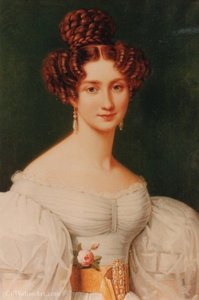
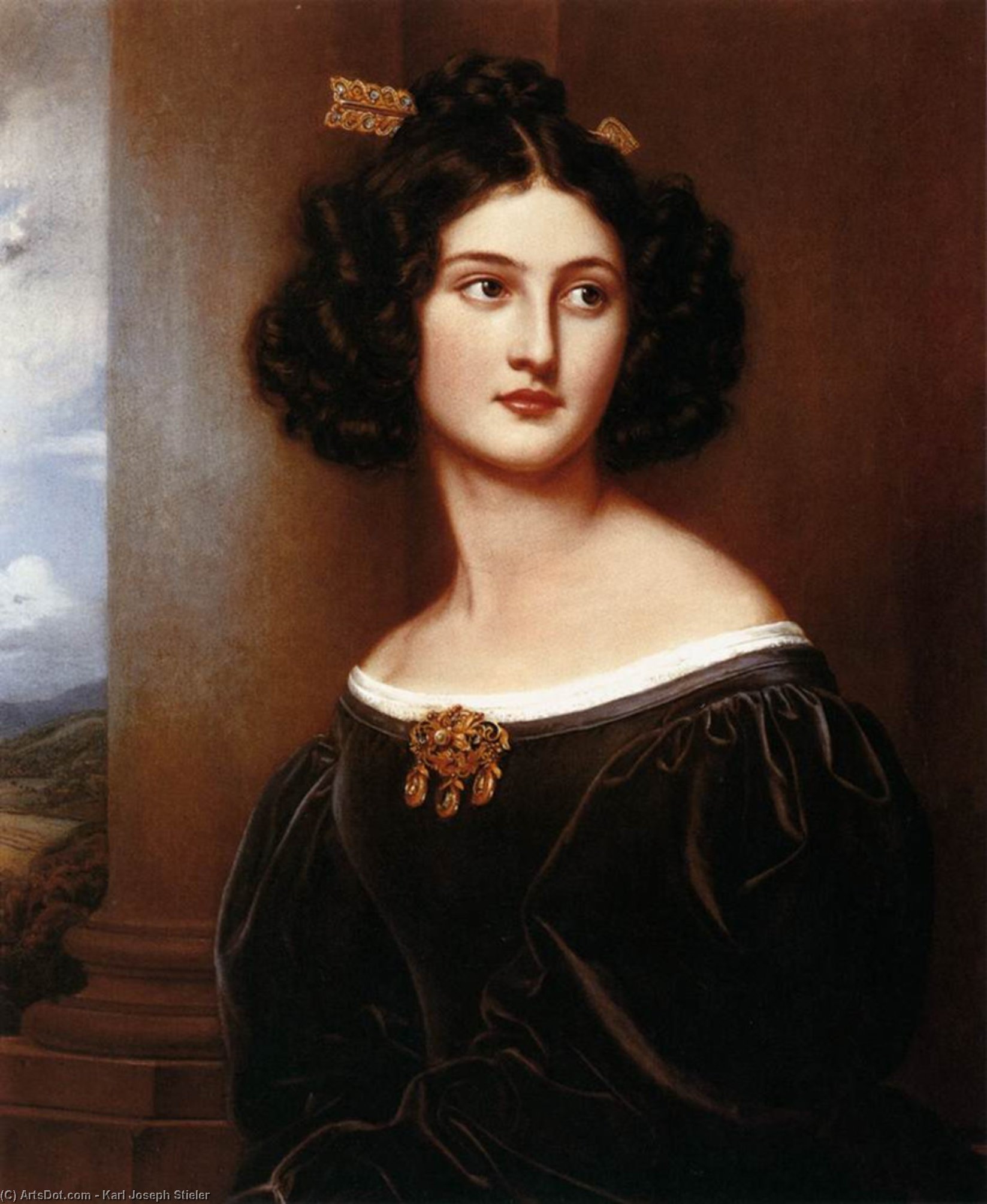
Nanette Heine, née Kaula


 Read More
Hand Made Oil Reproduction
Hand-painted oil on canvas in your size and frame, made to order by our artists. ( Buy Print Buy Image)




P118B $10

P118H $10

P118W $10

P438Z $10

P508JH $12

P508YH $12

P805H $10

P805Z $10

P919BZ $10

P919G $10

P919XJ $10

P959ZH $10

P968JZ $12

W106C $8

W218G $10

W218JH $8

W218Y $10

W307PJ $10

W316G $10

W316PJ $8

W316Y $10

W398PJ $8

W4111J $10

W500HY $15

W500JH $15

W692G $12

W849H $8

W940BG $15

W953PJ $8




Pick from our preset sizes that match the artwork's original proportions.

You may enter your own dimensions to fit a specific frame or space. If your selected size does not match the original image's proportions, we will either crop the artwork or extend the painting with additional hand-painted elements. A digital mockup will be sent for your approval before production begins.
Please note that the on-screen preview does not reflect the actual cropping or extension. Only the mockup will accurately show the final composition.
While custom sizes are available, we recommend selecting a dimension from the predefined list to preserve the original proportions.
After order, ArtsDot.com team will email client for instructions and provide a mockup preview
Worldwide Delivery () in 3/4 weeks instead of standard 5 weeks. (16 August). No compromise on quality.

Free Worldwide Express Shipping

High-Quality Linen Canvas

Full Shipping Insurance

Customs Tax Refund Guarantee

True Color Matching Guarantee

60-Day Return Policy (Defects Only)

100% Money-Back Guarantee

Bulk Discount Offer
 Glass option is only available in size under 110 CM

Nanette Heine, née Kaula
Reproduction Medium
Reproduction Size
-


Total Price
$ 263
Artwork Description
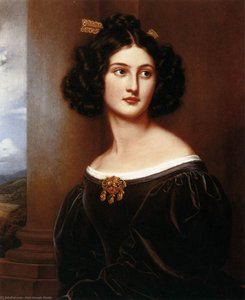
A Portrait of Elegance: Nanette Heine, née Kaula by Joseph Karl Stieler
The painting “Nanette Heine, née Kaula,” executed in 1829 by the Bavarian Court Painter Joseph Karl Stieler, stands as a testament to the neoclassical aesthetic that dominated European art during its formative years. More than just a likeness of a woman—a commission reflecting Dalberg’s patronage—the portrait embodies a carefully considered visual language designed to convey status and sophistication.
Stieler's meticulous approach is immediately evident in the painting’s technique. Employing oil paints on canvas, he achieved remarkable tonal gradation and subtle modeling effects, capturing the contours of Nanette Heine’s face with precision. The artist skillfully utilized chiaroscuro—the dramatic interplay between light and shadow—to sculpt the woman’s features, emphasizing her gaze and lending an air of contemplative seriousness to her expression.
The composition itself adheres to classical principles of balance and symmetry. Nanette Heine is positioned centrally within a formal landscape setting, dominated by a towering column and distant mountains. This backdrop serves not merely as decorative ornamentation but functions symbolically—the column representing stability and authority, mirroring the aristocratic lineage of its subject, while the mountains evoke grandeur and permanence.
Beyond its technical mastery, “Nanette Heine” resonates with deeper artistic intentions. The woman’s attire – a black dress adorned with a delicate gold necklace – speaks to the prevailing fashions of the era and underscores her social standing. Her gaze directly confronts the viewer, inviting contemplation and establishing an intimate connection between subject and observer—a hallmark of neoclassical portraiture aimed at capturing not just physical appearance but also inner character.
Stieler’s work exemplifies the broader artistic currents of his time, reflecting Dalberg's commitment to elevating Bavarian culture. The painting’s enduring appeal lies in its ability to transport us back to a period defined by aristocratic grandeur and refined sensibilities. It remains an inspiring example of how art can communicate both visual beauty and profound emotional resonance.
Related Artworks
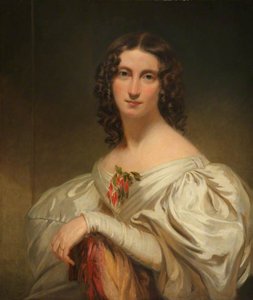
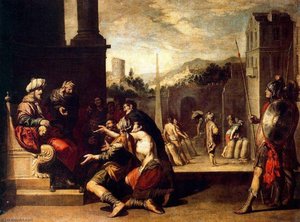
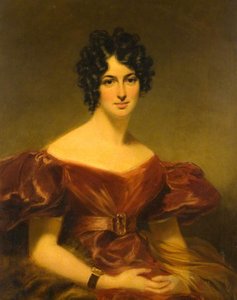
Artist Biography
The Master of Bavarian Elegance
Joseph Karl Stieler stands as a pivotal figure in the grand tapestry of nineteenth-century German art, a painter whose brush captured the very essence of Neoclassical refinement. Born in 1781 in the historic city of Mainz, Stieler was destined for a life steeped in the meticulous traditions of craftsmanship. He was born into a family deeply rooted in the precision of engraving and printmaking; his father, August Friedrich Stieler, was a respected engraver and punchcutter. This early exposure to the delicate art of fine lines and intricate detail provided the young artist with an foundational education in precision, instilling a stylistic sensibility that would later become the hallmark of his monumental portraiture.
The trajectory of Stieler’s life was irrevocably altered by the political tremors of the era. Following the French revolutionary upheaval of 1792, which saw Mainz fall under French control, Stieler relocated to Aschaffenburg. It was here that he encountered Archbishop Karl Theodor Anton Maria von Dalberg, a figure who would become his most influential patron. Under Dalberg’s benevolent support, Stieler’s artistic ambitions were fueled, allowing him to pursue formal training at the Academy of Fine Arts in Vienna under the tutelage of Heinrich Füger. In the halls of the Viennese Academy, he absorbed the stylistic precepts of Neoclassicism, a movement that emphasized clarity, order, and an idealized grace.
A Journey Through the Heart of Europe
Stieler’s artistic evolution was not confined to the classroom; it was forged through extensive travel and the pursuit of masters across the continent. In 1808, after establishing a studio in Frankfurt, he embarked on a profound pilgrimage to Italy, an experience that breathed new life into his vision. His travels further led him to encounter the grandeur of Parisian art, where he honed his technique under François Gérard, a student of the legendary Jacques-Louis David. This connection to the French Neoclassical tradition infused Stieler’s work with a certain dynamism and monumental scale, blending German precision with a sophisticated, international elegance.
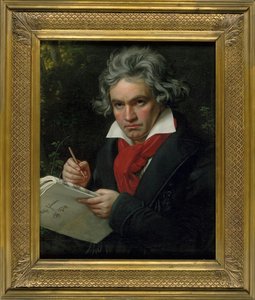
As his reputation grew, so did his proximity to power. From 1820 until 1855, Stieler served as the royal court painter for the Bavarian kings, a position that placed him at the very center of European aristocratic life. His studio became a site of significant historical encounters, where he translated the dignity of the monarchy into enduring visual legacies. Perhaps his most enduring contribution to musical iconography is his 1820 portrait of Ludwig van Beethoven. In this masterpiece, Stieler moved beyond mere likeness to capture the composer's intellectual intensity and palpable emotional depth, creating an image that remains a cornerstone of biographical art.
Legacy of the Gallery of Beauties
The zenith of Stieler’s career is perhaps most beautifully realized in his celebrated Gallery of Beauties at Nymphenburg Palace in Munich. This collection of portraits, commissioned by King Ludwig I, showcases Stieler's unparalleled ability to blend idealized Neoclassical beauty with a profound sense of individual character. Through these works, he achieved a level of technical mastery that allowed him to render luminous skin tones, intricate textures of silk and lace, and the subtle play of light with breathtaking realism.
Stieler’s significance extends far beyond the borders of Bavaria. His work represents a bridge between the rigid structures of early Neoclassicism and the more emotive, detailed portraiture that would follow. His achievements can be summarized through several key pillars of his career:
- Technical Precision: A lifelong dedication to detail inherited from his engraver lineage, allowing for exquisite textures in fabric and jewelry.
- Royal Patronage: His long-standing role as the Bavarian court painter, which allowed him to document the nobility of his era with unparalleled access.
- Iconic Imagery: The creation of world-renowned portraits, most notably the Beethoven portrait and the Gallery of Beauties.
- Stylistic Synthesis: The successful blending of German meticulousness with the grand, dynamic influences of French and Italian Neoclassicism.
When Joseph Karl Stieler passed away in 1858, he left behind a visual record of an era defined by elegance, hierarchy, and the pursuit of classical perfection. His portraits remain more than mere historical documents; they are windows into a vanished world of regal dignity and refined grace.
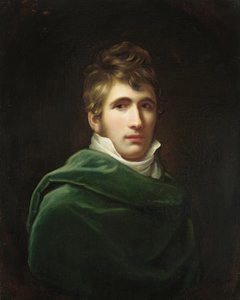
Karl Joseph Stieler
1781 - 1858 , Germany
Quick Facts
- Artistic Movement Or Style: Neoclassical
- Artists Or Movements Influenced By This Artist: ['Jacques-Louis David']
- Artists Who Influenced This Artist: ['Heinrich Füger']
- Date Of Birth: 1781 Mainz Germany
- Date Of Death: 1858 Munich Germany
- Full Name: Joseph Karl Stieler
- Nationality: German
- Notable Artworks:
- Gallery of Beauties
- Portrait of Beethoven
- Place Of Birth: Mainz Germany
Related Articles

The Bespoke Canvas: Commissioned Art as Unique Expression & Investment
Discover the art of commissioning unique masterpieces. Explore the investment potential & personal storytelling behind bespoke artwork with expert guidance. Elevate your collection today.

From Concept to Canvas: A Comprehensive Guide to Commissioning Bespoke Paintings for Personal Expression and Artistic Legacy
Commission bespoke paintings with ArtsDot.com! Expert artists create unique artworks tailored to your vision. Secure investment, lasting legacy & 100% satisfaction guaranteed.

From Inspiration to Creation: A Collaborative Journey in Custom Art Commissioning – Exploring the Client-Artist Partnership at ArtsDot
Commission unique, handmade art with skilled artists at . Transform your vision into a lasting heirloom. Expert consultations, personalized service & guaranteed quality. Explore bespoke portraits, paintings & more.
Beyond Reproduction: The Aesthetic and Emotional Value of Commissioned Art in Contemporary Interior Spaces
Discover the art of commissioning bespoke paintings & portraits. Expert guidance from artist selection to final placement. Elevate your space with unique, emotionally resonant artwork – a lasting investment in artistry and personal expression.

From Fan Favorite to Fine Art: A Comprehensive Guide to Commissioning Custom Pop Culture Paintings
Transform your fandom into stunning art! Our guide covers commissioning custom pop culture paintings – from artist selection & copyright to care tips. Get expert advice and create a unique masterpiece today!