 Preview
 Send
Send Share
Share
 Details

 Download
 Similars
 X-Ray
X-Ray Diaporama
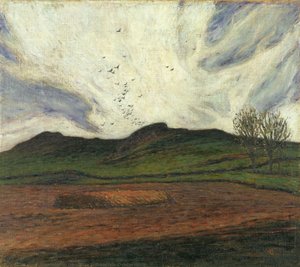
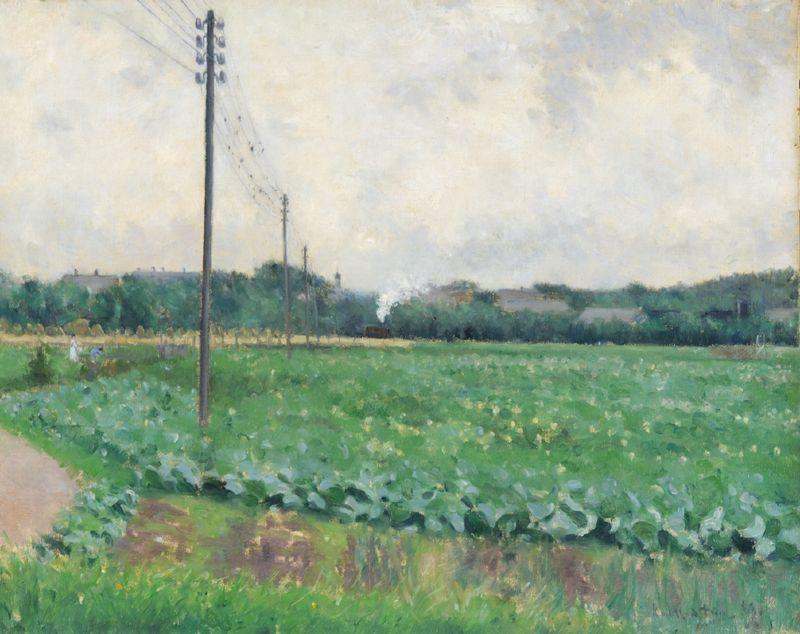
Landscape near Gothenburg

 Read More
Giclée / Art Print
Museum-quality giclée or canvas print with fast production and flexible finish options. ( Buy Hand Made Painting Buy Image)




































Pick from our preset sizes that match the artwork's original proportions.

You may enter your own dimensions to fit a specific frame or space. If your selected size does not match the original image's proportions, we will either crop the artwork or extend the image with a mirrored or solid-fill edge. A digital mockup will be sent for your approval before production begins.
Please note that the on-screen preview does not reflect the actual cropping or extension. Only the mockup will accurately show the final composition.
While custom sizes are available, we recommend selecting a dimension from the predefined list to preserve the original proportions.
Worldwide Delivery () in 2 weeks instead of standard 4/5 weeks. (25 August)

Free Worldwide Express Shipping

High-Quality Linen Canvas

Full Shipping Insurance

Customs Tax Refund Guarantee

True Color Matching Guarantee

60-Day Return Policy (Defects Only)

100% Money-Back Guarantee

Bulk Discount Offer
 Glass option is only available in size under 110 CM

Landscape near Gothenburg
Giclée / Art Print
Reproduction Size
-


Total Price
$ 63
Related Artworks









Artist Biography
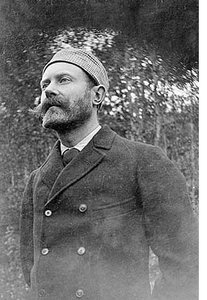
The Soul of the Nordic Landscape: The Life and Legacy of Karl Nordström
Born amidst the rugged beauty of the Swedish coast on the island of Tjörn, Karl Fredrik Nordström was destined to translate the raw, elemental spirit of the North onto canvas. His early years in Stenkyrka provided a foundational connection to the windswe and salt-sprayed landscapes that would later become the heartbeat of his oeuvre. While his formal training began at the prestigious Principskolan in Stockholm and continued under the guidance of Edvard Perséus, Nordström possessed an untamable temperament that resisted the rigid, academic constraints of the time. He sought not the sterile perfection of the antique school, but a more visceral connection to the natural world—a pursuit that would eventually lead him to become a revolutionary force in Scandinavian art.
The trajectory of Nordström’s career shifted profoundly in 1881 when he ventured to France. Immersed in the luminous atmosphere of Paris and the tranquil, sun-drenched environs of Grez-sur-Loing, he encountered the transformative power of Impressionism. This period was a crucible for his developing style; he learned to observe the fleeting dance of light and the subtle shifts in atmospheric color. Yet, rather than merely mimicking the French masters, Nordström began to synthesize these new optical sensations with a uniquely Nordic sensibility. He moved away from the bright, broken palettes of pure Impressionism toward something more structural and emotive, laying the groundwork for what would become known as the Synthetist style.
The Rise of Konstnärsförbundet and the Varberg School
Nordström was never a solitary wanderer; he was a leader of movements. His commitment to challenging established artistic conventions led him to become a cornerstone of Konstnärsförbundet, the Association of Artists. Serving as its chairman from 1896 until 1920, he steered this influential collective away from the restrictive policies of the Royal Academy and toward a more progressive, nationalistic expression. Alongside contemporaries such as Nils Kreuger and Richard Bergh, Nordström sought to create an art that was authentically Swedish, rooted in the local landscape yet sophisticated in its modern execution.
A defining chapter in this journey occurred in May 1893, when Nordström moved to Varberg. It was here that his artistic evolution reached a striking crescendo. In the coastal landscapes of Varberg, he developed a style characterized by:
- Bold, billowing lines that captured the rhythmic movement of the earth and sea.
- A subdued, moody palette that reflected the somber, often tempestuous weather of the Swedish coast.
- Synthetist elements where form and color were simplified to evoke a deeper, more psychological resonance.
This period produced works of immense emotional weight, such as Ovädersmoln (Storm Clouds), which critics of the era described with both awe and trepidation. To some, his landscapes appeared morose or introverted, capturing an ominous, brooding fury that seemed to mirror the very soul of the North. Yet, it was precisely this ability to imbue a landscape with such profound, almost haunting intensity that secured his historical significance.
A Lasting Impression on Scandinavian Modernism
As his career progressed, Nordström’s work continued to bridge the gap between the fleeting observations of Impressionism and the structured, symbolic depth of Symbolism. He remained a master of capturing the "Nordic light"—that specific, ethereal quality of light that defines the long twilights and heavy mists of Scandinavia. His ability to balance the physical reality of the landscape with an internal, emotional truth allowed him to transcend mere topography, turning landscapes into psychological portraits of the land itself.
By the time of his passing in Drottningholm in 1923, Karl Nordström had left an indelible mark on the history of European art. He did not merely paint the Swedish landscape; he redefined how it could be felt. Through his leadership in Konstnärsförbundet and his pioneering role in the Varberg School, he provided a blueprint for modern Scandinavian painting, proving that art could be both deeply nationalistic and universally profound. Today, his legacy lives on in every brushstroke that seeks to capture the sublime, brooding majesty of the natural world.
Quick Facts
- Artistic Movement Or Style: Impressionist & Synthetist
- Artists Or Movements Influenced By This Artist: ['Christian Krohg']
- Artists Who Influenced This Artist:
- Edvard Perséus
- Ivan Aguéli
- Claude Monet
- Date Of Birth: July 11, 1855
- Date Of Death: August 16, 1923
- Full Name: Karl Fredrik Nordström
- Nationality: Swedish
- Notable Artworks:
- Ovädersmoln
- Den svenske maler Karl Nordström
- Place Of Birth: Stenkyrka, Västra Götaland