

 Preview
 Send
Send Share
Share
 Details

 Download
 Similars
 X-Ray
X-Ray Diaporama
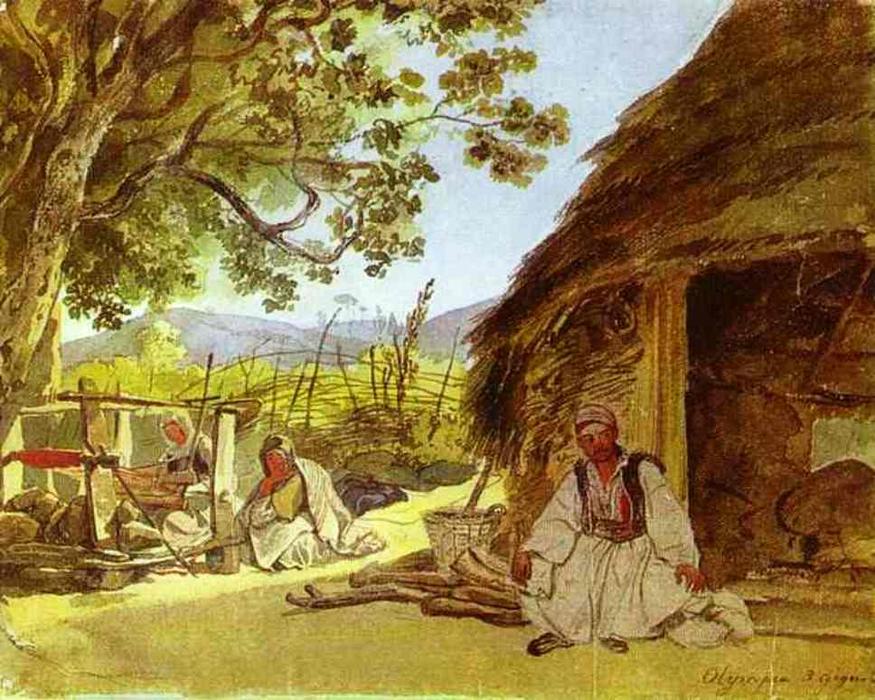
Greek Morning in Myraca


 Read More
Purchase a high-resolution, enhanced digital image, far superior to the online preview.
Each file is meticulously prepared by our in-house specialists using advanced tools and expert manual retouching. We ensure every image has exceptional clarity, precise color accuracy, and fine detail.
The final file is delivered via email within 72 hours, optimized for immediate use in professional, editorial, and print environments. This is the same quality trusted by top-tier design studios, publishers, and galleries.
Digital Image
Download a high-resolution file for personal display, printing, and creative projects. ( Buy Print Buy Hand Made Painting)
Included in Every Digital Image Order
Expert Digital Delivery, Guaranteed
When you choose ArtsDot.com, you're not just getting an image - you're receiving a professionally enhanced digital artwork, crafted with precision and backed by a satisfaction guarantee. Here's everything that comes with your order, automatically:

Fast Email Delivery
Your high-resolution digital image file will be emailed to you within 72 hours of ordering - ready for immediate use.

AI-Enhanced Digital File
Your artwork is professionally optimized using advanced AI tools and manual editing, ensuring maximum detail, clarity, and color accuracy.

Free Lifetime Re-Delivery
Accidentally deleted or lost your file? No worries - we'll resend it to you anytime, free of charge.

No Import Fees - Ever
Enjoy your artwork instantly with zero customs, duties, or delivery fees - digital downloads are always tax-free.

Color Accuracy Guarantee
We ensure your digital image reflects the original colors as closely as possible using professional tools and color management.

60-Day Satisfaction Guarantee
If you're not satisfied with your digital image, we'll revise it or refund 100% within 60 days - no questions asked.

100% Money-Back Guarantee
Not satisfied? Get a full refund within 60 days of receiving your digital file - no questions asked.

Bulk Order Discounts
Buy 3 images, save 10% - Buy 5, save 15% - Buy 10+, save 20%. Great for creative projects, galleries, and agencies.
Collectible Description
A Serene Glimpse into the Past: The Essence of Greek Morning in Myraca
In the delicate washes of Karl Pavlovich Brulloff’s 1835 masterpiece, Greek Morning in Myraca, we are invited to step into a world where time seems to have slowed to the gentle rhythm of nature. This exquisite watercolor serves as more than just a landscape; it is a window into a lost era of Mediterranean tranquility. The scene unfolds with a quiet intimacy, presenting a rustic outdoor setting where figures in traditional attire rest near a humble, thatched-roof dwelling. As the morning light filters through the atmosphere, it illuminates a composition that feels both grounded in reality and elevated by a poetic, Romantic sensibility. For the discerning collector or interior designer, this piece offers a profound sense of peace, making it an ideal centerpiece for spaces designed to evoke contemplation and warmth.
The artistry of Brulloff is on full display through his masterful command of watercolor and gouache techniques. Rather than relying on harsh, rigid outlines, the artist employs loose, expressive lines and soft, layered textures that allow colors to bleed and blend with organic grace. This painterly approach creates a sense of atmospheric depth, where the rolling hills and distant mountains appear to recede into a soft haze, lending the work a dreamlike quality. The lighting is notably diffuse, casting gentle shadows that do not obscure but rather highlight the subtle textures of the thatched roof, the rugged earth, and the flowing garments of the seated figures. This technique breathes life into the landscape, transforming a simple village scene into a living, breathing moment of historical beauty.
Symbolism and the Romantic Spirit
Beyond its aesthetic charm, Greek Morning in Myraca is steeped in the emotional language of the Romantic movement. Brulloff, a titan of Russian Romanticism, possessed a rare ability to weave classical precision with deep human emotion. In this work, the symbolism is found in the subtle interplay between humanity and the natural world. The presence of the figures—engaged in quiet conversation or perhaps lost in thought—alongside a loyal dog, suggests a harmonious existence where labor and leisure are balanced by the rhythms of the earth. The tools resting near the dwelling serve as quiet reminders of the industriousness of rural life, yet they do not disrupt the overarching mood of stillness.
For those looking to adorn a home with art that tells a story, this painting offers a narrative of nostalgia and timelessness. It evokes a longing for a simpler way of life, connecting the viewer to the enduring beauty of the Greek landscape and its people. Whether displayed in a sunlit library or a sophisticated living area, a high-quality reproduction of this work brings with it an aura of historical significance and emotional depth. Owning such a piece is not merely about decoration; it is about preserving a fragment of 19th-century soul, allowing the quiet majesty of Brulloff’s vision to inspire daily moments of grace and reflection.
Related Artworks
Artist Biography
A Titan of Romanticism: The Life and Legacy of Karl Bryullov
Karl Pavlovich Brulloff, known in the West as Karl Bryullov, stands as a monumental figure in 19th-century Russian art. Born in St. Petersburg in 1799, his artistic journey was one of relentless pursuit of classical ideals interwoven with a distinctly Romantic sensibility. His father, Pavel Bryullov, an accomplished sculptor and academician, recognized Karl’s prodigious talent early on and provided him with a rigorous foundation in the arts. This initial training instilled within young Karl a deep respect for form, anatomy, and the traditions of European masters – a reverence that would remain central to his work throughout his life. However, Bryullov was not merely an imitator; he possessed a unique ability to infuse classical precision with dramatic emotion and narrative power, ultimately forging a style that became synonymous with Russian Romanticism. His early years were marked by diligent study at the Imperial Academy of Arts, where he excelled in historical painting, quickly garnering recognition for his skillful draftsmanship and ambitious compositions. He received numerous awards and scholarships, including one that allowed him to travel extensively throughout Italy between 1822 and 1830 – a period that proved transformative for his artistic development.The Italian Years: A Crucible of Inspiration
Italy served as Bryullov’s artistic awakening. Immersed in the rich cultural heritage of Rome, Florence, and Naples, he meticulously studied the works of Renaissance masters like Raphael, Michelangelo, and Caravaggio. He wasn't simply copying; rather, he absorbed their techniques, compositional strategies, and understanding of light and shadow. This period saw a shift in his subject matter, moving away from purely academic exercises towards more emotionally charged historical scenes and portraits. He became fascinated with the grandeur of ancient civilizations, particularly Pompeii, which had recently been unearthed from volcanic ash. The tragic fate of this city – frozen in time by the eruption of Mount Vesuvius – resonated deeply with Bryullov’s Romantic temperament. This fascination culminated in his most celebrated masterpiece, The Last Day of Pompeii, a colossal canvas that would catapult him to international fame. During these years he also developed a keen eye for portraiture, capturing the likenesses of prominent figures within Russian society who were traveling through Italy. His portraits are not merely representations of physical appearance; they reveal the inner character and psychological state of his sitters with remarkable sensitivity.The Triumph of “Pompeii” and its Aftermath
The Last Day of Pompeii, completed in 1830-1833, is a breathtaking spectacle of human drama set against the backdrop of apocalyptic destruction. The painting depicts the chaotic moments immediately following the eruption of Mount Vesuvius in AD 79, showcasing a multitude of figures caught in various states of terror and despair. Bryullov’s masterful use of light, color, and composition creates an overwhelming sense of realism and emotional intensity. The sheer scale of the work – measuring over six meters in height and four meters wide – is awe-inspiring, drawing viewers into the heart of the catastrophe. Upon its exhibition in Rome and subsequently in St. Petersburg, The Last Day of Pompeii was met with unprecedented acclaim. Bryullov became an overnight sensation, lauded as one of the greatest painters of his time. He was elected to the academies of Florence, Bologna, and San Luca – a testament to his artistic prowess. However, the painting’s immense scale also proved challenging for Russian audiences accustomed to smaller-scale works. Despite its critical success, it didn't immediately translate into widespread popular appeal within Russia. The sheer emotional weight and dramatic intensity were perhaps overwhelming for some viewers.Later Years: A Return to Russia and Continued Innovation
Bryullov returned to Russia in 1834 a celebrated hero, appointed professor at the Academy of Arts and entrusted with significant commissions. He continued to paint historical scenes, portraits, and religious works, but his later output was marked by a growing sense of disillusionment and artistic experimentation. He struggled to reconcile his classical training with the evolving tastes of Russian society, which increasingly favored more realistic and socially conscious art forms. His work The Death of Emperor Maximilian I (1837) demonstrates his continued mastery of historical painting but also reveals a shift towards greater psychological depth and emotional restraint. He also undertook ambitious decorative projects, including the ceiling paintings for St. Isaac’s Cathedral in St. Petersburg – a monumental undertaking that showcased his technical skill and compositional ingenuity. Despite facing criticism from some quarters, Bryullov remained a highly influential figure within the Russian art world, mentoring a new generation of artists and advocating for the importance of classical education. He died prematurely in 1852, leaving behind a legacy as one of Russia’s most important Romantic painters – a titan whose work continues to captivate and inspire audiences today.Historical Significance and Enduring Influence
Karl Bryullov's impact on Russian art is undeniable. He bridged the gap between Neoclassicism and Romanticism, infusing classical precision with dramatic emotion and narrative power. The Last Day of Pompeii, his magnum opus, remains a landmark achievement in 19th-century painting, influencing generations of artists with its scale, realism, and emotional intensity. He elevated the status of historical painting within Russia, demonstrating its potential to explore complex themes of human tragedy and societal upheaval. His portraits are celebrated for their psychological depth and sensitivity, capturing the inner character of his sitters with remarkable accuracy. Bryullov’s emphasis on classical education and meticulous technique helped shape the curriculum of the Imperial Academy of Arts, fostering a new generation of skilled artists. His work also played a crucial role in establishing Russia's reputation as a major center for artistic innovation within Europe.- Influence on Russian Realism: While Bryullov himself was a Romantic painter, his emphasis on realism and historical accuracy paved the way for the development of Russian Realism in the latter half of the 19th century.
- Impact on Portraiture: His sensitive and psychologically insightful portraits set a new standard for portrait painting within Russia, influencing artists such as Ilya Repin and Vasily Perov.
- Legacy in Decorative Arts: His ambitious decorative projects, particularly the ceiling paintings of St. Isaac’s Cathedral, continue to be admired for their technical skill and compositional ingenuity.
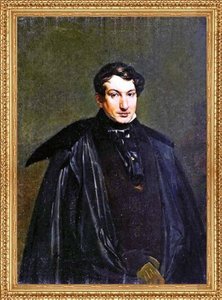
karl pavlovich brulloff
1799 - 1852
Quick Facts
- Artistic Movement Or Style: Romanticism
- Artists Who Influenced This Artist:
- Jean Auguste Dominique Ingres
- Alexei Nikolaevich Ivanov
- Date Of Birth: December 12, 1799
- Date Of Death: June 11, 1852
- Full Name: Karl Pavlovich Bryullov
- Nationality: Russian
- Notable Artworks:
- The Last Day of Pompeii
- Portrait of I.A. Krylov
- Portrait of the Poet and Playwrigh Nestor Kukolnic
- Fountain in Bakhchi-Sarai
- Place Of Birth: St. Petersburg, Russia

