

 Preview
 Send
Send Share
Share
 Details

 Download
 Similars
 X-Ray
X-Ray Diaporama
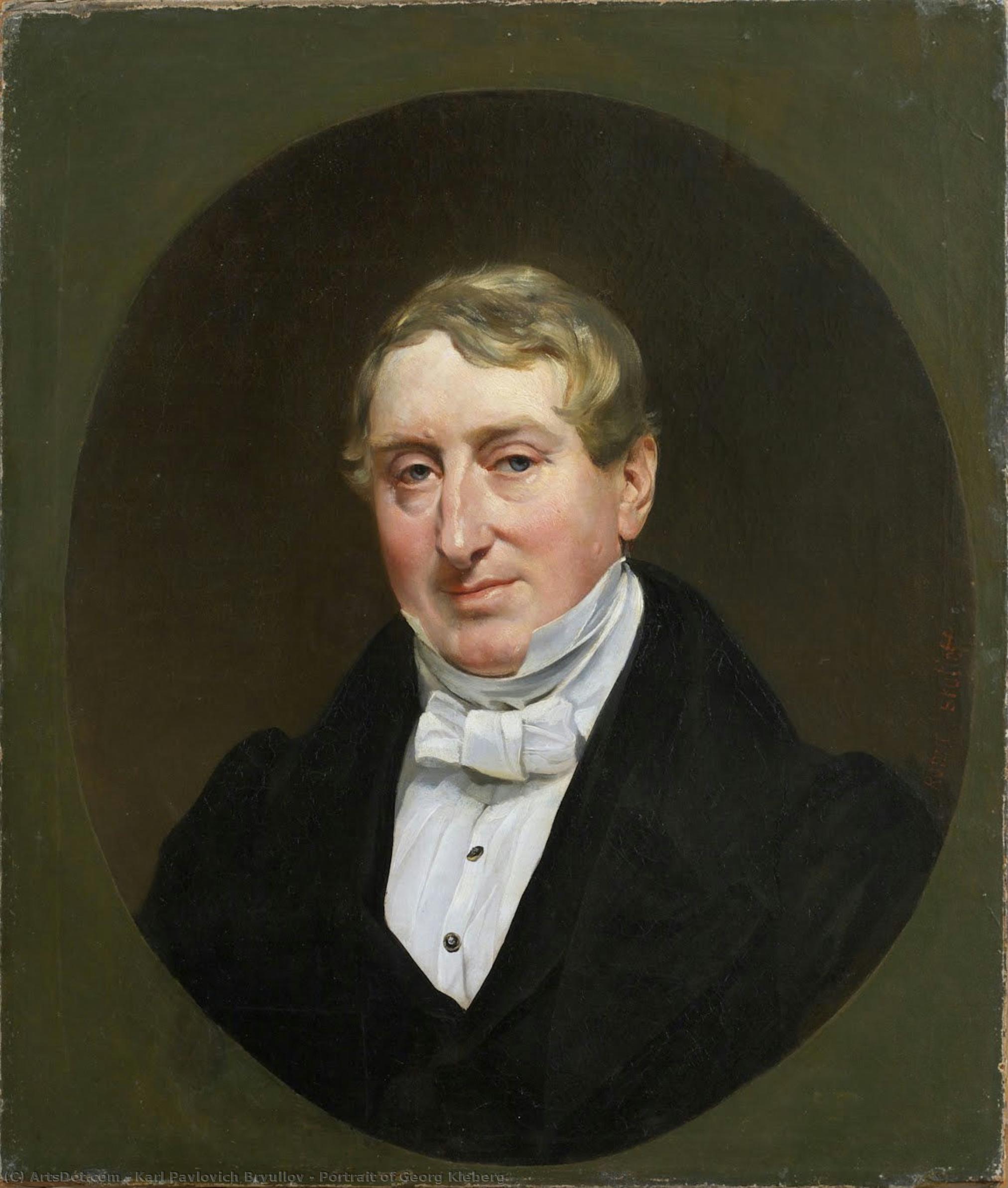
Portrait of Georg Kleberg
 Oil On Canvas
- WallArt
- Neoclassicism
 1833
1833- 19th Century
 72.0 x 62.0 cm
 The Art Museum RIGA BOURSE
 Read More
Purchase a high-resolution, enhanced digital image, far superior to the online preview.
Each file is meticulously prepared by our in-house specialists using advanced tools and expert manual retouching. We ensure every image has exceptional clarity, precise color accuracy, and fine detail.
The final file is delivered via email within 72 hours, optimized for immediate use in professional, editorial, and print environments. This is the same quality trusted by top-tier design studios, publishers, and galleries.
Digital Image
Download a high-resolution file for personal display, printing, and creative projects. ( Buy Print Buy Hand Made Painting)
Included in Every Digital Image Order
Expert Digital Delivery, Guaranteed
When you choose ArtsDot.com, you're not just getting an image - you're receiving a professionally enhanced digital artwork, crafted with precision and backed by a satisfaction guarantee. Here's everything that comes with your order, automatically:

Fast Email Delivery
Your high-resolution digital image file will be emailed to you within 72 hours of ordering - ready for immediate use.

AI-Enhanced Digital File
Your artwork is professionally optimized using advanced AI tools and manual editing, ensuring maximum detail, clarity, and color accuracy.

Free Lifetime Re-Delivery
Accidentally deleted or lost your file? No worries - we'll resend it to you anytime, free of charge.

No Import Fees - Ever
Enjoy your artwork instantly with zero customs, duties, or delivery fees - digital downloads are always tax-free.

Color Accuracy Guarantee
We ensure your digital image reflects the original colors as closely as possible using professional tools and color management.

60-Day Satisfaction Guarantee
If you're not satisfied with your digital image, we'll revise it or refund 100% within 60 days - no questions asked.

100% Money-Back Guarantee
Not satisfied? Get a full refund within 60 days of receiving your digital file - no questions asked.

Bulk Order Discounts
Buy 3 images, save 10% - Buy 5, save 15% - Buy 10+, save 20%. Great for creative projects, galleries, and agencies.
Collectible Description
A Portrait of Dignified Status: Karl Bryullov’s ‘Portrait of Georg Kleberg’
Karl Pavlovich Bryullov's 'Portrait of Georg Kleberg,' painted in 1833, is more than a simple likeness; it’s a meticulously crafted embodiment of Russian aristocratic identity during the Romantic era. Executed with the precision characteristic of his style and reflecting the influence of Italian Renaissance masters like Raphael and Michelangelo, this oil on canvas work offers a profound glimpse into the social and artistic sensibilities of 19th-century Saint Petersburg.
The subject, Georg Kleberg, is presented in a three-quarter pose within a classically framed oval, immediately establishing a sense of formality and respectability. The muted color palette – dominated by deep blacks, grays, and browns punctuated by subtle highlights of white and pale blues – contributes to an atmosphere of seriousness and quiet contemplation. Bryullov’s masterful use of light and shadow, reminiscent of Caravaggio's dramatic techniques, draws the viewer's eye to Kleberg’s face, emphasizing his features with a delicate realism that transcends mere representation.
Technical Mastery and Artistic Influences
Bryullov’s skill is immediately apparent in the meticulous rendering of texture. The brushstrokes are deliberately visible, particularly on the subject’s skin, hair, and the rich fabric of his coat, creating a palpable sense of realism that invites close inspection. The composition itself adheres to classical principles – lines define the contours of the face and clothing with exacting detail, while geometric shapes—circles for the frame, ovals for the head—reinforce the formality. However, Bryullov subtly deviates from strict academic constraints, incorporating elements of Italian Renaissance influence, particularly in his dramatic use of light and shadow, a hallmark of artists like Michelangelo and Raphael.
Symbolism and Historical Context
The attire worn by Kleberg – a black coat and white shirt with a bow tie – is laden with symbolic meaning. These garments represented respectability, status, and adherence to societal norms within the Russian aristocracy. Painted in 1833, this portrait reflects a period of significant social and political change in Russia, marked by the rise of the merchant class and increasing Western influence. Bryullov’s work captures a moment frozen in time, offering a window into the lives and values of the elite.
Emotional Impact and Legacy
'Portrait of Georg Kleberg' evokes a sense of dignified solemnity, inviting viewers to contemplate the subject's character and position within society. Bryullov’s ability to capture not just physical likeness but also an underlying emotional quality elevates this portrait beyond a simple representation; it is a testament to his artistic skill and a valuable historical document. This piece remains a significant example of Romantic portraiture, showcasing Bryullov's innovative approach while honoring the traditions of classical art.
Related Artworks

Artist Biography
Karl Pavlovich Bryullov: A Life in Romanticism
Early Life and Training
Karl Pavlovich Bryullov (born Karl Briullo) was born on December 23, 1799, in Saint Petersburg, Russia. His father, Pavel Ivanovich Briullo, was an academician, woodcarver, and engraver of Huguenot descent, who instilled in young Karl a love for the arts. Bryullov’s artistic journey began under his father's guidance before he formally enrolled at the Imperial School for the Arts in St. Petersburg in 1809.
Artistic Development and Influences
Though educated within a classical framework, Bryullov never fully embraced its rigid constraints. He felt a strong pull towards Italy from an early age, and his artistic development was significantly shaped by Italian Renaissance masters. His work demonstrates influences from artists like Raphael, Michelangelo, and Caravaggio, particularly in their dramatic use of light and shadow and mastery of anatomical detail.
- He distinguished himself as a promising student, showcasing imaginative talent during his education.
- After completing his studies, he moved to Rome in 1821, where he spent over a decade honing his skills.
Major Achievements and Notable Works
Bryullov’s breakthrough came with “The Last Day of Pompeii” (1830-1833), a monumental historical painting that catapulted him to international fame. The work, depicting the chaotic eruption of Mount Vesuvius, was lauded for its dramatic composition, emotional intensity, and technical brilliance. It garnered immense praise from contemporaries like Pushkin and Gogol.
- “The Taking of the Life of a Tsar” (1827) – An early work demonstrating his skill in historical narrative.
- “The Defense of the Sepulchre” (1846) - Showcasing Bryullov’s ability to balance emotion and historical accuracy.
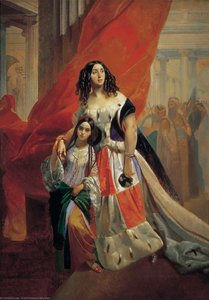
- "Princess Yuliya Pavlovna Samoilova Leaving a Ball with Adopted Daughter Amacilia Pacini" (1832) – A stunning example of his portraiture skills.
- “Genserich's Invasion of Rome” (1835) - Another dramatic historical scene displaying Baroque influence.
Career and Later Life
Following the success of “The Last Day of Pompeii,” Bryullov returned to Russia in triumph, securing a prestigious position at the Imperial Academy of Arts in 1836. He served as a professor there until 1848, influencing a generation of Russian artists.
- He developed a distinctive portrait style blending neoclassical simplicity with romantic sensibilities.
- His health began to decline while working on the plafond of St Isaac's Cathedral.
- In 1849, seeking improved health, he left Russia for Madeira and eventually settled near Rome, Italy.
Historical Significance and Legacy
Karl Pavlovich Bryullov is considered a pivotal figure in Russian Romanticism. His work marked a shift towards greater emotional expression and dramatic storytelling within Russian art. He bridged the gap between Neoclassical formality and the burgeoning Romantic movement, influencing subsequent generations of artists, including Gavriil Gorelov.
Bryullov’s legacy extends beyond his paintings; he was a respected teacher and a champion of artistic innovation. His contributions solidified his place as one of the greatest visual artists in Russian history, leaving an enduring mark on the nation's cultural heritage. He died on June 23, 1852, near Rome and is buried at the Cimitero Acattolico.
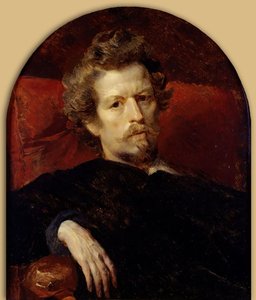
karl pavlovich bryullov
1799 - 1852 , Russia
Quick Facts
- Birth_Date: 1799-12-23
- Birth_Place: Saint Petersburg, Russia
- Death_Date: 1852-06-23
- Movement: Romanticism
- Name: Karl Pavlovich Bryullov
- Nationality: Russian
- Notable_Works:
- The Last Day of Pompeii
- The Taking of the Life of a Tsar
- The Defense of the Sepulchre

