

 Preview
 Send
Send Share
Share
 Details

 Download
 Similars
 X-Ray
X-Ray Diaporama
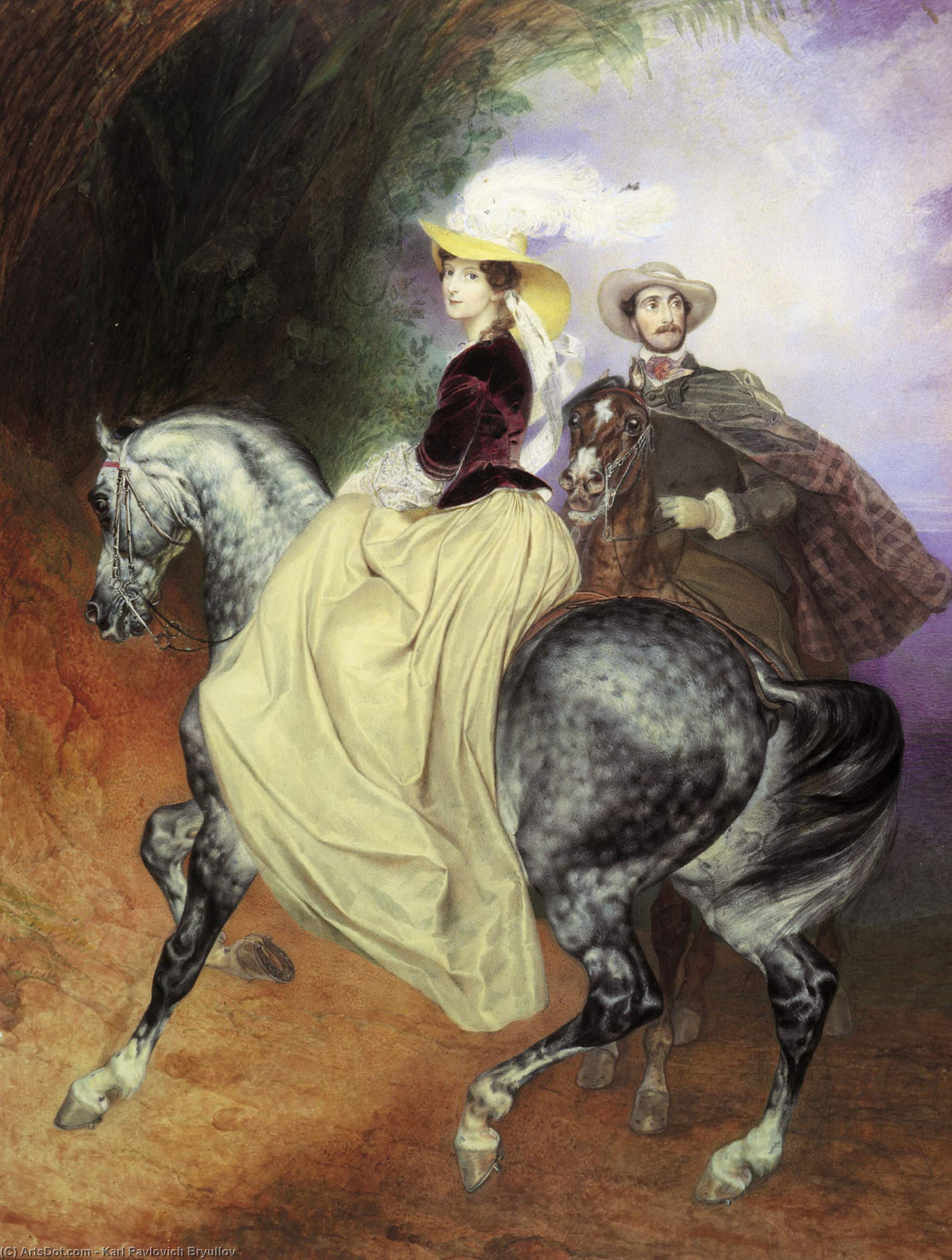
Portrait of Ye. Mussart and E. Mussart. (Riders)
 Oil
Oil- WallArt
- Romanticism
 1849
1849- 19th Century
 69.0 x 50.0 cm
 Read More
Purchase a high-resolution, enhanced digital image, far superior to the online preview.
Each file is meticulously prepared by our in-house specialists using advanced tools and expert manual retouching. We ensure every image has exceptional clarity, precise color accuracy, and fine detail.
The final file is delivered via email within 72 hours, optimized for immediate use in professional, editorial, and print environments. This is the same quality trusted by top-tier design studios, publishers, and galleries.
Digital Image
Download a high-resolution file for personal display, printing, and creative projects. ( Buy Print Buy Hand Made Painting)
Included in Every Digital Image Order
Expert Digital Delivery, Guaranteed
When you choose ArtsDot.com, you're not just getting an image - you're receiving a professionally enhanced digital artwork, crafted with precision and backed by a satisfaction guarantee. Here's everything that comes with your order, automatically:

Fast Email Delivery
Your high-resolution digital image file will be emailed to you within 72 hours of ordering - ready for immediate use.

AI-Enhanced Digital File
Your artwork is professionally optimized using advanced AI tools and manual editing, ensuring maximum detail, clarity, and color accuracy.

Free Lifetime Re-Delivery
Accidentally deleted or lost your file? No worries - we'll resend it to you anytime, free of charge.

No Import Fees - Ever
Enjoy your artwork instantly with zero customs, duties, or delivery fees - digital downloads are always tax-free.

Color Accuracy Guarantee
We ensure your digital image reflects the original colors as closely as possible using professional tools and color management.

60-Day Satisfaction Guarantee
If you're not satisfied with your digital image, we'll revise it or refund 100% within 60 days - no questions asked.

100% Money-Back Guarantee
Not satisfied? Get a full refund within 60 days of receiving your digital file - no questions asked.

Bulk Order Discounts
Buy 3 images, save 10% - Buy 5, save 15% - Buy 10+, save 20%. Great for creative projects, galleries, and agencies.
A Romantic Encounter in the Woods
In the heart of a sun-dappled forest, Karl Pavlovich Bryullov captures a moment of profound intimacy and quiet adventure in his 1849 masterpiece, Portrait of Ye. Mussart and E. Mussart (Riders). The painting invites the viewer to step into a private world where the boundaries between nature and human emotion blur seamlessly. Two figures, mounted upon their horses, traverse a verdant landscape that feels both timeless and fleeting. On the left, a man sits with a composed, rugged dignity; his black hat and the subtle presence of a holstered gun at his hip suggest a life of movement and perhaps a touch of daring. Beside him, the woman provides a radiant contrast, her yellow dress catching the filtered light of the canopy, acting as a luminous focal point amidst the deep greens and earthy tones of the woodland setting.
The composition is masterfully balanced, utilizing the rhythmic placement of the two horses to guide the eye through the depth of the forest. Bryullov, a titan of Russian Romanticism, employs a technique that breathes life into every texture—from the soft sheen of the horses' coats to the delicate folds of the lady's gown. The interplay of light and shadow, a hallmark of his training under the influence of Italian masters like Caravaggio, creates a sense of atmospheric volume. This is not merely a portrait of two individuals, but a study of how light interacts with the natural world to heighten the emotional resonance of a shared journey.
The Spirit of Romanticism and Narrative Depth
Beyond the mere depiction of a ride through the woods, this work serves as an evocative emblem of the Romantic era's fascination with the individual's connection to the wild. The presence of the firearm introduces a subtle narrative tension—a hint of the unpredictable adventures that await travelers in the untamed landscape. Yet, this edge is softened by the palpable sense of companionship between the riders. There is a quiet, shared joy evident in their posture, suggesting a bond that is as much about mutual spirit as it is about social standing. For the collector or interior designer, this piece offers more than just aesthetic beauty; it provides a window into a bygone era of elegance and exploration.
For those looking to adorn a sophisticated living space or a curated gallery, a high-quality reproduction of this work brings an air of historical grandeur and emotional warmth. The painting’s palette—rich with forest greens, deep blacks, and brilliant yellows—complements both classical and contemporary interiors, acting as a conversational centerpiece that evokes feelings of nostalgia and wanderlust. To possess such a piece is to hold a fragment of 19th-century Russian artistry, celebrating the enduring allure of the romantic spirit and the timeless beauty of the natural world.
Related Artworks
Artist Biography
Karl Pavlovich Bryullov: A Life in Romanticism
Early Life and Training
Karl Pavlovich Bryullov (born Karl Briullo) was born on December 23, 1799, in Saint Petersburg, Russia. His father, Pavel Ivanovich Briullo, was an academician, woodcarver, and engraver of Huguenot descent, who instilled in young Karl a love for the arts. Bryullov’s artistic journey began under his father's guidance before he formally enrolled at the Imperial School for the Arts in St. Petersburg in 1809.
Artistic Development and Influences
Though educated within a classical framework, Bryullov never fully embraced its rigid constraints. He felt a strong pull towards Italy from an early age, and his artistic development was significantly shaped by Italian Renaissance masters. His work demonstrates influences from artists like Raphael, Michelangelo, and Caravaggio, particularly in their dramatic use of light and shadow and mastery of anatomical detail.
- He distinguished himself as a promising student, showcasing imaginative talent during his education.
- After completing his studies, he moved to Rome in 1821, where he spent over a decade honing his skills.
Major Achievements and Notable Works
Bryullov’s breakthrough came with “The Last Day of Pompeii” (1830-1833), a monumental historical painting that catapulted him to international fame. The work, depicting the chaotic eruption of Mount Vesuvius, was lauded for its dramatic composition, emotional intensity, and technical brilliance. It garnered immense praise from contemporaries like Pushkin and Gogol.
- “The Taking of the Life of a Tsar” (1827) – An early work demonstrating his skill in historical narrative.
- “The Defense of the Sepulchre” (1846) - Showcasing Bryullov’s ability to balance emotion and historical accuracy.
- "Princess Yuliya Pavlovna Samoilova Leaving a Ball with Adopted Daughter Amacilia Pacini" (1832) – A stunning example of his portraiture skills.
- “Genserich's Invasion of Rome” (1835) - Another dramatic historical scene displaying Baroque influence.
Career and Later Life
Following the success of “The Last Day of Pompeii,” Bryullov returned to Russia in triumph, securing a prestigious position at the Imperial Academy of Arts in 1836. He served as a professor there until 1848, influencing a generation of Russian artists.
- He developed a distinctive portrait style blending neoclassical simplicity with romantic sensibilities.
- His health began to decline while working on the plafond of St Isaac's Cathedral.
- In 1849, seeking improved health, he left Russia for Madeira and eventually settled near Rome, Italy.
Historical Significance and Legacy
Karl Pavlovich Bryullov is considered a pivotal figure in Russian Romanticism. His work marked a shift towards greater emotional expression and dramatic storytelling within Russian art. He bridged the gap between Neoclassical formality and the burgeoning Romantic movement, influencing subsequent generations of artists, including Gavriil Gorelov.
Bryullov’s legacy extends beyond his paintings; he was a respected teacher and a champion of artistic innovation. His contributions solidified his place as one of the greatest visual artists in Russian history, leaving an enduring mark on the nation's cultural heritage. He died on June 23, 1852, near Rome and is buried at the Cimitero Acattolico.
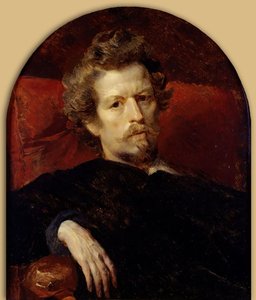
karl pavlovich bryullov
1799 - 1852 , Russia
Quick Facts
- Birth_Date: 1799-12-23
- Birth_Place: Saint Petersburg, Russia
- Death_Date: 1852-06-23
- Movement: Romanticism
- Name: Karl Pavlovich Bryullov
- Nationality: Russian
- Notable_Works:
- The Last Day of Pompeii
- The Taking of the Life of a Tsar
- The Defense of the Sepulchre

