 Preview
 Send
Send Share
Share
 Details

 Download
 Similars
 X-Ray
X-Ray Diaporama
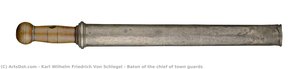
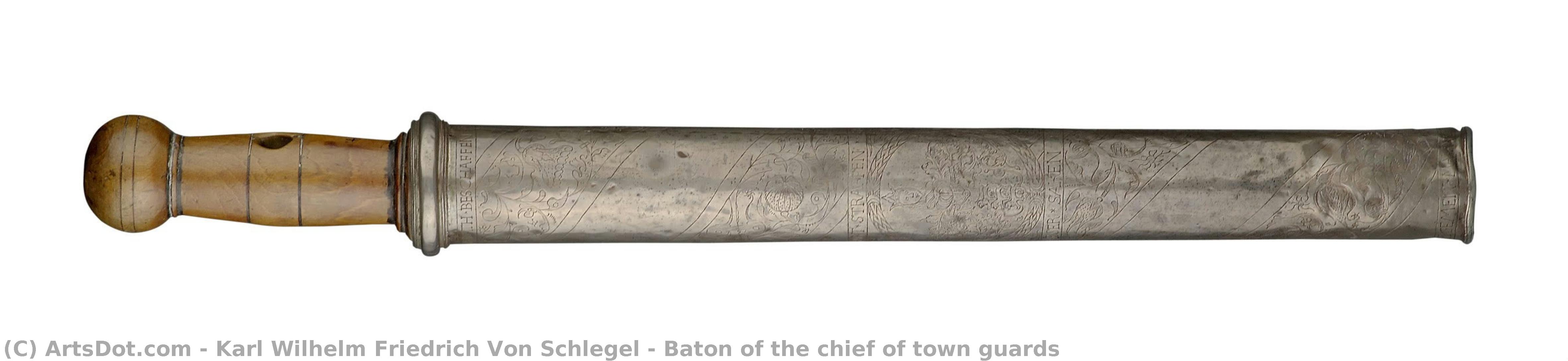
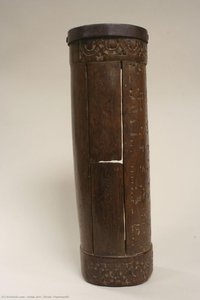
Baton of the chief of town guards


 Read More
Giclée / Art Print
Museum-quality giclée or canvas print with fast production and flexible finish options. ( Buy Hand Made Painting Buy Image)




































Pick from our preset sizes that match the artwork's original proportions.

You may enter your own dimensions to fit a specific frame or space. If your selected size does not match the original image's proportions, we will either crop the artwork or extend the image with a mirrored or solid-fill edge. A digital mockup will be sent for your approval before production begins.
Please note that the on-screen preview does not reflect the actual cropping or extension. Only the mockup will accurately show the final composition.
While custom sizes are available, we recommend selecting a dimension from the predefined list to preserve the original proportions.
Worldwide Delivery () in 2 weeks instead of standard 4/5 weeks. (5 September)

Free Worldwide Express Shipping

High-Quality Linen Canvas

Full Shipping Insurance

Customs Tax Refund Guarantee

True Color Matching Guarantee

60-Day Return Policy (Defects Only)

100% Money-Back Guarantee

Bulk Discount Offer
 Glass option is only available in size under 110 CM

Baton of the chief of town guards
Giclée / Art Print
Reproduction Size
-


Total Price
$ 63
Related Artworks





Artist Biography
Karl Wilhelm Friedrich von Schlegel: Life and Legacy
Early Life and Education
Karl Wilhelm Friedrich von Schlegel was born in Hanover, Germany, in 1772. He came from a fervently Protestant family, though he later rejected organized religion in favor of atheism and individualism during his youth. Initially intending to study law at the University of Göttingen, Schlegel quickly gravitated towards classical literature, recognizing its profound influence on shaping thought and culture.
Literary Beginnings and the *Athenaeum*
Schlegel embarked on a career as a writer and lecturer, becoming a prominent figure in the burgeoning intellectual circles of his time. In 1798, alongside his brother August Wilhelm Schlegel, he founded the influential journal Athenaeum*. This publication served as a platform for exploring Romantic ideas, literary criticism, and philosophical discourse, quickly establishing itself as a central voice of the early German Romantic movement.
Religious Conversion and Political Service
A pivotal moment in Schlegel’s life occurred in 1808 when he returned to Christianity. Both he and his wife, Dorothea Veit, were baptized into the Catholic Church. This conversion led to estrangement from family and former friends who remained committed to Protestantism or secular thought. In 1809, Schlegel moved to Austria, where he entered diplomatic service under Klemens von Metternich, the Austrian Empire’s foreign minister. He also continued his work as a journalist and writer.
Scholarly Achievements and Linguistic Contributions
Beyond his literary pursuits, Schlegel was a groundbreaking scholar in several fields. He is credited with first identifying what became known as Grimm's Law – a principle of sound shifts in Indo-European languages. His 1819 publication presented the first comprehensive theory linking the Indo-Iranian and Germanic language families under the broader “Aryan” group, marking him as a pioneer in Indo-European studies, comparative linguistics, and morphological typology.
Influence and Artistic Connections
Schlegel’s ideas profoundly influenced numerous writers and thinkers. He inspired figures such as Samuel Taylor Coleridge, Adam Mickiewicz, and Kazimierz Brodziński. His writings also captured the attention of composers; works by Schlegel were set to music by renowned artists including Franz Schubert, Felix Mendelssohn, and Robert Schumann.
Legacy and Historical Significance
Friedrich Schlegel died in Dresden in 1829 at the age of 56. He remains a significant figure in intellectual history as a key promoter of the Romantic movement and a foundational scholar in linguistics. His contributions to literary criticism, philosophy, and comparative philology continue to be studied and appreciated today.
Key Contributions
- Founding and editing the Athenaeum* journal
- Pioneering work in Indo-European linguistics (Grimm’s Law)
- Advocacy for Romanticism and German Idealism
- Influencing a generation of writers, poets, and composers
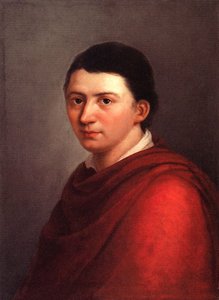
karl wilhelm friedrich von schlegel
1772 - 1829 , Germany
Quick Facts
- Birth Date: 1772
- Birth Place: Hanover, Germany
- Death Date: 1829
- Influenced:
- Samuel Taylor Coleridge
- Adam Mickiewicz
- Kazimierz Brodziński
- Movement: Romanticism, German Idealism
- Name: Karl Wilhelm Friedrich von Schlegel
- Nationality: German
- Notable Works: Athenaeum journal, Indo-European linguistics theory