 Send
Send Share
Share
 Details

 Download
 Similars
 Diaporama
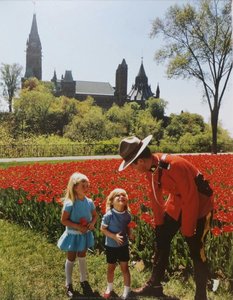
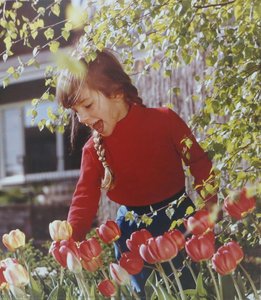
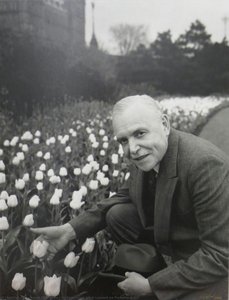
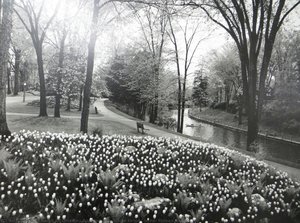
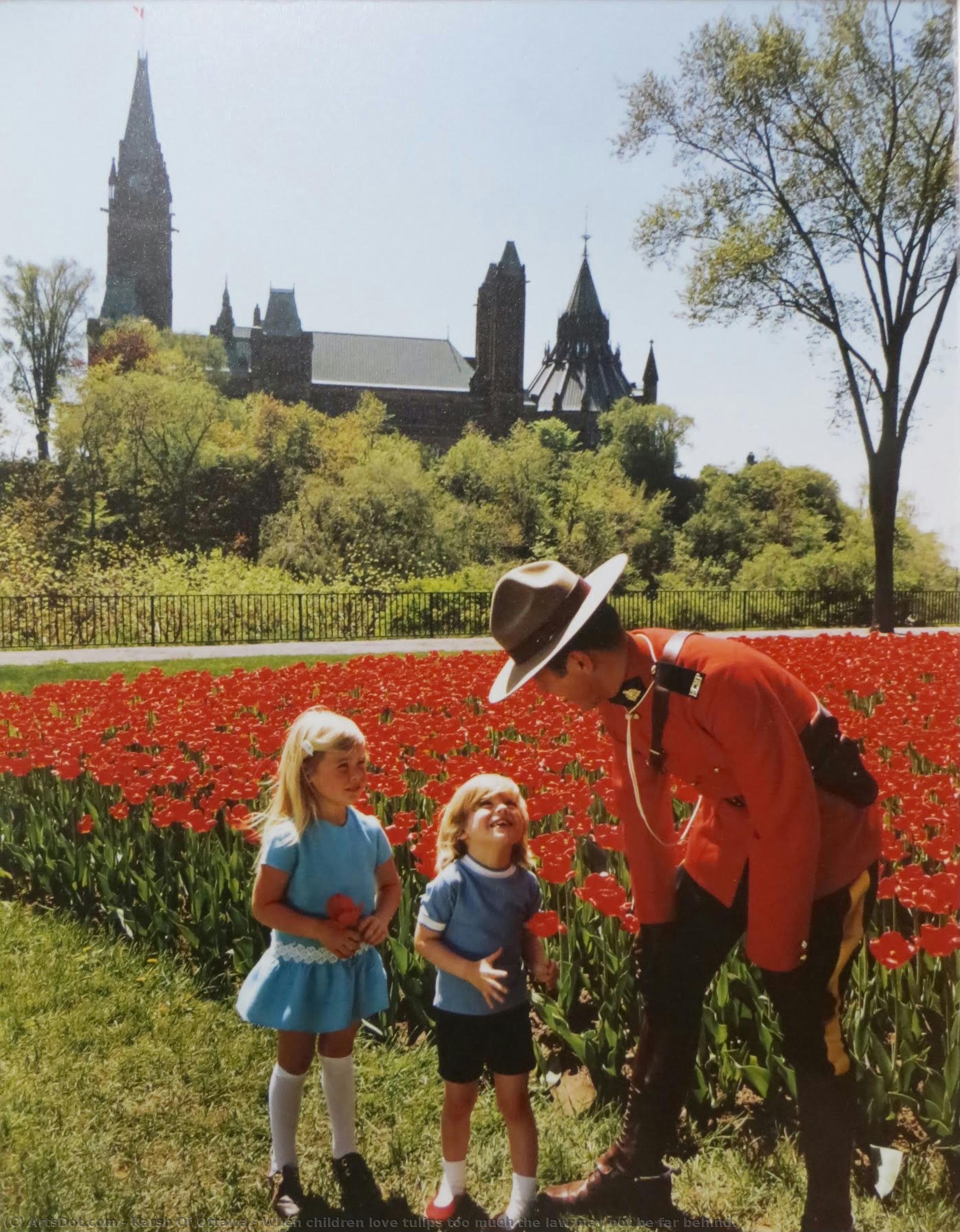
When children love tulips too much the law may not be far behind.
 Black and White Photography
- Photo
 1978
1978- Modern
 46.0 x 39.0 cm
 Canadian Museum of Nature
 Read More
Giclée / Art Print
Museum-quality giclée or canvas print with fast production and flexible finish options. ( Buy Hand Made Painting Buy Image)




































Pick from our preset sizes that match the artwork's original proportions.

You may enter your own dimensions to fit a specific frame or space. If your selected size does not match the original image's proportions, we will either crop the artwork or extend the image with a mirrored or solid-fill edge. A digital mockup will be sent for your approval before production begins.
Please note that the on-screen preview does not reflect the actual cropping or extension. Only the mockup will accurately show the final composition.
While custom sizes are available, we recommend selecting a dimension from the predefined list to preserve the original proportions.
Worldwide Delivery () in 2 weeks instead of standard 4/5 weeks. (4 September)

Free Worldwide Express Shipping

High-Quality Linen Canvas

Full Shipping Insurance

Customs Tax Refund Guarantee

True Color Matching Guarantee

60-Day Return Policy (Defects Only)

100% Money-Back Guarantee

Bulk Discount Offer
 Glass option is only available in size under 110 CM

When children love tulips too much the law may not be far behind.
Giclée / Art Print
Reproduction Size
-


Total Price
$ 63
A Moment Frozen in Time: The Poetic Narrative of Karsh
In the vast canon of twentieth-century photography, few names command as much reverence as Karsh of Ottawa. Known primarily for his monumental portraits of world leaders—capturing the very essence of power and intellect in figures like Winston Churchill and Albert Einstein—Karsh possessed a rare, dualistic ability to pivot from the gravity of historical icons to the tender, ephemeral moments of everyday life. The photograph titled "When children love tulips too and the law may not be far behind" serves as a breathtaking departure from his formal studio work, offering instead a candid, soulful glimpse into a narrative that feels both whimsical and deeply grounded in human connection.
The composition presents a striking visual dialogue between color and monochrome. While the photograph itself is captured with the sharp, meticulous clarity characteristic of Karsh’s technical mastery, the description reveals a vibrant interplay of hues: the bold, authoritative red of a man's jacket contrasted against the soft, innocent blue of the children's shirts. This juxtaposition creates a focal point that draws the eye immediately to the interaction at the heart of the frame. A man, perhaps a soldier or a figure of authority, stands alongside two young girls, his hat held in hand as he engages them in conversation. There is an unmistakable warmth in this encounter, a sense of shared joy that transcends the formal boundaries often associated with law or order.
Symbolism and the Architecture of Memory
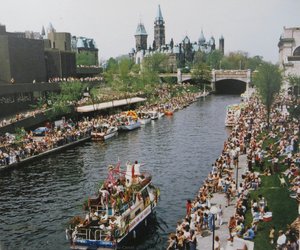
Beyond the immediate charm of the subjects, the artwork breathes through its setting. The background features a majestic, castle-like structure, its clock tower rising into the sky like a silent witness to the passage of time. This architectural element introduces a layer of historical weight, suggesting that while the children’s laughter is fleeting, it exists within the enduring framework of history and tradition. The presence of scattered potted plants adds an organic, textured layer to the scene, grounding the human interaction in a lush, cultivated environment. These botanical elements may serve as subtle metaphors for growth, beauty, and the delicate balance between nature and the structured world of man.
The title itself—a playful, almost cryptic observation—invites the viewer to contemplate the relationship between innocence and consequence. It suggests a whimsical warning, hinting at the inevitable arrival of rules and regulations as one matures. This tension between the unbridled love for beauty (the tulips) and the encroaching presence of "the law" provides a profound emotional depth, making the piece much more than a mere snapshot; it becomes a meditation on the loss of innocence and the structured reality of adulthood.
An Essential Addition to the Discerning Collection
For the art collector or interior designer, this work offers a unique opportunity to introduce a narrative-driven masterpiece into a curated space. Unlike traditional portraits that demand a formal atmosphere, this piece brings a sense of storytelling and lightheartedness. Its ability to evoke nostalgia and warmth makes it an ideal centerpiece for a library, a sophisticated study, or a contemporary living area where conversation and emotion are paramount.
As a high-quality reproduction, this artwork preserves the intricate details of Karsh’s legendary eye—from the subtle textures of the clothing to the distant grandeur of the clock tower. It serves as a testament to a master photographer who could find the extraordinary within the ordinary, providing any space with a touch of historical elegance and an enduring sense of human wonder.
Related Artworks
Artist Biography
**early life and career**
karsh of ottawa, born yousuf karsh on december 23, 1908, in mardin, ottoman empire (now turkey), was a renowned armenian canadian photographer. his life's journey, marked by early challenges and eventual success, laid the foundation for his remarkable photographic career. * **persecution and migration**: karsh's family endured persecution in turkey, leading to their flight on foot to aleppo, syria, in 1922. * **photographic beginnings**: in canada, karsh joined his uncle, a photographer, in sherbrooke, quebec, marking the start of his photographic apprenticeship.**artistic development and notable works**
karsh's photographic portraits have become synonymous with the public images of major international figures. some of his most notable works include:- winston churchill's 1941 portrait, featured on the cover of life magazine, stands as a definitive portrayal.
- his photographs of albert einstein, sir winston churchill, walt disney, and grace kelly are iconic representations of these figures.
- karsh's use of dramatic lighting, learned from his apprenticeship with john h. garo, a boston painter and portrait photographer, added depth to his portraits.
**legacy and later life**
* **establishment**: karsh established a studio in ottawa with financial help from his uncle, eventually affiliating with the ottawa little theatre, where he met his wife, actress solange gauthier. * **retirement**: after a distinguished career, karsh retired in 1993. * **enduring impact**: his photographic portraits continue to represent the public images of major international figures, displayed in public galleries and widely circulated in magazines. **view more works by karsh of ottawa on ArtsDot:** [https://ArtsDot.com/@/karsh-of-ottawa](https://ArtsDot.com/@/karsh-of-ottawa) | explore the extensive collection of karsh's photographic portraits, including those of renowned figures and behind-the-scenes glimpses into his artistic process. **discover more on ArtsDot:** /en/art/show/art-d3crhf-en/ | delve into the rich history of the ottoman period art movement, influencing karsh's early life and artistic inclinations. **references:** * [wikipedia.org](https://www.wikipedia.org/) - yousuf karsh * karsh of ottawa | ArtsDot.com artist profile
karsh of ottawa
1908 - 2002 , Turkey
Quick Facts
- Artistic Movement Or Style: Dramatic Portrait Lighting
- Artists Or Movements Influenced By This Artist: ['Boston Painter']
- Artists Who Influenced This Artist: ['John H. Garo']
- Date Of Birth: December 23, 1908
- Date Of Death: July 13, 2002
- Full Name: Yousuf Karsh
- Nationality: Canadian Armenian
- Notable Artworks:
- Winston Churchill's Portrait
- Albert Einstein Photographs
- Walt Disney Portraits
- Grace Kelly Portraits
- Place Of Birth: Mardin, Turkey
Related Articles

Crimson Threads of Narrative: Exploring Symbolism & Representation in Artworks Featuring the Red Dress
Explore the rich symbolism of the red dress in art history! From ancient power displays to iconic portraits like Cézanne’s 'Madame Cezanne', discover the cultural and artistic significance behind this captivating color. Expert analysis & insights.

Mark Rothko's Masterpieces: 25 Paintings That Define Abstract Expressionism | ArtsDot
Explore 25 iconic Mark Rothko paintings that define Abstract Expressionism. Discover the stories, colors & emotions behind these masterpieces. Find museum-quality art reproductions and curated decor ideas at ArtsDot.com.
Modigliani's Masterpieces: 25 Iconic Paintings & Sculptures | ArtsDot
Explore 25 iconic artworks by Amedeo Modigliani, from his haunting portraits to captivating sculptures. Discover the stories behind these masterpieces of early 20th-century art & find museum-quality reproductions at ArtsDot.com.
Egon Schiele's Masterpieces: 25 Paintings That Define Expressionism | ArtsDot
Delve into the haunting world of Egon Schiele with our curated selection of his 25 most iconic Expressionist paintings. Explore the artist's life, technique & emotional depth. Find museum-quality Schiele reproductions and elevate your home decor on ArtsDot.com.
Roy Lichtenstein's Masterpieces: 25 Iconic Pop Artworks for Your Home | ArtsDot
Explore Roy Lichtenstein's 25 most iconic Pop Art masterpieces! Discover the stories behind 'Drowning Girl', 'Look Mickey' & more. Find museum-quality reproductions and elevate your home decor with ArtsDot. Explore the full collection online.