 Preview
 Send
Send Share
Share
 Details

 Download
 Similars
 X-Ray
X-Ray Diaporama
Green Lamp\n\nGreen Lamp

 Read More
Hand Made Oil Reproduction
Hand-painted oil on canvas in your size and frame, made to order by our artists. ( Buy Print Buy Image)




































Pick from our preset sizes that match the artwork's original proportions.

You may enter your own dimensions to fit a specific frame or space. If your selected size does not match the original image's proportions, we will either crop the artwork or extend the painting with additional hand-painted elements. A digital mockup will be sent for your approval before production begins.
Please note that the on-screen preview does not reflect the actual cropping or extension. Only the mockup will accurately show the final composition.
While custom sizes are available, we recommend selecting a dimension from the predefined list to preserve the original proportions.
After order, ArtsDot.com team will email client for instructions and provide a mockup preview
Worldwide Delivery () in 3/4 weeks instead of standard 5 weeks. (25 August). No compromise on quality.

Free Worldwide Express Shipping

High-Quality Linen Canvas

Full Shipping Insurance

Customs Tax Refund Guarantee

True Color Matching Guarantee

60-Day Return Policy (Defects Only)

100% Money-Back Guarantee

Bulk Discount Offer
 Glass option is only available in size under 110 CM

Green Lamp\n\nGreen Lamp
Reproduction Medium
Reproduction Size
-


Total Price
$ 263
Artwork Description
Related Artworks






Artist Biography
A Tapestry of Memory and Space: The Life of Kate Elizabeth Daw
The trajectory of Kate Elizabeth Daw (1965–2020) was one of profound intellectual depth and an unyielding commitment to the power of visual storytelling. Born in the coastal serenity of Esperance, Western Australia, her early connection to the natural world provided a foundational sensitivity that would later manifest in her complex, layered explorations of identity and place. Though she briefly stepped away from formal education at eighteen to pursue an independent path of discovery, this period of wandering proved essential to her development. It allowed her to cultivate a singular, uncompromising vision long before she entered the rigorous academic environments of Melbourne and Glasgow. When she eventually moved to Melbourne in 1989, her arrival marked the beginning of a prolific era characterized by a seamless fusion of painting, ceramics, and installation art.
Daw’s artistic evolution was deeply intertwined with her academic pursuits, which lent an extraordinary intellectual rigor to her creative output. After earning her Bachelor’s degree in Painting from the Victoria College of Arts (VCA), she traveled to the Glasgow School of Art as a recipient of the prestigious Anne and Gordon Samstag International Visual Arts Scholarship. This international exposure expanded her horizons, leading her back to Melbourne to complete a Master’s degree and eventually a doctorate at RMIT University. Her work became increasingly sophisticated, moving beyond simple representation into what critics often termed spatial narrative—a method of using physical space and material texture to tell stories that exist between the seen and the unseen.
The Interplay of Medium and Message
What distinguished Daw from her contemporaries was her refusal to be confined by a single medium. She navigated the boundaries between the tactile world of ceramics and the expansive possibilities of large-scale installation with remarkable fluidity. Her later paintings were particularly evocative, often acting as vessels for memory; she would interweave snapshots of personal recollections with modernist designs and cultural motifs. In some of her most intimate works, she utilized typewritten text, incorporating excerpts from her own writings alongside the prose of literary giants like Jean Rhys and Marcel Proust. This layering of text and image created a palimpsest effect, where history, literature, and personal experience collided on the canvas.
Her collaborative spirit also played a vital role in her artistic legacy. Working alongside artists such as Stewart Russell, she explored themes that resonated with the Australian social fabric. Their project “Two Homes” at the Melbourne Cricket Ground (MCG) investigated the complexities of identity and place, while other works delved into the intersection of sport and human rights, specifically honoring the courage of Olympian Peter Norman. Through these collaborations, Daw demonstrated that art could serve as a powerful vehicle for social commentary and feminist advocacy, using her platform to illuminate the female experience and broader societal struggles.
Liminality and the Light of Discovery
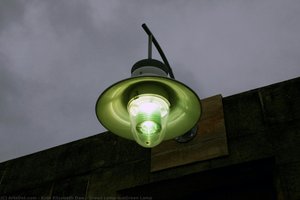
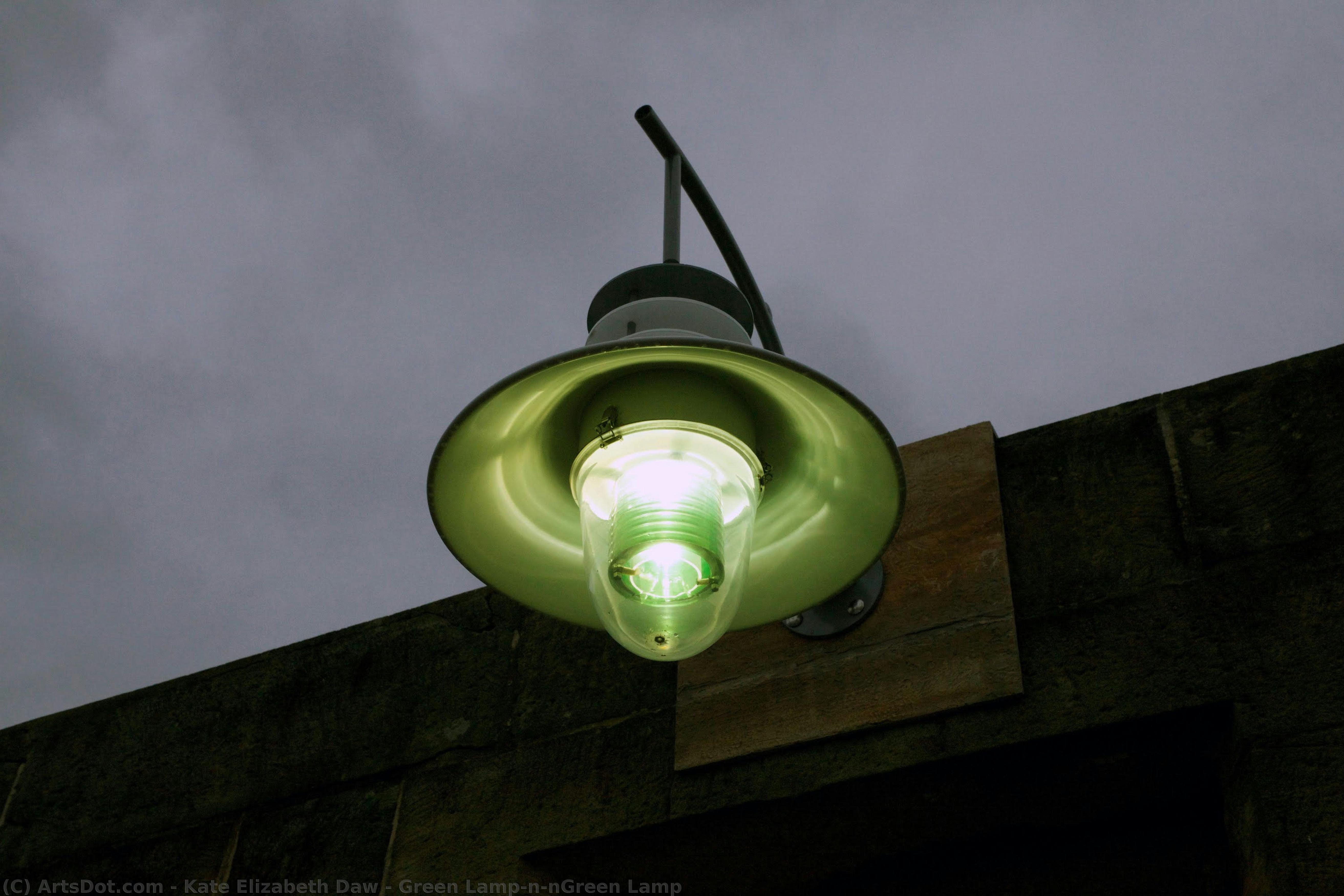
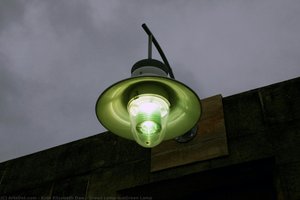
One of the most hauntingly beautiful aspects of Daw’s practice was her fascination with the liminal—the threshold between states of being. This is perhaps best exemplified in her site-specific installation, Green Lamp (2013–14), created for the 19th Biennale of Sydney. Situated on Cockatoo Island, the work consisted of a single green light shining from an old military guardhouse, visible only to those passing by on ferries or gazing from the distant shoreline. The installation evoked a sense of longing and mystery, drawing comparisons to the beckoning green light in F. Scott Fitzgerald’s The Great Gatsby. It was a work that existed as much in the mind’s eye as it did in physical reality, embodying the very essence of her artistic philosophy: that true meaning often resides in what is glimpsed but not fully grasped.
As a painter, sculptor, educator, and curator, Kate Elizabeth Daw left an indelible mark on the Australian contemporary art landscape. Her ability to weave together the disparate threads of personal memory, historical truth, and sculptural form created a body of work that was both deeply intimate and expansively social. Even after her passing in 2020, her influence persists through the many layers of narrative she left behind—reminding us that art is not merely an object to be viewed, but a space to be inhabited and a story to be felt.
kate elizabeth daw
1965 - 2020 , Australia
Quick Facts
- Artistic Movement Or Style: Contemporary Painting
- Date Of Birth: 1965
- Full Name: Kate Elizabeth Daw
- Nationality: Australian
- Notable Artworks:
- A Simple Act (Detail)
- Green Lamp
- Place Of Birth: Esperance, Australia