 Preview
 Send
Send Share
Share
 Details

 Download
 Similars
 X-Ray
X-Ray Diaporama
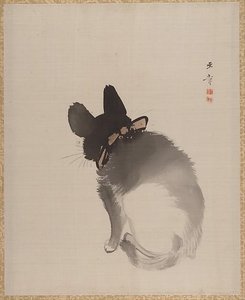
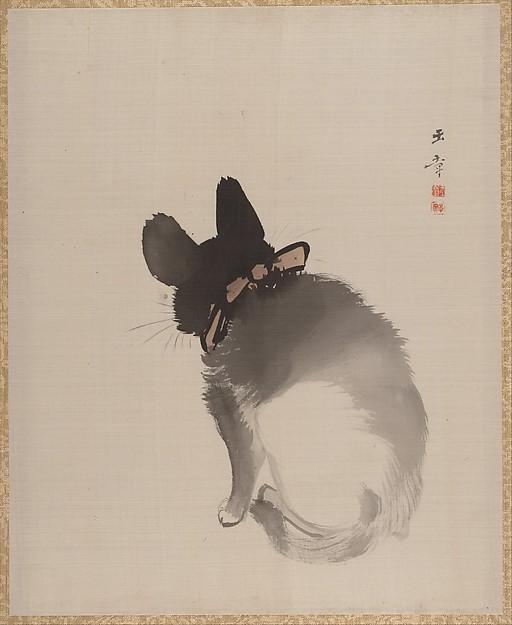
猫図 Cat Seen from Behind
 1868
1868 34.0 x 28.0 cm
 Read More
Hand Made Oil Reproduction
Hand-painted oil on canvas in your size and frame, made to order by our artists. ( Buy Print Buy Image)




































Pick from our preset sizes that match the artwork's original proportions.

You may enter your own dimensions to fit a specific frame or space. If your selected size does not match the original image's proportions, we will either crop the artwork or extend the painting with additional hand-painted elements. A digital mockup will be sent for your approval before production begins.
Please note that the on-screen preview does not reflect the actual cropping or extension. Only the mockup will accurately show the final composition.
While custom sizes are available, we recommend selecting a dimension from the predefined list to preserve the original proportions.
After order, ArtsDot.com team will email client for instructions and provide a mockup preview
Worldwide Delivery () in 3/4 weeks instead of standard 5 weeks. (24 August). No compromise on quality.

Free Worldwide Express Shipping

High-Quality Linen Canvas

Full Shipping Insurance

Customs Tax Refund Guarantee

True Color Matching Guarantee

60-Day Return Policy (Defects Only)

100% Money-Back Guarantee

Bulk Discount Offer
 Glass option is only available in size under 110 CM

猫図 Cat Seen from Behind
Reproduction Medium
Reproduction Size
-


Total Price
$ 263
Related Artworks









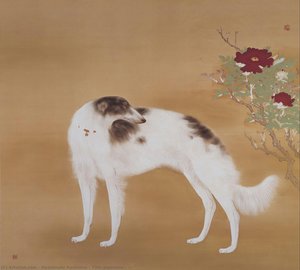
Artist Biography
The Soul of the Meiji Era: The Life and Art of Kawabata Gyokushō
Born in 1842 amidst the fading lantern glow of the late Edo period, Kawabata Gyokushō stands as a profound bridge between the ancient traditions of Japan and the transformative dawn of modernity. His life, spanning from the twilight of the Shogunate to the early Taishō era, was defined by a delicate dance between preservation and innovation. While history often remembers him through the lens of his literary depth—a figure whose exploration of loneliness and nature resonates with the quietude of a Zen monk—it is in his brushwork that one truly encounters the heartbeat of the Meiji period. Gyokushō did not merely observe the rapid Westernization of his country; he absorbed its light, blending it with the refined aesthetics of the Maruyama and Shijō schools to create an art form that felt both timeless and strikingly contemporary.
His artistic journey began in earnest at the tender age of eleven, when he entered a rigorous apprenticeship under the master Nakajima Raishō. This early immersion in the classical traditions of Kyoto provided him with a foundation of grace, simplicity, and emotional subtlety. However, Gyokushō was an artist possessed by a restless curiosity. As Japan opened its doors to the world, he sought out the new, moving to Edo in 1866 to study Western-style painting under Takahashi Yuichi. This pivotal encounter with Western techniques allowed him to introduce elements like foreshortening into his compositions, breathing a new, realistic vitality into traditional subjects. He became a master of the tsuketate method and the mokkotsu, or "boneless," technique, where ink is applied directly to paper without the constraint of outlines, allowing forms to emerge organically from the void.
A Symphony of Ink and Silence
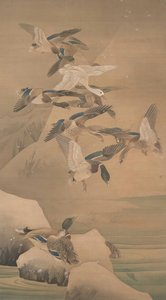
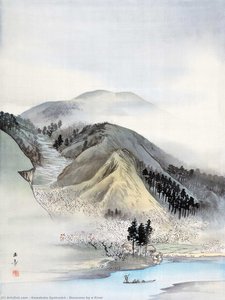
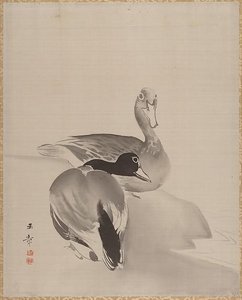
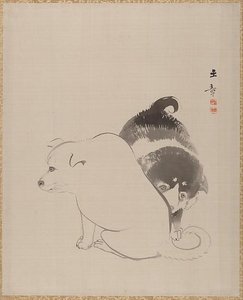
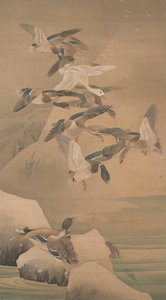
To gaze upon a Gyokushō painting is to enter a space of profound contemplation. His work is an exquisite embodiment of wabi-sabi—the Japanese aesthetic that finds beauty in imperfection, transience, and the quiet dignity of decay. He possessed a singular ability to capture the ephemeral; whether it was the soft flutter of wings in Ducks in the Snow or the intimate, tender presence of A Pair of Puppies, his subjects were never mere decorations but vessels for emotion. His landscapes often utilized muted palettes and understated compositions, inviting the viewer to linger in the stillness of a snow-covered field or the gentle movement of blossoms by a river.
The technical brilliance of his work lies in its restraint. He understood that true power often resides in what is left unsaid, using the vast, empty spaces of silk and paper to represent the infinite. His mastery of ink wash techniques allowed him to convey texture and atmosphere with minimal movement, creating a sense of depth that feels both physical and spiritual. This balance of meticulous detail and atmospheric abstraction ensured that his art never demanded attention through ostentation, but rather earned it through a quiet, irresistible eloquence that mirrored the natural world he so revered.
Legacy of a Master
Beyond his individual canvases, Gyokushō’s historical significance is cemented by his role in shaping the institutional landscape of Japanese art. His appointment as a professor at the Tokyo Fine Arts School and his service as a Court Artist and juror for the Bunten exhibition demonstrate his immense influence on the next generation of creators. He stood at the epicenter of an era where the old world was being rewritten, serving as a guardian of classical values while simultaneously welcoming the winds of change. His life’s work remains a testament to the idea that tradition is not a static relic to be guarded, but a living, breathing entity capable of profound evolution.
Today, the legacy of Kawabata Gyokushō continues to inspire those who seek beauty in the quiet corners of existence. His ability to weave together the following elements remains his greatest achievement:
- The Fusion of Styles: The seamless integration of traditional Japanese ink wash with Western perspective and realism.
- Emotional Resonance: A profound capacity to translate themes of solitude, nature, and the passage of time into visual poetry.
- Aesthetic Integrity: An unwavering commitment to the principles of wabi-sabi and the beauty of simplicity.
- Cultural Stewardship: His pivotal role in navigating the artistic transition from the Edo period through the Meiji era.
kawabata gyokushō
1842 - 1913
Quick Facts
- Artistic Movement Or Style: Japanese Modernism
- Artists Or Movements Influenced By This Artist: ['James Abbott McNeill Whistler']
- Artists Who Influenced This Artist:
- Hiroshige
- Utagawa Hiroshi
- Date Of Birth: 1842
- Date Of Death: 1913
- Full Name: Kawabata Gyokushō
- Nationality: Japanese
- Notable Artworks:
- A Pair of Puppies
- Pair of Ducks
- Place Of Birth: Tokyo, Japan