

 Preview
 Send
Send Share
Share
 Details

 Download
 Similars
 X-Ray
X-Ray Diaporama
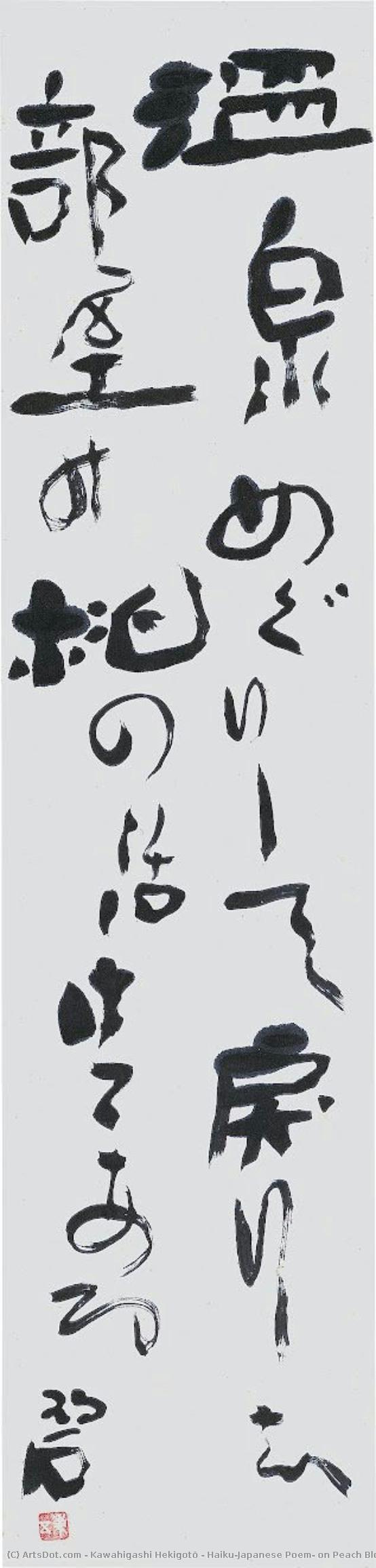
Haiku(Japanese Poem) on Peach Blossoms
 134.0 x 32.0 cm
 Read More
Hand Made Oil Reproduction
Hand-painted oil on canvas in your size and frame, made to order by our artists. ( Buy Print Buy Image)




































Pick from our preset sizes that match the artwork's original proportions.

You may enter your own dimensions to fit a specific frame or space. If your selected size does not match the original image's proportions, we will either crop the artwork or extend the painting with additional hand-painted elements. A digital mockup will be sent for your approval before production begins.
Please note that the on-screen preview does not reflect the actual cropping or extension. Only the mockup will accurately show the final composition.
While custom sizes are available, we recommend selecting a dimension from the predefined list to preserve the original proportions.
After order, ArtsDot.com team will email client for instructions and provide a mockup preview
Worldwide Delivery () in 3/4 weeks instead of standard 5 weeks. (3 September). No compromise on quality.

Free Worldwide Express Shipping

High-Quality Linen Canvas

Full Shipping Insurance

Customs Tax Refund Guarantee

True Color Matching Guarantee

60-Day Return Policy (Defects Only)

100% Money-Back Guarantee

Bulk Discount Offer
 Glass option is only available in size under 110 CM

Haiku(Japanese Poem) on Peach Blossoms
Reproduction Medium
Reproduction Size
-


Total Price
$ 263
Related Artworks





Artist Biography
Early Life and Influences
Kawahigashi Hekigotō (河東碧梧桐), born February 26, 1873, in Matsuyama, Ehime prefecture, Japan, was a figure whose quiet brilliance reshaped the landscape of Japanese poetry. His formative years were steeped in Confucian scholarship—his father held a prominent position within the scholarly elite—providing him with an intellectual foundation rooted in classical Chinese thought. Crucially, his childhood friendship with Kyoshi Takahama proved to be transformative. Takahama, himself a burgeoning poet and novelist, would become Kawahigashi’s steadfast companion and collaborator, forging a bond that profoundly impacted their artistic trajectories. This shared passion for literature ignited by Shiki Masaoka—a literary titan who championed the modernist movement—established Kawahigashi's intellectual compass.The Rise of Tanshi and Shiki Masaoka’s Legacy
In 1894, Kawahigashi and Takahama embarked on a shared journey away from formal schooling, relocating to Tokyo where they joined the ranks of Shiki Masaoka's disciples. Shiki Masaoka, recognized as the undisputed leader of modern haiku, had irrevocably altered poetic conventions by discarding the traditional 5-7-5 syllable structure—a cornerstone of Japanese verse for centuries—and advocating for “tanshi,” a form of free verse that prioritized immediacy and sensory experience. Kawahigashi wholeheartedly embraced Shiki’s revolutionary vision, recognizing its potential to capture the essence of fleeting moments with unparalleled nuance. This allegiance solidified his position at the forefront of poetic innovation.Editorials and Literary Contributions
Kawahigashi's literary career ascended rapidly following Shiki’s death in 1897 when he assumed the editorship of *Hototogisu* (“Cuckoo”) magazine—a publication dedicated to promoting Shiki’s aesthetic. Subsequently, he secured a role as editor for *Nippon* (“Japan”), furthering his influence within Japan's literary sphere. Beyond editorial duties, Kawahigashi demonstrated versatility across numerous artistic disciplines. He was a prolific travel writer documenting his explorations of Japan and abroad, crafting evocative narratives that mirrored the spirit of Shiki’s poetic sensibilities. His meticulous calligraphic work—characterized by elegant brushstrokes and profound contemplation—served as an extension of his artistic exploration. Furthermore, he pursued noh dance, immersing himself in Japanese theatrical tradition, and undertook daring mountaineering expeditions reflecting a spirit of adventurous inquiry.Notable Works and Artistic Innovation
Kawahigashi’s magnum opus remains *Hekigotō kushū* (“Hekigotō Collection”), published in 1916—a testament to his unwavering commitment to tanshi poetry. This collection exemplifies the core tenets of Shiki's influence: capturing ephemeral beauty and conveying emotion with understated precision. Kawahigashi’s exploration of seasonal imagery (*kigo*) – a technique championed by Shiki – continued to inspire subsequent poets, albeit with a willingness to abandon established conventions altogether. His disciples recognized his genius but ultimately distanced themselves from him as he ceased writing in 1933 marking the end of an extraordinary artistic journey.Historical Significance
Kawahigashi Hekigotō stands as a pivotal figure in Japanese literary history—a champion of modernist innovation who irrevocably altered the trajectory of haiku poetry. His unwavering devotion to Shiki Masaoka’s vision solidified his legacy as one of Japan's most influential poets, securing his place among the luminaries who redefined artistic expression and championed the pursuit of authentic experience. He remains an enduring symbol of intellectual curiosity and artistic courage—a testament to the transformative power of embracing unconventional approaches within established traditions.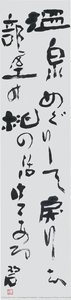
kawahigashi hekigotō
1873 - 1937 , Japan
Quick Facts
- Artistic Movement Or Style: Modern Haiku
- Artists Or Movements Influenced By This Artist: ['Takahama Kyoshi']
- Artists Who Influenced This Artist: ['Shiki Masaoka']
- Date Of Birth: February 26, 1873
- Date Of Death: February 1, 1937
- Full Name: Kawahigashi Hekigotō
- Nationality: Japanese
- Notable Artworks: ['Hekigotō kushū']
- Place Of Birth: Matsuyama, Japan


