 Preview
 Send
Send Share
Share
 Details

 Download
 Similars
 X-Ray
X-Ray Diaporama
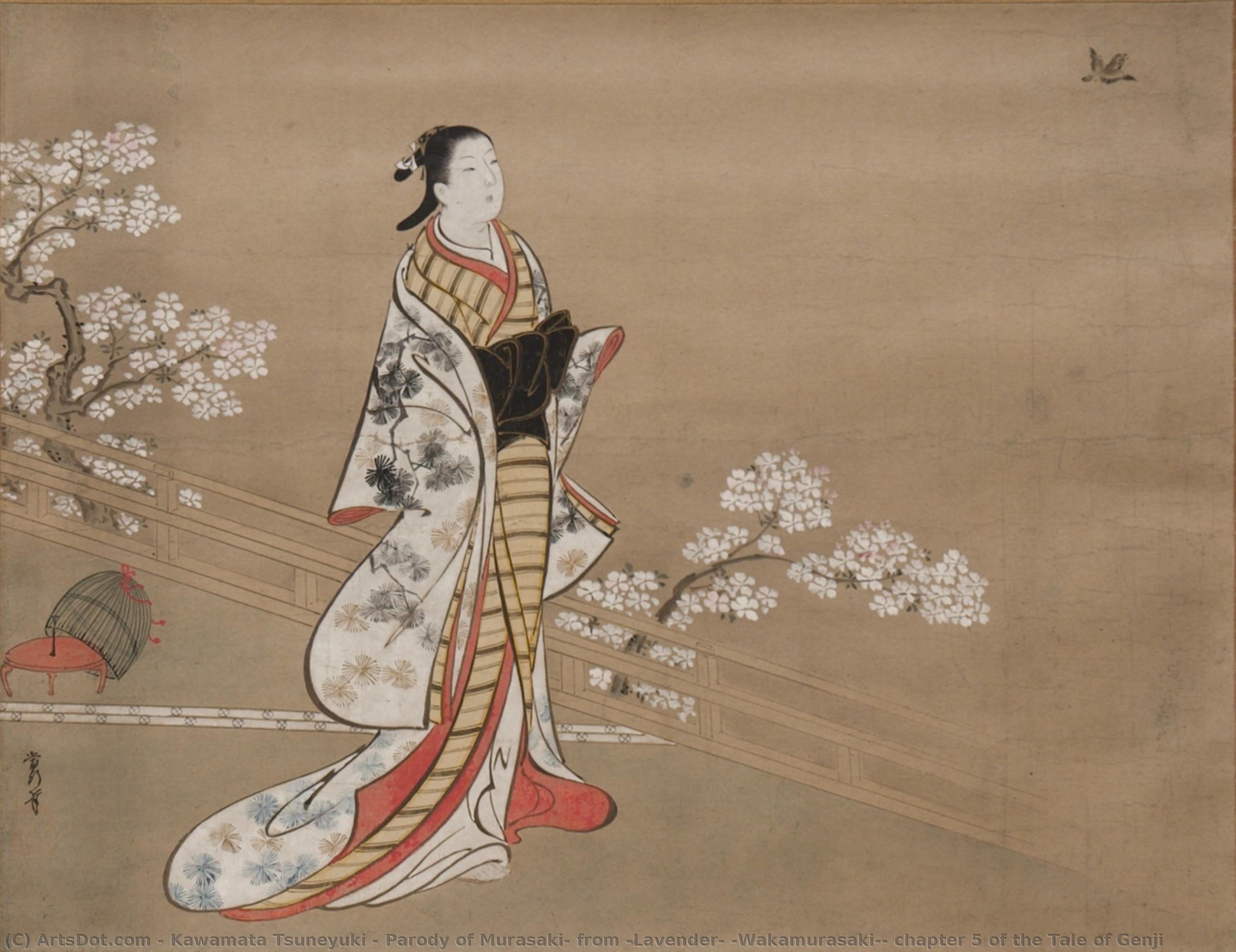
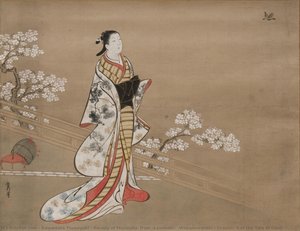
Parody of Murasaki, from "Lavender" (Wakamurasaki), chapter 5 of the Tale of Genji
 701
701 36.0cm x 47.0cm
 Read More
Hand Made Oil Reproduction
Hand-painted oil on canvas in your size and frame, made to order by our artists. ( Buy Print Buy Image)




































Pick from our preset sizes that match the artwork's original proportions.

You may enter your own dimensions to fit a specific frame or space. If your selected size does not match the original image's proportions, we will either crop the artwork or extend the painting with additional hand-painted elements. A digital mockup will be sent for your approval before production begins.
Please note that the on-screen preview does not reflect the actual cropping or extension. Only the mockup will accurately show the final composition.
While custom sizes are available, we recommend selecting a dimension from the predefined list to preserve the original proportions.
After order, ArtsDot.com team will email client for instructions and provide a mockup preview
Worldwide Delivery () in 3/4 weeks instead of standard 5 weeks. (4 September). No compromise on quality.

Free Worldwide Express Shipping

High-Quality Linen Canvas

Full Shipping Insurance

Customs Tax Refund Guarantee

True Color Matching Guarantee

60-Day Return Policy (Defects Only)

100% Money-Back Guarantee

Bulk Discount Offer
 Glass option is only available in size under 110 CM

Parody of Murasaki, from "Lavender" (Wakamurasaki), chapter 5 of the Tale of Genji
Reproduction Medium
Reproduction Size
-


Total Price
$ 263
Related Artworks








Artist Biography
The Quiet Legacy of Kawamata Tsuneyuki
In the vibrant, bustling landscape of Edo-period Japan, where the ephemeral world of ukiyo-e captured the fleeting pleasures of urban life, the name Kawamata Tsuneyuki resonates with a unique and refined grace. Born around 1677, Tsuneyuki emerged not as a prolific printmaker seeking mass production, but as a master of the brush, carving out a niche that prioritized the permanence of paint over the reproducibility of woodblocks. While much of his personal history remains shrouded in the mists of time, his artistic presence is felt through a body of work that emphasizes meticulous observation and a subtle, sophisticated innovation that would eventually birth an entire lineage of painters.
The foundations of Tsuneyuki’s aesthetic were likely laid within the prestigious ateliers of Kyoto. It is widely believed by scholars that he absorbed the delicate sensibilities of Miyagawa Chōshun, a master celebrated for his ability to capture transient beauty with profound precision. This early exposure to the refined traditions of Kyoto allowed Tsuneyuki to develop a style that was both deeply rooted in classical elegance and strikingly modern for its era. His work would go on to bridge the gap between the delicate aesthetics of earlier eras and the more bold, expressive movements that followed in the 18th century.
The Birth of the Kawamata School
Perhaps Tsuneyuki’s most enduring contribution to Japanese art history was his establishment of the Kawamata School. In an age where the woodblock print was becoming the dominant medium for disseminating imagery, Tsuneyuki made a deliberate and rare departure from convention. He championed nikuhitsu-ga—the art of hand-painted works—focusing on the intimacy and technical complexity that only a brush could achieve. This dedication to painting rather than printing allowed his school to cultivate a distinctive artistic idiom characterized by sharp, confident outlines and lush, florid compositions.
The Kawamata School became a sanctuary for detail and color. Unlike the mass-produced prints of his contemporaries, which often relied on standardized lines, the works emerging from Tsuneyuki’s influence celebrated the nuanced textures of silk and the subtle gradations of pigment. This focus on the singular, unrepeatable object elevated the status of ukiyo-e from mere popular media to a high art form capable of profound emotional resonance. Through his teachings and his own practice, Tsuneyuki ensured that the tradition of fine painting remained a vital component of the Japanese visual lexicon.
Elegance in Form and Subject
The surviving oeuvre of Tsuneyuki, though numbering only about twenty identifiable paintings, offers a breathtaking glimpse into his mastery of bijin-ga, or portraits of beautiful women. His subjects are often depicted with a serene, almost ethereal poise, set against landscapes that feel both natural and highly stylized. One can observe a recurring fascination with the interplay between human grace and the seasonal beauty of the natural world—motifs such as falling cherry blossoms or reclining figures amidst flora serve to underscore the transient nature of life, a central theme of the ukiyo-e philosophy.
His technical prowess is most evident in his ability to translate classical literature into contemporary visual narratives. In works such as his parodies of The Tale of Genji, Tsuneyuki reimagines legendary figures through a modern lens. He might take a moment of profound sorrow from a twelfth-century romance and recontextualize it within the fashionable attire and settings of the Edo period. By doing so, he created a dialogue between the ancient past and his contemporary present, inviting the viewer to find beauty in both the historical myth and the lived reality of his time. This ability to blend nostalgia with contemporary elegance remains the hallmark of his incomparable artistic spirit.
kawamata tsuneyuki
Japan
Quick Facts
- Artistic Movement Or Style: Ukiyo-e
- Artists Or Movements Influenced By This Artist: ['Kawamata School']
- Artists Who Influenced This Artist: ['Miyagawa Chōshun']
- Date Of Birth: c. 1677
- Full Name: Kawamata Tsuneyuki 川又 常行
- Nationality: Japanese
- Notable Artworks:
- Lavender (Wakamurasaki)
- Young man and a young woman on the seashore
- Place Of Birth: Japan