 Preview
 Send
Send Share
Share
 Details

 Download
 Similars
 X-Ray
X-Ray Diaporama
Red House
 Acrylic
- WallArt
- Suprematism
 1932
1932 63.0 x 55.0 cm
 Read More
Hand Made Oil Reproduction
Hand-painted oil on canvas in your size and frame, made to order by our artists. ( Buy Print Buy Image)




P118B $10

P118H $10

P118W $10

P438Z $10

P508JH $12

P508YH $12

P805H $10

P805Z $10

P919BZ $10

P919G $10

P919XJ $10

P959ZH $10

P968JZ $12

W106C $8

W218G $10

W218JH $8

W218Y $10

W307PJ $10

W316G $10

W316PJ $8

W316Y $10

W398PJ $8

W4111J $10

W500HY $15

W500JH $15

W692G $12

W849H $8

W940BG $15

W953PJ $8




Pick from our preset sizes that match the artwork's original proportions.

You may enter your own dimensions to fit a specific frame or space. If your selected size does not match the original image's proportions, we will either crop the artwork or extend the painting with additional hand-painted elements. A digital mockup will be sent for your approval before production begins.
Please note that the on-screen preview does not reflect the actual cropping or extension. Only the mockup will accurately show the final composition.
While custom sizes are available, we recommend selecting a dimension from the predefined list to preserve the original proportions.
After order, ArtsDot.com team will email client for instructions and provide a mockup preview
Worldwide Delivery () in 3/4 weeks instead of standard 5 weeks. (17 August). No compromise on quality.

Free Worldwide Express Shipping

High-Quality Linen Canvas

Full Shipping Insurance

Customs Tax Refund Guarantee

True Color Matching Guarantee

60-Day Return Policy (Defects Only)

100% Money-Back Guarantee

Bulk Discount Offer
 Glass option is only available in size under 110 CM

Red House
Reproduction Medium
Reproduction Size
-


Total Price
$ 263
Artwork Description
A Bold Statement Against Representation: Kazimir Malevich’s Red House
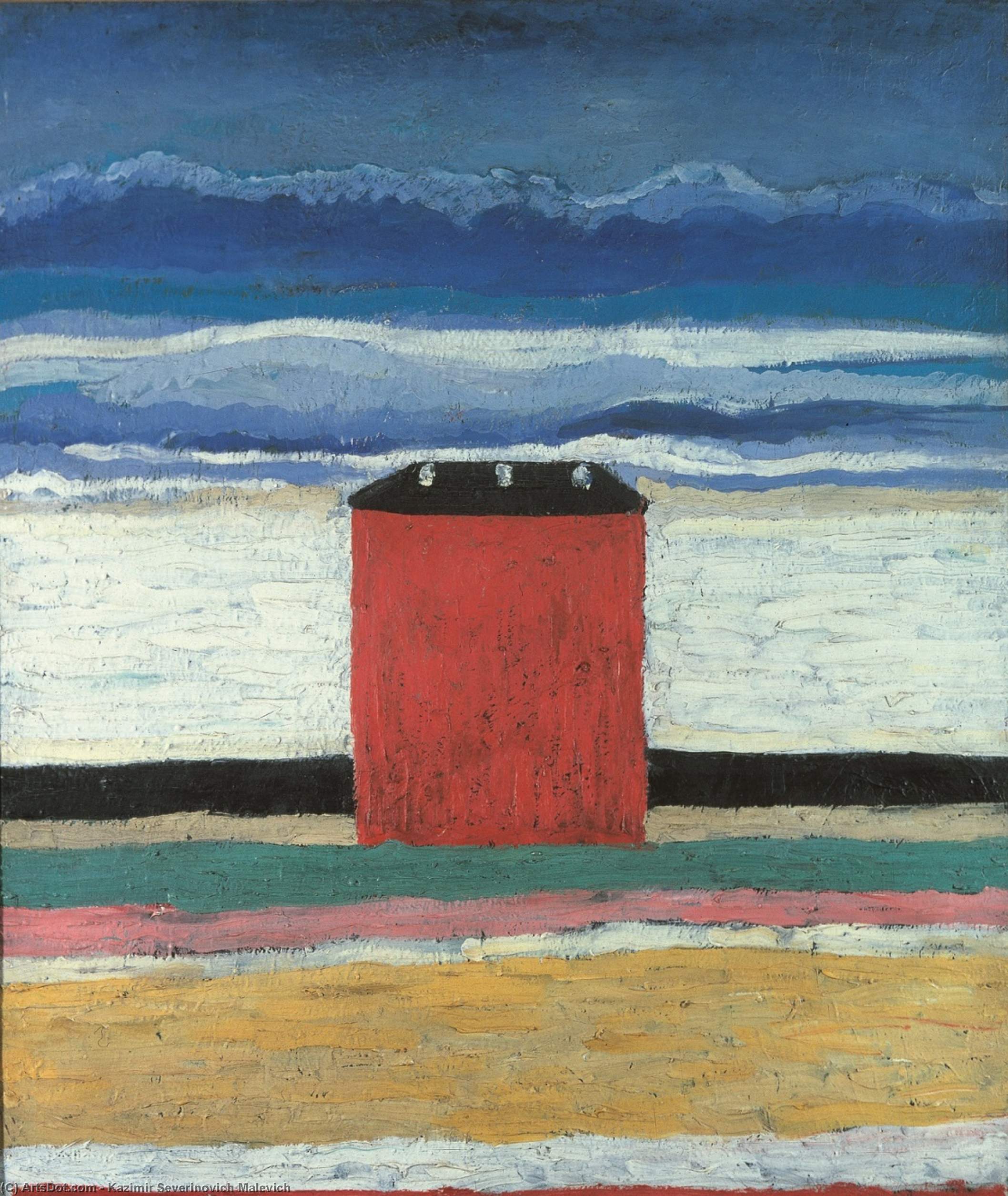
The painting “Red House” by Kazimir Malevich stands as a monumental testament to Suprematism, an artistic movement that fundamentally challenged the conventions of Western art in the early 20th century. Executed in 1932, this canvas – measuring 63 x 55 cm – isn’t merely a depiction of a seaside dwelling; it's a deliberate rejection of illusionistic perspective and color palettes favored by preceding artistic traditions. Instead, Malevich presents us with an uncompromising exploration of pure geometric abstraction, embodying the core tenets of his revolutionary vision.The Suprematist Aesthetic: Beyond Sight
Malevich’s approach to art stemmed from a profound intellectual conviction that painting should transcend sensory experience altogether. Influenced by Russian Orthodox iconography and philosophical ideas surrounding asceticism, he sought to liberate art from the constraints of depicting reality. This pursuit led him to develop Suprematism – “Supermatism” – which prioritized geometric forms like squares and circles over naturalistic imagery. The resulting compositions aim not to imitate what is seen but to express an inner spiritual state, prioritizing conceptual purity above visual accuracy. Malevich famously declared that "Painting should be like a musical note."Technique and Composition: Simplicity as Power
The execution of “Red House” exemplifies Malevich’s meticulous technique. Using oil paints on canvas, he applied bold, flat planes of color – predominantly red for the house itself and black for its roof – creating an arresting visual impact. The background is rendered in shades of blue, subtly suggesting the ocean expanse without resorting to detailed shading or atmospheric perspective. This deliberate simplification isn’t a lack of skill; it's a conscious decision to distill art down to its essential elements. Malevich’s compositional strategy emphasizes balance and stability, mirroring the spiritual quest at the heart of his artistic philosophy. The placement of the house against the horizon line reinforces this sense of groundedness while simultaneously elevating it into an emblem of transcendence.Historical Context: A Reaction Against Impressionism
“Red House” emerged during a period of intense artistic experimentation in Russia following World War I. Malevich’s Suprematism directly confronted the dominant Impressionist and Post-Impressionist styles that had prevailed for decades, arguing that they were hopelessly inadequate to convey the complexities of human experience. He saw these movements as trapped within the limitations of representing the visible world, whereas Suprematism sought to access a higher realm of consciousness. This rejection resonated with intellectuals and artists alike who were grappling with existential questions about art’s role in society and its capacity for spiritual transformation.Symbolism Beyond Color: The House as Icon
While seemingly straightforward in its color scheme, “Red House” carries significant symbolic weight. Red, traditionally associated with passion, vitality, and divine presence – particularly within Orthodox Christianity – serves as a focal point of visual energy. Malevich deliberately chose this hue to represent not just the physical structure but also an idealized notion of home and refuge. The black roof symbolizes solemnity and permanence, grounding the composition while simultaneously hinting at the infinite expanse of the cosmos. Ultimately, Malevich’s masterpiece invites contemplation on themes of faith, purity, and the pursuit of spiritual enlightenment—a legacy that continues to inspire artists and collectors today.Related Artworks
Artist Biography
Kazimir Malevich: A Pioneer of Abstract Art
Early Life and Influences
- Born in Kyiv Oblast, Ukraine in 1878 to a Polish family, Kazimir Severinovich Malevich’s early life was shaped by the rural Ukrainian landscape and its rich folk culture.
- His upbringing instilled in him an appreciation for traditional artistic expressions that would later subtly influence his work.
- Formal training began in Kyiv, but Malevich quickly sought broader artistic horizons, moving towards Moscow and eventually engaging with the burgeoning avant-garde movements of Europe.
- Key Influences: Early exposure to folk art, combined with a desire for modern expression, formed the foundation of his unique style.
Artistic Development & Key Movements
- Initially, Malevich explored various styles including Impressionism, Symbolism, Fauvism, and Cubism. A pivotal trip to Paris in 1912 exposed him to the latest developments in European art.
- He gradually moved away from representational forms, seeking a purely artistic language based on geometric shapes and color.
- This led to the development of Suprematism around 1915 – an abstract movement focused on “the supremacy of pure feeling” in art.
- Suprematism rejected any attempt to depict objects from the visible world, instead prioritizing basic geometric forms like squares, circles, and rectangles.
Major Achievements & Notable Works
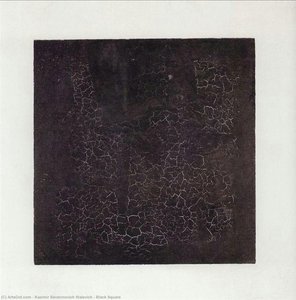
- Black Square (1915): Arguably his most famous work, it represents a radical departure from traditional art and is considered a foundational piece of abstract painting.
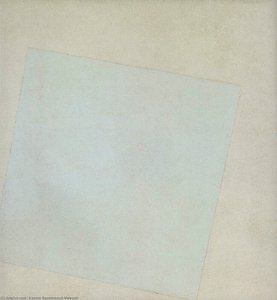
- White on White (1918): A series exploring the purity of form and color, featuring white geometric shapes against a white background – pushing abstraction to its limits.
- Stroyuschiysya dom [House under Construction] (1916): An early example of Suprematism showcasing his unique perspective on Ukrainian culture through abstract forms.
- He also wrote extensively on art theory, articulating the philosophical principles behind Suprematism and advocating for a new artistic consciousness.
Historical Significance & Legacy
- Malevich’s work profoundly impacted the development of 20th-century abstract art, influencing movements like Minimalism and Constructivism.
- He challenged conventional notions of representation and paved the way for non-objective art.
- His ideas about pure feeling and geometric abstraction continue to resonate with artists today.
- Despite facing political persecution under Stalin – initially supported, then suppressed – Malevich persevered in his practice and teaching.
- Influence on Later Artists: He directly influenced artists like El Lissitzky and indirectly shaped countless others through the enduring legacy of Suprematism.
Later Life & Death
- In his later years, Malevich revisited figurative painting, attempting to synthesize his abstract principles with representational forms.
- He continued to teach and write about art until his death in Leningrad (now St. Petersburg) in 1935.
- His work remained relatively obscure for decades after his death but experienced a resurgence of interest in the latter half of the 20th century, solidifying his place as one of the most important figures in modern art history.

Kazimir Malevich
1878 - 1935 , Ukraine
Quick Facts
- Artistic Movement Or Style: Suprematism, Abstract Art
- Artists Or Movements Influenced By This Artist:
- Minimalism
- Constructivism
- El Lissitzky
- Artists Who Influenced This Artist:
- Cubism
- Fauvism
- Impressionism
- Date Of Birth: 1878
- Date Of Death: 1935
- Full Name: Kazimir Severinovich Malevich
- Nationality: Ukrainian/Russian
- Notable Artworks:
- Black Square
- White on White
- House under Construction
- Place Of Birth: Kyiv, Ukraine
Related Articles
Kazimir Malevich: 25 Masterpieces of Suprematism & Abstract Art | ArtsDot
Explore 25 iconic artworks by Kazimir Malevich, pioneer of Suprematism & abstract art. Discover the stories behind 'Black Square' and more! Find museum-quality prints & elevate your home decor with ArtsDot.com.

Geometric Abstraction's 10 Defining Masterpieces | Art for Your Home - ArtsDot
Explore 10 defining masterpieces of Geometric Abstraction! Discover Kandinsky, Mondrian & Malevich’s iconic works. Find museum-quality art reproductions and curated decor ideas to elevate your home at ArtsDot.com.
Beyond Form & Color: Geometric Abstraction's Enduring Legacy in Art History
Explore the captivating world of geometric abstraction! Discover its origins, key artists like Malevich & Mondrian, and why this movement remains highly valued by art collectors today. Expert insights at ArtsDot.

Beyond Form & Color: Geometric Abstraction's Evolution in 20th/21st Century Art
Explore the evolution of geometric abstraction from Cubism to contemporary art. Discover key artists like Malevich & Mondrian, investment insights, and expert collecting advice at ArtsDot.
Beyond Form: Exploring the Philosophical Foundations of Geometric Abstraction
Explore the philosophical roots & artistic evolution of geometric abstraction with ArtsDot. Discover Mondrian, Malevich, De Stijl & more. Expert insights for collectors and art enthusiasts.
![Black circle [1913] State Russian Museum,](/media/artworks/images/thumbnails/29/9f/299f2153e48d4d70918e77144b5835a6.jpg)