

 Preview
 Send
Send Share
Share
 Details

 Download
 Similars
 X-Ray
X-Ray Diaporama
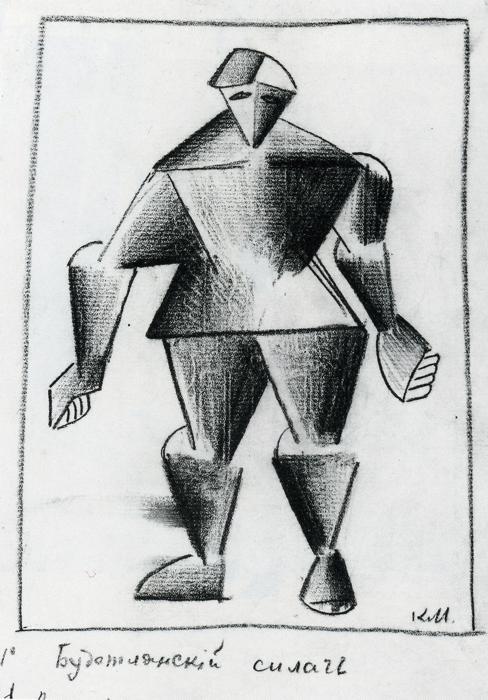
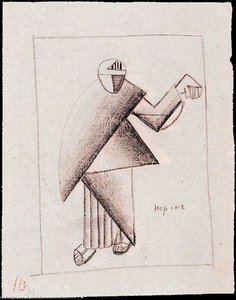
The Athlete of the Future
 Acrylic On Canvas
- WallArt
- Cubist Suprematism
 1913
1913- Early Medieval
 27.0 x 21.0 cm
 Read More
Purchase a high-resolution, enhanced digital image, far superior to the online preview.
Each file is meticulously prepared by our in-house specialists using advanced tools and expert manual retouching. We ensure every image has exceptional clarity, precise color accuracy, and fine detail.
The final file is delivered via email within 72 hours, optimized for immediate use in professional, editorial, and print environments. This is the same quality trusted by top-tier design studios, publishers, and galleries.
Digital Image
Download a high-resolution file for personal display, printing, and creative projects. ( Buy Print Buy Hand Made Painting)
Included in Every Digital Image Order
Expert Digital Delivery, Guaranteed
When you choose ArtsDot.com, you're not just getting an image - you're receiving a professionally enhanced digital artwork, crafted with precision and backed by a satisfaction guarantee. Here's everything that comes with your order, automatically:

Fast Email Delivery
Your high-resolution digital image file will be emailed to you within 72 hours of ordering - ready for immediate use.

AI-Enhanced Digital File
Your artwork is professionally optimized using advanced AI tools and manual editing, ensuring maximum detail, clarity, and color accuracy.

Free Lifetime Re-Delivery
Accidentally deleted or lost your file? No worries - we'll resend it to you anytime, free of charge.

No Import Fees - Ever
Enjoy your artwork instantly with zero customs, duties, or delivery fees - digital downloads are always tax-free.

Color Accuracy Guarantee
We ensure your digital image reflects the original colors as closely as possible using professional tools and color management.

60-Day Satisfaction Guarantee
If you're not satisfied with your digital image, we'll revise it or refund 100% within 60 days - no questions asked.

100% Money-Back Guarantee
Not satisfied? Get a full refund within 60 days of receiving your digital file - no questions asked.

Bulk Order Discounts
Buy 3 images, save 10% - Buy 5, save 15% - Buy 10+, save 20%. Great for creative projects, galleries, and agencies.
Kazimir Malevich and the Dawn of Abstract Form
Kazimir Malevich’s “The Athlete of the Future,” painted in 1913, isn't merely a depiction of a figure; it’s a profound exploration of the nascent possibilities of modern art. Born in Kyiv Oblast, Ukraine, in 1879, Malevich was a pivotal figure in the Russian avant-garde, a movement that violently rejected traditional representation and sought to distill art down to its purest essence. This particular work, created during a period of intense experimentation within Cubism and Futurism, embodies this radical shift – a deliberate dismantling of recognizable form in favor of geometric abstraction and dynamic composition. It’s a snapshot of an artist grappling with the future of visual language, a moment where the familiar world began to dissolve into fragmented shapes and bold lines.
The painting immediately commands attention through its stark monochrome palette – shades of black and white that amplify the angularity of the subject. Malevich’s masterful use of hatching and cross-hatching creates an illusion of volume and texture, lending a surprising physicality to what could easily be dismissed as a purely intellectual exercise. The figure itself is rendered in a Cubist style, broken down into a series of interlocking geometric planes – cubes, rectangles, and triangles – that suggest movement and instability. This fragmentation isn’t chaotic; rather, it creates a sense of contained energy, mirroring the dynamism of the title subject.
Deconstructing Humanity: Symbolism in Form
The central figure, an athlete poised mid-stride, is deliberately ambiguous. It's neither entirely human nor entirely machine, existing instead as a potent symbol of the evolving relationship between man and technology. The skeletal face, devoid of emotion, coupled with the mechanical limbs and multiple hands – each seemingly detached from the body – evoke themes of dehumanization and alienation, reflecting anxieties prevalent at the dawn of the 20th century. The clock in the upper right corner isn’t simply a decorative element; it's a potent symbol of time, progress, and perhaps even mortality, adding layers of philosophical depth to the composition.
Furthermore, the figure’s unbalanced pose – one leg raised, creating an off-center dynamism – speaks to a world in flux. It suggests instability, uncertainty, and a rejection of established norms. The deliberate flattening of perspective, characteristic of Cubism, further reinforces this sense of disorientation, forcing the viewer to actively engage with the artwork and reconstruct its meaning.
Technique and Historical Context
“The Athlete of the Future” is executed in pencil on paper, a technique that lends it an intimacy and immediacy. Malevich’s meticulous hatching and cross-hatching demonstrate his control over tonal values and his ability to create depth through shading. The work was created during a period of rapid social and technological change – the rise of industrialization, urbanization, and new scientific discoveries were fundamentally altering human experience. Malevich's art reflects this upheaval, questioning traditional notions of beauty and representation in favor of exploring abstract concepts and expressing the anxieties and possibilities of the modern age.
Considered a foundational work within Suprematism – Malevich’s own revolutionary movement that prioritized pure feeling and non-objective forms – “The Athlete of the Future” stands as a testament to his pioneering spirit. It's a challenging yet rewarding piece, inviting viewers to contemplate the nature of form, representation, and the future of art itself. Reproductions offer an accessible way to experience this groundbreaking work, bringing its powerful symbolism and dynamic composition into any space.
Related Artworks

Artist Biography
Kazimir Malevich: A Pioneer of Abstract Art
Early Life and Influences
- Born in Kyiv Oblast, Ukraine in 1878 to a Polish family, Kazimir Severinovich Malevich’s early life was shaped by the rural Ukrainian landscape and its rich folk culture.
- His upbringing instilled in him an appreciation for traditional artistic expressions that would later subtly influence his work.
- Formal training began in Kyiv, but Malevich quickly sought broader artistic horizons, moving towards Moscow and eventually engaging with the burgeoning avant-garde movements of Europe.
- Key Influences: Early exposure to folk art, combined with a desire for modern expression, formed the foundation of his unique style.
Artistic Development & Key Movements
- Initially, Malevich explored various styles including Impressionism, Symbolism, Fauvism, and Cubism. A pivotal trip to Paris in 1912 exposed him to the latest developments in European art.
- He gradually moved away from representational forms, seeking a purely artistic language based on geometric shapes and color.
- This led to the development of Suprematism around 1915 – an abstract movement focused on “the supremacy of pure feeling” in art.
- Suprematism rejected any attempt to depict objects from the visible world, instead prioritizing basic geometric forms like squares, circles, and rectangles.
Major Achievements & Notable Works
- Black Square (1915): Arguably his most famous work, it represents a radical departure from traditional art and is considered a foundational piece of abstract painting.
- White on White (1918): A series exploring the purity of form and color, featuring white geometric shapes against a white background – pushing abstraction to its limits.
- Stroyuschiysya dom [House under Construction] (1916): An early example of Suprematism showcasing his unique perspective on Ukrainian culture through abstract forms.
- He also wrote extensively on art theory, articulating the philosophical principles behind Suprematism and advocating for a new artistic consciousness.
Historical Significance & Legacy
- Malevich’s work profoundly impacted the development of 20th-century abstract art, influencing movements like Minimalism and Constructivism.
- He challenged conventional notions of representation and paved the way for non-objective art.
- His ideas about pure feeling and geometric abstraction continue to resonate with artists today.
- Despite facing political persecution under Stalin – initially supported, then suppressed – Malevich persevered in his practice and teaching.
- Influence on Later Artists: He directly influenced artists like El Lissitzky and indirectly shaped countless others through the enduring legacy of Suprematism.
Later Life & Death
- In his later years, Malevich revisited figurative painting, attempting to synthesize his abstract principles with representational forms.
- He continued to teach and write about art until his death in Leningrad (now St. Petersburg) in 1935.
- His work remained relatively obscure for decades after his death but experienced a resurgence of interest in the latter half of the 20th century, solidifying his place as one of the most important figures in modern art history.

Kazimir Malevich
1878 - 1935 , Ukraine
Quick Facts
- Artistic Movement Or Style: Suprematism, Abstract Art
- Artists Or Movements Influenced By This Artist:
- Minimalism
- Constructivism
- El Lissitzky
- Artists Who Influenced This Artist:
- Cubism
- Fauvism
- Impressionism
- Date Of Birth: 1878
- Date Of Death: 1935
- Full Name: Kazimir Severinovich Malevich
- Nationality: Ukrainian/Russian
- Notable Artworks:
- Black Square
- White on White
- House under Construction
- Place Of Birth: Kyiv, Ukraine

