 Preview
 Send
Send Share
Share
 Details

 Download
 Similars
 X-Ray
X-Ray Diaporama
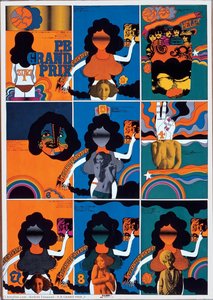
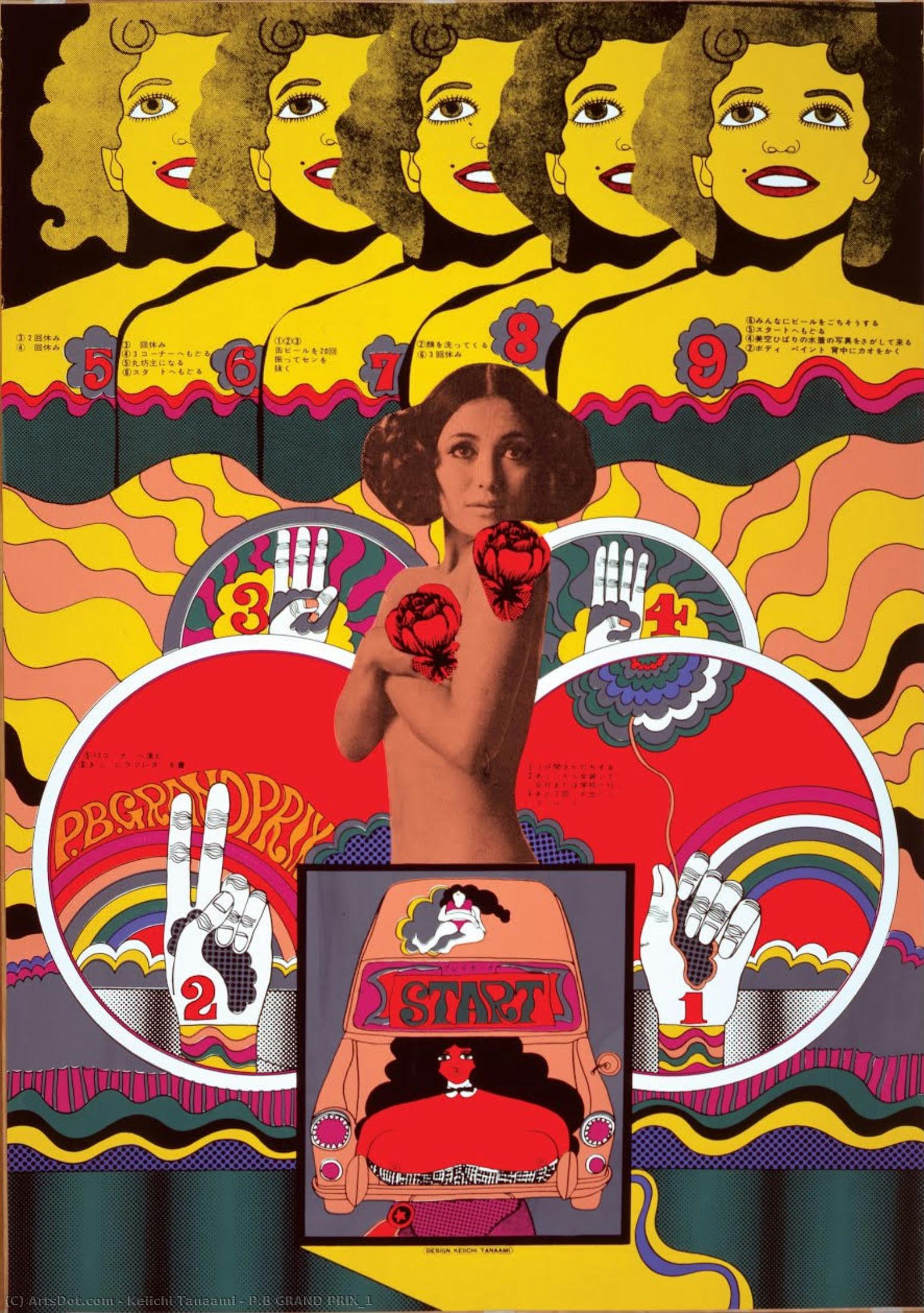
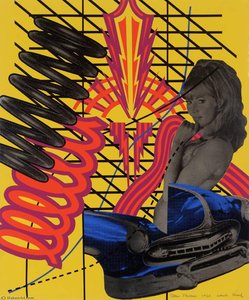
P.B GRAND PRIX_1
 1968
1968 103.0 x 72.0 cm
 Read More
Giclée / Art Print
Museum-quality giclée or canvas print with fast production and flexible finish options. ( Buy Hand Made Painting Buy Image)




































Pick from our preset sizes that match the artwork's original proportions.

You may enter your own dimensions to fit a specific frame or space. If your selected size does not match the original image's proportions, we will either crop the artwork or extend the image with a mirrored or solid-fill edge. A digital mockup will be sent for your approval before production begins.
Please note that the on-screen preview does not reflect the actual cropping or extension. Only the mockup will accurately show the final composition.
While custom sizes are available, we recommend selecting a dimension from the predefined list to preserve the original proportions.
Worldwide Delivery () in 2 weeks instead of standard 4/5 weeks. (22 August)

Free Worldwide Express Shipping

High-Quality Linen Canvas

Full Shipping Insurance

Customs Tax Refund Guarantee

True Color Matching Guarantee

60-Day Return Policy (Defects Only)

100% Money-Back Guarantee

Bulk Discount Offer
 Glass option is only available in size under 110 CM

P.B GRAND PRIX_1
Giclée / Art Print
Reproduction Size
-


Total Price
$ 63
Related Artworks





Artist Biography
A Kaleidoscope of Memory and Chaos
The life and work of Keiichi Tanaami (1936–2024) represent a profound intersection of personal trauma and global pop culture, creating a visual language that is as unsettling as it is mesmerizing. Born in Tokyo, Tanaami’s earliest consciousness was shaped by the terrifying spectacle of the Second World War. As a young child, he witnessed the Great Tokyo Air Raid of 1945, an event that seared indelible images into his psyche: the roar of American bombers, the blinding flashes of searchlights, and the apocalyptic sea of fire consuming his native city. These were not merely historical events to him, but visceral, haunting fragments of a nightmare that would later serve as the foundational iconography for his art. He possessed a unique ability to transmute the dread of firebombing and fleeing masses into a vibrant, psychedelic aesthetic, where the destruction of the past is perpetually reborn through the explosive colors of the present.
This duality—the coexistence of terror and beauty—defined his evolution from a talented graphic designer into a global icon of Japanese pop art. Tanaami’s early career in the 1960s saw him navigating the high-energy worlds of advertising and illustration, where he applied his meticulous draughtsmanship to record covers for legendary acts like Jefferson Airplane and The Monkees. During this era, he absorbed the burgeoning energy of Western Pop Art, finding a kindred spirit in the repetitive, bold aesthetics of Andy Warhol and Roy Lichtenstein. Yet, Tanaami’s vision remained distinctly his own, deeply rooted in the Japanese experience. He wove together the commercial dynamism of American pop culture with the nostalgic textures of kamishibai—traditional Japanese street theater—and the expressive, often surreal linework found in manga and animation.
The Architecture of a Psychedelic Dream
As his practice matured, Tanaami’s work transcended simple graphic design to become a complex, multi-layered exploration of the subconscious. His compositions often resemble hyper-saturated, overpopulated collages that defy easy categorization. Drawing heavily from Dadaism and Surrealism, he constructed dreamscapes where disparate elements—glamorous movie stars, monstrous creatures, and fragments of war machinery—collide in a dizzying vortex of pattern and pigment. His use of color was never merely decorative; it was an emotional tool used to evoke the "feeling of being alive," capturing both the ecstatic joy of pop culture and the underlying anxieties of a post-war generation. Through his mastery of silkscreen, acrylic, and video art, he created textures that felt simultaneously nostalgic and futuristic.
The technical brilliance of Tanaami lay in his ability to balance chaos with precision. His works often feature:
- Intricate Halftone Patterns: A nod to his graphic design roots, used to create a sense of vibrating movement across the canvas.
- Juxtaposed Iconography: The seamless blending of innocent childhood motifs, such as goldfish and cartoons, with the grim remnants of aerial warfare.
- Psychedelic Color Palettes: A relentless use of neon and primary hues that demand attention and overwhelm the senses.
- Narrative Fragmentation: A storytelling technique borrowed from manga that allows for a non-linear, dreamlike progression of imagery.
Legacy of a Visionary
Throughout his decades-long career, Tanaami’s influence radiated far beyond the borders of Japan. His exhibitions at prestigious institutions such as Tate Modern, Centre Pompidou-Metz, and the Philadelphia Museum of Art solidified his status as a pivotal figure in contemporary art history. He was not merely an observer of culture but an active participant in its transformation, bridging the gap between high art and mass media. By embracing the "low" culture of advertisements, comics, and cinema, he challenged the boundaries of what fine art could represent, proving that the most profound psychological truths can often be found within the most vibrant pop aesthetics.
Even in his later years, Tanaami remained a prolific force, continuing to teach and innovate. His ability to revisit his childhood memories through the lens of modern technology ensured that his work remained perpetually relevant. He left behind an oeuvre that serves as both a memorial to a lost era of Tokyo and a celebration of the infinite possibilities of human imagination. In the swirling patterns of a Tanaami painting, one finds a lasting peace message—a testament to the resilience of the human spirit in the face of overwhelming darkness.
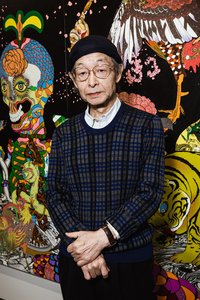
Keiichi Tanaami
1936 - , Japan
Quick Facts
- Artistic Movement Or Style: Pop Art
- Artists Or Movements Influenced By This Artist:
- Manga
- Animation
- Artists Who Influenced This Artist: ['']
- Date Of Birth: Tokyo, Japan (1936)
- Date Of Death: August 9, 2024
- Full Name: keiichi tanaami
- Nationality: Japanese
- Notable Artworks:
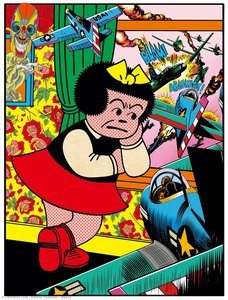
- Nancy ①
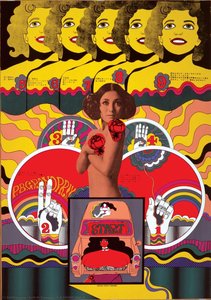
- P.B GRAND PRIX_3
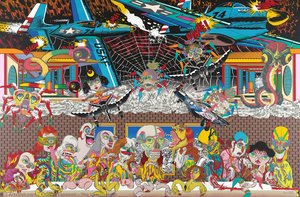
- The Last Supper
- Place Of Birth: Tokyo