 Preview
 Send
Send Share
Share
 Details

 Download
 Similars
 X-Ray
X-Ray Diaporama
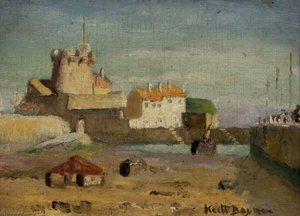
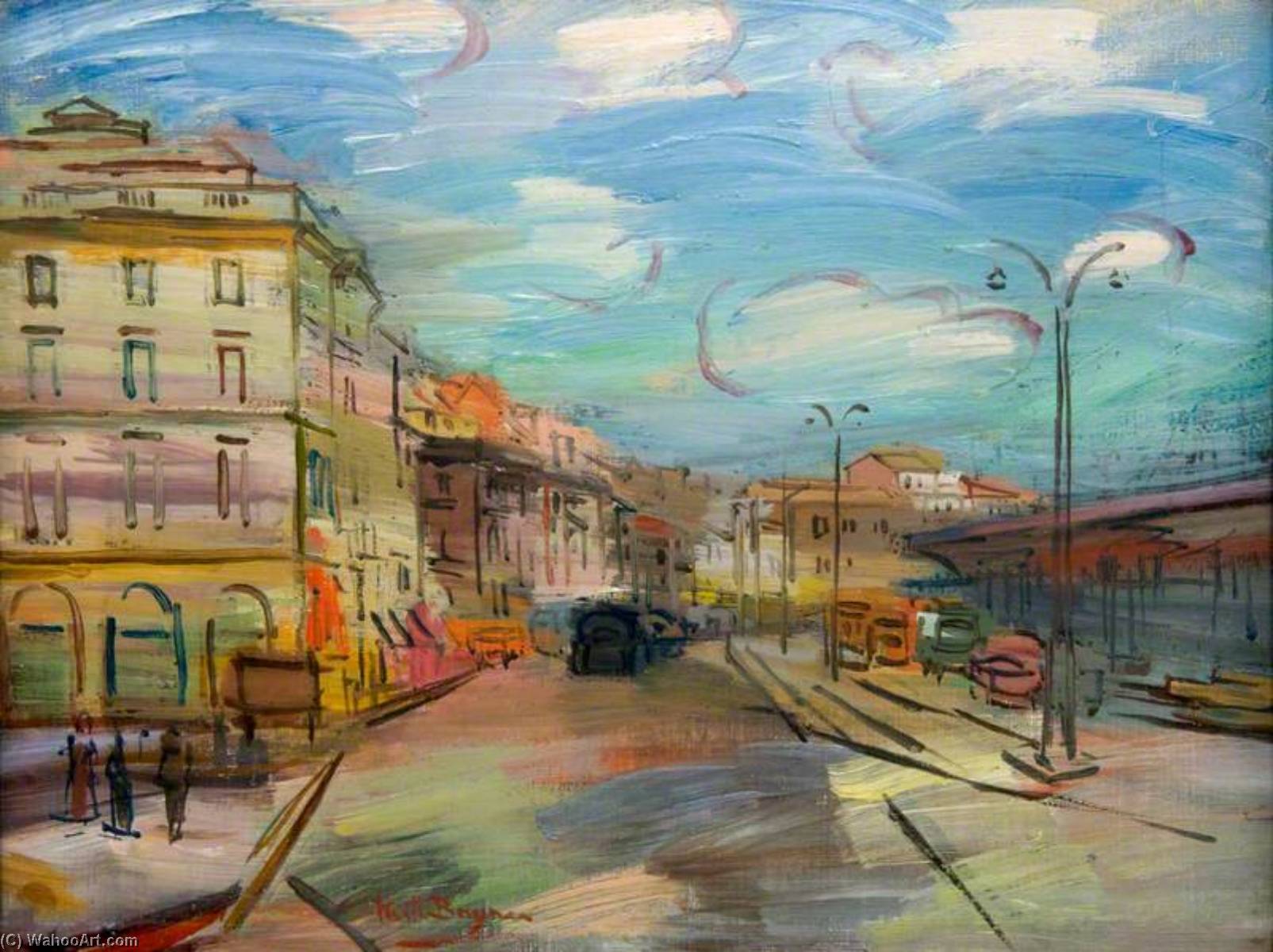
Quai des Chartrons, Bordeaux
 1949
1949 36.0 x 46.0 cm
 Read More
Giclée / Art Print
Museum-quality giclée or canvas print with fast production and flexible finish options. ( Buy Hand Made Painting Buy Image)




































Pick from our preset sizes that match the artwork's original proportions.

You may enter your own dimensions to fit a specific frame or space. If your selected size does not match the original image's proportions, we will either crop the artwork or extend the image with a mirrored or solid-fill edge. A digital mockup will be sent for your approval before production begins.
Please note that the on-screen preview does not reflect the actual cropping or extension. Only the mockup will accurately show the final composition.
While custom sizes are available, we recommend selecting a dimension from the predefined list to preserve the original proportions.
Worldwide Delivery () in 2 weeks instead of standard 4/5 weeks. (20 August)

Free Worldwide Express Shipping

High-Quality Linen Canvas

Full Shipping Insurance

Customs Tax Refund Guarantee

True Color Matching Guarantee

60-Day Return Policy (Defects Only)

100% Money-Back Guarantee

Bulk Discount Offer
 Glass option is only available in size under 110 CM

Quai des Chartrons, Bordeaux
Giclée / Art Print
Reproduction Size
-


Total Price
$ 63
Collectible Description
Artistic Style and Inspiration
Keith Baynes' style is reminiscent of other notable artists, such as Louis-Vincent-Léon Pallière, who was also known for his captivating depictions of city life. The Musée des Beaux-Arts Bordeaux in France is another great example of a institution that showcases the beauty of urban art, with its extensive collection of paintings and sculptures. As seen in the article Discover the Masterpieces of Musée des Beaux-Arts Bordeaux, France, this museum is a must-visit for art enthusiasts. Key Features of the Painting- The painting depicts a busy city street scene with various vehicles and pedestrians
- The use of oil on canvas creates a vibrant and dynamic effect
- The artwork measures 36 x 46 cm, making it a unique and intimate piece
The Quai des Chartrons, Bordeaux painting by Keith Baynes is a true masterpiece that showcases the beauty of urban life. With its vibrant colors and dynamic composition, this artwork is sure to captivate audiences for years to come. As seen on ArtsDot.com, this painting is a must-have for any art enthusiast.
Related Artworks





Artist Biography
The Resilient Vision of Keith Baynes
The life of Keith Stuart Baynes was a profound testament to the triumph of artistic spirit over physical adversity. Born in Reigate, Surrey, in 1887, his early path was diverted from the academic rigors of Cambridge University by a period of debilitating ill health. This unexpected detour led him to the lush landscapes of Jamaica, a transformative experience that provided not only the respite needed for recovery but also a broadening of his visual horizons far beyond the English countryside. It was this unique intersection of British sensibility and colonial exposure that would eventually inform his distinctive approach to light and form. Upon returning to London, he sought formal training at the prestigious Slade School of Fine Art, marking the beginning of a career defined by an unwavering commitment to capturing the pulse of the modern world.
As Baynes navigated the early twentieth century, his work became deeply embedded in the avant-garde currents of London. While he maintained a certain independence from the more rigid movements of his time, his presence within the vibrant circles of the New English Art Club and The London Group from 1919 placed him at the heart of a revolution in representation. His brushwork often mirrored the restless energy of the era, utilizing bold strokes and simplified geometries to distill the essence of his subjects. Whether he was depicting the bustling streets of London or the serene vistas of Europe, there was always an underlying tension between modernist abstraction and a deeply felt observational realism that allowed him to bridge the gap between tradition and the new.
A Tapestry of Urbanity and Nature
The breadth of Baynes’s oeuvre reveals an artist capable of finding profound beauty in both the monumental and the mundane. His landscapes often serve as more than mere scenery; they are psychological spaces where light and movement interact. In works such as St Jean de Luz, created during his early years, one can observe a delicate balance of tranquility and life, where the presence of figures and animals harmonizes with the architectural grandeur of the coast. Conversely, his later explorations of urban environments, such as his 1949 depiction of Quai des Chartrons, Bordeaux, showcase a more dynamic, almost frenetic mastery of composition. In these cityscapes, the artist captures the rhythmic chaos of pedestrian and vehicular movement, transforming a busy street into a vibrant mosaic of color and light.
His technical development was characterized by an increasing confidence in the use of impasto and a sophisticated palette that could shift from earthy, grounded tones to brilliant, luminous hues. This versatility allowed him to move seamlessly between different modes of expression:
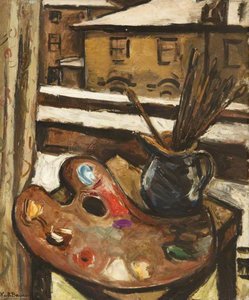
- Still Life: Works like Still Life with Brushes and Palette demonstrate his ability to find sculptural depth in everyday objects through thick, textured applications of paint.
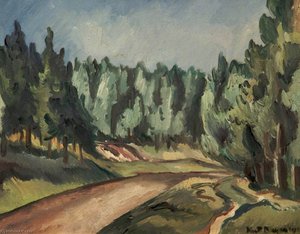
- Landscape: His forest paths and woodland scenes evoke a sense of quiet introspection and the enduring beauty of the natural world.
- Urban Landscapes: His later works reflect an engagement with the energy of the modern city, prefiguring the visual language of much later movements.
Legacy and Artistic Significance
Though perhaps not as widely recognized by the general public as some of his contemporaries in the Bloomsbury Group, Baynes shared a profound intellectual kinship with figures such as Vanessa Bell and Duncan Grant. His ability to exist on the periphery of these influential circles allowed him to absorb their experimental spirit without losing his unique artistic voice. This independence is perhaps his greatest achievement; he was an artist who could look at the changing world—from the quietude of a French village to the industrial hum of a growing metropolis—and translate it through a lens that was both deeply personal and strikingly modern.
The historical significance of Keith Baynes lies in his role as a bridge between eras. His work carries the DNA of late nineteenth-century observation while embracing the fragmented, energetic aesthetics that would define much of twentieth-century art. By the time of his major retrospective at The Minories in Colchester in 1969, it was clear that his legacy was one of resilience and vision. He remains a vital figure for those studying the evolution of British modernism, reminding us that true artistic mastery is found in the ability to find the extraordinary within the ordinary, and to turn personal struggle into a universal language of beauty.
keith baynes
1887 - 1977
Quick Facts
- Artistic Movement Or Style: Modernist, Street Art
- Artists Or Movements Influenced By This Artist:
- London Group
- Bloomsbury Group
- Artists Who Influenced This Artist:
- Roger Fry
- Walter Sickert
- Vanessa Bell
- Duncan Grant
- Date Of Birth: 1887
- Date Of Death: 1977
- Full Name: Keith Stuart Baynes
- Nationality: British
- Notable Artworks:
- Still Life with Brushes & Palette
- Quai des Chartrons, Bordeaux
- St Jean de Luz
- Place Of Birth: Reigate, Surrey, UK