

 Preview
 Send
Send Share
Share
 Details

 Download
 Similars
 X-Ray
X-Ray Diaporama
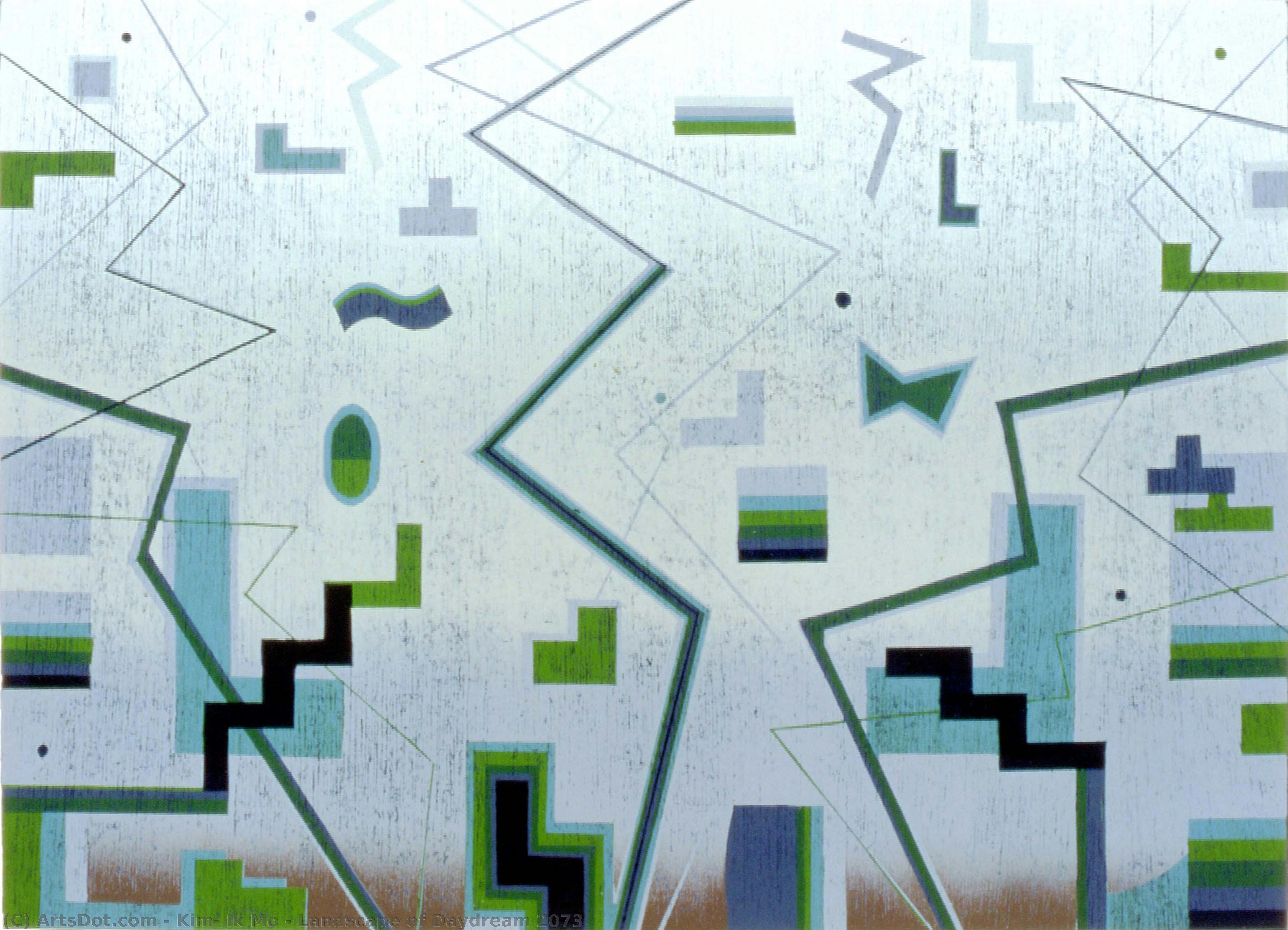
Landscape of Daydream 2073
 Painting
- Contemporary Art
 2002
2002- Contemporary
 550.0 x 400.0 cm
 Korean Art Museum Association
 Read More
Purchase a high-resolution, enhanced digital image, far superior to the online preview.
Each file is meticulously prepared by our in-house specialists using advanced tools and expert manual retouching. We ensure every image has exceptional clarity, precise color accuracy, and fine detail.
The final file is delivered via email within 72 hours, optimized for immediate use in professional, editorial, and print environments. This is the same quality trusted by top-tier design studios, publishers, and galleries.
Digital Image
Download a high-resolution file for personal display, printing, and creative projects. ( Buy Print Buy Hand Made Painting)
Included in Every Digital Image Order
Expert Digital Delivery, Guaranteed
When you choose ArtsDot.com, you're not just getting an image - you're receiving a professionally enhanced digital artwork, crafted with precision and backed by a satisfaction guarantee. Here's everything that comes with your order, automatically:

Fast Email Delivery
Your high-resolution digital image file will be emailed to you within 72 hours of ordering - ready for immediate use.

AI-Enhanced Digital File
Your artwork is professionally optimized using advanced AI tools and manual editing, ensuring maximum detail, clarity, and color accuracy.

Free Lifetime Re-Delivery
Accidentally deleted or lost your file? No worries - we'll resend it to you anytime, free of charge.

No Import Fees - Ever
Enjoy your artwork instantly with zero customs, duties, or delivery fees - digital downloads are always tax-free.

Color Accuracy Guarantee
We ensure your digital image reflects the original colors as closely as possible using professional tools and color management.

60-Day Satisfaction Guarantee
If you're not satisfied with your digital image, we'll revise it or refund 100% within 60 days - no questions asked.

100% Money-Back Guarantee
Not satisfied? Get a full refund within 60 days of receiving your digital file - no questions asked.

Bulk Order Discounts
Buy 3 images, save 10% - Buy 5, save 15% - Buy 10+, save 20%. Great for creative projects, galleries, and agencies.
Collectible Description
A Visionary Realm: The Ethereal Landscape of Daydream 2073
In the vast, evocative expanse of Landscape of Daydream 2073, the viewer is invited to step beyond the boundaries of the physical world and into a dreamscape where reality and imagination coalesce. Created in 2002 by the contemporary South Korean master Kim Ik Mo, this monumental work serves as a profound meditation on existence, solitude, and the interconnectedness of life. The painting presents a sweeping vista that feels simultaneously grounded in a coastal setting and untethered from time, capturing a moment of quiet introspection amidst a bustling, yet strangely silent, universe. At its heart, a solitary figure stands near the water's edge, acting as an emotional anchor for the observer, while scattered figures and a rhythmic dance of birds across the sky suggest a larger, unseen narrative unfolding within this surrealist landscape.
The technique employed by Kim Ik Mo is a masterful blend of modern precision and organic fluidity. The artist utilizes a sophisticated palette of colors and shapes to construct a sense of depth that pulls the eye through layers of atmosphere. There is a rhythmic quality to the composition; the way the birds are distributed across the heavens creates a visual cadence that mimics the movement of wind or the pulse of a heartbeat. This careful arrangement of elements—the interplay between the solid presence of the human figures and the ephemeral, fleeting nature of the avian silhouettes—demonstrates a high level of technical mastery. For the collector, this piece offers more than just visual beauty; it provides a complex texture of brushwork that rewards close inspection, revealing subtle shifts in light and shadow that breathe life into the canvas.
Symbolically, Landscape of Daydream 2073 functions as a window into the subconscious. The "daydream" referenced in the title suggests a state of heightened awareness where the mundane is transformed into the extraordinary. The presence of multiple figures, some near and others receding into the distance, evokes themes of human community and the inherent isolation of the individual experience. The birds, often symbols of freedom, transcendence, or the soul, add a layer of spiritual longing to the scene, suggesting that even within our terrestrial landscapes, there is an eternal impulse toward the infinite. It is a work that speaks to the universal human desire to find meaning within the vastness of nature.
For interior designers and connoisseurs of fine art, this reproduction offers an unparalleled opportunity to introduce a sense of profound tranquility and intellectual depth into a space. Its immense scale—measuring 550 x 400 cm—makes it a commanding centerpiece capable of transforming a grand hall, a luxury lounge, or a sophisticated gallery setting. The painting does not merely decorate a wall; it alters the atmosphere of a room, inviting guests to pause, reflect, and lose themselves in its storied depths. Whether placed in a contemporary minimalist setting or a more classical environment, this work stands as a testament to the enduring power of landscape painting to evoke the sublime.
Related Artworks





Artist Biography
Paul Jackson Pollock: A Revolutionary of American Abstraction
Jackson Pollock, born January 28, 1912, in Cody, Wyoming, and tragically dying August 11, 1956, in East Hampton, New York, remains one of the most iconic and debated figures in 20th-century art. More than just a painter, he was a radical innovator who fundamentally altered our understanding of what painting could be – shifting from representational imagery to an intensely personal and dynamic exploration of color, gesture, and process. His legacy extends far beyond his individual works; Pollock’s methods profoundly influenced subsequent generations of artists and continue to resonate within contemporary art practice.
Pollock's early life was marked by constant relocation due to his father’s work as a government surveyor. This itinerant upbringing instilled in him a sense of restlessness and an appreciation for diverse cultures, particularly Native American traditions which he encountered during surveying trips. He enrolled at Los Angeles’ Manual Arts High School but was expelled for disruptive behavior, a period that fostered a rebellious spirit and a rejection of conventional artistic norms. He later studied at the Art Students League in New York City under Thomas Hart Benton, absorbing elements of Benton's mural style while simultaneously developing his own distinct approach. This early exposure to both traditional and experimental art laid the groundwork for his future innovations.
The Emergence of “Drip” Painting
Pollock’s groundbreaking technique, often referred to as “drip painting,” emerged in 1947 after a move to Springs, Long Island, where he married Lee Krasner. He began working on canvases laid flat on the floor of his studio, abandoning traditional brushes and palettes. Instead, he employed a variety of tools – sticks, rags, syringes, even his own hands – to fling, drip, and pour thinned enamel paints onto the surface. This process wasn’t about meticulously applying color; it was about embracing chance, spontaneity, and the inherent properties of paint itself. As Pollock famously stated, “When I am in my painting, I’m not aware of what I’m doing.”
This method resulted in works characterized by their all-over composition – a deliberate avoidance of focal points or hierarchical arrangements. The entire canvas became a field of color and texture, inviting the viewer to immerse themselves within the work. His use of alkyd enamels, a relatively new medium at the time, allowed for fluidity and transparency that contributed significantly to the dynamic effects of his paintings. Critics initially reacted with skepticism, questioning the randomness and lack of discernible subject matter, but as Pollock’s influence grew, his approach was increasingly recognized as a revolutionary departure from established artistic conventions.
Key Works and Influences
Pollock's oeuvre is remarkably diverse, encompassing a vast range of styles and techniques within his core “drip” method. Notable works include *Number 17A* (1948), a monumental canvas that exemplifies the scale and dynamism of his process; *No. 5, 1948*, a vibrant explosion of color and texture; *Mural on Indian Red Ground* (1950), which references Native American patterns and symbolism; and *Autumn Rhythm (Number 30)* (1952), showcasing the artist’s exploration of rhythm and movement. His work was profoundly influenced by several sources, including the Surrealist emphasis on the subconscious, the abstract expressionists like Franz Kline and Willem de Kooning, and the Mexican muralists David Alfaro Siqueiros and José Clemente Orozco.
The influence of Jackson Pollock extended beyond his own artistic practice. His willingness to embrace chance, reject traditional techniques, and prioritize process over representation paved the way for subsequent movements such as Pop Art and Minimalism. His work challenged conventional notions of authorship and originality, prompting a re-evaluation of the role of the artist in the creative process.
Legacy and Historical Significance
Despite his tragically short life – cut short by a car accident at age 44 – Jackson Pollock left an indelible mark on the art world. His innovative techniques and uncompromising vision redefined American painting, establishing Abstract Expressionism as a dominant force in international art. His work continues to be exhibited widely and studied extensively, serving as a testament to his revolutionary spirit and enduring influence. The Museum of Modern Art (MoMA) holds one of the most comprehensive collections of Pollock’s paintings, ensuring that his legacy will continue to inspire and challenge artists for generations to come.
In 1958, Allan Kaprow famously described Pollock as “the first painter to use the support of the canvas itself.” This succinct statement encapsulates the essence of Pollock's radical approach – a shift from the image being imposed upon the surface to the surface becoming an integral part of the artwork’s meaning. Pollock’s legacy is not simply one of artistic innovation, but also of a profound questioning of the very nature of art and its relationship to the world.
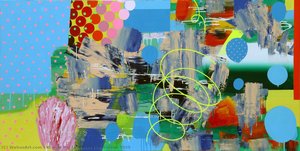
kim, ik mo
1956 - , South Korea
Quick Facts
- Artistic Movement Or Style: Abstract Expressionism”
- Artists Or Movements Influenced By This Artist:
- Lee Krasner
- Allan Kaprow
- Donald Judd
- Gutai Group
- Date Of Birth: January 28, 1912
- Date Of Death: August 11, 1956
- Drip Painting: Action painting
- Full Name: Paul Jackson Pollock
- Nationality: American
- Number 17a",
"No. 5, 1948",
"Mural On Indian Red Ground",
"Autumn Rhythm (Number 30)",
"Convergence",
"Blue Poles"
],
"Artists Who Influenced This Artist:
- Thomas Hart Benton
- David Alfaro Siqueiros
- José Clemente Orozco
- Pablo Picasso
- Place Of Birth: Cody, Wyoming, USA
- All-Over Painting: Notable artworks

