

 Preview
 Send
Send Share
Share
 Details

 Download
 Similars
 X-Ray
X-Ray Diaporama
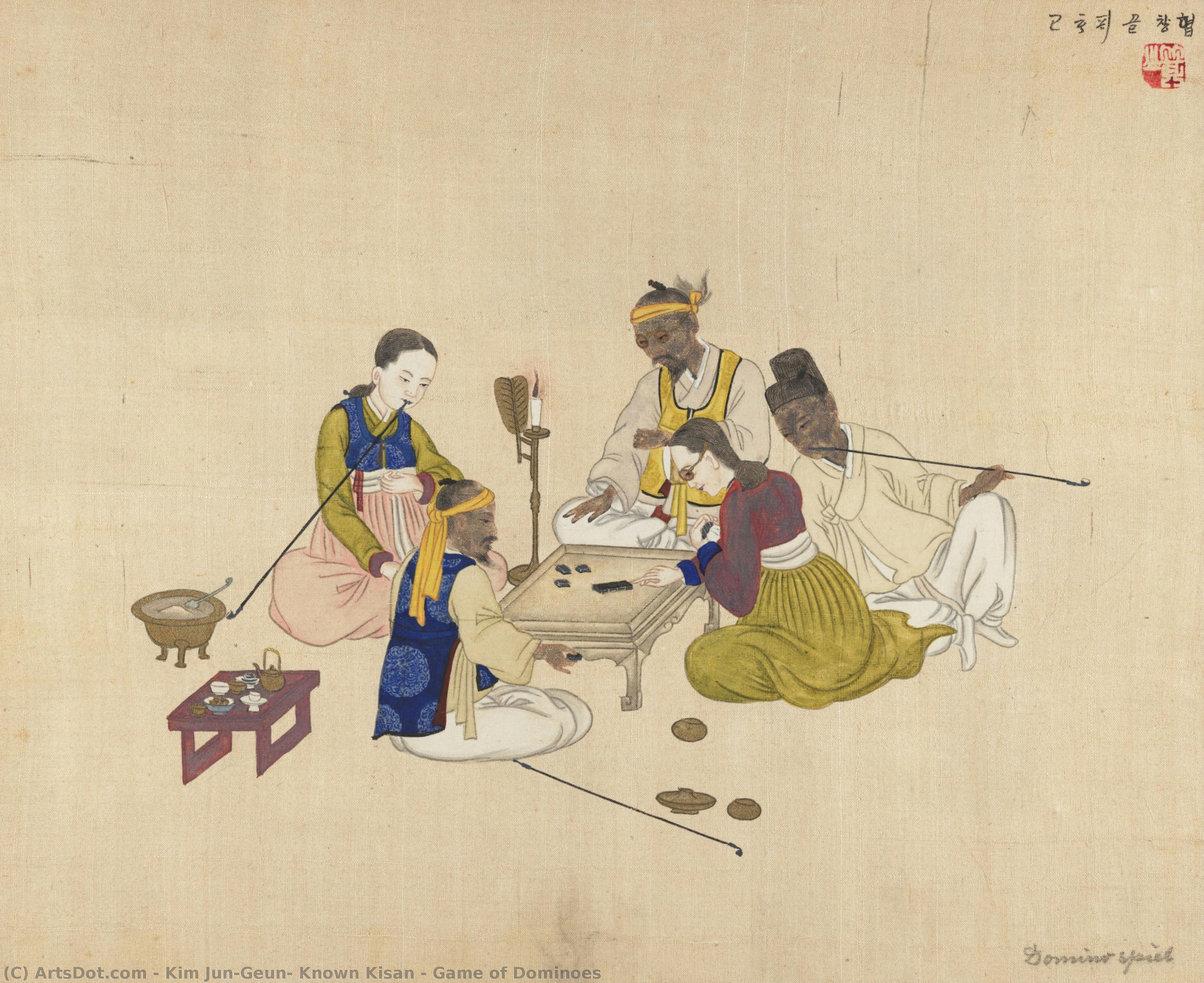
Game of Dominoes
 Watercolor
- WallArt
- Genre Painting
 1800
1800- 19th Century
 5.0 x 56.0 cm
 Museu do Oriente
 Read More
Purchase a high-resolution, enhanced digital image, far superior to the online preview.
Each file is meticulously prepared by our in-house specialists using advanced tools and expert manual retouching. We ensure every image has exceptional clarity, precise color accuracy, and fine detail.
The final file is delivered via email within 72 hours, optimized for immediate use in professional, editorial, and print environments. This is the same quality trusted by top-tier design studios, publishers, and galleries.
Digital Image
Download a high-resolution file for personal display, printing, and creative projects. ( Buy Print Buy Hand Made Painting)
Included in Every Digital Image Order
Expert Digital Delivery, Guaranteed
When you choose ArtsDot.com, you're not just getting an image - you're receiving a professionally enhanced digital artwork, crafted with precision and backed by a satisfaction guarantee. Here's everything that comes with your order, automatically:

Fast Email Delivery
Your high-resolution digital image file will be emailed to you within 72 hours of ordering - ready for immediate use.

AI-Enhanced Digital File
Your artwork is professionally optimized using advanced AI tools and manual editing, ensuring maximum detail, clarity, and color accuracy.

Free Lifetime Re-Delivery
Accidentally deleted or lost your file? No worries - we'll resend it to you anytime, free of charge.

No Import Fees - Ever
Enjoy your artwork instantly with zero customs, duties, or delivery fees - digital downloads are always tax-free.

Color Accuracy Guarantee
We ensure your digital image reflects the original colors as closely as possible using professional tools and color management.

60-Day Satisfaction Guarantee
If you're not satisfied with your digital image, we'll revise it or refund 100% within 60 days - no questions asked.

100% Money-Back Guarantee
Not satisfied? Get a full refund within 60 days of receiving your digital file - no questions asked.

Bulk Order Discounts
Buy 3 images, save 10% - Buy 5, save 15% - Buy 10+, save 20%. Great for creative projects, galleries, and agencies.
Collectible Description
Related Artworks

Artist Biography
Kim Jun-geun (Kisan): A Chronicle of Rural Korea
The world of late 19th and early 20th century Korean art is often viewed through the lens of grand imperial narratives or political upheaval. Yet, within this context, a quiet revolution was unfolding – one captured with remarkable sensitivity and detail by Kim Jun-geun, more commonly known as Kisan. Born in a time of increasing Western influence and social change, Kisan’s work offers an intimate glimpse into the daily lives and traditions of rural Korea, revealing a profound connection to the land and its people. His paintings aren't merely depictions; they are windows into a vanishing world, imbued with a poignant beauty that continues to resonate today.
Kisan’s life remains somewhat shrouded in mystery, adding to the allure surrounding his art. He emerged as an artist during a period of significant transformation for Korea, navigating the complexities of modernization and the pressures of foreign intervention. While precise details about his early years are scarce, it's understood that he was a self-taught painter, developing his distinctive style largely independently. He adopted the name Kisan – literally “farmer” – reflecting his subject matter and likely symbolizing a commitment to representing the lives of ordinary Koreans. This deliberate choice underscores the importance of portraying the working class and rural communities, often overlooked in official artistic representations.
The World of Genre Painting
Kisan’s primary focus was on genre painting – a style that meticulously documented everyday scenes from common life. Unlike grand historical or religious paintings, his works centered on the routines, customs, and occupations of rural Koreans. His subjects ranged from humble farmers tending their fields to skilled artisans engaged in traditional crafts, from families sharing meals to children playing games. These weren’t idealized portrayals; Kisan presented a realistic, unvarnished view of Korean life, capturing both its hardships and its joys.
His technique was characterized by a remarkable attention to detail. Employing watercolor on paper – a medium particularly well-suited for capturing the nuances of light and texture – he meticulously rendered every element of his scenes. The brushstrokes are often loose and expressive, conveying a sense of immediacy and spontaneity. He skillfully used color to evoke atmosphere and mood, employing earthy tones to depict the landscapes and clothing worn by his subjects. The compositions are typically balanced and carefully arranged, drawing the viewer’s eye through each scene.
Key Works and Recurring Themes
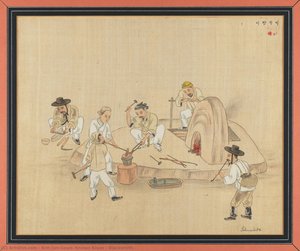
Among Kisan's most celebrated works is “Blacksmith,” a captivating watercolor depicting a Korean metalworker at his forge. The painting vividly portrays the physicality of labor, capturing the intensity of the blacksmith’s movements and the heat radiating from the flames. Similarly, "Game of Dominoes" offers a charming snapshot of domestic life, showcasing a family gathered around a table playing this traditional game. These scenes, alongside depictions of traditional Korean wrestling, noodle making, and other everyday activities, provide a rich tapestry of rural Korean culture.
Recurring themes in Kisan’s work include the importance of family, the connection to the land, and the value of tradition. He consistently portrays Koreans as hardworking, resilient individuals deeply rooted in their community and customs. His paintings also subtly highlight the challenges faced by rural communities – poverty, hardship, and the encroachment of modernization – without resorting to sentimentality or melodrama.
Historical Significance and Legacy
Kisan’s work holds significant historical value as a visual record of late 19th-century Korea. His paintings offer invaluable insights into the lives of ordinary Koreans during a period of profound change, documenting customs and traditions that were rapidly disappearing. They stand as a testament to his commitment to representing the experiences of those often marginalized in official narratives.
While Kisan’s work was largely appreciated by Western travelers and collectors during his lifetime, it wasn't until relatively recently that his art gained wider recognition within Korea. Today, his paintings are celebrated for their artistic merit and historical significance, serving as a powerful reminder of the rich cultural heritage of rural Korea. His legacy continues to inspire artists and scholars alike, ensuring that the stories of ordinary Koreans are preserved and shared through the enduring beauty of his work.
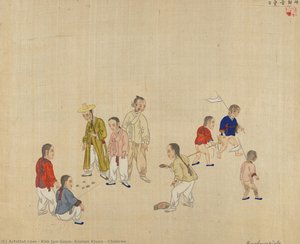
kim jun-geun, known kisan
South Korea
Quick Facts
- Artistic Movement Or Style: Genre painting
- Full Name: Kim Jun-geun (Kisan)
- Nationality: Korean
- Notable Artworks:
- Blacksmith
- Game of Dominoes
- Traditional wrestling
- Place Of Birth: South Korea

