 Preview
 Send
Send Share
Share
 Details

 Download
 Similars
 X-Ray
X-Ray Diaporama
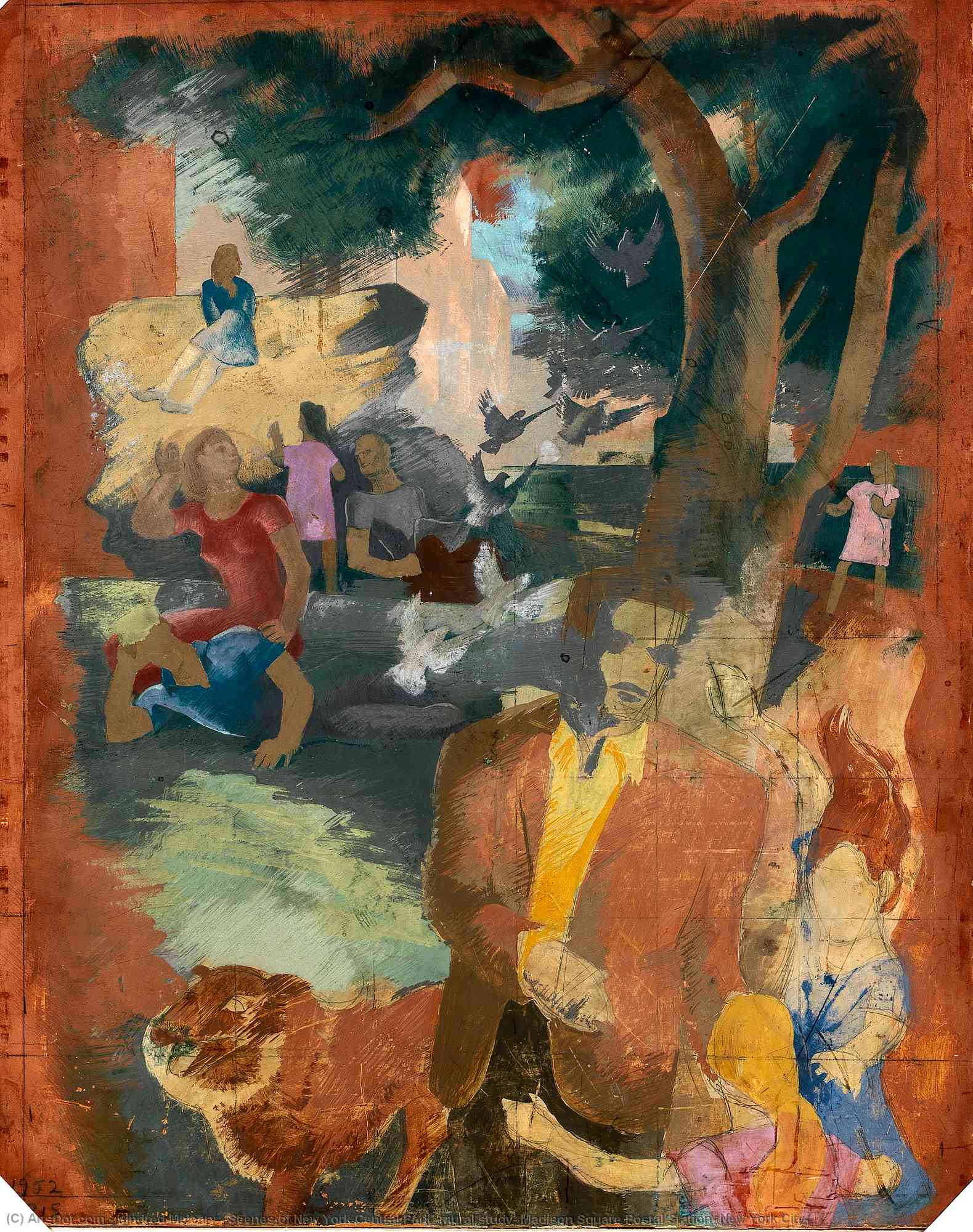
Scenes of New York Central Park (mural study, Madison Square Postal Station, New York City)
 1938
1938 46.0 x 36.0 cm
 Read More
Hand Made Oil Reproduction
Hand-painted oil on canvas in your size and frame, made to order by our artists. ( Buy Print Buy Image)




































Pick from our preset sizes that match the artwork's original proportions.

You may enter your own dimensions to fit a specific frame or space. If your selected size does not match the original image's proportions, we will either crop the artwork or extend the painting with additional hand-painted elements. A digital mockup will be sent for your approval before production begins.
Please note that the on-screen preview does not reflect the actual cropping or extension. Only the mockup will accurately show the final composition.
While custom sizes are available, we recommend selecting a dimension from the predefined list to preserve the original proportions.
After order, ArtsDot.com team will email client for instructions and provide a mockup preview
Worldwide Delivery () in 3/4 weeks instead of standard 5 weeks. (30 August). No compromise on quality.

Free Worldwide Express Shipping

High-Quality Linen Canvas

Full Shipping Insurance

Customs Tax Refund Guarantee

True Color Matching Guarantee

60-Day Return Policy (Defects Only)

100% Money-Back Guarantee

Bulk Discount Offer
 Glass option is only available in size under 110 CM

Scenes of New York Central Park (mural study, Madison Square Postal Station, New York City)
Reproduction Medium
Reproduction Size
-


Total Price
$ 263
Related Artworks








Artist Biography
The Architectural Soul of a Muralist
Kindred McLeary was far more than a mere painter; he was a visionary who perceived the world through the dual lenses of structural precision and emotive storytelling. Born on December 3, 1901, in the rural landscape of Weimar, Texas, his early years were steeped in a profound appreciation for the textures of the natural world and the quiet dignity of craftsmanship. This Texan heritage provided a foundational groundedness that would later anchor his more soaring, cosmopolitan artistic ambitions. As he moved toward formal education at Allen Academy and eventually the University of Texas, McLeary began to weave together the rigid discipline of architecture with the fluid grace of fine art, a synthesis that would become the hallmark of his career.
His journey took him far beyond the borders of the American South, leading him to the historic art centers of Europe. Studying in Fontainebleau and Rome, McLeary immersed himself in the classical traditions that have shaped Western aesthetics for centuries. It was during this period of international exposure that he encountered the influential mentorship of Jean Carlu, whose modern sensibilities helped refine McLeary’s ability to communicate complex narratives through bold, structured visual language. By the time he earned his architecture degree in 1927, he possessed a unique intellectual toolkit: the ability to understand the skeletal strength of a building and the atmospheric potential of its surfaces.
A Legacy Written in Stone and Color
McLeary’s professional life was a seamless blend of educator, architect, and muralist. After honing his architectural skills in Florida and New York, he transitioned into academia, joining the faculty at Carnegie Tech—now Carnegie Mellon University—in 1928. This role allowed him to influence a new generation of designers, instilling in them the belief that art and architecture should exist in a symbiotic embrace. However, it was on the grand scale of public walls that his most enduring legacies were etched. His murals were not merely decorations; they were monumental dialogues with the public, designed to inhabit the very spaces they adorned.
The pinnacle of his artistic achievement remains the breathtaking mural Defense of Human Freedoms (1942), also known as America the Mighty. Commissioned for what is now the Harry S. Truman Building in Washington, D.C., this sprawling masterpiece captures the profound anxieties and the indomitable spirit of an era defined by global conflict. Through a masterful command of scale and color, McLeary depicted the chaos of war alongside the enduring human struggle to preserve civilization. Though the mural faced periods of obscurity—hidden behind plywood for years before its triumphant restoration in 2010—it remains a cornerstone of American civic art, embodying the tension between destruction and hope.
The Narrative Power of the Brush
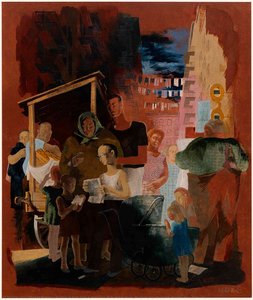
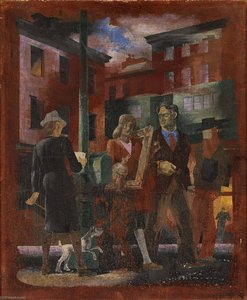
Beyond his monumental government commissions, McLeary’s work often touched upon the intimate and the local, finding beauty in the rhythmic life of American cities. His mural studies for the Madison Square Postal Station in New York City, including depictions of Greenwich Village, the Lower East Side, and Central Park, reveal an artist deeply enamored with the pulse of urban existence. These works demonstrate his ability to translate the bustling energy of New York into structured, painterly compositions that celebrate the diversity of the human experience.
Even in his earlier, more controversial works, McLeary displayed a fearless commitment to truth. His painting Cotton, exhibited at the Witte Memorial Museum, showcased his ability to tackle social themes with raw honesty, portraying the lives of African-American laborers with a realism that challenged the prejudices of his time. Whether he was painting the quiet dignity of a rural field or the epic struggle of a nation at war, Kindred McLeary remained a steadfast narrator of the human condition, leaving behind a body of work that continues to bridge the gap between the structural permanence of architecture and the ephemeral beauty of art.

Quick Facts
- Artistic Movement Or Style: Mod Genre
- Artists Who Influenced This Artist: ['Jean Carlu']
- Date Of Birth: December 3, 1901
- Full Name: Kindred McLeary
- Nationality: American
- Notable Artworks:
- Defense of Human Freedoms
- Scenes of New York Lower East Side
- Scenes of New York Greenwich Village
- Place Of Birth: Weimar, Texas