 Preview
 Send
Send Share
Share
 Details

 Download
 Similars
 X-Ray
X-Ray Diaporama
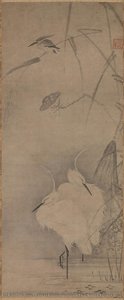
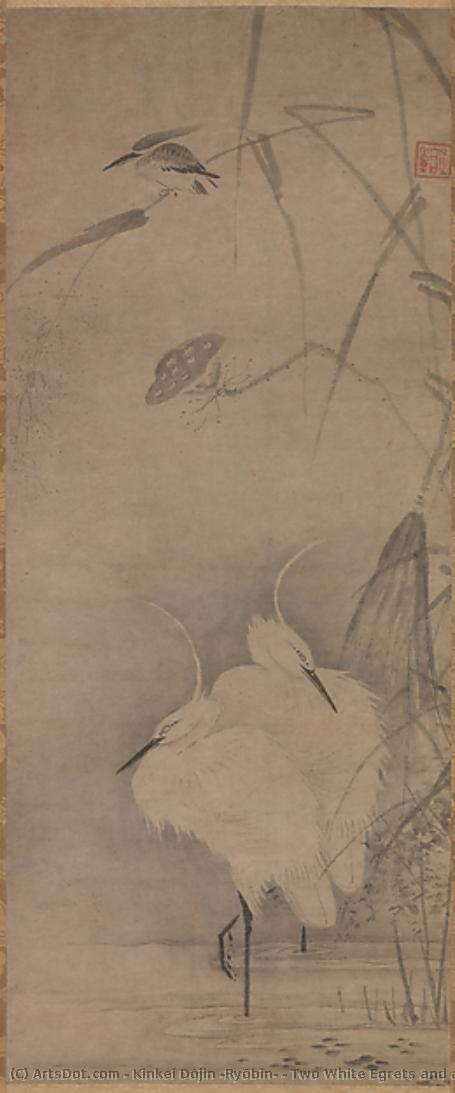
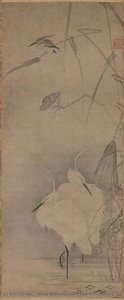
Two White Egrets and a Kingfisher at a Lotus Pond
 501
501 96.0cm x 40.0cm
 Read More
Giclée / Art Print
Museum-quality giclée or canvas print with fast production and flexible finish options. ( Buy Hand Made Painting Buy Image)




































Pick from our preset sizes that match the artwork's original proportions.

You may enter your own dimensions to fit a specific frame or space. If your selected size does not match the original image's proportions, we will either crop the artwork or extend the image with a mirrored or solid-fill edge. A digital mockup will be sent for your approval before production begins.
Please note that the on-screen preview does not reflect the actual cropping or extension. Only the mockup will accurately show the final composition.
While custom sizes are available, we recommend selecting a dimension from the predefined list to preserve the original proportions.
Worldwide Delivery () in 2 weeks instead of standard 4/5 weeks. (25 August)

Free Worldwide Express Shipping

High-Quality Linen Canvas

Full Shipping Insurance

Customs Tax Refund Guarantee

True Color Matching Guarantee

60-Day Return Policy (Defects Only)

100% Money-Back Guarantee

Bulk Discount Offer
 Glass option is only available in size under 110 CM

Two White Egrets and a Kingfisher at a Lotus Pond
Giclée / Art Print
Reproduction Size
-


Total Price
$ 63
Collectible Description
Related Artworks






Artist Biography
Kinkei Dōjin (Ryōbin): A Master of Muromachi Ink
The world of Japanese art holds countless treasures, but few resonate with the quiet serenity and profound beauty of Kinkei Dōjin, more commonly known as Ryōbin. Born in 1562 in what is now Kyoto, Japan, during the tumultuous Muromachi period, he emerged as a pivotal figure in the development of Japanese ink painting – specifically, the genre of yamato-e (Japanese landscape painting) and, crucially, the delicate art of depicting lotus ponds. His life, though tragically cut short at the age of 39, left an indelible mark on the artistic landscape, influencing generations of artists with his masterful technique and evocative compositions.
Dōjin’s early life was marked by a formal education in calligraphy and painting under the tutelage of his father, Dōan, a renowned calligrapher. However, he quickly surpassed his father's skills, demonstrating an exceptional talent for capturing the subtle nuances of nature. Initially, he focused on producing scrolls for the shogunate, creating elaborate scenes of mountains, rivers, and temples – works that showcased both technical proficiency and a burgeoning artistic vision. Yet, it was his fascination with the lotus pond, particularly its reflection in water, that would ultimately define his legacy.
The Lotus Pond: A Symbol of Purity and Enlightenment
The lotus flower itself held immense symbolic significance in Japanese Buddhism, representing purity, enlightenment, and rebirth. Dōjin’s obsession with depicting these serene scenes – often featuring a single, solitary lotus floating on a still pond – became his signature style. He meticulously studied the effects of light and shadow, mastering the art of capturing the shimmering reflections on water and the delicate textures of foliage. His works are characterized by their understated elegance, achieved through a restrained palette and a remarkably subtle use of brushstrokes.
Unlike many of his contemporaries who favored bold colors and dramatic compositions, Dōjin embraced a more muted aesthetic. He employed a limited range of pigments – primarily browns, greens, and blues – to create a sense of tranquility and depth. His technique involved layering thin washes of ink, building up the image gradually with countless delicate strokes. This painstaking process resulted in paintings that possess an almost ethereal quality, inviting viewers into a realm of quiet contemplation.
Influences and Artistic Development
Dōjin’s artistic development was shaped by several key influences. The Sumi-e tradition, emphasizing the expressive power of ink, undoubtedly played a significant role. He also drew inspiration from Chinese landscape painting, particularly the works of masters like Li Cheng and Fan Kuan, adapting their techniques to suit Japanese aesthetics. However, Dōjin’s genius lay in his ability to synthesize these influences into a uniquely Japanese style – one that prioritized simplicity, elegance, and a profound connection with nature.
A pivotal moment in his artistic journey occurred when he traveled to the Izu Peninsula, renowned for its stunning coastal scenery. This experience profoundly impacted his work, leading him to incorporate elements of the sea and sky into his lotus pond compositions. He began to depict the interplay between water, light, and atmosphere with unprecedented skill, capturing the fleeting beauty of a single moment in time.
Major Achievements and Legacy
Dōjin’s most celebrated works include “Two White Egrets and a Kingfisher at a Lotus Pond” (circa 1590), a masterpiece that exemplifies his mastery of technique and his profound understanding of the subject matter. This painting, now housed in the Metropolitan Museum of Art, is widely considered to be one of the finest examples of Japanese ink painting ever created. He also produced numerous hanging scrolls and individual paintings, each reflecting his evolving artistic vision.
Despite his relatively short career, Kinkei Dōjin (Ryōbin) left an enduring legacy on Japanese art. His innovative approach to landscape painting, particularly his focus on the lotus pond, profoundly influenced subsequent generations of artists. He demonstrated that beauty could be found in simplicity and restraint, proving that a single brushstroke could convey profound emotion and spiritual insight. His work continues to captivate viewers today, offering a glimpse into a world of serene contemplation and timeless elegance.
Historical Context: The Muromachi Period
Dōjin’s artistic output is inextricably linked to the tumultuous Muromachi period (1392-1573) in Japan. This era was marked by political instability, warfare, and social upheaval – yet it also witnessed a flourishing of art and culture. The shogunate exerted considerable influence over the arts, commissioning works for temples, palaces, and private collections. The rise of Zen Buddhism further shaped artistic sensibilities, emphasizing simplicity, introspection, and a connection with nature. Dōjin’s work reflects these broader cultural trends, embodying the spirit of quiet contemplation and aesthetic refinement that characterized this complex period.
kinkei dōjin (ryōbin)
Japan
Quick Facts
- Artistic Movement Or Style: Ink Wash Painting
- Full Name: Kinkei Dōjin (Ryōbin)
- Nationality: Japanese
- Notable Artworks:
- Two White Egrets...
- Lotus Pond Scenes
- Place Of Birth: Wahoo, Japan