 Preview
 Send
Send Share
Share
 Details

 Download
 Similars
 X-Ray
X-Ray Diaporama
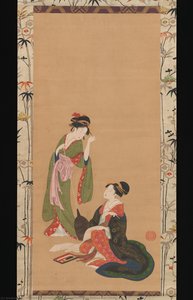
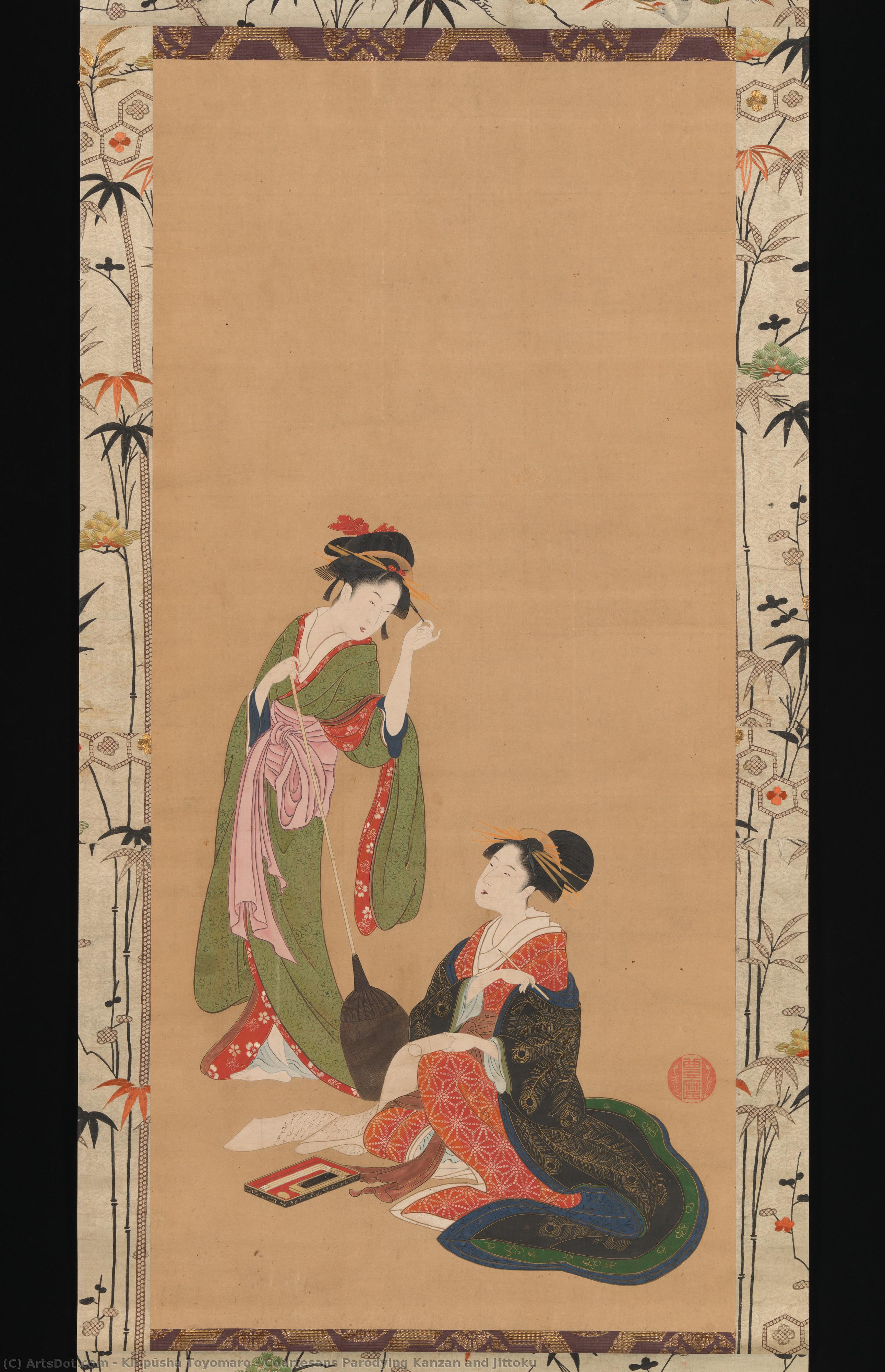
Courtesans Parodying Kanzan and Jittoku
 801
801 122.0cm x 56.0cm
 Read More
Giclée / Art Print
Museum-quality giclée or canvas print with fast production and flexible finish options. ( Buy Hand Made Painting Buy Image)




































Pick from our preset sizes that match the artwork's original proportions.

You may enter your own dimensions to fit a specific frame or space. If your selected size does not match the original image's proportions, we will either crop the artwork or extend the image with a mirrored or solid-fill edge. A digital mockup will be sent for your approval before production begins.
Please note that the on-screen preview does not reflect the actual cropping or extension. Only the mockup will accurately show the final composition.
While custom sizes are available, we recommend selecting a dimension from the predefined list to preserve the original proportions.
Worldwide Delivery () in 2 weeks instead of standard 4/5 weeks. (23 August)

Free Worldwide Express Shipping

High-Quality Linen Canvas

Full Shipping Insurance

Customs Tax Refund Guarantee

True Color Matching Guarantee

60-Day Return Policy (Defects Only)

100% Money-Back Guarantee

Bulk Discount Offer
 Glass option is only available in size under 110 CM

Courtesans Parodying Kanzan and Jittoku
Giclée / Art Print
Reproduction Size
-


Total Price
$ 63
Collectible Description
Related Artworks










Artist Biography
Kitagawa Utamaro: The Poet of the Floating World
Kitagawa Utamaro (c. 1753 – October 31, 1806) stands as a towering figure in the history of Japanese art, a master of *ukiyo-e* woodblock prints and paintings who captured the essence of Edo-period life with an unparalleled sensitivity to beauty and human emotion. More than just a skilled craftsman, Utamaro was a poet of his time, translating the fleeting pleasures and subtle nuances of the “floating world”—the vibrant, transient realm of entertainment and commerce that defined urban Japan—onto paper and wood. His legacy endures not only through the exquisite detail of his works but also as a pivotal influence on Western art movements in the 19th century.
Born Kitagawa Ichitarō in Edo (modern-day Tokyo), Utamaro’s early life remains shrouded in some mystery. He apprenticed under the renowned artist Torii Kiyonaga, a dominant force in *ukiyo-e* during the late 1780s and early 1790s. Kiyonaga's influence is evident in Utamaro’s initial style—a focus on dynamic compositions and bold colors—but it was Utamaro who ultimately developed his own distinctive approach, characterized by a remarkable delicacy of line, an astute understanding of human psychology, and a profound appreciation for the subtle beauty of everyday life. Unlike Kiyonaga's often theatrical scenes, Utamaro’s work favored intimate portraits and studies of nature, reflecting a growing interest in quiet contemplation and refined aesthetics.
The Beauty of the Bijin-ga
Utamaro’s most celebrated achievement lies in his series of *bijin-ga*—“pictures of beautiful women.” These weren't simply depictions of fashionable courtesans; they were profound explorations of female character, capturing a range of emotions and personalities with astonishing subtlety. He moved away from the prevailing trend of full-length group portraits, instead focusing on cropped views that emphasized the upper body, drawing attention to the face, hands, and gestures—elements that conveyed volumes about the subject’s inner life. His women are often depicted in moments of quiet contemplation, playful interaction, or graceful movement, imbued with a sense of both vulnerability and strength.
A key characteristic of Utamaro's *bijin-ga* is his masterful use of color and texture. He employed a delicate palette of muted tones—pale blues, greens, pinks, and creams—to create an atmosphere of understated elegance. His brushwork was incredibly refined, producing a shimmering effect that captured the play of light on silk and skin. Utamaro’s ability to render the textures of clothing, hair, and flesh with such precision was revolutionary for his time, elevating *ukiyo-e* to a new level of artistic sophistication.
Influence and Legacy
Utamaro's work gained significant recognition in Europe during the mid-19th century, largely thanks to the opening of Japan to Western trade and diplomacy. His prints were enthusiastically collected by European artists and intellectuals, including Mary Cassatt, who famously described his works as “you who want to make color prints, you couldn't imagine anything more beautiful.” The influence of Utamaro’s elongated figures, delicate brushwork, and emphasis on subtle emotion can be seen in the Impressionist painters of France, particularly Monet and Degas. They were captivated by the Japanese aesthetic—known as *Japonism*—and sought to emulate its distinctive qualities in their own work.
Despite his fame during his lifetime, Utamaro’s career was not without controversy. In 1804, he was arrested and manacled for fifty days for creating unauthorized prints depicting Toyotomi Hideyoshi, the powerful military ruler who had died decades earlier. This act of defiance—a challenge to the strict censorship laws that governed the production of art—demonstrates Utamaro’s independent spirit and his willingness to push artistic boundaries. He died two years later, leaving behind a remarkable body of work that continues to inspire and captivate audiences today.
A Lasting Impression
Kitagawa Utamaro's legacy extends far beyond the realm of Japanese art history. His innovative techniques, profound understanding of human psychology, and exquisite aesthetic sensibility helped to shape the course of Western art in the late 19th century. His *bijin-ga* remain a testament to his extraordinary talent—a poignant and enduring celebration of beauty, grace, and the ephemeral nature of life itself. Utamaro’s work serves as a reminder that even within the fleeting pleasures of the “floating world,” there lies a wealth of artistic potential waiting to be discovered.
kinpūsha toyomaro
Japan
Quick Facts
- Artistic Movement Or Style: Ukiyo-e
- Artists Or Movements Influenced By This Artist: ['Impressionism']
- Artists Who Influenced This Artist: ['Kitagawa Eisen']
- Date Of Birth: c. 1753
- Date Of Death: 1806
- Full Name: Kitagawa Utamaro
- Nationality: Japanese
- Notable Artworks:
- Courtesans Parodying Kanzan
- Bijin-ga paintings
- Place Of Birth: Osaka, Japan