 Preview
 Send
Send Share
Share
 Details

 Download
 Similars
 X-Ray
X-Ray Diaporama
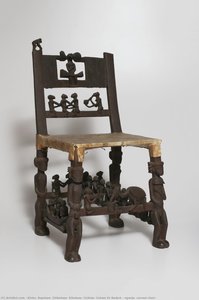
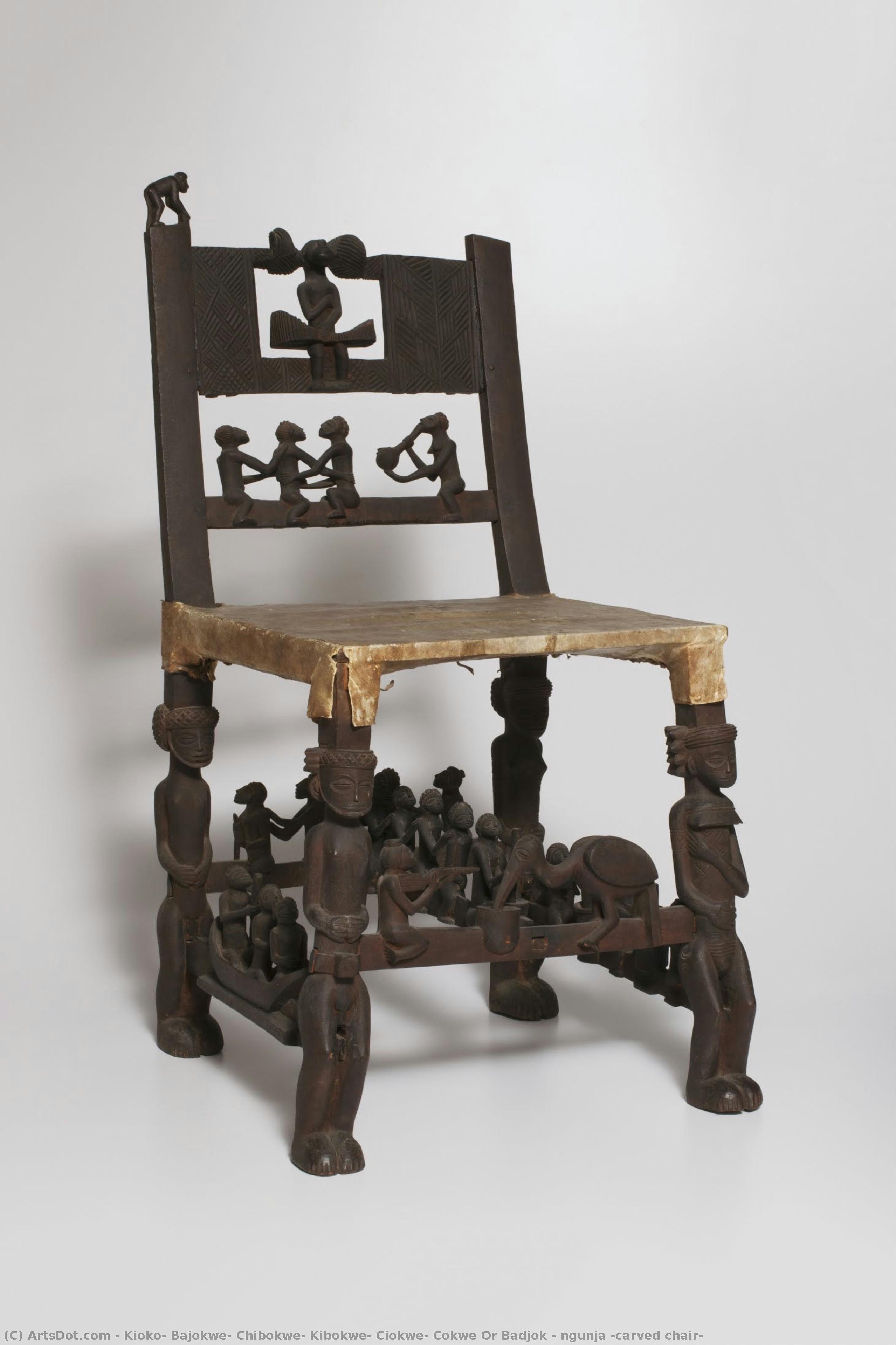
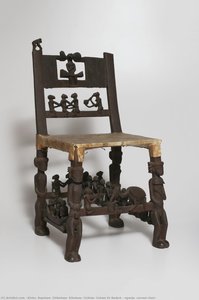
ngunja (carved chair)
 1914
1914 78.0 x 39.0 cm
 Read More
Giclée / Art Print
Museum-quality giclée or canvas print with fast production and flexible finish options. ( Buy Hand Made Painting Buy Image)




































Pick from our preset sizes that match the artwork's original proportions.

You may enter your own dimensions to fit a specific frame or space. If your selected size does not match the original image's proportions, we will either crop the artwork or extend the image with a mirrored or solid-fill edge. A digital mockup will be sent for your approval before production begins.
Please note that the on-screen preview does not reflect the actual cropping or extension. Only the mockup will accurately show the final composition.
While custom sizes are available, we recommend selecting a dimension from the predefined list to preserve the original proportions.
Worldwide Delivery () in 2 weeks instead of standard 4/5 weeks. (7 September)

Free Worldwide Express Shipping

High-Quality Linen Canvas

Full Shipping Insurance

Customs Tax Refund Guarantee

True Color Matching Guarantee

100-Day Return Policy (Defects Only)

100% Money-Back Guarantee

Bulk Discount Offer
 Glass option is only available in size under 110 CM

ngunja (carved chair)
Giclée / Art Print
Reproduction Size
-


Total Price
$ 63
Related Artworks





Artist Biography
The Enduring Echoes of the Chokwe: A People and Their Art
The Chokwe people, a vibrant tapestry woven across central and southern Africa—primarily in Angola, the Democratic Republic of Congo, and northwestern Zambia—are far more than just a collection of individuals inhabiting a specific geographic region. They represent a profound cultural legacy, meticulously expressed through an art form that is both deeply rooted in ancestral traditions and remarkably adaptable to the passage of time. Their story is one of resilience, complex social structures, and a captivating visual language born from a unique confluence of beliefs, rituals, and environmental realities. The Chokwe’s artistic output—characterized by intricate carvings, powerful masks, and symbolic objects—serves as an invaluable window into their worldview, offering glimpses into their cosmology, social hierarchies, and enduring connection to the spirit world.
The origins of the Chokwe are shrouded in a fascinating blend of migration and assimilation. While tracing a precise lineage remains challenging due to centuries of intermingling with neighboring groups like the Lunda, Mbundu, and Imbangala, archaeological evidence suggests that the core of the Chokwe population emerged from the Bantu-speaking peoples who migrated into the region between the 16th and 18th centuries. These early settlers encountered established communities, leading to a complex process of cultural exchange and incorporation. The Lunda, in particular, exerted considerable influence, shaping aspects of Chokwe political organization and religious beliefs. However, the Chokwe maintained their distinct identity, developing a sophisticated social structure centered around matrilineal descent and elaborate initiation rituals—practices that continue to define their culture today.
Spiritual Resonance and Artistic Mastery
Central to understanding Chokwe art is the concept of Nganga, or spirit, which permeates every facet of their lives. These spirits are believed to inhabit both the physical and metaphysical realms, and much of the artistic production serves as a bridge between these two states. The craftsmanship of the Chokwe is not merely decorative; it is functional and sacred. When one examines a carved chair, such as the ngunja, or observes the fierce grace of a ceremonial mask, they are witnessing a dialogue with the divine. Every notch in the wood and every application of pigment carries weight, often representing ancestral wisdom or the presence of forest deities.
The technical skill required for such work is immense, demanding a deep knowledge of local materials including wood, hide, and metal. The artists of this tradition act as historians and theologians, using their hands to preserve the memory of a people who have navigated the turbulent waters of colonialism and territorial shifts. Their ability to maintain such high levels of symbolic complexity while adapting to new trade realities—such as the 19th-century ivory and rubber booms—demonstrates an extraordinary artistic plasticity.
A Legacy of Cultural Resilience
The historical significance of Chokwe art lies in its role as a vessel for identity. Despite the fragmentation of Chokwe power caused by disease, overexpansion, and the encroaching forces of colonialism, their visual language has remained remarkably potent. The artistry continues to reflect a society that values the wisdom of elders and the continuity of the maternal line. To engage with Chokwe art is to encounter a living history:
- Symbolic Depth: Each object acts as a mnemonic device for oral traditions and cosmological truths.
- Social Cohesion: Art serves as a central component in initiation rites, marking the transition of individuals within the community.
- Cultural Continuity: The persistence of traditional motifs despite external pressures highlights the strength of the Chokwe spirit.
kioko, bajokwe, chibokwe, kibokwe, ciokwe, cokwe or badjok
Central Africa
Quick Facts
- Artistic Movement Or Style: Traditional African art
- Artists Or Movements Influenced By This Artist:
- Chokwe tradition
- Bantu art forms
- Artists Who Influenced This Artist:
- Lunda people
- Mbuti Pygmy
- Full Name: Kioko, Bajokwe, Chibokwe
- Nationality: Bantu
- Notable Artworks:
- Ngunja (carved chair)
- Various masks and sculptures
- Place Of Birth: Central Africa