 Preview
 Send
Send Share
Share
 Details

 Download
 Similars
 X-Ray
X-Ray Diaporama
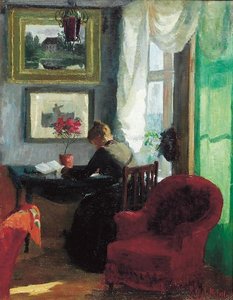
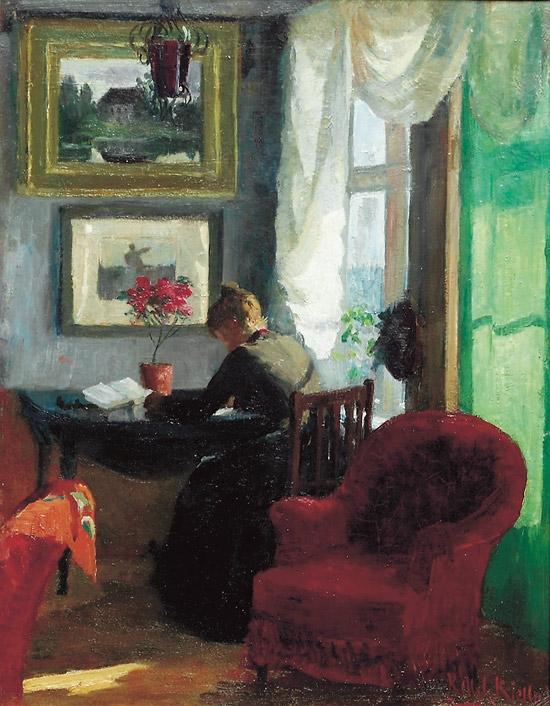
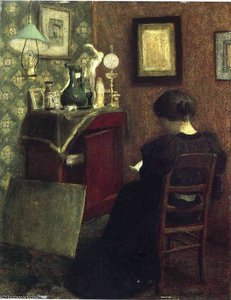
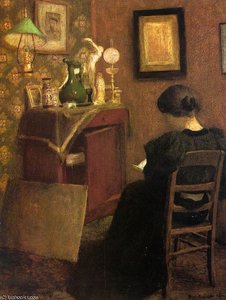
Interior with red chair
 Read More
Giclée / Art Print
Museum-quality giclée or canvas print with fast production and flexible finish options. ( Buy Hand Made Painting Buy Image)




































Pick from our preset sizes that match the artwork's original proportions.

You may enter your own dimensions to fit a specific frame or space. If your selected size does not match the original image's proportions, we will either crop the artwork or extend the image with a mirrored or solid-fill edge. A digital mockup will be sent for your approval before production begins.
Please note that the on-screen preview does not reflect the actual cropping or extension. Only the mockup will accurately show the final composition.
While custom sizes are available, we recommend selecting a dimension from the predefined list to preserve the original proportions.
Worldwide Delivery () in 2 weeks instead of standard 4/5 weeks. (18 August)

Free Worldwide Express Shipping

High-Quality Linen Canvas

Full Shipping Insurance

Customs Tax Refund Guarantee

True Color Matching Guarantee

60-Day Return Policy (Defects Only)

100% Money-Back Guarantee

Bulk Discount Offer
 Glass option is only available in size under 110 CM

Interior with red chair
Giclée / Art Print
Reproduction Size
-


Total Price
$ 63
Related Artworks
Artist Biography
Early Life and Artistic Beginnings
Kitty Lange Kielland, born in Stavanger, Norway, in 1843, emerged from a prosperous family environment that initially offered limited encouragement for a professional artistic path. As the elder sister of the celebrated novelist Alexander Kielland, her early life was deeply intertwined with his burgeoning literary career; their mutual interactions proved pivotal in shaping her own creative aspirations. Though she received foundational training in drawing and painting, it wasn’t until reaching the age of thirty that Kitty was finally permitted to pursue formal artistic education—a testament to the societal constraints placed upon women during the 19th century. This delayed start, however, did little to diminish her fervent dedication. In 1873, she embarked on a journey to Karlsruhe, Germany, where she began studies under the tutelage of Hans Gude, a prominent figure in Norwegian landscape painting. The realities of being a female artist at the time meant private lessons were necessary rather than full participation in Gude’s classes, yet his emphasis on realism would profoundly influence her developing style. During these two years with Gude, Kitty demonstrated remarkable progress, laying the groundwork for a distinctive artistic voice.Munich and the Norwegian Artistic Circle
Kitty Kielland's relocation to Munich in 1875 marked a significant turning point in her career. The city was then a vibrant hub for a community of Norwegian artists, providing an enriching environment for collaboration and growth. She joined this circle, studying with Hermann Baisch, a French-inspired realist painter, and more importantly, Eilif Peterssen, who many consider to be her most influential teacher. Her time in Munich, lasting until 1878, was characterized by intensive study and the development of a unique artistic perspective. Following Munich, she settled in Paris, establishing a daily painting practice that would become central to her life. This period solidified her commitment to landscape as her primary subject matter, setting the stage for explorations that would define her legacy.The Jæren Landscapes: A Pioneering Vision
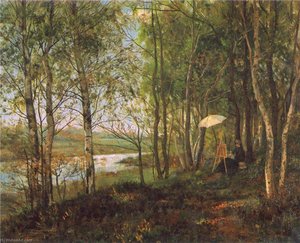
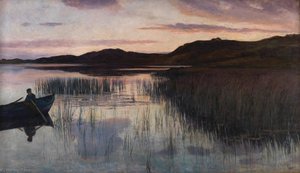
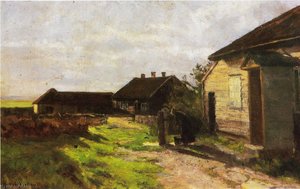
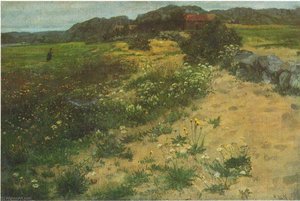
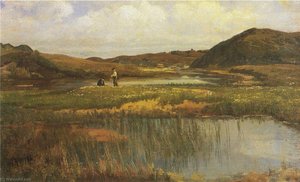
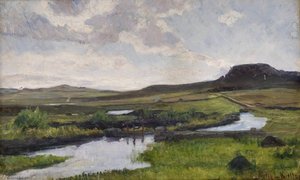
A pivotal moment arrived in 1876 when Kitty Kielland visited Jæren, a coastal region in southern Norway. This journey was prompted by Hans Gude, who had previously painted there and encouraged her to capture its unique character. Upon returning from Jæren, she began creating studies that would later form the basis of her groundbreaking paintings. She became the first artist to depict the flat, expansive landscapes of Jæren with such realism, a departure from conventional romanticized depictions. Her work captured not only the physical appearance of the peat bogs and monotonous terrain but also an atmospheric quality that evoked a sense of solitude and grandeur. Kitty’s repeated visits during the summers allowed her to intimately understand the region, resulting in paintings imbued with a profound connection to the land—a landscape she described as possessing “the grandeur of the landscape and the wealth of poverty.” The skill evident in these works cemented her reputation as one of Gude's most accomplished students.Artistic Development and Simplification
Throughout the 1890s, Kitty Kielland’s artistic style underwent a notable evolution, influenced by Jens Ferdinand Willumsen and a growing desire for simplification. She actively engaged in public debates surrounding women’s rights, demonstrating a commitment to social issues that extended beyond her art. Her participation in the Palace of Fine Arts at the 1893 World's Columbian Exposition in Chicago brought international recognition to her work. However, towards the end of her life, Kitty experienced declining health and reduced her artistic output due to senile dementia. Despite this, her legacy as a pioneering landscape painter remained secure. Her later works reflect a move away from detailed realism toward a more expressive and atmospheric style, foreshadowing elements of modernism.Historical Significance and Lasting Legacy
Kitty Kielland’s contribution to Norwegian art extends beyond her captivating landscapes. She was a trailblazer for women artists, navigating societal barriers to establish herself as a respected professional painter. Her exploration of the Jæren landscape not only introduced a new subject matter but also challenged conventional artistic norms. Furthermore, her involvement in social and political debates highlighted her commitment to equality and freedom—themes that resonate powerfully today. The exhibition “Open Air” at Lillehammer Art Museum in 2017, featuring over 100 of her works, underscored the importance of her artistry and brought renewed attention to a figure who had been largely overlooked by art history for too long. Kitty Kielland’s paintings continue to captivate audiences with their evocative beauty and profound connection to the natural world, solidifying her place as an innovative artist and a compelling voice in 19th-century Norwegian culture.
Quick Facts
- Artistic Movement Or Style: World Goes Pop
- Artists Or Movements Influenced By This Artist: ['Influences various contemporary artists']
- Artists Who Influenced This Artist: ['Influenced by diverse artists within the World Goes Pop movement']
- Date Of Death: Living
- Notable Artworks: ['Various works featured in The World Goes Pop exhibition']
- Place Of Birth: WahooArt